
This post may contain affiliate links. Please read my disclosure policy.
All recipes on Doggone Baking are intended for humans — the dogs are just our enthusiastic photo assistants and taste-test spectators.
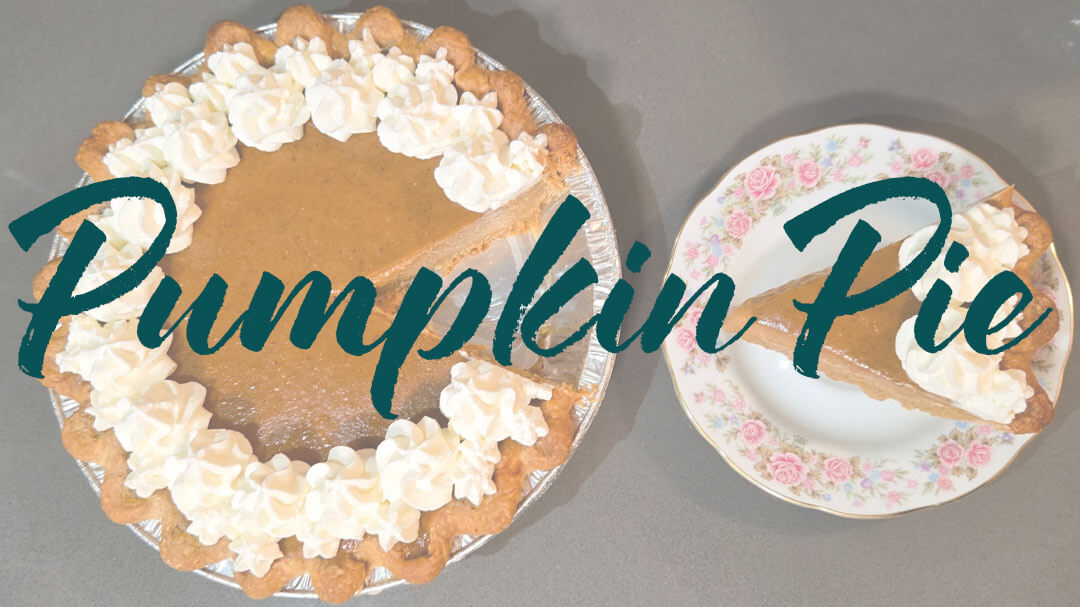
Pumpkin Pie Recipe: A Complete Guide to the Classic Dessert
Pumpkin pie is one of the most well-known and popular desserts in the US. It’s an iconic fall dessert recipe, and a traditional Thanksgiving pie. There are countless variations and spinoffs of pumpkin pie and pumpkin spice desserts, but a classic pumpkin pie recipe is timeless: a smooth, spiced pumpkin custard filling inside of a flaky all-butter pie crust.

What Is Pumpkin Pie?
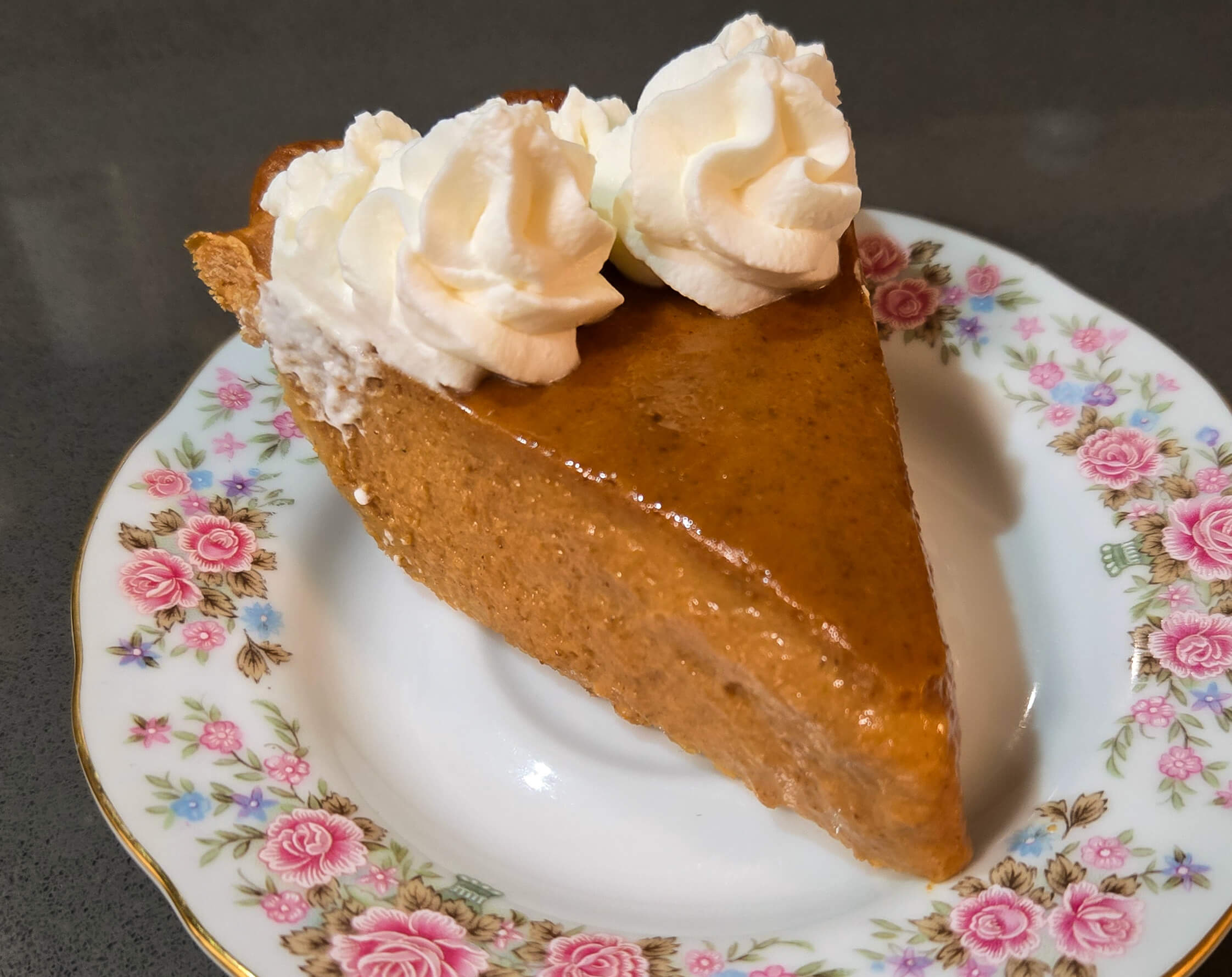
Pumpkin pie, as we know it today, is a silky, spiced pumpkin custard baked inside of a pie crust. It’s one of the most iconic American holiday desserts, sparking a nationwide craze for “pumpkin spice” products every fall. Pumpkin pie is right up there with apple pie and pecan pie for some of the most popular Thanksgiving pies each year.
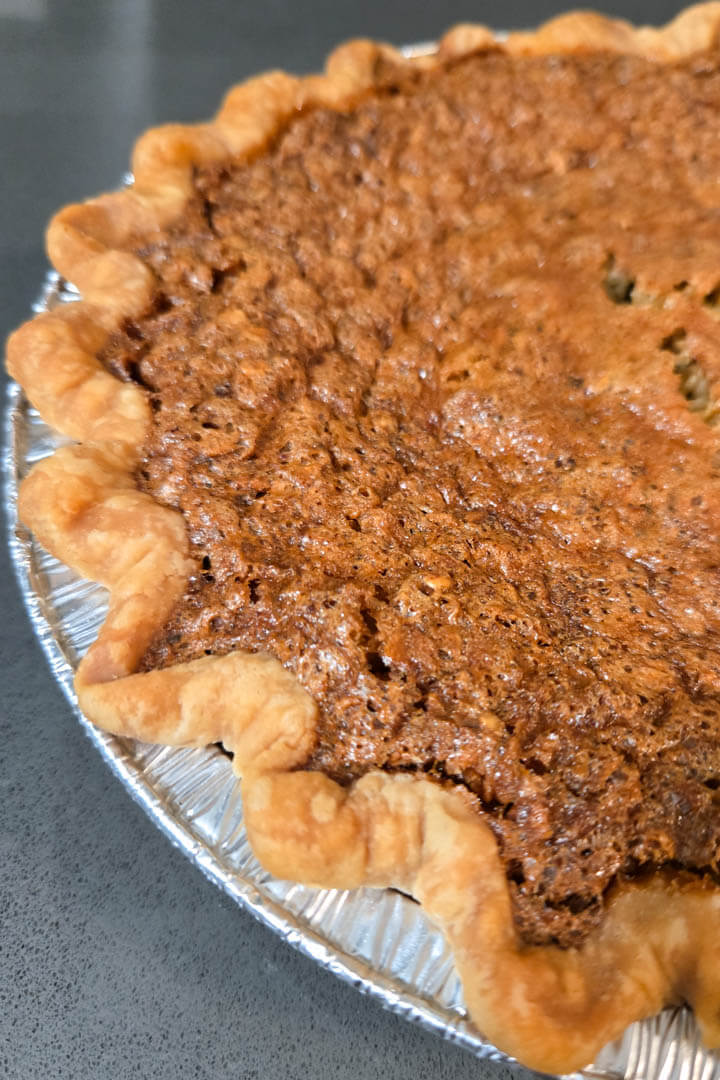
Like any pie that gets incredibly popular, many bakers have created a wide variety of spinoffs and variations of pumpkin pie. Some recipes use a flaky pastry crust, while others opt for a crumb crust like graham cracker crust, or an Oreo cookie crumb crust. The fillings can vary just as much: maple pumpkin pie, chocolate pumpkin pie, peanut butter pumpkin pie, pumpkin praline pie … the options are endless. Each version puts a new spin on the perennial classic while still delivering that cozy, spiced pumpkin flavor.
This recipe is for the classic, go-to pumpkin pie you’ll find on countless Thanksgiving tables: a warmly spiced pumpkin custard baked into a buttery, flaky crust.
The History of Pumpkin Pie
Pumpkins are native to the Americas and among the oldest cultivated vegetables in the Western Hemisphere. Archaeological evidence suggests that they were grown in what is now Oaxaca, Mexico at least 7,500 years ago! That predates many grains and vegetables that we consider staples today.
Indigenous communities in the Americas had been roasting and stewing pumpkins for centuries by the time European colonists arrived in North America. The colonists quickly adopted pumpkins into their cooking, but their early “pumpkin pies” looked nothing like the pumpkin custard pies we eat today. In the 17th and 18th centuries, pumpkin pie recipes often called for sliced pumpkin baked or fried with sugar and spices inside a double-crust pastry. Some versions even called for alternating layers of pumpkin and apple slices.
We see the first pumpkin custard pies resembling the pumpkin pies of today in American Cookery (1796) by Amelia Simmons, the first American cookbook written and published by an American. Her recipe for “pumpkin pudding” called for stewed and strained pumpkin, eggs, sugar, cream, molasses, and spices like ginger, mace, nutmeg, and allspice. Although it was called “pumpkin pudding” instead, the recipe is strikingly similar to the classic pumpkin pie recipes of today.
In 1824, the famous cookbook, The Virginia Housewife, contained a similar recipe for pumpkin pie (this one with a splash of brandy). By this time, pumpkin pie had cemented its status as an iconic American pie, even mentioned in patriotic poems and songs and being celebrated as a uniquely American dessert.
In the mid-19th century, pumpkin pie even became a political symbol. During the Civil War era, pumpkin pie was adopted by abolitionists as emblematic of Yankee virtues and an anti-slavery ethos. In contrast to the South’s reliance on crops like sugar and molasses, New England farmers saw pumpkin as a humble, morally grounded ingredient. Petula Dvorak wrote a piece on the topic in the Washington Post in November 2024.
The popularity of pumpkin pie really exploded in the early 1900s, when canned pumpkin became widely available at grocers across the country. Libby’s, the brand still dominating supermarket shelves today, began selling their canned pumpkin puree in 1929. Suddenly, the once time-consuming process of cooking and pureeing fresh pumpkins became as simple as opening a can. As a result, pumpkin pie became accessible to nearly every home cook in the country.
Pumpkin pie has remained steadily popular since. Remarkably, the recipes that we use for pumpkin pie today have changed very little since those recipes that were published over 150 years ago!
If you’d like to read a more detailed piece on the history of pumpkin pie, the Library of Congress has an excellent write-up available here.
How to Make Homemade Pumpkin Puree
Using canned pumpkin is by far the most convenient way to make pumpkin pie. It produces consistent results, is easy to find year-round, and most recipes are tested with canned pumpkin. But if you happen to have the time and motivation, making your own homemade pumpkin puree, or fresh pumpkin puree, can be fun.
Choosing the Right Pumpkin
To make pumpkin puree, look for “sugar pumpkins” or “pie pumpkins” at the store. These smaller varieties are sweeter, denser, and less watery than the big pumpkins sold for carving. A good rule of thumb is to look for pumpkins in the 2-4 pound range with firm skin and a deep orange color.
How to Make Pumpkin Puree
1.
Preheat the Oven: Preheat your oven to 350°F.
2.
Prep the Pumpkin: Wash the outside thoroughly, then slice the pumpkin in half from top to bottom. Use a spoon to scoop out the seeds and stringy pulp. (You can save the seeds to roast later if you’d like).
3.
Bake Until Tender: Place the halves, cut side down, on a baking sheet lined with parchment paper or foil. Roast at 350°F for 45-60 minutes until the flesh is fork-tender.
4.
Cool and Scoop: Remove the pumpkin halves from the oven, and let them cool until you can handle them comfortably. Scoop the soft flesh out of the skins, discarding the skin.
5.
Blend Until Smooth: Using a food processor or high-powered blender, puree the pumpkin flesh until it’s fully blended and smooth. If the puree seems watery, you can let it sit in a fine-mesh sieve or cheesecloth for about 30 minutes.
Storing Homemade Pumpkin Puree:
Fresh pumpkin puree can be stored in an airtight container in the refrigerator for up to 5 days. For longer storage, portion it into freezer bags or containers and freeze for up to 3 months. To use in recipes, let it thaw in your refrigerator overnight.
Step-by-Step Pumpkin Pie Recipe
Crust:
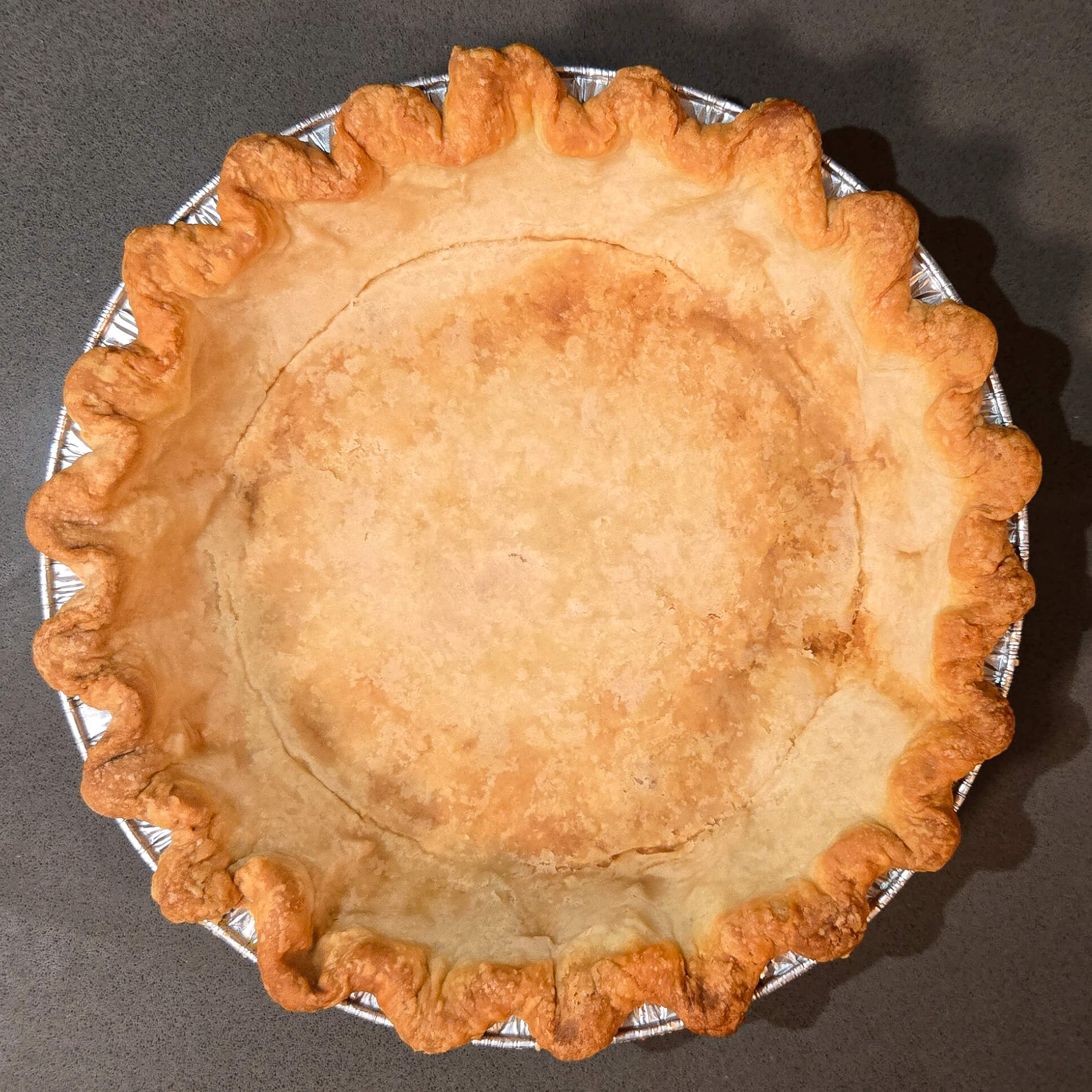
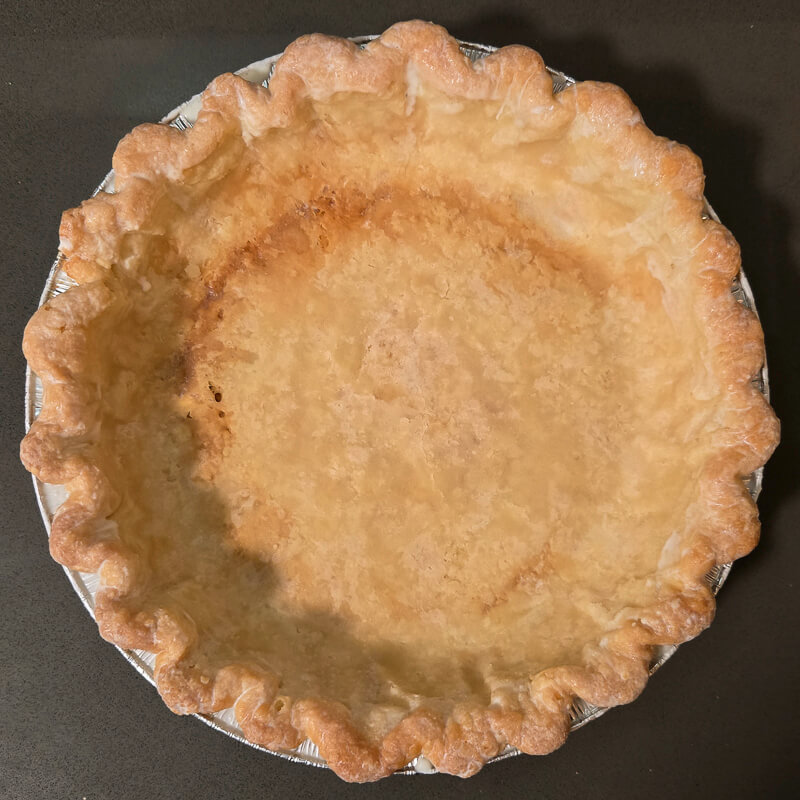
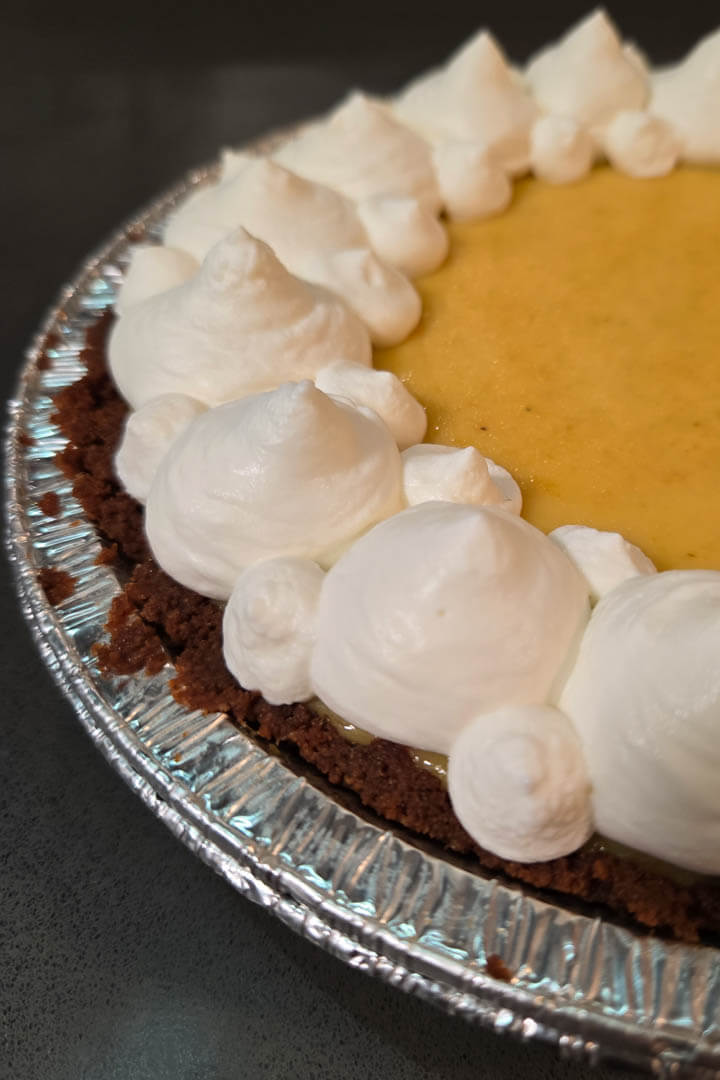
Pumpkin pie can be made in a wide variety of crusts. Pumpkin pie in a dark blind baked flaky, all-butter pie crust is a classic combination. However, it can also be made in any number of crumb crust such as graham cracker crust. If you’re looking for a Halloween pie, try pumpkin pie in an Oreo cookie crust, or bake it in a gingersnap pie crust if you want to give it an extra spicy, festive twist.
Homemade Pumpkin Pie Filling Recipe:
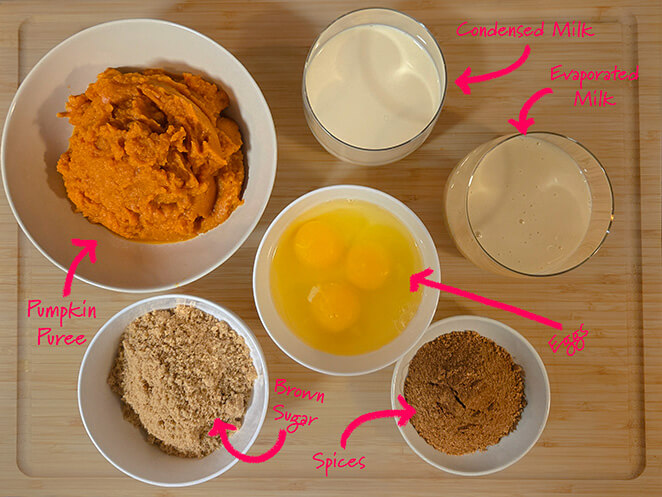
Ingredients
- 1 dark, blind-baked pie shell
- 15oz (1 can) pumpkin puree
- 7.5oz sweetened condensed milk
- 6oz evaporated milk
- 75g (6T) brown sugar
- 3 eggs
- 4t cinnamon
- 4t ginger
- 3/4t nutmeg
- 1/4t cloves
- 1/2t salt
- 1/4c heavy cream (optional)
1.
Preheat your oven to 325°F (160°C).
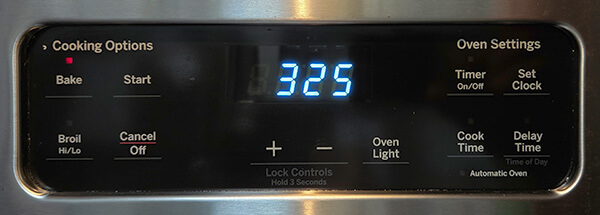
Pro Tip: Using a lower baking temperature of 325°F rather than 350°F helps the custard cook more gently and evenly. This also helps to keep the filling from cracking as it cools.
2.
In a large mixing bowl, whisk together the brown sugar, spices (cinnamon, ginger, nutmeg, cloves, and salt), and pumpkin puree. This helps keep the spices from clumping when you mix.
3.
Whisk in the eggs, evaporated milk, and condensed milk until smooth.
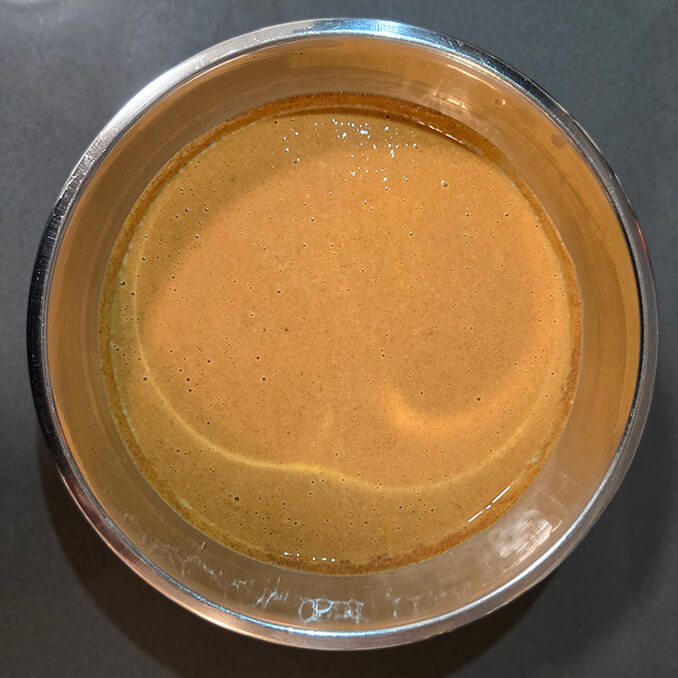
Pro Tip: If you have an immersion blender, this is the perfect application for one.
4.
(Optional) Brush the edges of your dark, blind-baked pie crust with heavy whipping cream. This will give the crust a deeper, more golden brown color after it finishes baking.
5.
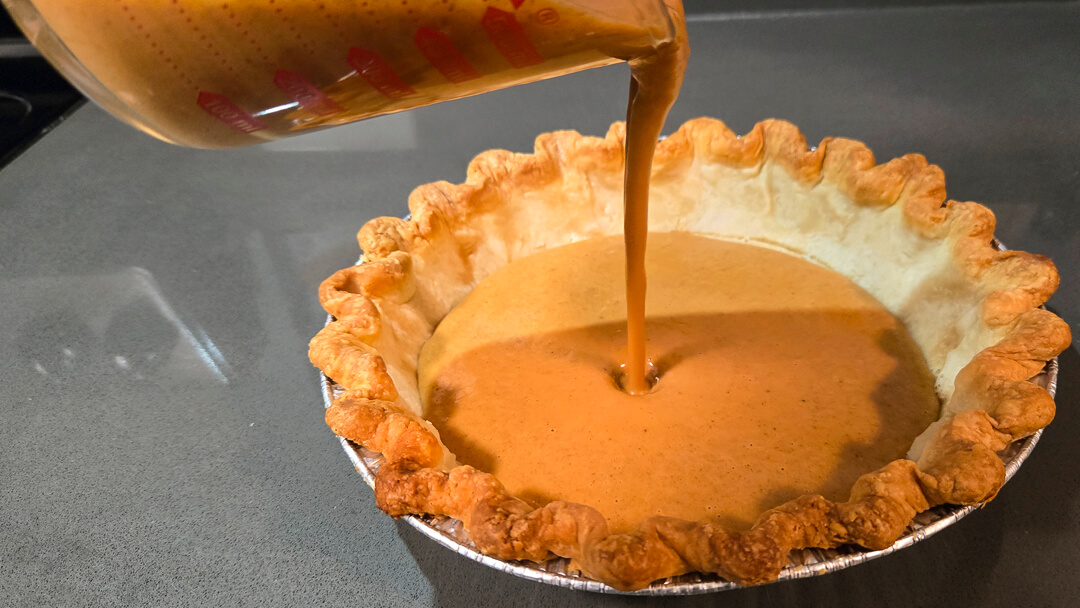
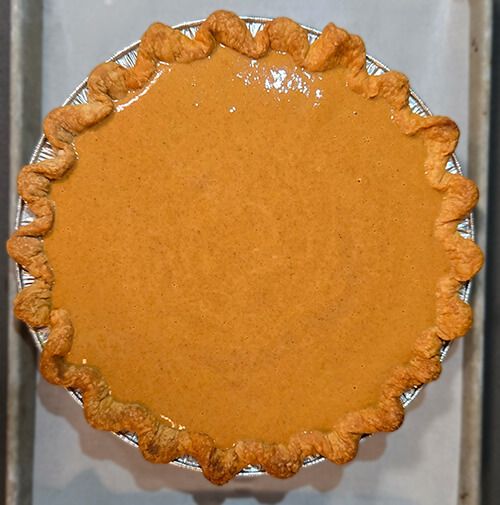
Pour your filling into the pie crust right up to the top edge, just before it begins to overflow. Pour slowly and evenly, and pop any large bubbles with a toothpick or fork.
6.
Bake the pumpkin pie for 35 – 40 minutes, or until the edges of the filling are set, while the center is still slightly jiggly.
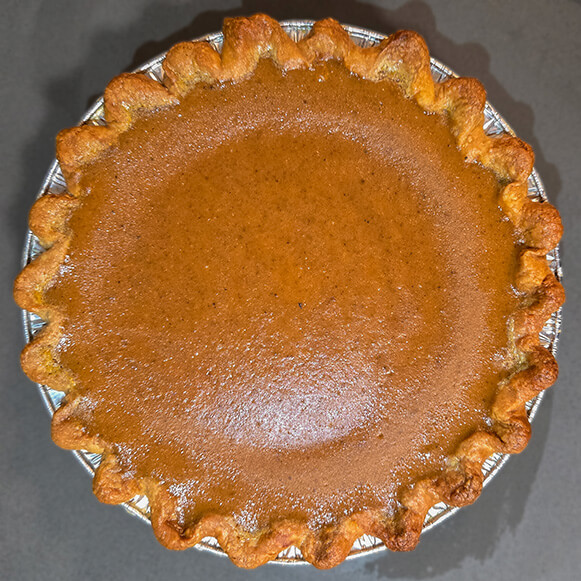
Pro Tip: Pumpkin pie continues to cook as it cools, so don’t worry if the center looks a little underbaked when you pull it from the oven. This is actually how it should look to get a perfectly baked pumpkin pie. If you’re worried, you can use a thermometer to make sure the center of the pie is 175°F – just be aware that this will leave a small hole behind in the pie where you inserted the thermometer.
7.
Allow the pie to cool to room temperature before slicing and serving. If you prefer your pumpkin pie chilled, allow the pie to cool to room temperature, and then transfer the pie to your refrigerator for 3 hours before serving.
How to Create Your Own Pumpkin Pie Spice Blend
One of the best parts of making pumpkin pie from scratch is customizing the spice blend. Store-bought pumpkin spice is convenient, but mixing your own lets you adjust the flavor balance to your tastes.
What Spices are in Pumpkin Pie Spice?
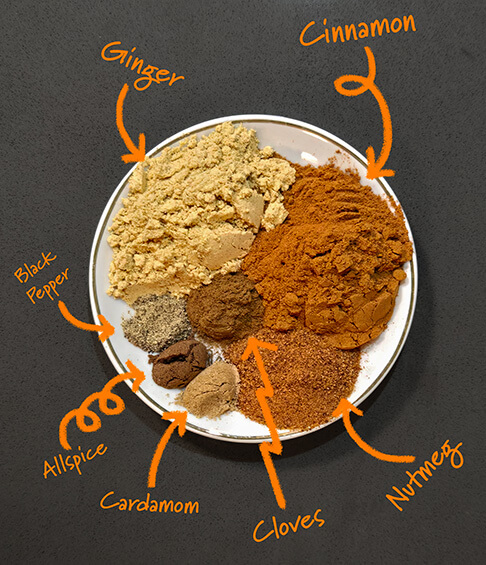
Most pumpkin pie spice blends include cinnamon, ginger, nutmeg, and cloves. Some add allspice, cardamom, or even a pinch of black pepper for depth. Each spice brings something a little different:
- Cinnamon: Made from the bark of an evergreen tree, cinnamon is the warm, sweet backbone of apple pie spice. There are two main types: ceylon cinnamon and cassia cinnamon. Cassia is the variety you will most likely find at a North American grocery store, and it has a bolder, spicier flavor than the milder ceylon.
- Ginger: A bright, zingy root native to Southeast Asia, ginger adds a lively kick to apple pie spice and has been used medicinally for centuries. It keeps the blend from feeling too heavy or flat.
- Nutmeg: The seed of an evergreen tree native to Indonesia, nutmeg adds a woody, earthy, faintly spicy depth to the blend. It’s the primary flavor of eggnog.
- Cloves: bold, aromatic, and intense
- Allspice: Native to Jamaica and a cornerstone of Jamaican cooking, allspice has a bold, intensely warm flavor. The English named it allspice because they felt it captured the combined flavors of cinnamon, nutmeg, and cloves all in one spice.
- Cardamom: Native to Indonesia and harvested as flower buds, cloves are intensely warm and aromatic. A little goes a very long way, so they should always be used in small quantities.
- Black Pepper: Black pepper, which many people think of as a spice for savory cooking, can add a touch of bright sharpness to your pumpkin pie spice blend.
My Go-To Pumpkin Pie Spice Ratio:
For one pie I use:
- 1 tablespoon cinnamon
- 2 teaspoons ginger
- ½ teaspoon nutmeg
- ¼ teaspoon cloves
Adjusting to Your Palate
Don’t be afraid to tweak the ratios to suit your preferences. For more spice, add a touch of ginger or allspice (⅛ teaspoon at a time). Start small with these strong spices, and taste the filling as you go.
What is the Difference Between Apple Pie Spice and Pumpkin Pie Spice?
Pumpkin pie spice and apple pie spice are closely related, and in a pinch they can absolutely be used interchangeably. Both are warming fall spice blends built on a similar foundation of cinnamon, nutmeg, and allspice. The differences are subtle but real. Apple pie spice is more cinnamon-forward and tends to have a brighter, more floral flavor. Pumpkin pie spice typically includes cloves as a key ingredient, which gives it a deeper, earthier, more full-bodied warmth. The result is that apple pie spice tastes a little lighter and more delicate, while pumpkin pie spice has a bolder, more intense kick.
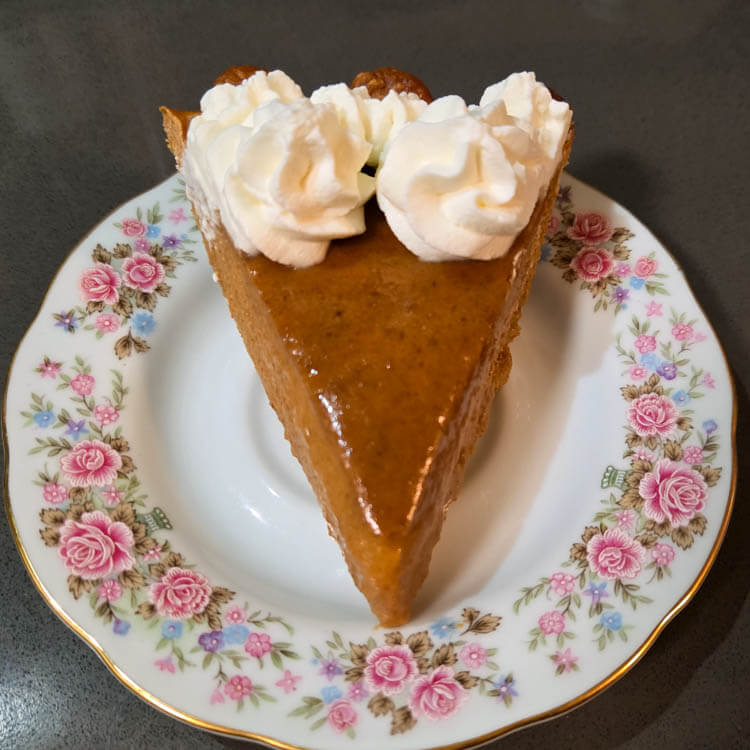
Using Condensed Milk vs. Evaporated Milk in Pumpkin Pie Filling
Most pumpkin pie recipes call for evaporated milk, condensed milk, or both. Old-fashioned recipes from the 19th century often use milk and heavy cream. How do you know which is the best milk for pumpkin pie?
Condensed Milk:
Sweetened condensed milk is thick, sweet, and syrupy because about 60% of the water has been removed and sugar has been added. It creates a pumpkin pie filling that’s very rich, sweet, and creamy.
Evaporated Milk:
Evaporated milk also has had about 60% of the water removed, but doesn’t have added sugar. It produces a lighter, airier custard.
Milk and Heavy Cream:
Using scalded whole milk and heavy cream is the closest to the original, old-fashioned pumpkin pie recipes. It gives you a rich, milky flavor and a silky texture, but the filling won’t set up quite as firmly.
In my recipe, I use both evaporated milk and condensed milk together. This creates a pumpkin pie filling that is extra creamy and rich without it being too heavy or too sweet. The combination balances beautifully and gives the pie that perfect, classic custard texture.
Vegan Alternatives:
If you’d like to make your pumpkin pie dairy-free or vegan, coconut cream is a fantastic substitute. It mimics the richness of heavy cream, and adds a subtle coconut flavor that pairs surprisingly well with pumpkin spice.
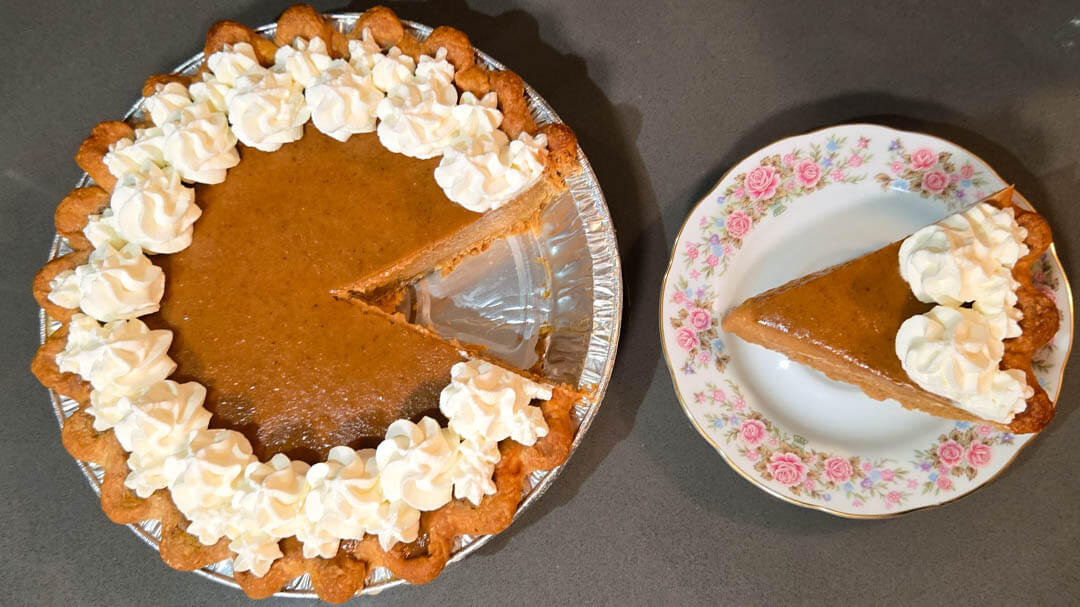
Pumpkin Pie Variations
Pumpkin is a flavor that complements many others, making it easy to create delicious twists on the classic pie. Here are some of my favorite ways to switch things up:
Pumpkin Pie with Liquor
Brandy, rum, bourbon, and other spirits pair great with pumpkin. Adding a splash to your recipe is a timeless radiation. In the classic 1824 cookbook, The Virginia Housewife, has a pumpkin pie recipe with a splash of brandy. Just one or two tablespoons stirred into the filling adds depth and flavor without making the pie overly boozy.
Maple Pumpkin Pie
Maple is another classic American flavor that pairs naturally with pumpkin. A few tablespoons of maple syrup mixed into your filling, or even using it in place of some of the sugar sugar, adds a cozy sweetness.
Pumpkin Pecan (or Pumpkin Praline) Pie
Combine two classic American pies with a pumpkin pecan pie. Combining pumpkin pie and pecan pie makes for a rich, indulgent holiday dessert. Some bakers top the pumpkin custard with praline, while others fold chopped pecans into the pumpkin pie filling.
Chocolate Pumpkin Pie
Chocolate and pumpkin are a surprisingly perfect match. Stir some melted chocolate or a few tablespoons of cocoa powder into your filling for a chocolate-y twist, or try a chocolate cookie crumb crust for something different. Chocolate pumpkin pies make a great Halloween pie.
Pumpkin Pie with Different Crusts
While the classic all-butter pie crust will never go out of style, pumpkin pie also works great with other crusts such as graham cracker crust, Oreo cookie crust, or gingersnap cookie crust.
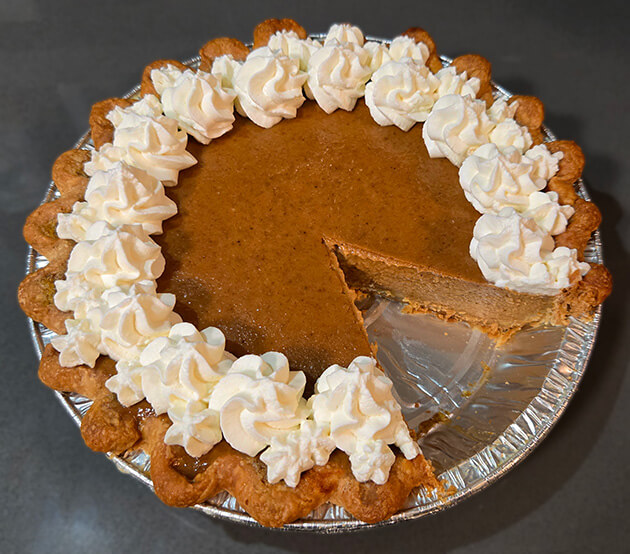
How to Decorate a Pumpkin Pie
Just as with the filling and the crust, topping your pumpkin pie is another way to give it a personal flourish. Whether you prefer simple and classic or a little more dressed up, here are a few of my favorite options:
Classically Plain
Pumpkin pie is beautiful on its own, so you can always serve it untopped for a polished, traditional look. A dollop of whipped cream or a scoop of vanilla ice cream on the side is all it needs.
Decorative Crust Cut-Outs
Create an Instagram-worthy finish, decorate your pie with pie crust cutouts.Make the cutouts before baking your pumpkin pie. Roll out some extra pie dough to about 2mm thick, then use cookie cutters to create festive shapes. Freeze them on a flat surface. Before baking, brush with heavy cream (add a drop of food coloring to the cream for extra fun), and bake on a parchment-lined cookie sheet at 350°F until golden brown. As soon as your pumpkin pie comes out of the oven, arrange the cutouts on top of the custard and they’ll stick to the pie as it cools.
Whipped Cream Topping
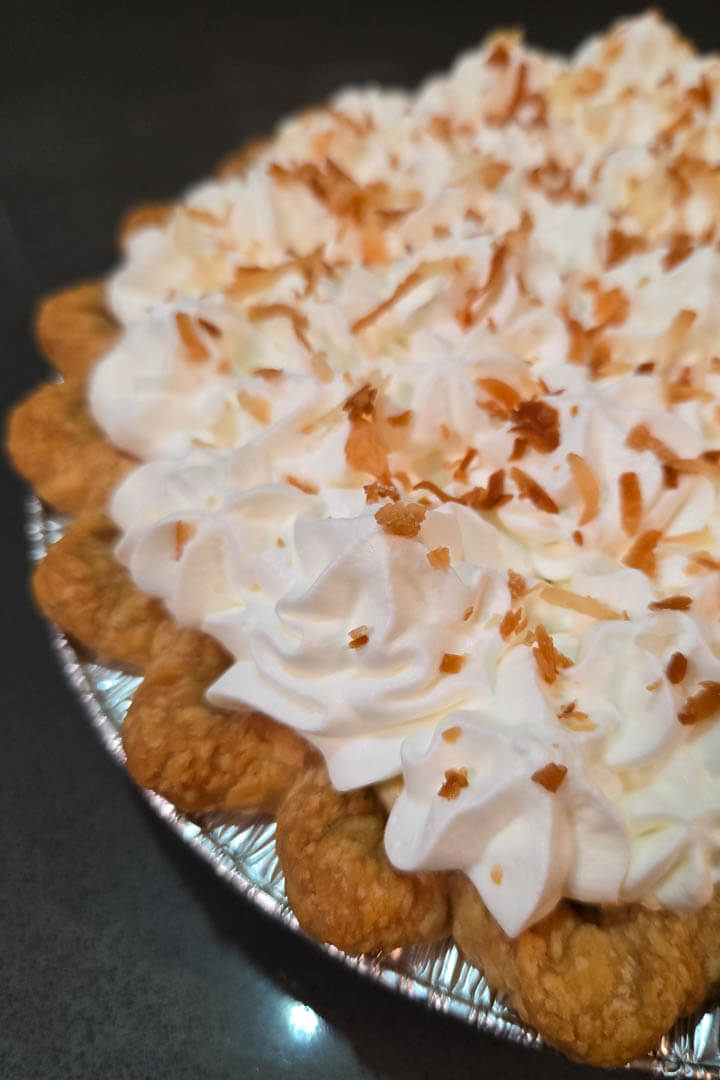
Whipped cream is a popular topping for pumpkin pie. For a rustic look, spread it over your pie with the back of a spoon or an offset spatula. For something fancier, use piping tips to create decorative patterns. Chopped pecans sprinkled on top add a festive touch.
Meringue Pie Topping
For something a bit more old-school, try topping your pumpkin pie with meringue instead of whipped cream. The meringue can be toasted until golden, giving it a dramatic, retro look.
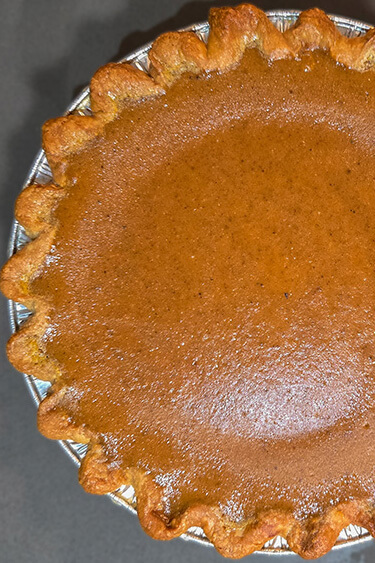
How to Prevent Cracks in Pumpkin Pie
Have you ever baked a pumpkin pie that looked perfect when it came out of the oven, only to return a few hours later to find a giant crack running down the center?
Cracks in pumpkin pie filling are a common problem and happen when the custard filling contracts as it cools. To prevent them from happening and keep your pie looking smooth, remove the pie from the oven before you think it’s done. The filling should not be quite set in the center when you pull the pie out of the oven.
To be precise, you can use a thermometer. The center of the pie should be 175°F when it’s ready to pull out of the oven. Just keep in mind that this will leave behind a small hole in your pie where the thermometer was inserted.
Another cause of cracks in pumpkin pie filling is cooling the pie too quickly. Resist the temptation to move the pie straight from the oven to the refrigerator. Instead, let it cool slowly on your countertop until it reaches room temperature, then transfer it to the fridge if desired.

How to Store Pumpkin Pie
Pumpkin pie should always be refrigerated after baking. Once cooled, cover the pie loosely with plastic wrap or foil and store it in the refrigerator for 3–5 days. If you’d like to keep it longer, wrap the pie tightly in plastic to prevent freezer burn. It can be frozen for up to one month. To serve, transfer the pie to the refrigerator the night before so it can thaw.
For the best texture, especially if the crust has softened, reheat the pie in a 350°F (175°C) oven for about 20 minutes before serving. This refreshes the crust, warms the filling slightly, and makes the pie taste almost as good as freshly baked.
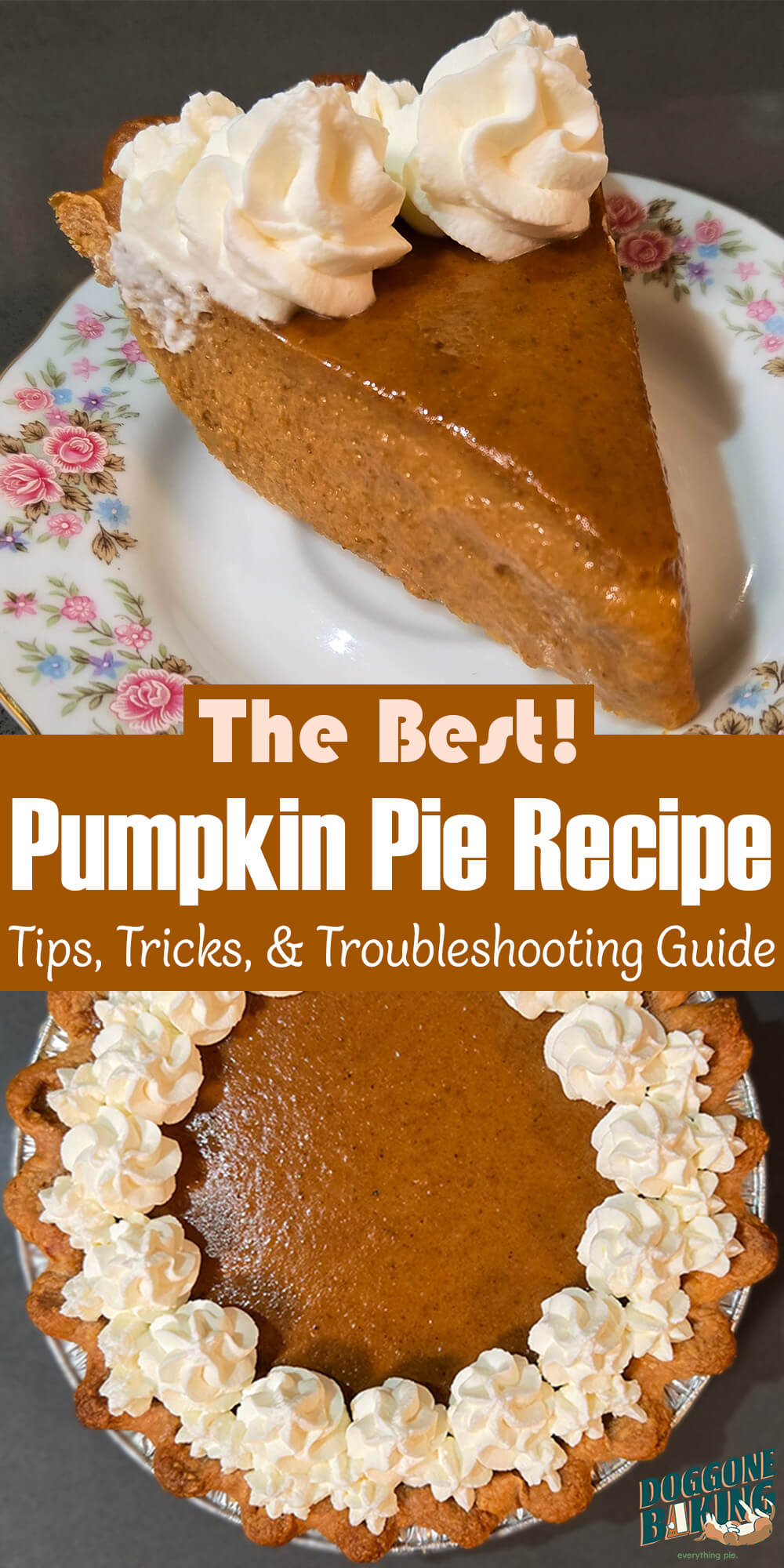
Baking this recipe? We’d love to see your version! Tag @doggone_baking in photos of your most show-stopping pumpkin pie creations.
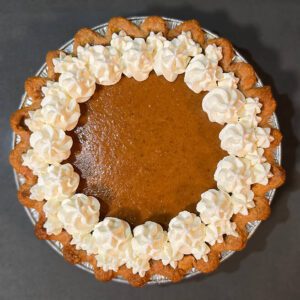
Classic Pumpkin Pie
Ingredients
Crust
- 1 Dark, Blind-Baked Pie Shell
- 2 tbsp heavy whipping cream (optional)
Pumpkin Pie Filling
- 15 oz pumpkin puree (1 15oz can)
- 6 tbsp brown sugar (75g)
- 3 eggs
- 7.5 oz sweetened condensed milk
- 6 oz evaporated milk
- 1 tbsp cinnamon
- 2 tsp ginger
- ½ tsp nutmeg
- ¼ tsp cloves
- ½ tsp salt
Instructions
- Before beginning to make this pie, prepare a dark, blind-baked pie crust. Almost any other crust of your choosing can be used as well. Instructions for an all-butter crust can be found here.
- Preheat the oven to 325℉
- In a large bowl, combine the pumpkin puree, brown sugar, eggs, sweetened condensed milk, evaporated milk, spices, and salt.
- Whisk until smooth, scraping the sides and bottom of the bowl.
- Place your blind-baked pie crust on a baking sheet. Lightly brush around the edges with heavy cream.
- Pouring slowly, fill the pie crust to the top edge. Pop any bubbles with a toothpick or fork.
- Bake for 35-40 minutes at 325℉, or until the edges are set but the center is still slightly jiggly.

- Cool at room temperature for at least 1 hour.
- Transfer the pie to the refrigerator until ready to serve.


About Me
In 2016, I left my office job and became a professional baker. These days I spend my days testing recipes and baking pies while my two dogs snooze happily nearby.
See My Full Bio
9 responses to “Pumpkin Pie Recipe: Complete Guide to a Classic Dessert”
-
What a well-written and useful guide! I’ve bookmarked it for Thanksgiving when I know I’ll need it. I’m super-impressed! -
Such a delicious, perfectly spiced pumpkin pie recipe! It will be on our Thanksgiving menu from now on! -
I loved how the spices blended perfectly, making every bite feel like a warm hug. I honestly couldn’t stop sneaking little tastes, and my whole place smelled like a cozy bakery for hours. -
I’ve been looking for a recipe that was just like my grandma used to make, and this was it! So yummy and a true classic recipe! And easy to make, too! Thanks for sharing! -
Thank you for these great instructions to make a classic pumpkin pie! Your recipe is very easy to follow! -
There is nothing more tasty than a good ol’ fashioned pumpkin pie! The recipe looks easy to follow – thanks for sharing!
-
I found this recipe after my go-ro recipe failed me. This one was a hit and I will be definitely making it for Thanksgiving this year! The seasonings were perfect -sweet and spicy. Thanks! -
This pumpkin pie is so delicious, with a creamy interior and that crust is perfectly baked. I am going to make it again. -
This pumpkin-pie recipe is a winner. Smooth, warmly spiced custard in a flaky crust that screams “holiday dessert done right.”





Leave a Reply