
This post may contain affiliate links. Please read my disclosure policy.
All recipes on Doggone Baking are intended for humans — the dogs are just our enthusiastic photo assistants and taste-test spectators.
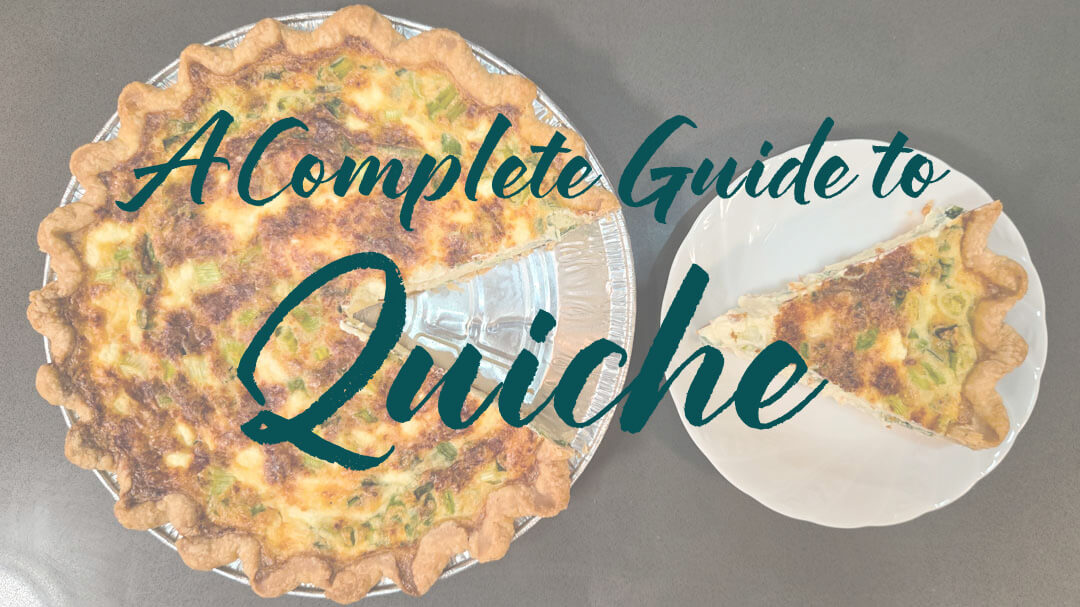
A Complete Guide to Quiche
What is a Quiche?
A modern quiche is a savory custard pie with a creamy, savory filling made with eggs, cream, and cheese baked in a flaky, all-butter pie crust. This easy quiche recipe is almost endlessly customizable, and the filling can be adjusted to make nearly any flavor that you want. Scroll to the bottom of this post to find a recipe for a basic, creamy quiche custard that you can customize yourself!



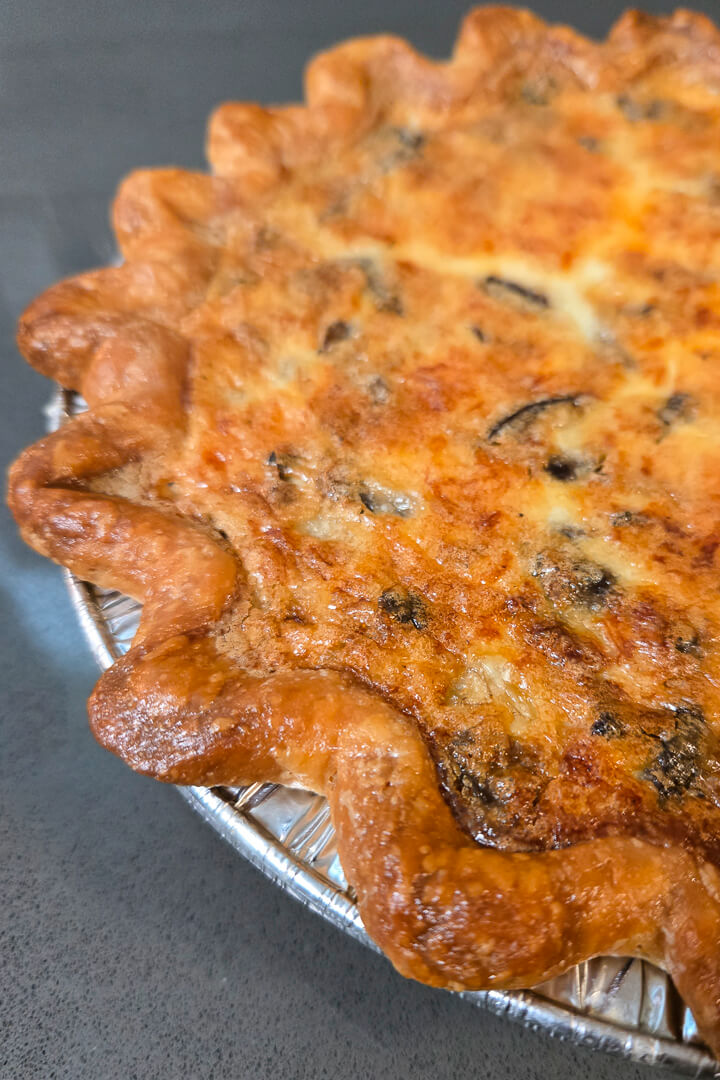
Traditional Quiche Recipes

Quiche Lorraine
Quiche Lorraine is a classic French quiche that originated in the Lorraine region of France. This modern quiche recipe combines gruyère, onions, and bacon for a creamy, flavorful quiche that’s delicious for a weekend brunch spread or sliced for a weekday breakfast.
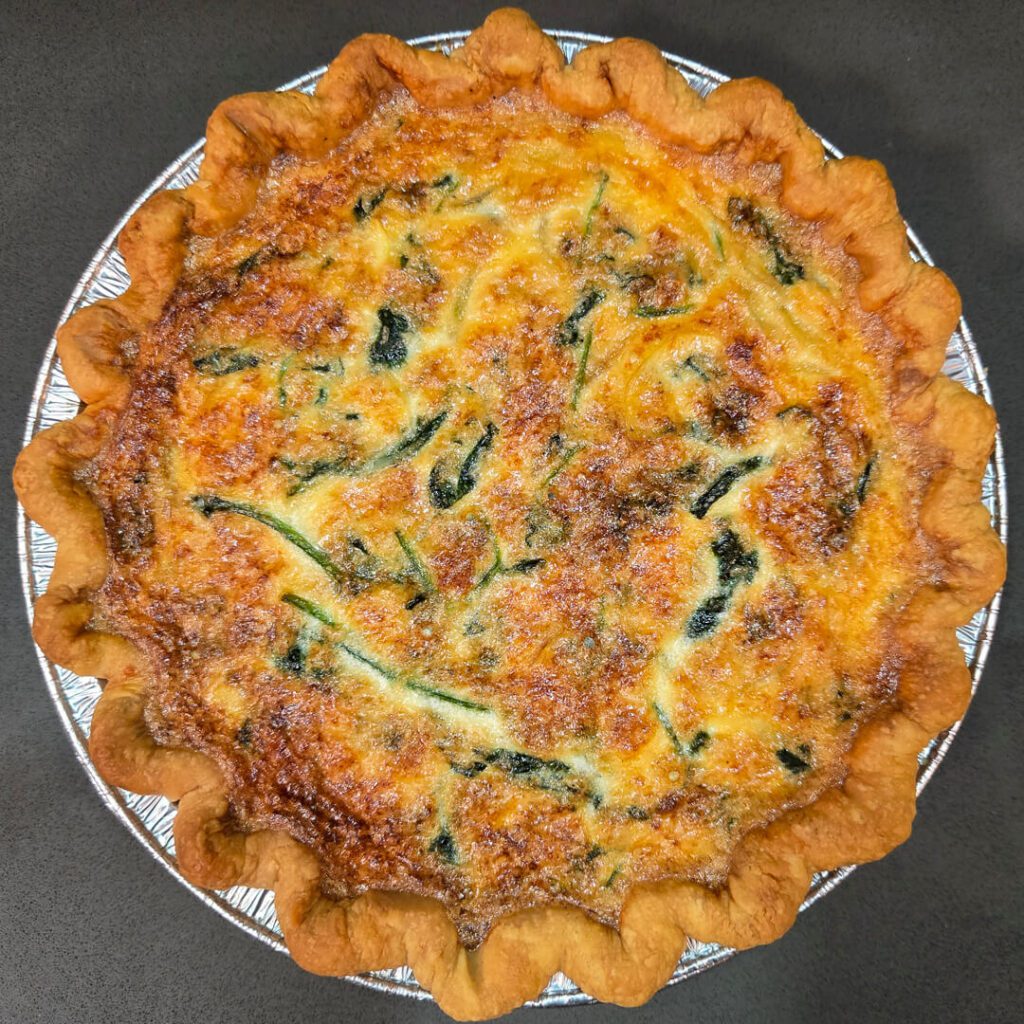
Quiche Florentine
Quiche Florentine, also called spinach quiche, is a classic quiche. If you are looking for a vegetarian quiche for brunch, a weekend breakfast, or an easy picnic dish, a creamy quiche filled with spinach and onions is the perfect choice.

Quiche aux Champignons
Mushrooms are one of the most popular and classic quiche fillings. Their earthy and savory flavor pairs beautifully with a rich, cheesy custard, creating a vegetarian mushroom quiche that feels both simple and satisfying.
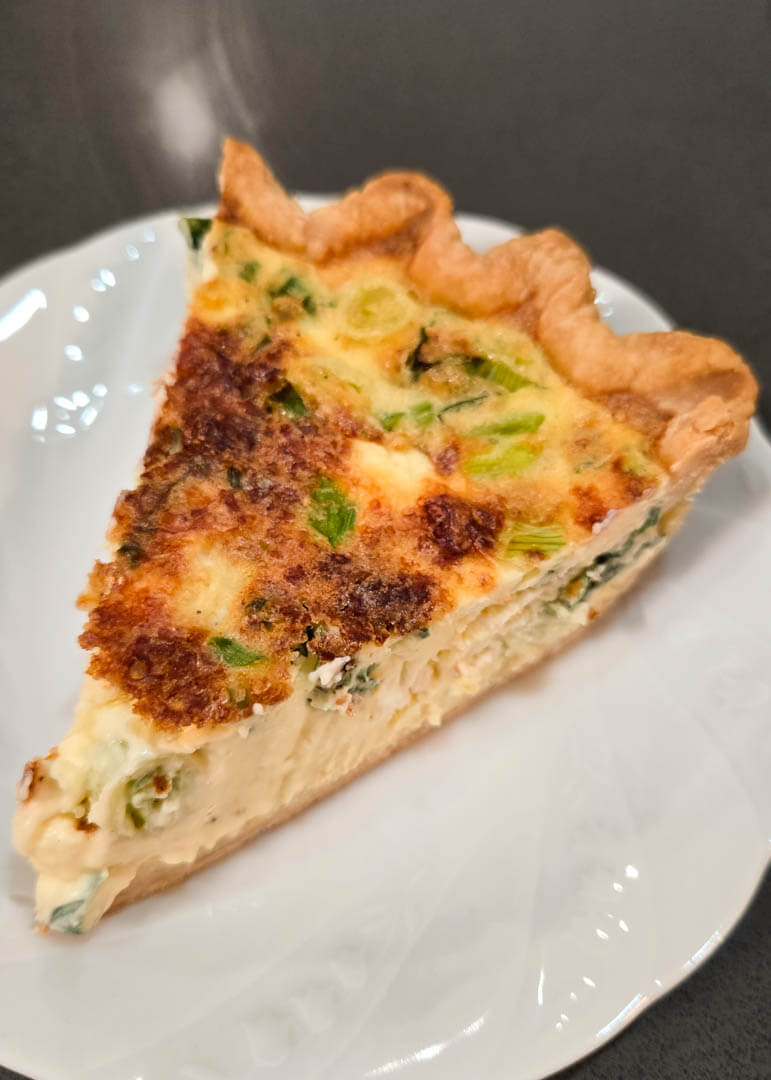
The History of Quiche
The earliest references to quiche I can find date back to the 1500s, although there are claims quiches began appearing in the Lorraine region of France as early as 1373. The word quiche likely comes from a word in the Lorraine dialect, kichel or kich, meaning “cake,” which itself was derived from the German word kuchen. The shared etymology makes sense, Lorraine borders Germany, and the region’s cuisine has long reflected that blend of French and German influences.
The earliest quiches from Lorraine looked quite different from the creamy, cheese-filled versions of quiche we know today. Originally, the crust wasn’t pastry at all but a simple base of bread dough. There also wasn’t any cheese in the filling. The dish was born from practicality, a way for home cooks to repurpose leftover dough and ingredients into a satisfying meal.
By the 19th century, quiche had evolved into a richer, more refined dish that bourgeois were also partaking in. Its reputation spread after World War II, when French cuisine surged in popularity across the UK and America. At that point, the term “quiche” broadened to include nearly any savory custard baked in a pastry shell, with endless combinations of fillings and flavors.
For a fun write-up on the history of quiche Lorraine and its authenticity, check out this post on substack.
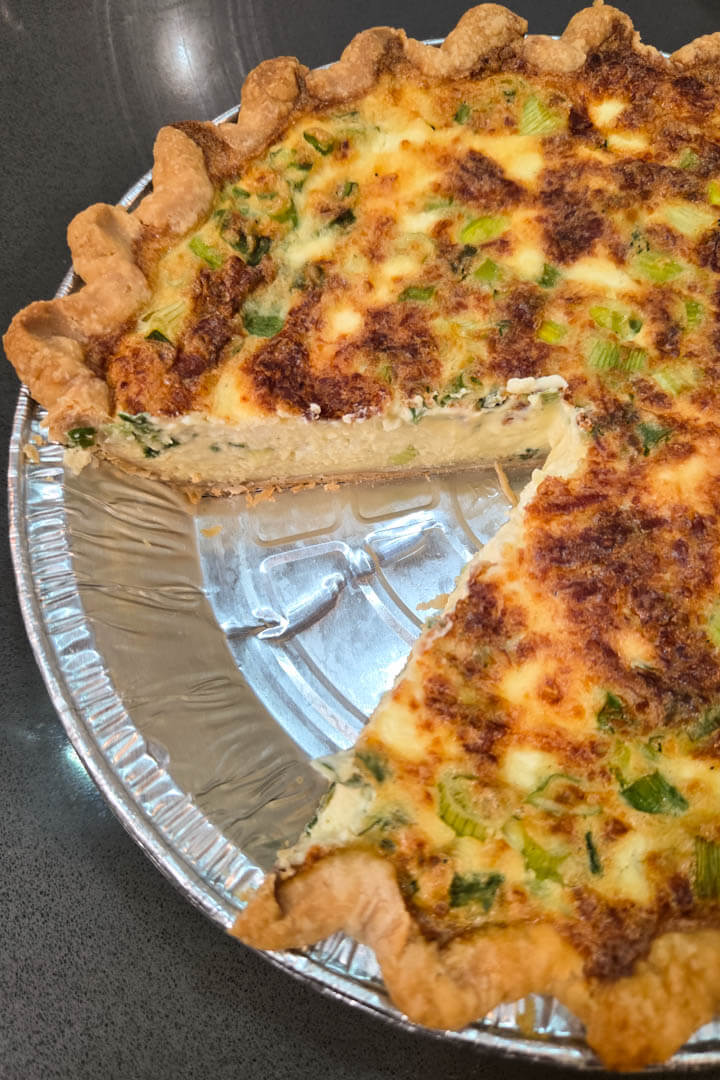
How to Make Any Kind of Quiche You Want
Almost any kind of vegetable, meat, or cheese can be used in a quiche as long as all the flavors work together.
Best Meats for Quiche
Almost any kind of meat can be added to a quiche. Just be sure the meat is cooked before you add it to the filling! Although quiche custard sets when its internal temperature reaches around 175°F (79°C), the custard does not necessarily stay at higher temperatures long enough to safely cook meat. Additionally, make sure the meat is cut into small pieces before adding it to the quiche filling.
The most popular meats to add to a quiche filling include bacon bits or lardons, diced ham, and crumbled or diced sausage. However, cooked chicken or steak cut into bite size pieces is also delicious in a quiche and can be a great way to use up leftover meat.
Best Vegetables for Quiche
Almost any sauteed or baked vegetable works well in a quiche. Again, like with meat, quiches come out best when the vegetables are diced and cooked beforehand. Unlike meat, it is safe to put raw vegetables in a quiche batter, the final quiche might just be a bit more watery than you’d like as the vegetables release water as they cook.
The only vegetables that wouldn’t work well in a quiche are vegetables that are best raw such as cucumbers and lettuce. Classic vegetables to add to a quiche would be sauteed mushrooms, onions, and spinach. Other more unusual vegetables that I enjoy adding to my quiches are asparagus, potatoes, and squashes like butternut squash.
Best Cheese for Quiche
There are two classes of cheese to add to a quiche. The first is a hard cheese that melts well that you can shred and incorporate into the filling, and the other is soft cheeses you can dollop throughout the quiche.
The best hard cheeses for shredding and incorporating into your quiche filling are good melting cheeses. The classic choice is a hard alpine cheese such as gruyère. However, other hard melting cheeses such as cheddars work well as well. Here are some of my favorite alpine cheeses:
- Chällerhocker: Pronounced “holler-hocker,” this Swiss alpine cheese from Lutisberg is aged for at least 10 months and washed with wine and spices during the process. It’s intensely savory and umami-rich, with a deep, complex flavor that’s exceptional in quiche.
- Hornbacher: Sometimes called “the baked potato cheese,” Hornbacher is an alpine cheese from Wasen, Switzerland. It’s another extremely umami and savory melting cheese. A younger version of Hornbacher called Hornbacher “Little Brother” won World’s Best Cheese in 2024.
- Comte: Extremely similar to Gruyère, Comte is a French, alpine cheese from the Jura mountains. It’s an extremely snackable cheese that has a similar yet a slightly more delicate flavor than Gruyère.
- Appenzeller: The creamiest and most aromatic of the group, Appenzeller has been produced since the Middle Ages across Switzerland, France, Austria, and Italy. Its tangy, full-bodied flavor melts beautifully into quiche custard.
You can also dollop softer cheeses throughout a quiche. Some popular options for this include classic soft goat cheese, burrata, and fresh mozzarella slices.
Customizable Easy Quiche Recipe
Crust:
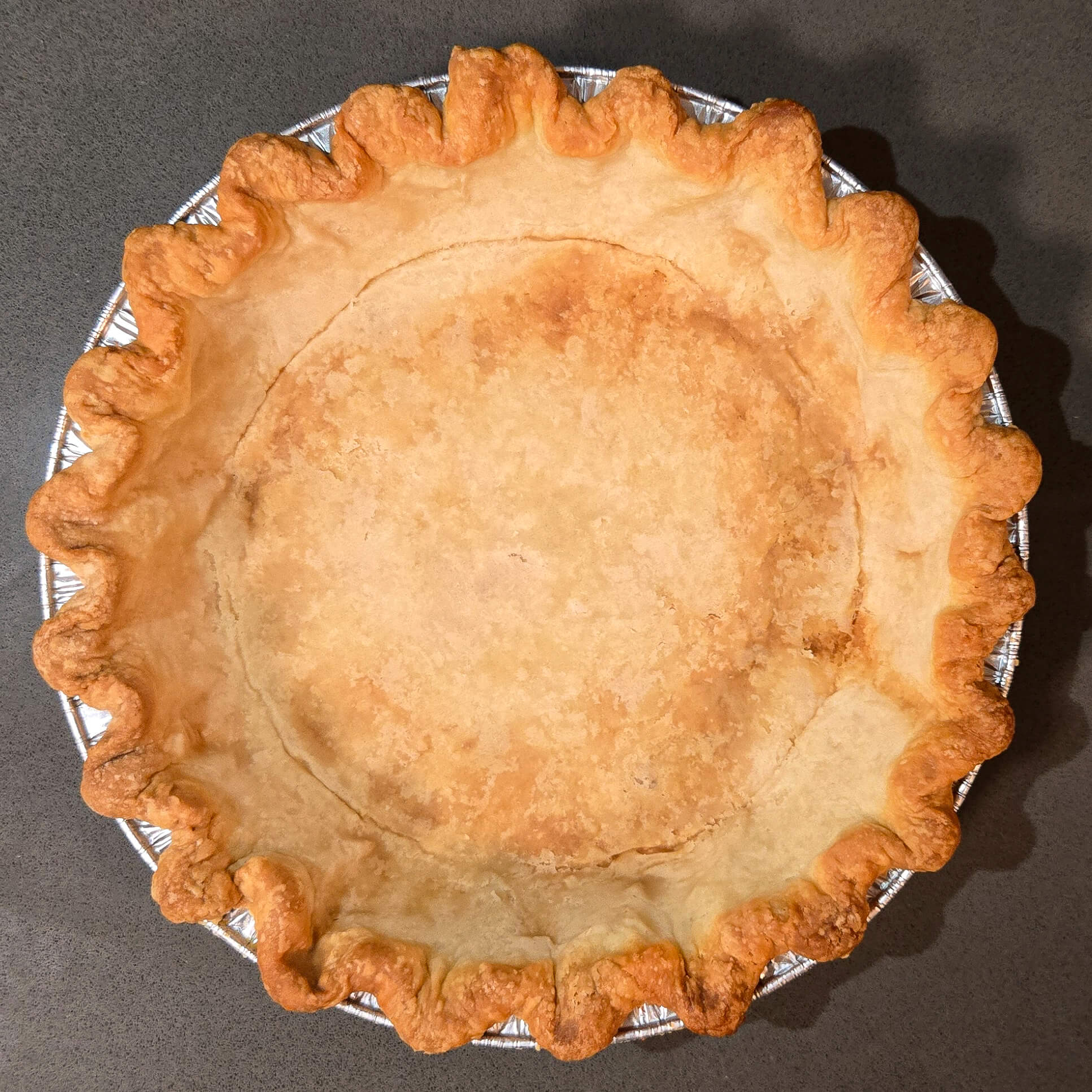
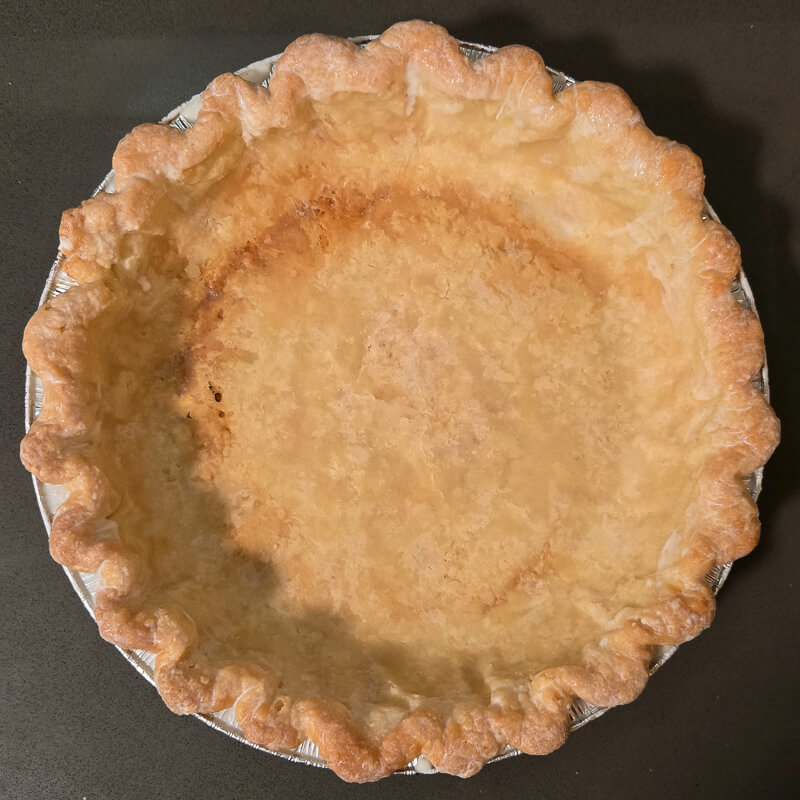
Quiches work best in a pastry crust rather than a crumb crust. However, they will work in various types of pastry crust. My preference is in a dark, blind-baked all-butter pie crust. Additionally, you can make quiches in both pie tins and in tart pans. It’s entirely up to personal preference. However, do note that this recipe is for a quiche in a 9-inch pie tin, if you’re using a tart pan, you may need to adjust the amount of filling.
Customizable Quiche Recipe
Ingredients
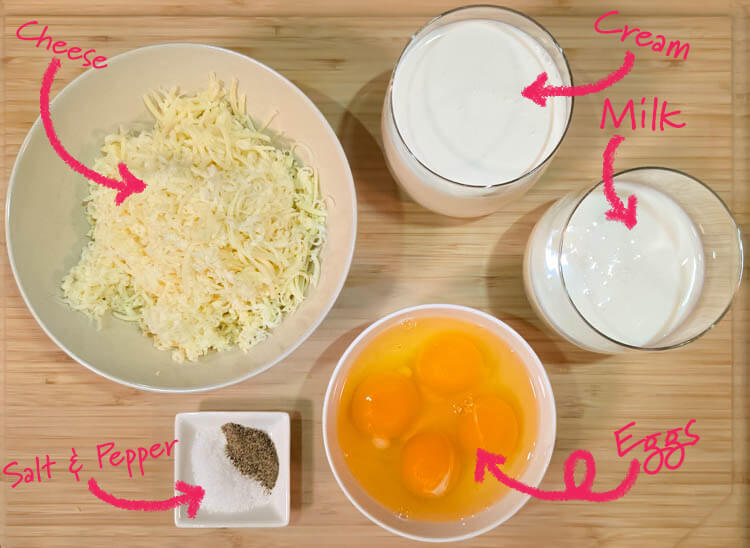
- 4 Eggs
- 1⅓c Heavy Whipping Cream
- ⅔c Whole Milk
- 4oz Cheese*, grated (113g)
- ½t Salt
- ¼t Black Pepper
- 2c of sauteed vegetables and/or cooked meat, chopped
- 2T Heavy Whipping Cream (optional)
*For the cheese, any good melting cheese that melts well will work.
1.
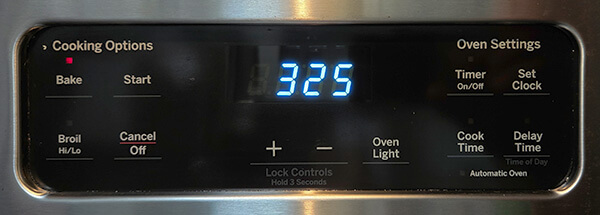
Preheat the oven to 325°F (165°C).
2.
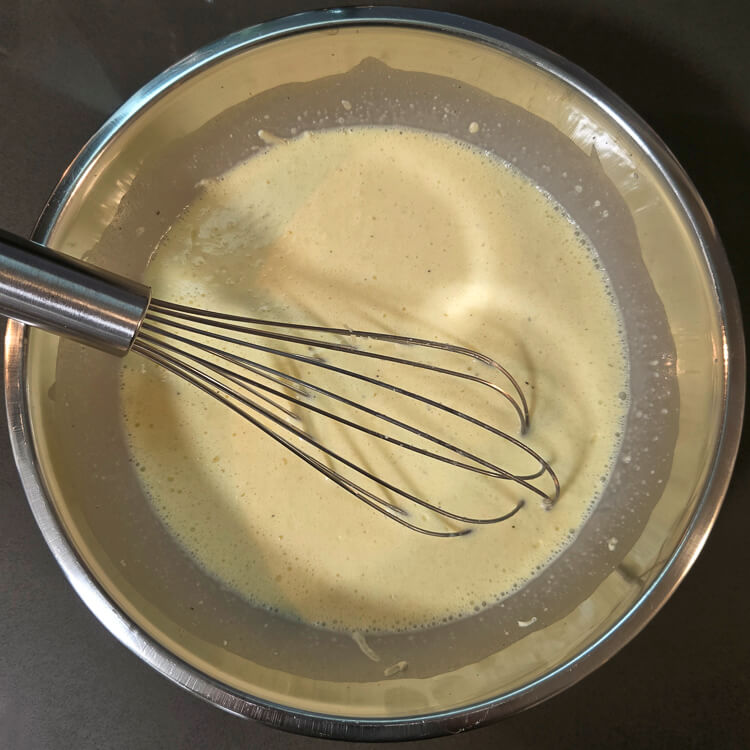
In a large mixing bowl, whisk together the eggs, milk, cream, salt, pepper, and grated cheese until smooth and fully combined.
3.
(Optional) Lightly brush the edges of your dark, blind-baked pie crust with heavy cream for a beautiful golden finish after baking.
4.
Spread the sauteed vegetables, meat, and other fillings in the bottom of your pie crust.
5.
On a metal sheet pan, pour the quiche mixture into the prepared crust, filling it just below the rim to prevent overflow.

6.
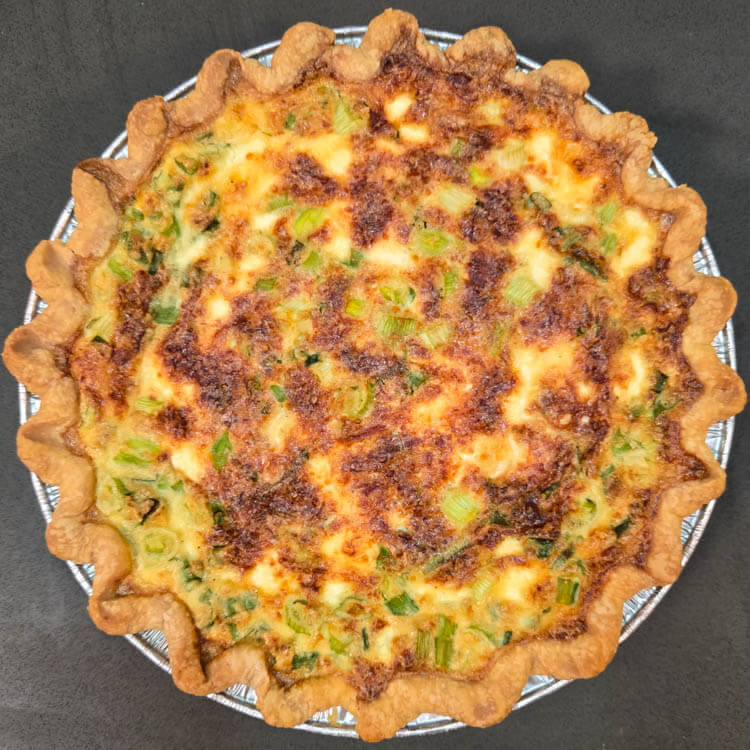
Transfer the quiche to the oven and bake for 35–40 minutes, or until the edges are puffed and the center is still slightly jiggly. The filling will continue to set as it cools.
7.
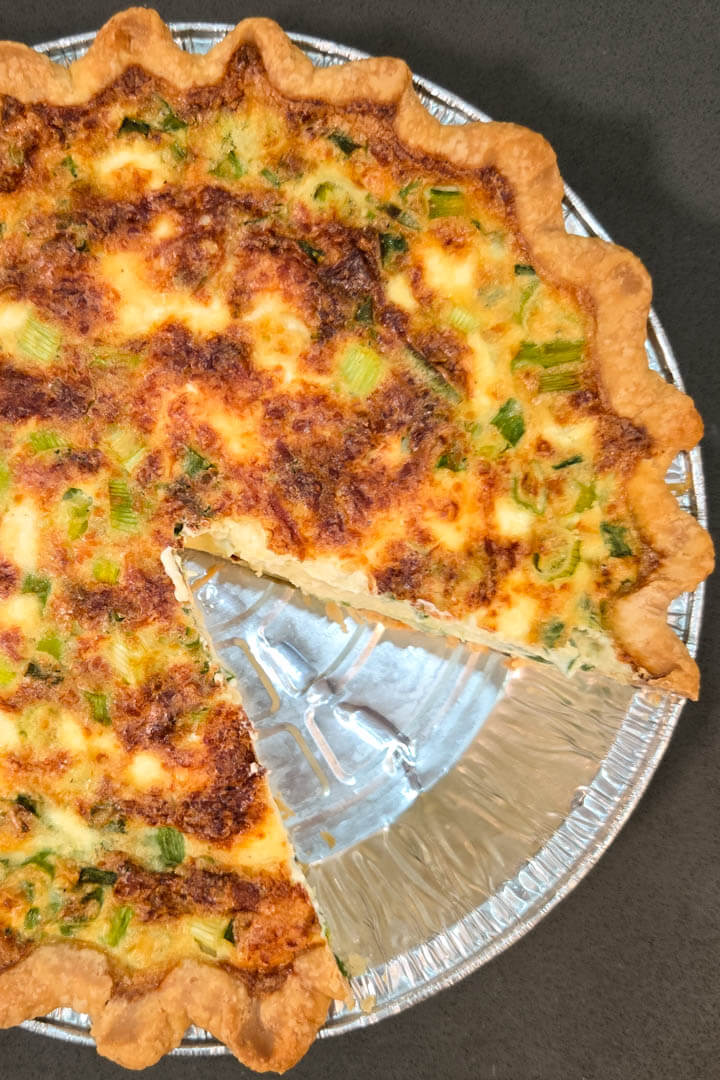
Remove the quiche from the oven and let it cool on the countertop for at least 30 minutes before slicing and serving.
How to Make a Perfectly Creamy Quiche
Ratio of Eggs to Dairy for a Quiche Custard
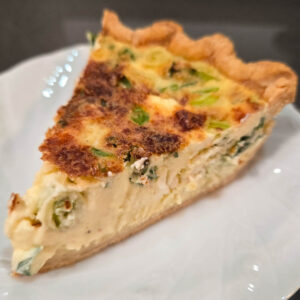
A classic quiche should have a silky, custard-like texture that’s creamy but stable enough to slice cleanly. The key to achieving this is the right balance of eggs to dairy. Use roughly ½ cup (125 mL) of dairy for every large egg in your mixture. Adjusting the balance of milk to cream also affects richness. This recipe uses more cream than milk for an extra creamy and rich filling. For a lighter, fluffier filling that allows the eggs to shine, use more milk than cream.
Don’t Overbake the Quiche:
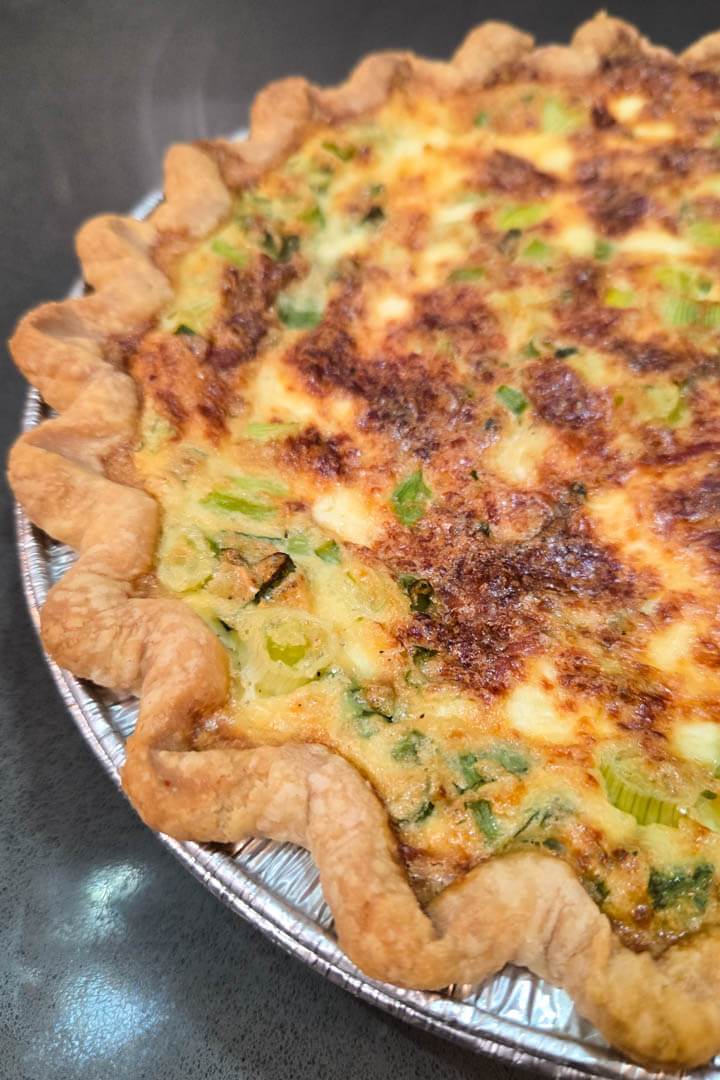
The most common mistake when baking quiche is overcooking it. Overbaked custard turns dense and rubbery instead of soft and creamy. For perfect texture, remove the quiche from the oven while the edges are set but the center still has a gentle jiggle. The residual heat will finish cooking the custard as it cools, leaving it creamy, tender, and perfectly set once sliced.
How to Store Quiche
Because quiche contains eggs, dairy, and sometimes meat, it should always be refrigerated if you’re not serving it right away. Quiche keeps well for 3–4 days in the refrigerator when wrapped tightly in plastic wrap or stored in an airtight container.
You can also freeze a whole, baked quiche for longer storage. Wrap it securely in plastic, then place it in a freezer-safe bag to prevent freezer burn. Frozen quiche will keep for up to one month. When ready to serve, let it thaw in the refrigerator, then reheat it in a 325°F (165°C) oven for 15–20 minutes, or until warmed through.

We’d love to see your quiche creations! If you give this recipe a try, tag @doggone_baking on social media so we can share in the baking fun.
Easy Creamy Quiche Recipe
Ingredients
Crust
- 1 Dark, Blind-Baked Pie Shell
- 2 tbsp Heavy Whipping Cream (optional)
Customizable Creamy Quiche Filling
- 2 cups Sauteed Veggies and/or Cooked Meats* chopped
- 4 Eggs
- 1⅓ cups Heavy Whipping Cream (315mL)
- ⅔ cup Whole Milk (160mL)
- 4 oz Cheese** grated
- ½ tsp Salt
- ¼ tsp Black Pepper
Instructions
- Preheat the oven to 350°F (175°C).
- In a large mixing bowl, whisk together the eggs, milk, cream, salt, pepper, and grated cheese until smooth and fully combined.
- (Optional) Lightly brush the edges of your dark, blind-baked pie crust with heavy cream for a beautiful golden finish after baking.
- Spread the sauteed vegetables, meat, and other fillings in the bottom of your pie crust.
- On a metal sheet pan, pour the quiche mixture into the prepared crust, filling it just below the rim to prevent overflow.
- Transfer the quiche to the oven and bake for 35–40 minutes, or until the edges are puffed and the center is still slightly jiggly. The filling will continue to set as it cools.
- Remove the quiche from the oven and let it cool on the countertop for at least 30 minutes before slicing and serving.
Notes


About Me
In 2016, I left my office job and became a professional baker. These days I spend my days testing recipes and baking pies while my two dogs snooze happily nearby.
Leave a Reply