
This post may contain affiliate links. Please read my disclosure policy.
All recipes on Doggone Baking are intended for humans — the dogs are just our enthusiastic photo assistants and taste-test spectators.
Pasta Frolla (Italian Shortcrust Pastry)
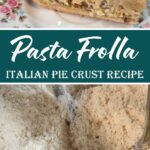
Pasta frolla is an Italian shortcrust pastry used as the base for many Italian pies. It’s most notably used as the crust for Pastiera Napoletana, a popular Easter pie from Naples. Rather than the flaky, crimped crust you might picture when you think of an all-butter pie crust, pasta frolla bakes up more like a sugar cookie. In fact, pasta frolla can and is used to make cookies as well. Like many pastry recipes, it can be a bit finicky to master, but it’s well worth the effort.

What is Pasta Frolla?
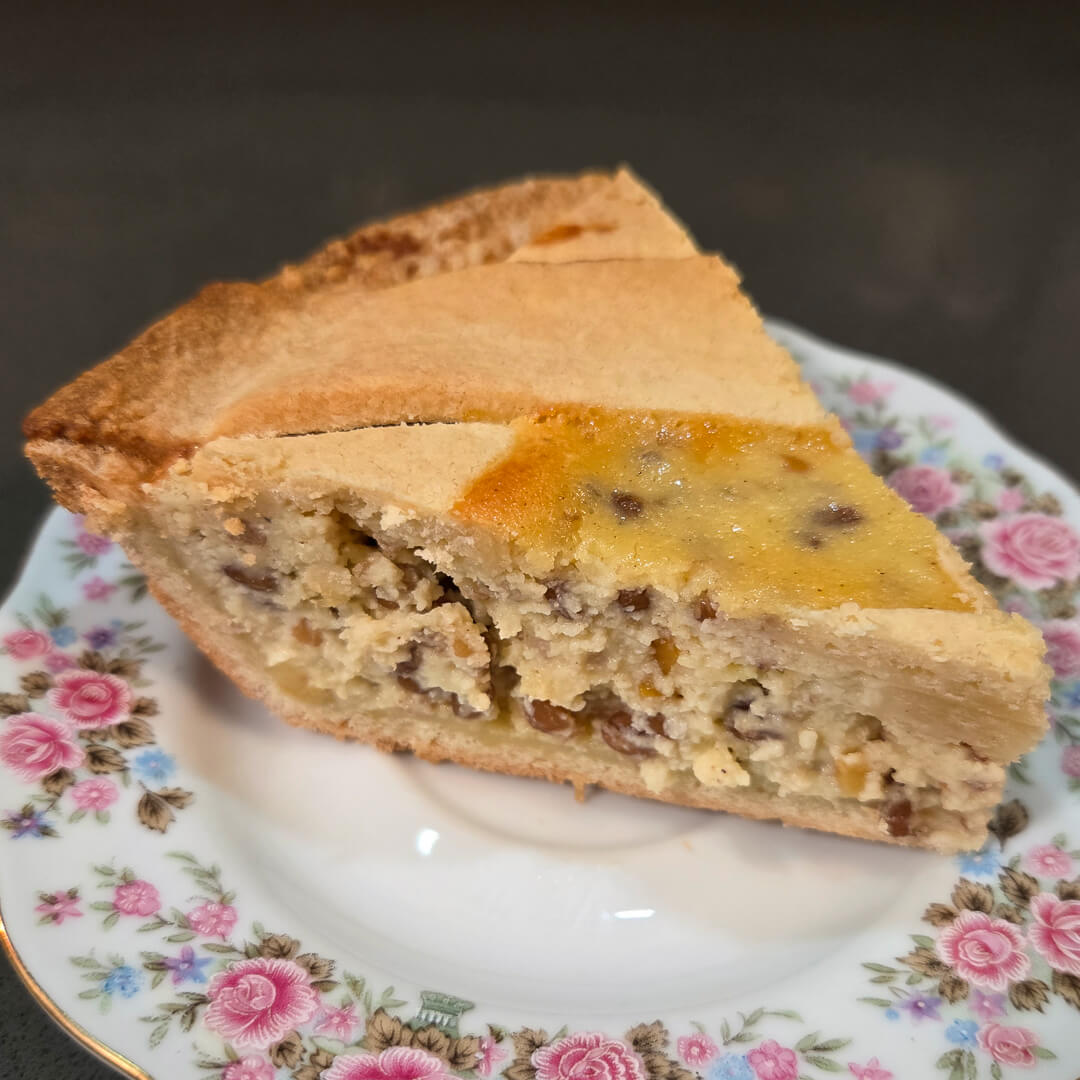
Pasta frolla is a sweet Italian shortcrust pastry that can be used to make pies, tarts, and cookies. Compared to an all-butter pie dough, pasta frolla has much more sugar. Pasta frolla dough typically has a nearly 1:2 ratio of sugar to flour, meaning there’s usually half as much sugar in the dough as flour. All-butter pie dough, by comparison, often has no sugar at all.
Once baked, pasta frolla is much more crumbly than a traditional puff pastry style dough, with a texture closer to a sugar cookie. This is because very little gluten develops in the dough compared to puff pastry. No additional liquid is added to the dough. Instead, eggs and softened butter provide just enough moisture to hold everything together.
What is Shortcrust Pastry?
Shortcrust pastry is a type of pastry made with butter, sugar, flour, and eggs that bakes up crumbly and a little sweet. Think of it as shortbread cookies used as a pie crust. It’s called “shortcrust” pastry because in the 1700s, “shortening” food meant adding butter, lard, or shortening to make something crumbly. This is the same reason shortbread and shortcake have the word “short” in them.
History of Pasta Frolla
Pasta frolla is an old recipe that has been around for thousands of years in Italy. Records of desserts made with pasta frolla date back to around the year 1000 in Venice, when merchants began importing sugar from Egypt, Syria, and other parts of the Middle East. The first published recipe for shortcrust pastry can be found in a cookbook called Le Viandier, most likely published in the early 1300s in France. It is one of the most famous and complete recipe collections from the Middle Ages that we have access to in modern times.
The first published recipe for Italian pasta frolla itself can be found in Opera di M. Bartolomeo Scappi, published in 1570. If you read Italian or have access to a translation, this 2022 issue of an Italian publication called Pastry Magazine has a nice writeup on pasta frolla as well.
Pasta Frolla Compared to Other Pie Doughs
There are a few general categories that most pie crusts fall into: crumb crusts, shortcrust pastry crusts, and puff pastry style crusts. Each of these categories has a few common variations, and many more creative variations as well.
Shortcrust Pastry Pie Crusts
Since pasta frolla is a type of shortcrust pastry, we’ll discuss these first. These pie crusts are usually described as “crumbly” or “tender” rather than “flaky” and “crisp.” They usually have some sweetness. However, savory versions of shortcrust pastry without much sugar exist as well and are used for savory pies like pastiera salata.
Shortcrust pastry crusts are also commonly used as crusts for various tarts.
- Pasta Frolla: Italian shortcrust pastry. Most notably used for Pastiera Napoletana, also called Italian Easter Pie. It’s also used in a wide variety of other Italian recipes and can even be baked as cookies.
- Pasta Frolla Salata: A savory version of pasta frolla, this is an unsweetened shortcrust pastry. This variation is used for savory pies like pastiera salata or pizza rustica.
- Pâte Sucrée: French shortcrust pastry. This is usually the go-to type of pastry for tart crusts in North America. Pâte sucrée typically uses a bit more butter than pasta frolla, and often uses powdered sugar rather than granulated sugar.
- Pâte Brisée: Could be considered the French version of pasta frolla salata. Pâte brisée falls somewhere between a shortcrust pastry and a puff pastry. It’s France’s answer to a crust for savory tarts. The butter is fully worked into the flour like a shortcrust, but water is added to build the gluten a bit more. The final result is a little flaky and a little crumbly.
What is Puff Pastry?
Puff pastry is a flaky and often crispy laminated pastry dough. Laminated doughs sandwich layers of butter between layers of dough. As the dough bakes, the butter melts, leaving behind gaps. The steam from the butter then lifts the dough, creating layers. The most recognizable laminated dough is probably a croissant. You can think of puff pastry a bit like a crispier, unleavened version of a croissant.
A standard all-butter pie crust, the kind of crust you’ll see on pies across North America and the UK, is similar to a variation of puff pastry called rough puff.
- Puff Pastry: Standard puff pastry is an unleavened laminated dough. You can usually buy it frozen in sheets from grocery stores in many parts of the world. If you’re not feeling up to making your own all-butter pie dough from scratch and want to make a lattice-topped or double crust pie, I recommend buying frozen puff pastry. Puff pastry is used in many applications, from turnovers to pies to beef wellington.
- Rough Puff: Making proper puff pastry requires practice, technique, time, and a detail-oriented approach. Rough puff is a technique very similar to making all-butter pie dough. Rather than fully laminating the dough, you leave large butter chunks when mixing, which create pockets instead of layers as the pastry bakes. For many baking applications, this creates a similar enough effect to a fully laminated dough.
- All-Butter Pie Dough: All-butter pie dough is very similar to rough puff. The only difference is that it tends to be a little sturdier and have a little less sugar.
Crumb Crusts:
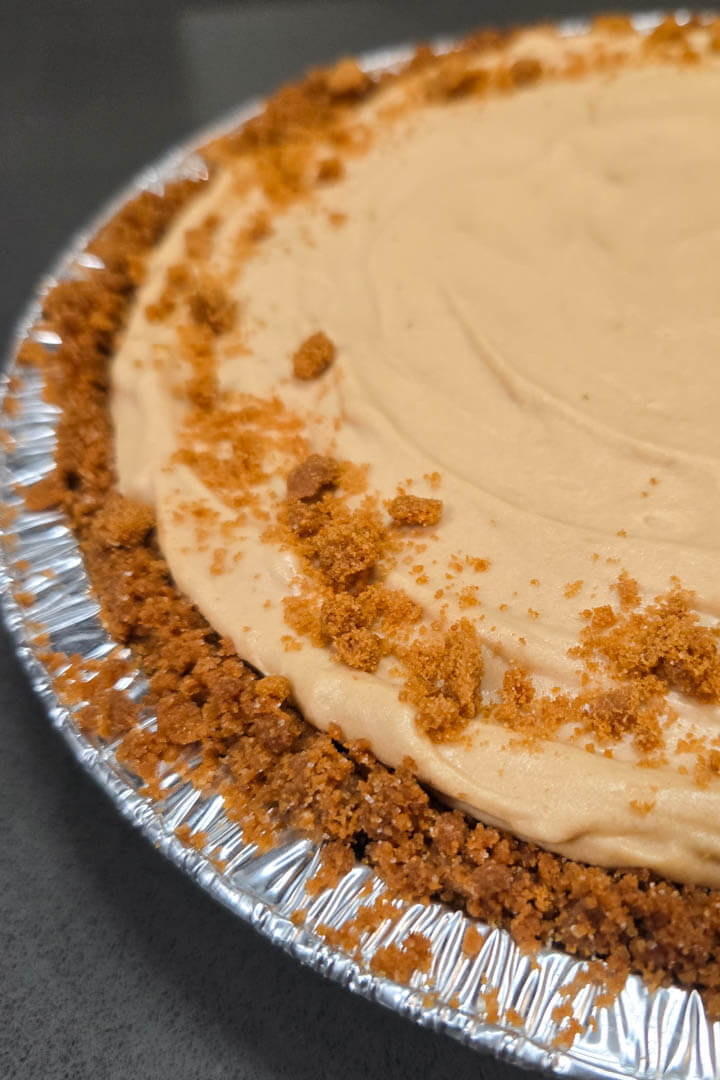
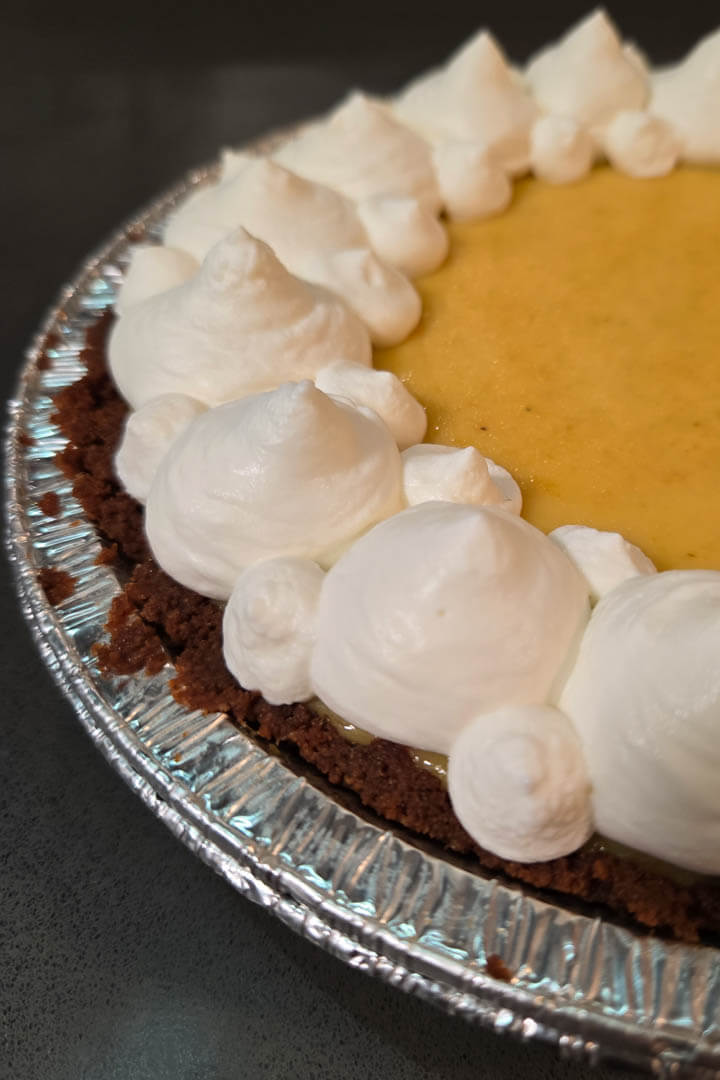
There’s one more category of crusts commonly used for pies: crumb crusts. A crumb crust is made by grinding cookies or crackers into fine crumbs, mixing them with a little sugar and melted butter, and pressing the mixture into a pie pan. Unlike traditional pastry crusts, crumb crusts don’t require rolling, shaping, or blind baking, which makes them much simpler and more approachable for beginner bakers. They are especially popular for cream pies, custard pies, and no-bake pies, where their crisp, sweet base provides a perfect contrast to smooth, creamy fillings.
Graham cracker crust is the most well-known crust in this category, but you can make crumb crusts from pretty much any cookie or cracker. Some popular examples include Oreo crust, vanilla wafer crust, Biscoff cookie crust, and even pretzel crust. Atlantic Beach Pie from North Carolina uses a saltine cracker crust.
What is Italian 00 Flour?
Most Italian pasta frolla recipes call for a flour called 00 flour (or doppio zero flour, double zero flour in English). The term “00” refers to the grind size of the flour. Italian flours range from “00” to “2,” with 00 being the finest grind and 2 being the coarsest. 00 flour is used for pasta, pizza, and pastry, while type 2 flour is better suited for heartier baked goods like rustic bread loaves.
While Italian flours are defined by their coarseness, in the US, flour is categorized by protein content. Bread flour has a high protein content of about 12% by weight; all-purpose falls in the middle, usually somewhere between 10-12%; and cake flour has the lowest protein content, usually below 10%. The higher the protein content, the more gluten forms. For bread, you want lots of gluten formation. For a tender, soft cake, you want lower protein content.
00 Flour vs All-Purpose Flour
Now that we know all-purpose flour is characterized by its protein content (somewhere between 10-12%), while 00 flour is characterized by its coarseness (very fine), what’s the actual difference between these two flours?
00 flour is usually a finer grind than American all-purpose flour. A finer grind means there’s more total surface area of flour proportional to the weight of the flour. In practical terms, 00 flour can usually absorb more water more quickly than all-purpose flour. This translates to higher elasticity in doughs. For example, a high-hydration pizza dough made with 00 flour will probably come out ever so slightly more elastic than one made with all-purpose flour. For pasta frolla specifically, dough made with 00 flour will be slightly easier to roll out..
All-purpose flour is also usually a malted flour, while 00 flour is usually unmalted. Malt contains an enzyme called amylase, which feeds on the starches in the flour and breaks them down into sugars. This faster breakdown of starch into sugar speeds up fermentation (important when making bread), feeds yeast (also important when making bread), and leads to faster browning via the Maillard reaction. Pasta frolla made with all-purpose flour will brown more quickly in the oven than one made with 00 flour.
Occasionally, you’ll come across claims online that 00 flour has more or less protein than all-purpose flour. Depending on the brand, this may be true. Claims vary because the protein content in 00 flour varies widely depending on the exact flour you’re buying. As mentioned above, 00 flour only refers to grind size, not protein content.
Substituting All-Purpose Flour for 00 Flour
While 00 flour and all-purpose flour will produce slightly different results, the differences are small. You can easily substitute all-purpose flour if you live somewhere where Italian 00 flour is difficult to find.
Pasta frolla made with all-purpose flour will brown a bit more quickly in the oven, and may be a bit more crumbly and less smooth than pasta frolla made with 00 flour. However, I’ve made this recipe with both 00 flour and all-purpose flour, and both results were delicious.
Step-by-Step Pasta Frolla Recipe
Ingredients
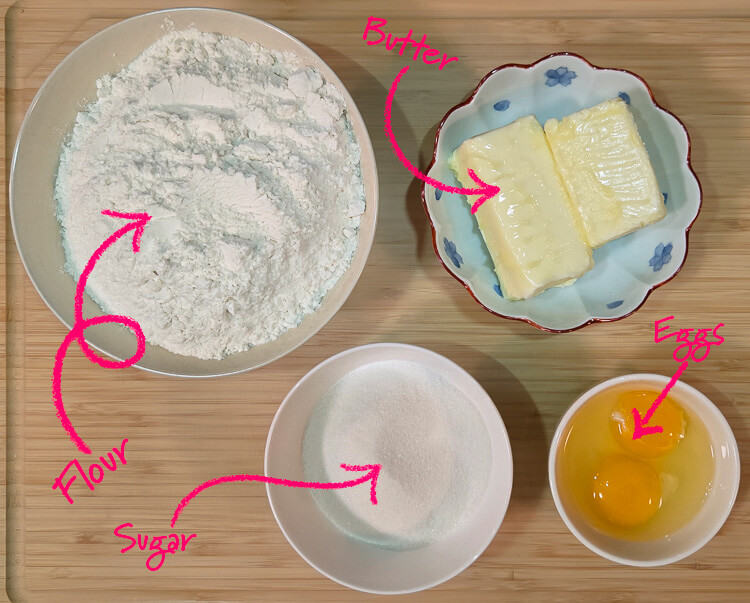
- 2⅔c 00 or All-Purpose Flour (335g)
- 7oz Unsalted Butter, softened (14tbsp, 200g)
- ½c Granulated Sugar (100g)
- 1 Egg
- 1 Egg Yolk
1.
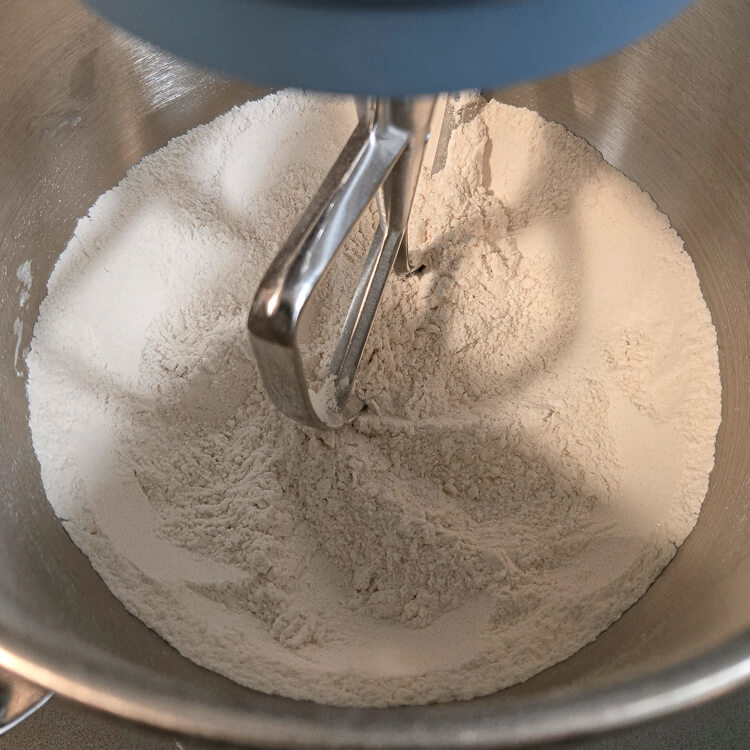
In the bowl of a stand mixer fitted with the paddle attachment, mix the flour and sugar on low speed until evenly combined.
2.
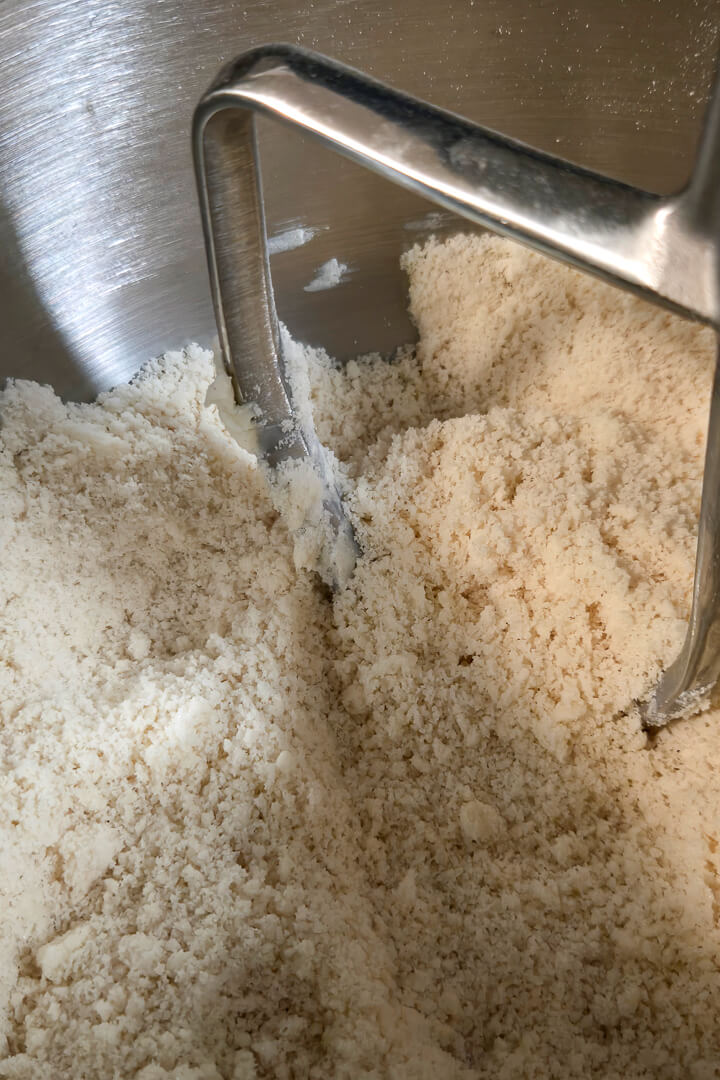
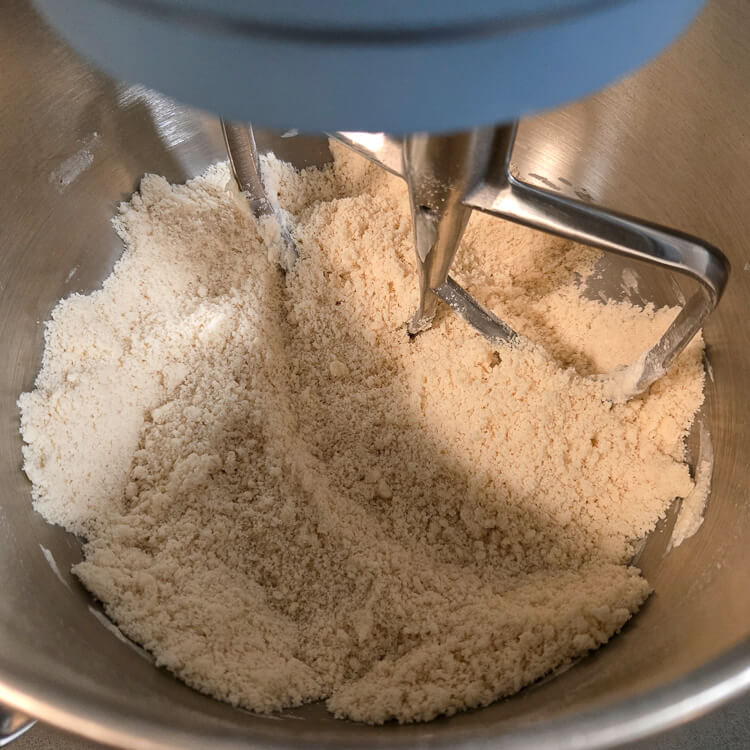
Add the softened butter and mix on low speed until no large chunks of butter remain and the mixture looks like wet sand.
3.
In a small bowl, beat the egg and egg yolk together.
4.
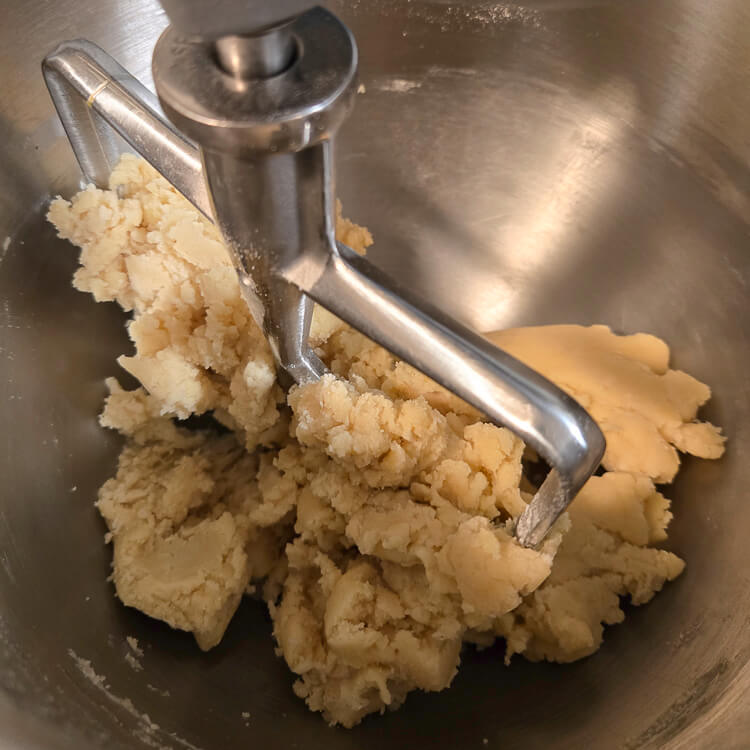
Add the eggs to the stand mixer and mix on low speed until the dough comes together and no dry spots remain.
5.
Turn the dough out onto a lightly floured surface.
6.
Divide the dough into two portions and firmly shape each into a disc about 2-3 inches (5-8cm) thick.
7.
Wrap each disc in plastic wrap and refrigerate for at least one hour before rolling.
How to Roll out Shortcrust Pastry
You can find a breakdown on how to roll out an all-butter pie crust in this post here. Rolling out shortcrust is similar, but takes slightly different techniques and finesse to get right. Shortcrust pastry has less gluten formation than pie dough, making it far less elastic and much more prone to breaking and cracking. On the flip side, it’s also much easier to press back together and patch holes than an all-butter pie crust.
Tips for Rolling Out Shortcrust Pastry Doughs:
- Let the dough soften to room temperature
Compared to a pastry dough like puff pastry or all-butter pie dough, you’ll want to let shortcrust pastry soften to a much more pliable temperature. Because of the lower gluten content and the nature of the dough in general, trying to roll out cold shortcrust pastry will cause the dough to crack around the edges, and sometimes even down the center or in half. If the dough is closer to room temperature and more pliable, it minimizes cracking and reaches a temperature where you can use your fingers to push the dough back together wherever it starts to crack.
- Use less flour
Because shortcrust pastry contains very little liquid (just enough butter and egg to bring the dough together), adding too much flour when rolling will cause the dough to dry out and crack more easily. If you’re working with pâte sucrée, one trick is to dust your rolling surface and rolling pin with powdered sugar rather than flour.
- Roll the dough out on a silicone baking mat or a sheet of parchment paper
With all-butter pie dough or puff pastry, rolling the dough out while the butter is still cold and dusting the rolling surface liberally with flour keeps the dough from sticking. It’s also fairly easy to pick up by rolling it around your rolling pin. Shortcrust pastry is trickier. Because it needs to be rolled out at a slightly warmer temperature and with as little flour as possible, it has a higher tendency to stick to your rolling surface. On top of that, because it cracks much more easily, it can be extremely difficult to lift the pastry without breaking it. Rolling the pastry out on a piece of parchment paper or a flexible silicone baking mat makes transferring it to the tart pan or pie tin much easier.
How to Fit Shortcrust Pastry into a Pie Tin
1.
Take your disc of pastry dough out of the refrigerator and let it soften to room temperature. It should be pliable enough to easily press your finger into the surface, but not so warm that it feels greasy.
2.
Set a piece of parchment paper, 12×16 inches (half sheet size; 30x40cm) on a flat work surface. Lightly dust the parchment paper and both sides of your dough with flour.
3.
Using the heel of your hand, gently press the dough out into a circle about 1 inch (2.5cm) thick. If cracks start to form at the edges, press the dough back together with your hand.
4.
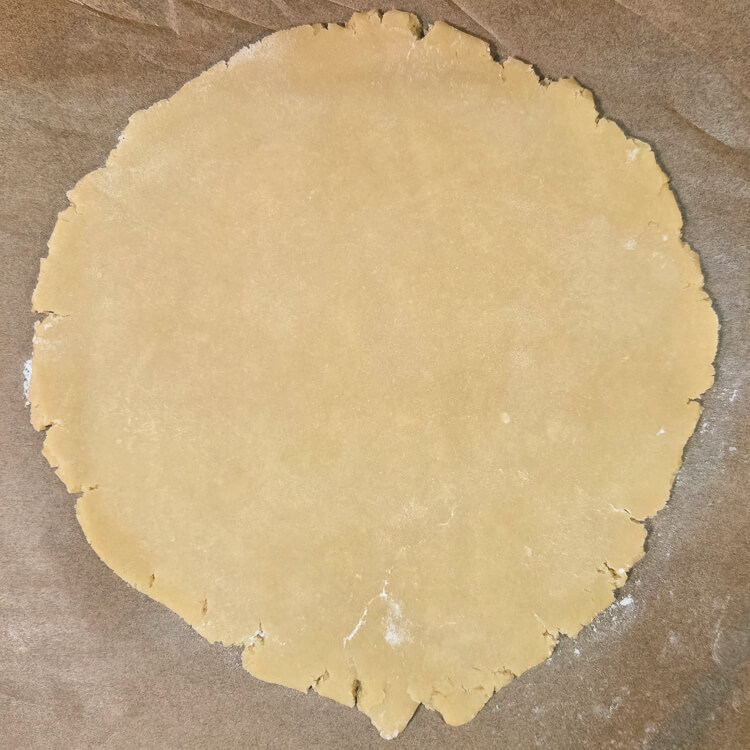
Flip the disc of dough over, dusting both sides lightly with flour again. Using a rolling pin, roll the dough out into a circle about 12 inches (30cm) in diameter and 3-4mm thick.
5.
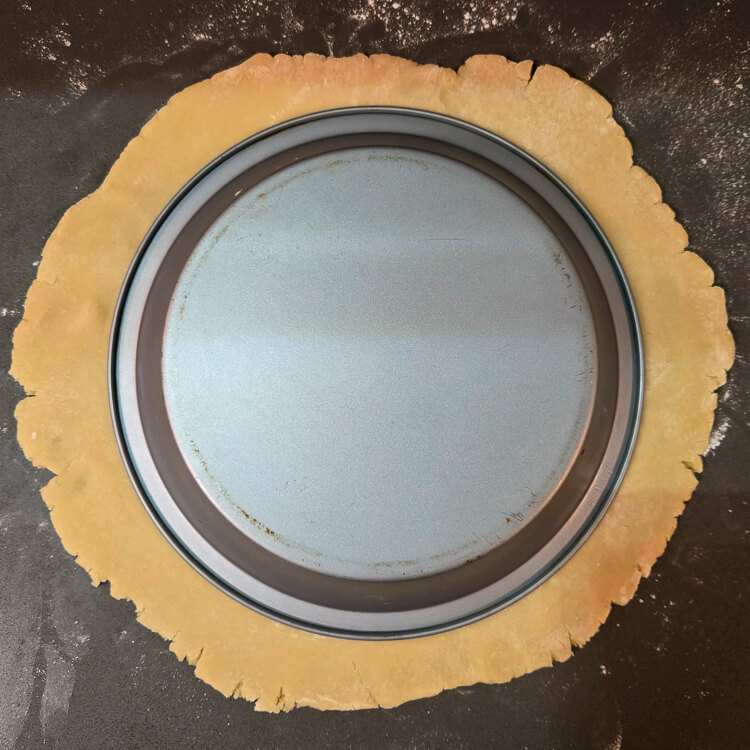
Flip your tart or pie tin upside down, centered over the circle of dough.
6.
Very carefully but with some speed, flip everything over so the tin is right side up with the dough centered on top of it.
7.
Carefully peel the parchment paper off of the shortcrust pastry dough.
8.
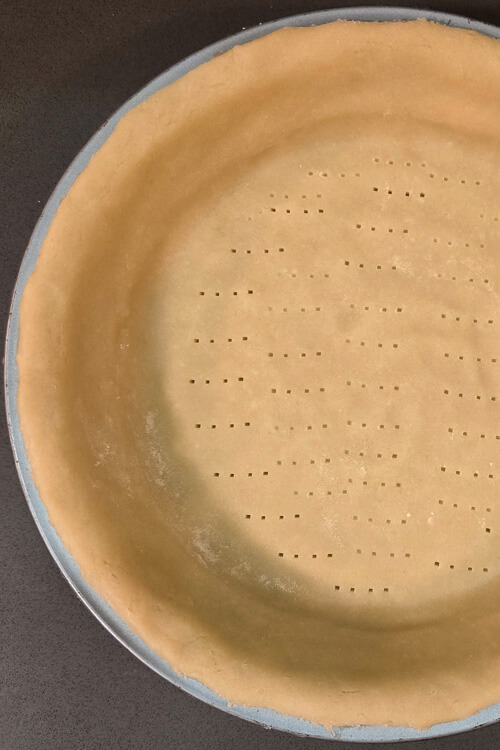
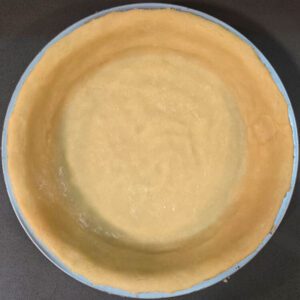
Gently push the dough into the pie tin and trim away any excess. If there are any cracks, press some of the excess dough into that area.
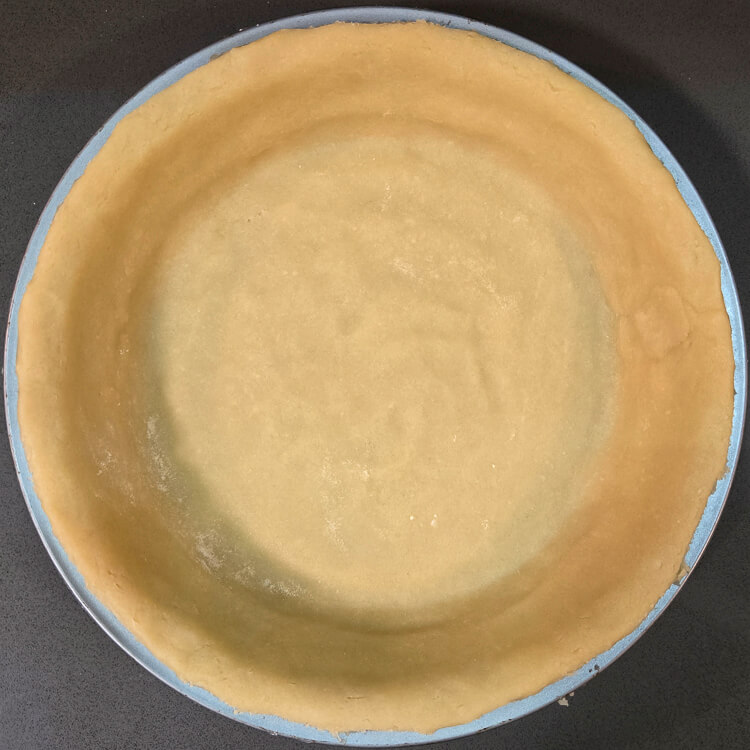
Note: When fitting regular pie dough into a pie tin, you want to lift and press the dough into the tin to avoid pushing or stretching it. This prevents slumping or shrinkage as the crust bakes and the gluten contracts. Because shortcrust pastry has less gluten, it cannot be manipulated in the same way and also does not have the same issue with shrinkage. With shortcrust, you want a movement that’s closer to pushing the dough together to fit it into your desired shape.
Recipes that use Pasta Frolla
If you aren’t intimately familiar with Italian pastry, it may be difficult to think of recipes that use pasta frolla dough. Here are a few of the more common pies and tarts made with pasta frolla.
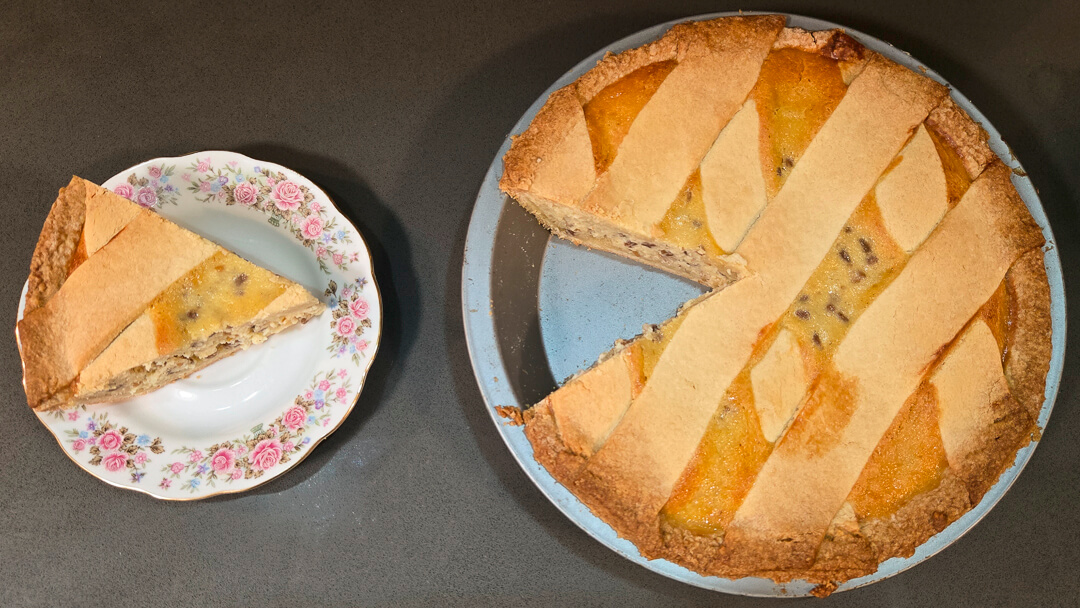
- Pastiera Napoletana: The most well-known pie that uses pasta frolla as the base. Originally from Naples, Pastiera Napoletana is an Easter pie with a ricotta-based filling flavored with orange blossom water.
- Pastiera di Riso: Similar to Pastiera Napoletana and also traditionally made around Easter, pastiera di riso has a filling made with arborio rice and ricotta flavored with orange blossom water.
- Torta di Mele Cremosa: An Italian apples and cream tart with a pasta frolla crust and apple slices baked on top of a custard filling.
- Crostata alla marmellata: A classic Italian jam tart with a pasta frolla crust.

How to Make Pasta Frolla in Advance
Like many doughs, pasta frolla can be made well in advance. Pastiera Napoletana, in particular, is a time-consuming recipe that takes many days to prepare. Making the pasta frolla ahead of time can help cut down on kitchen time just before Easter.
To make pasta frolla in advance, follow this recipe as written and be sure to complete the final step of shaping the dough into two discs wrapped tightly in plastic wrap. The dough can be stored in the refrigerator for up to one week, or placed into a freezer bag and stored in the freezer for up to three months. When you’re ready to use the dough, just pull it out of the freezer and let it warm up to room temperature before rolling.
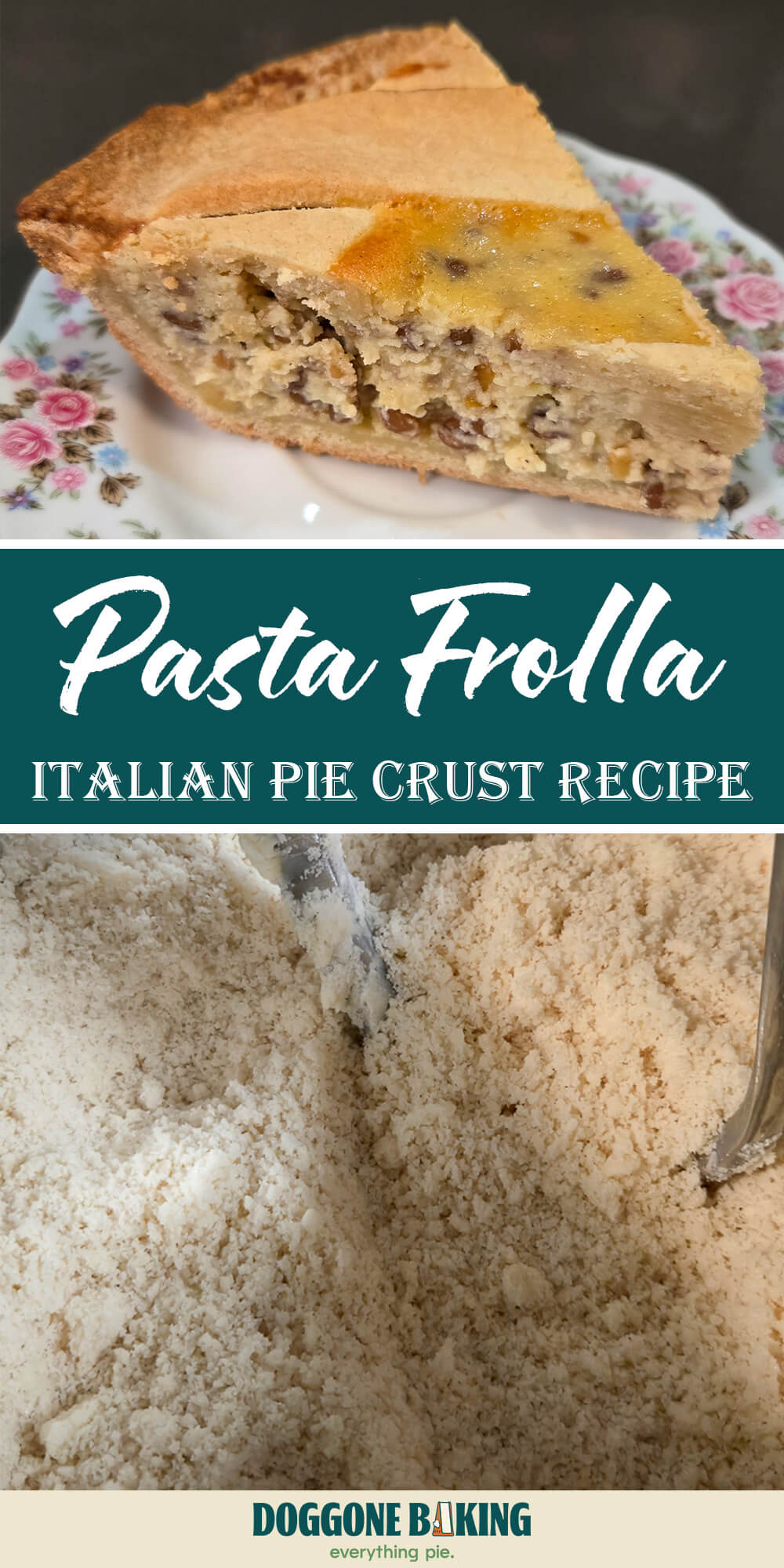
We’d love to see your Italian pastiera creations! If you give this recipe a try, tag @doggone_baking on social media so we can share in the baking fun.
Pasta Frolla (Italian Shortcrust Pastry)
Ingredients
- 2⅔ cups 00 Flour or All-Purpose Flour (335g)
- 7 oz Unsalted Butter, softened (14tbsp, 200g)
- ½ cup Granulated Sugar (100g)
- 1 Egg
- 1 Egg Yolk
Instructions
Making the Pasta Frolla
- In the bowl of a stand mixer fitted with the paddle attachment, mix the flour and sugar on low speed until evenly combined.
- Add the softened butter and mix on low speed until no large chunks of butter remain and the mixture looks like wet sand.
- In a small bowl, beat the egg and egg yolk together.
- Add the eggs to the stand mixer and mix on low speed until the dough comes together and no dry spots remain.
- Turn the dough out onto a lightly floured surface.
- Divide the dough into two portions and firmly shape each into a disc about 2-3 inches (5-8cm) thick.
- Wrap each disc in plastic wrap and refrigerate for at least one hour before rolling.
Rolling and Shaping a Pasta Frolla Pie Crust
- Take your disc of pastry dough out of the refrigerator and let it soften to room temperature. It should be pliable enough to easily press your finger into the surface, but not so warm that it feels greasy.
- Set a piece of parchment paper, 12×16 inches (half sheet size; 30x40cm) on a flat work surface. Lightly dust the parchment paper and both sides of your dough with flour.
- Using the heel of your hand, gently press the dough out into a circle about 1 inch (2.5cm) thick. If cracks start to form at the edges, press the dough back together with your hand.
- Flip the disc of dough over, dusting both sides lightly with flour again. Using a rolling pin, roll the dough out into a circle about 12 inches (30cm) in diameter and 3-4mm thick.
- Flip your tart or pie tin upside down, centered over the circle of dough.
- Very carefully but with some speed, flip everything over so the tin is right side up with the dough centered on top of it.
- Carefully peel the parchment paper off of the shortcrust pastry dough.
- Gently push the dough into the pie tin and trim away any excess. If there are any cracks, press some of the excess dough into that area.

About Me
In 2016, I left my office job and became a professional baker. These days I spend my days testing recipes and baking pies while my two dogs snooze happily nearby.
Leave a Reply