This post may contain affiliate links. Please read my disclosure policy.
All recipes on Doggone Baking are intended for humans — the dogs are just our enthusiastic photo assistants and taste-test spectators.
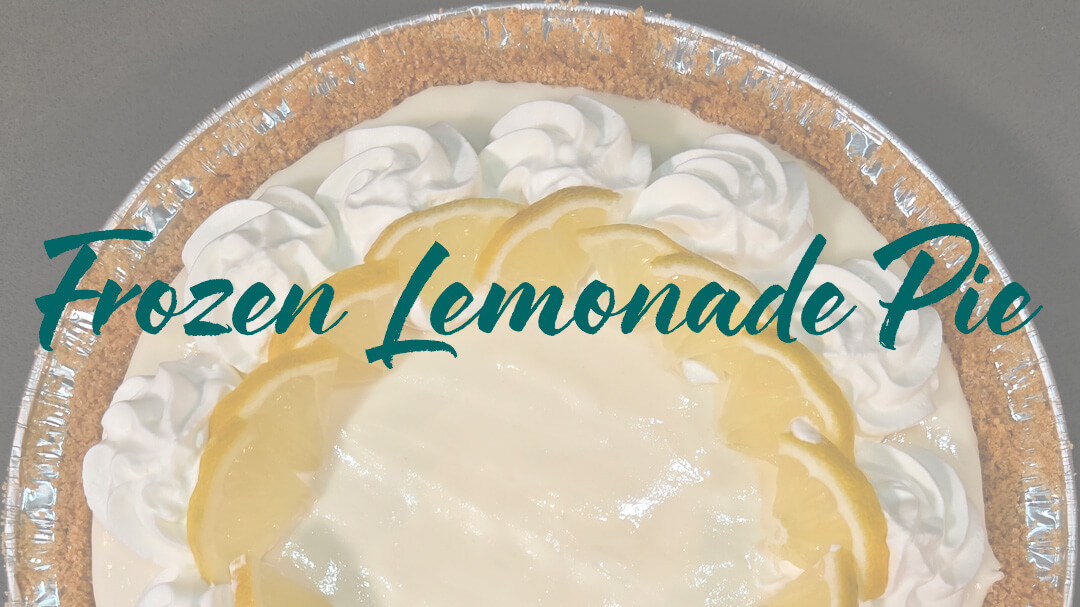
Frozen Lemonade Pie Recipe
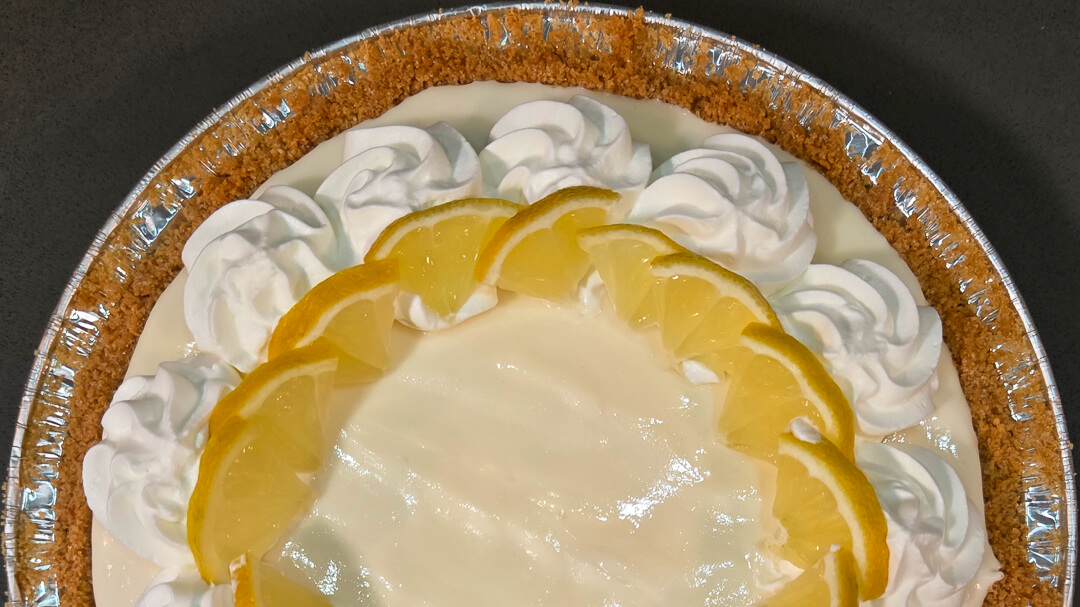
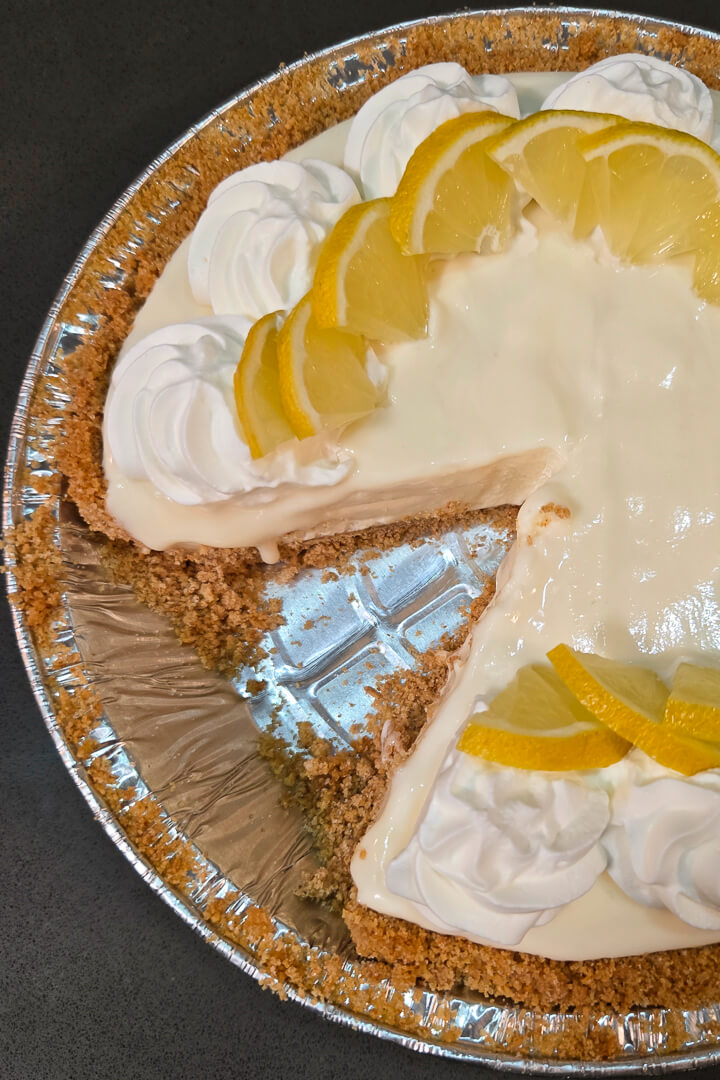
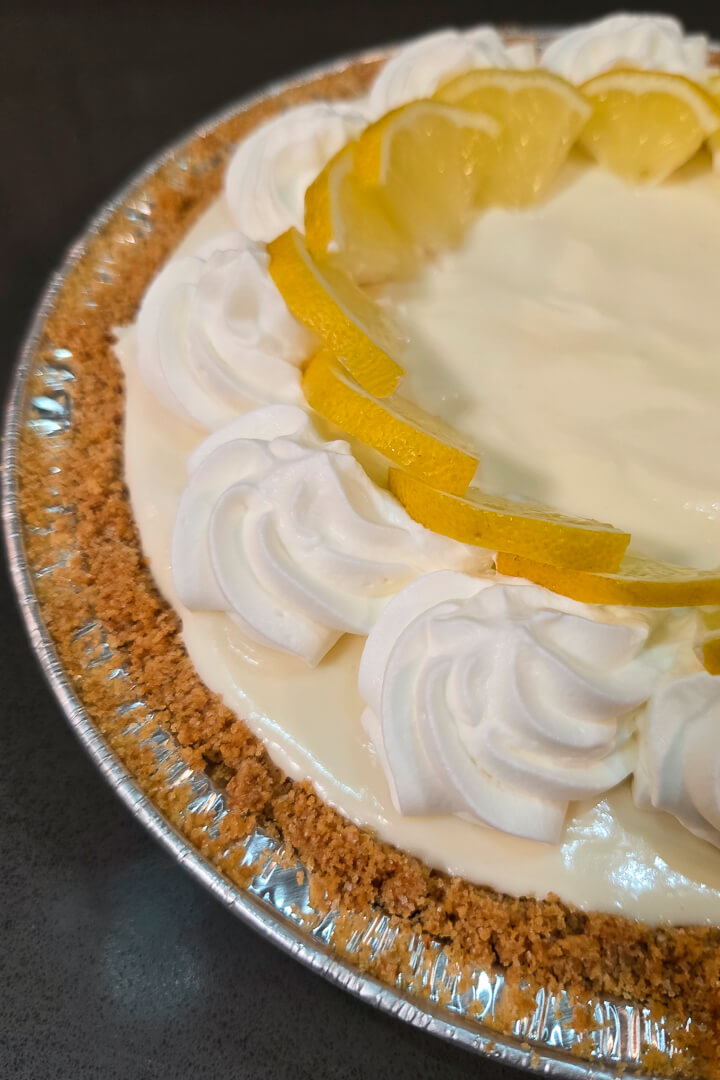
Frozen lemonade pie is a newer spin on a retro lemon icebox pie. It’s a simple, beginner-friendly recipe that’s perfect for hot summer days! Homemade no-churn lemonade ice cream is frozen inside a graham cracker crust for a delicious, sliceable dessert.

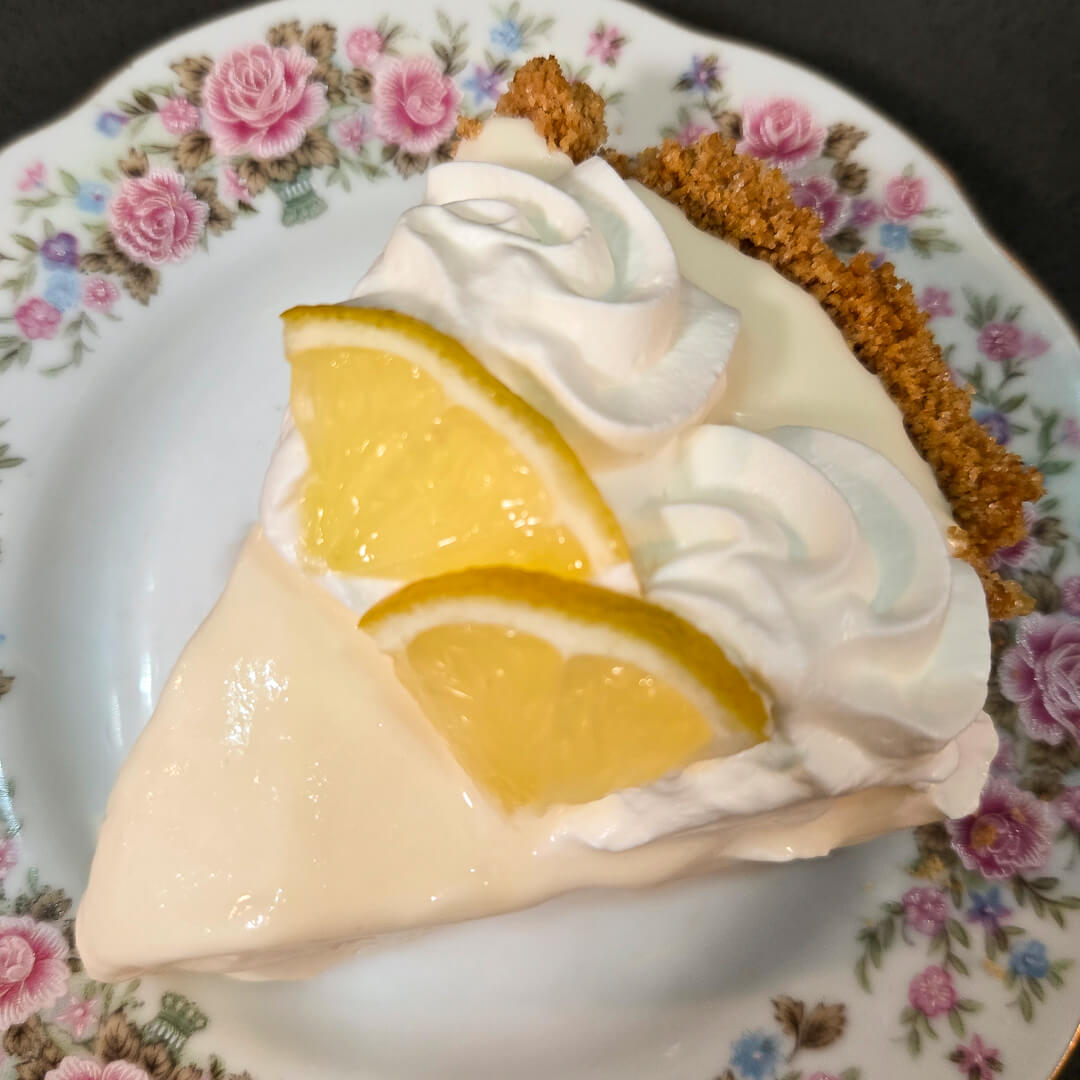
What is Frozen Lemonade Pie?
Frozen lemonade pie is exactly what it sounds like: no-churn lemonade ice cream frozen inside a pie crust. The crust is most often a graham cracker crust, but other crumb crusts work just as well, including a Digestive biscuit crust if you live somewhere where graham crackers are hard to find.
The no-churn ice cream filling is made with a combination of sweetened condensed milk, frozen lemonade concentrate, and either whipped cream or Cool Whip. Some recipes add cream cheese. This recipe does too. Cream cheese acts as a stabilizer and helps make the filling feel like real ice cream.
Because the pie is a no-bake dessert with an easy graham cracker crust, frozen lemonade pie is the perfect summer recipe for beginner bakers just getting into home baking.
Frozen Lemonade Pie vs Frozen Pink Lemonade Pie
Frozen pink lemonade pie is simply a variation of frozen lemonade pie. The only difference is swapping pink lemonade concentrate for regular lemonade concentrate. Sometimes a little red food coloring is added to make the pink more vibrant.
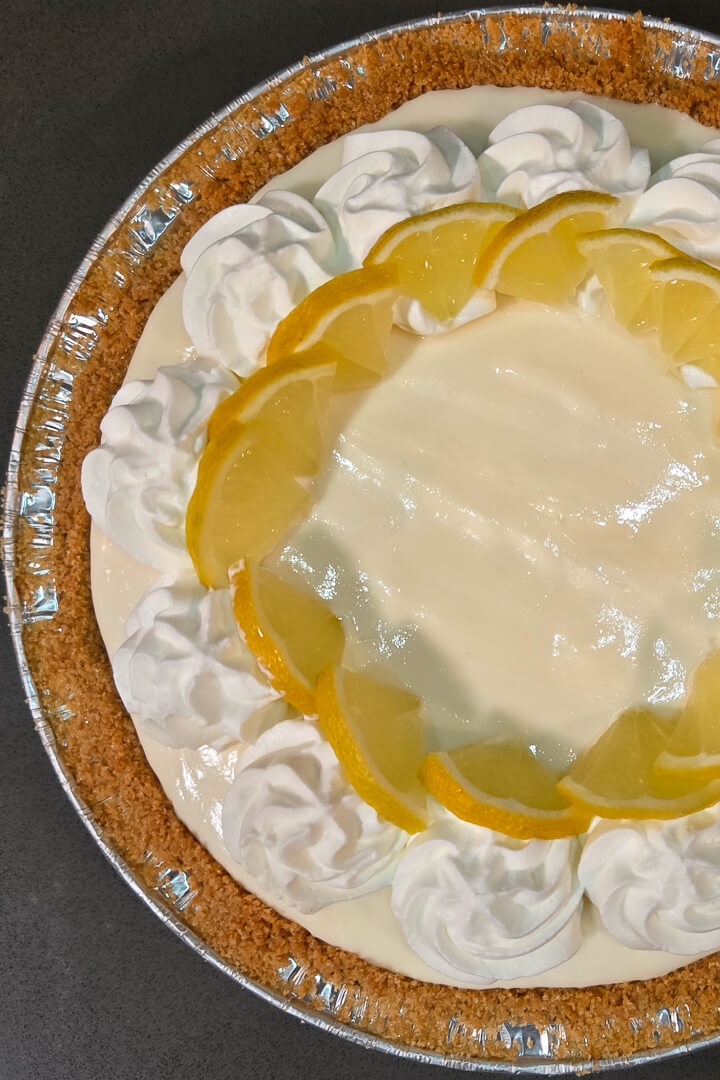
History of Frozen Lemonade Pie
If you search for frozen lemonade pie recipes today, you’ll find a fair number of results. They all use some combination of frozen lemonade concentrate, sweetened condensed milk, and whipped cream or Cool Whip. Some use cream cheese. (I highly recommend the versions that use cream cheese – more on that throughout the post).
Some of these recipes come with comments from people who remember their family making the pie back in the ’70s, or who connect it to Eagle Brand sweetened condensed milk. That’s not entirely wrong. But it’s not entirely right either.
Published recipes for “lemonade pie” do start appearing in 1968. But those early versions were not frozen pies, they were icebox pies, with a filling much closer to the custard of a key lime pie than the no-churn ice cream filling of this frozen lemonade pie. Similar versions continued to appear in cookbooks through the 1970s and 1980s.
Side Note: That first published recipe I can find is in one of my favorite vintage cookbooks, a satirical feminist cookbook from the 1960s called The How to Keep Him (After You’ve Caught Him) Cookbook.
The first published recipe I can find for a frozen lemonade pie is from Southern Living’s 1992 cookbook. That recipe is almost identical to what you’ll find today: sweetened condensed milk and lemonade concentrate with whipped topping folded in.
Online, this version of frozen lemonade pie starts picking up steam around 2007. In the very early 2000s, the version of “frozen lemonade pie” floating around the internet was a different animal entirely using a filling made from lemonade concentrate mixed with softened vanilla ice cream.
What is Frozen Lemonade Concentrate?
One of the key ingredients in frozen lemonade pie is frozen lemonade concentrate. If you’ve never used it before, it’s a thick lemonade syrup sold in cans in the freezer section of the grocery store. The idea is that you buy a can, mix it with ice and water, and have a fresh pitcher of lemonade on a hot summer day with almost no work.
More practically, frozen lemonade concentrate is just lemonade with most of the water removed, which is why you add water to dilute it back into lemonade. The result is a syrup with an extremely high sugar concentration and very little free water. This is important for frozen lemonade pie in particular, because that low water concentration is key for being able to make a smooth no-churn ice cream without sharp ice crystals.
How to Make Homemade Frozen Lemonade Concentrate
Most store-bought frozen lemonade concentrate contains high fructose corn syrup. If you’d prefer to make your own without it, it’s very easy to do. You will want to add a glucose syrup to the mix though, for the smoothest no-churn ice cream results (more on that in the section below).
While you can make homemade lemonade concentrate with just sugar, water, lemon juice, and lemon zest, for this frozen lemonade pie you’ll want to add a small amount of invert sugar syrup or regular corn syrup.
Regular corn syrup and high fructose corn syrup are two very different things despite having similar names. Regular corn syrup contains nearly no fructose at all. It is almost entirely glucose, which means it does not pose any more health risk than regular sugar. Being a glucose syrup also means that it actually tastes less sweet than regular sugar does. It’s still sugar, so it’s not healthy in large quantities, but using it in baking does not introduce the health concerns associated with high fructose corn syrup.
If you don’t want to buy corn syrup, you can still make your own glucose syrup at home by following my recipe for invert sugar syrup. Invert sugar syrup is just sugar and water with a tiny bit of acid (usually lemon juice or cream of tartar), heated to a point where the sucrose molecules break up into glucose and fructose.
Because the entire process of making ice cream relies on preventing crystals from forming, a smooth no-churn ice cream relies heavily on including some of these sugar syrups that contain different types of sugar to create a smooth, velvety ice cream texture.
Ingredients
- 7T Granulated Sugar
- ½c Water
- ½c Fresh Lemon Juice
- 1t Lemon Zest
- 1T Light Corn Syrup (or Invert Sugar Syrup)
1.
In a small pot over medium heat, combine the water, sugar, and corn syrup, whisking until the sugar dissolves completely.
2.
Allow the mixture to come to a boil.
3.
As soon as it reaches a boil, remove the pot from heat and mix in the lemon juice.
4.
If you want a perfectly smooth concentrate, strain the mixture through a fine mesh sieve.
How Does No-Churn Ice Cream Work?
The Science Behind Ice Cream
Before we can talk about how and why no-churn ice cream works, we first need to understand how regular ice cream works. The difference between a smooth, creamy homemade ice cream and a hard, icy one usually comes down to physics and chemistry.
To delve into why no-churn ice cream works, we first need to understand how sugars, fats, air, and stabilizers work together in regular ice cream. Milk and egg proteins also play an important role in regular ice cream, but since they aren’t components of no-churn ice cream, we’ll skip diving into that part for now.
Although I’ll often link to cookbooks I used as references for recipes on this website, I don’t often explicitly recommend buying cookbooks. This is an exception. One of my absolute favorite cookbooks in my collection is Hello, My Name is Ice Cream by Dana Cree. (And no, this isn’t a sponsored post, I just really love this cookbook.) It delivers an enormous amount of scientific knowledge in a very easy to understand way, and goes deep on the science of ice cream.
The Role of Fat and Air in Ice Cream
A delicious, smooth, creamy ice cream texture comes from suspending and freezing tiny air bubbles within the mixture. In other words, ice cream is technically a kind of foam! Foams come up a lot in baking and cooking. Meringue is a foam, and so is whipped cream (more on that below).
While the proteins in egg whites trap air bubbles to create a foam in meringue, whipped cream and ice cream are made by suspending air bubbles within butterfat. Churning ice cream introduces those air bubbles while simultaneously preventing ice crystals from forming. Keeping large ice crystals from forming is the key to a smooth, creamy ice cream rather than an icy one.
Additionally, fat melts pretty much immediately when you bring it up to your body temperature. Therefore, the frozen ice cream melts almost instantly when you take a bite, creating a creamy texture as it melts.
Fun Fact: The amount of butterfat in ice cream is what gives it that “premium” feel. To be legally sold as “ice cream,” a product must contain at least 10% butterfat by weight. Anything below that is where you start finding products labeled “Frozen Dairy Dessert” or similar. The fancier, richer ice creams tend to land around 15% butterfat, while budget brands hover right around that 10% minimum. Cream costs more than milk, after all, and you can taste the difference.
How Different Types of Sugar Affect Ice Cream
Regular granulated sugars (brown and white) are composed of sucrose molecules. But other types of sugars exist on a molecular level, and in ice cream, the relevant ones are glucose, lactose, and fructose. Sugars play the second half of the equation in keeping ice cream scoopable.
Sugar water has a lower freezing point than plain water. The sugars dissolve into the milk, binding to the water molecules and helping keep the ice cream from freezing solid at a temperature where plain water would. But monosaccharides like glucose and fructose are much more efficient at binding water than a disaccharide like sucrose. (Sucrose is a di-saccaride because it is a fructose and glucose molecule holding hands; mono-saccharides like glucose and fructose are perfectly happy to go about life on their own). More monosaccharides in your ice cream means a softer, more scoopable ice cream.
The sugars also help break up the water molecules. Water molecules attached to sugar molecules can’t attach to other water molecules to form big ice crystals. The more we can interrupt those connections between water molecules, the better we can ensure there are no large ice crystals in the ice cream.
Using Stabilizers in Ice Cream
Most commercially available ice cream contains stabilizers such as xanthan gum, carob bean gum, and carrageenan. Stabilizers help keep ingredients together in the way you want them to be. In meringue, cream of tartar is often used as a stabilizer to keep the egg white proteins stronger and the air bubbles more effectively trapped. In whipped cream, gelatin can be used as a stabilizer to keep it from collapsing over time. In ice cream, gums are typically used instead.
With meringue and whipped cream, the goal is generally just to keep the air bubbles trapped within the protein matrix or fat globules. With ice cream, we also need to keep the water molecules away from each other. These gums help keep water molecules suspended in the ice cream as tiny droplets, rather than letting them find each other and form big ice crystals.
The Science Behind No-Churn Ice Cream
Now that we know the basic scientific principles behind creating a smooth, creamy ice cream, we need to figure out how to recreate that in a no-churn ice cream. With traditional ice cream, slowly churning the mixture as it freezes incorporates air bubbles and breaks up any ice crystals as they form. With no-churn ice cream, that mechanical agitation is not present. Therefore, we need to find ways to replicate the effects.
Reducing Water Content in No-Churn Ice Cream
One key factor in no-churn ice cream is using highly condensed and concentrated ingredients. If the biggest obstacle to a smooth, creamy ice cream texture is water molecules, then the simplest solution is also the most obvious one: use less water.
Sweetened condensed milk is usually used in place of regular milk in no-churn ice cream, and it pulls double duty. First, as the name suggests, the milk has been reduced down to a thicker consistency and most of the water has been boiled off. Second, as we’ll discuss further below, sweetened condensed milk is also an invert sugar product, which means it’s doing even more work behind the scenes.
For flavoring this no-churn ice cream, we’re using lemonade concentrate. Like sweetened condensed milk, this is a syrup with a high sugar content and very little free water. This is actually why syrups will generally yield better results than juices when flavoring no-churn ice cream.
Introducing Monosaccharides in No-Churn Ice Cream
As mentioned above, monosaccharides like glucose and fructose are more efficient in binding water molecules than disaccharides like sucrose. In commercial ice cream production, glucose syrup is often used as a sweetener. When making ice cream at home, you can use a homemade invert sugar syrup or light corn syrup. (Light corn syrup is a glucose syrup, and is different from high-fructose corn syrup. You can read more on the science behind corn syrup and how it’s useful in baking.)
Invert sugar syrups are created by heating sugar and water for a long period of time until the sucrose molecules break up into individual glucose and fructose molecules. Because sweetened condensed milk is also held at high heat for a long time, it is also an invert sugar product. Therefore, not only is using condensed milk a way to reduce the water content in no-churn ice cream, it’s also a way to introduce more monosaccharides into the mixture. Two birds, one very delicious stone.
Using Cream Cheese as a Stabilizer in Ice Cream
While commercial ice creams use commercial stabilizers and gums, cream cheese can be used as a stabilizer in homemade ice cream. Not all frozen lemonade pie recipes call for cream cheese. However, I made this pie with and without cream cheese, and the results were noticeably and significantly better with it. The final result of the no-churn ice cream has a more substantive mouthfeel, closer to real ice cream, and a much fluffier texture.
Adding cream cheese also helps stabilize the filling over time. My test batch made without cream cheese began weeping, developing ice crystals, and losing its shape after just a couple of days in my freezer. The version with cream cheese stayed fluffy and creamy for over five days.
Using Cool Whip vs Homemade Whipped Cream for Frozen Lemonade Pie
Many recipes for frozen lemonade pie call for “whipped topping.” This is just a generic term for tubs of Cool Whip. You can make frozen lemonade pie with either Cool Whip or homemade whipped cream, and both will give you a delicious result.
But what is the difference between Cool Whip and whipped cream? Cool Whip is marketed as “whipped topping” instead of “whipped cream” for a reason: it doesn’t contain any actual cream. Homemade whipped cream, when used as a baking ingredient, is exactly one ingredient: heavy whipping cream. Sometimes powdered sugar and vanilla extract are added for flavoring. Cool Whip, on the other hand, lists water, corn syrup, high-fructose corn syrup, hydrogenated vegetable oil, and skim milk in its long list of ingredients. Dairy is the last ingredient, and it’s fat-free milk (0% milkfat), the opposite of heavy whipping cream, which comes in at 36-40% milkfat.
How does that translate into using Cool Whip versus whipped cream in frozen lemonade pie or other no-churn ice cream? Both products will make a perfectly delicious frozen lemonade pie. Cool Whip is slightly lower calorie, with an 8oz tub coming in at 625 calories versus 1 cup of heavy whipping cream at 960 calories. They both add air bubbles stabilized with fat molecules into the mixture, but one uses butterfat while the other uses vegetable oil. The final product made with whipped cream will feel, well, creamy, while the version made with Cool Whip is more likely to feel slightly oily or like it’s leaving a film in your mouth.
Whipped cream also introduces smaller, denser air bubbles, which makes the final product feel a little richer than when using Cool Whip. However, the difference is quite negligible. Honestly, if I hadn’t been tasting the two versions side-by-side, I’m not sure I would’ve noticed the difference. But when I did taste them side-by-side, the whipped cream version was noticeably richer and more flavorful than the version that used Cool Whip.
If you prefer to use Cool Whip over homemade whipped cream for this recipe, you can substitute one 8oz tub in place of the heavy whipping cream.
Step-by-Step Frozen Lemonade Pie Recipe
Crust:
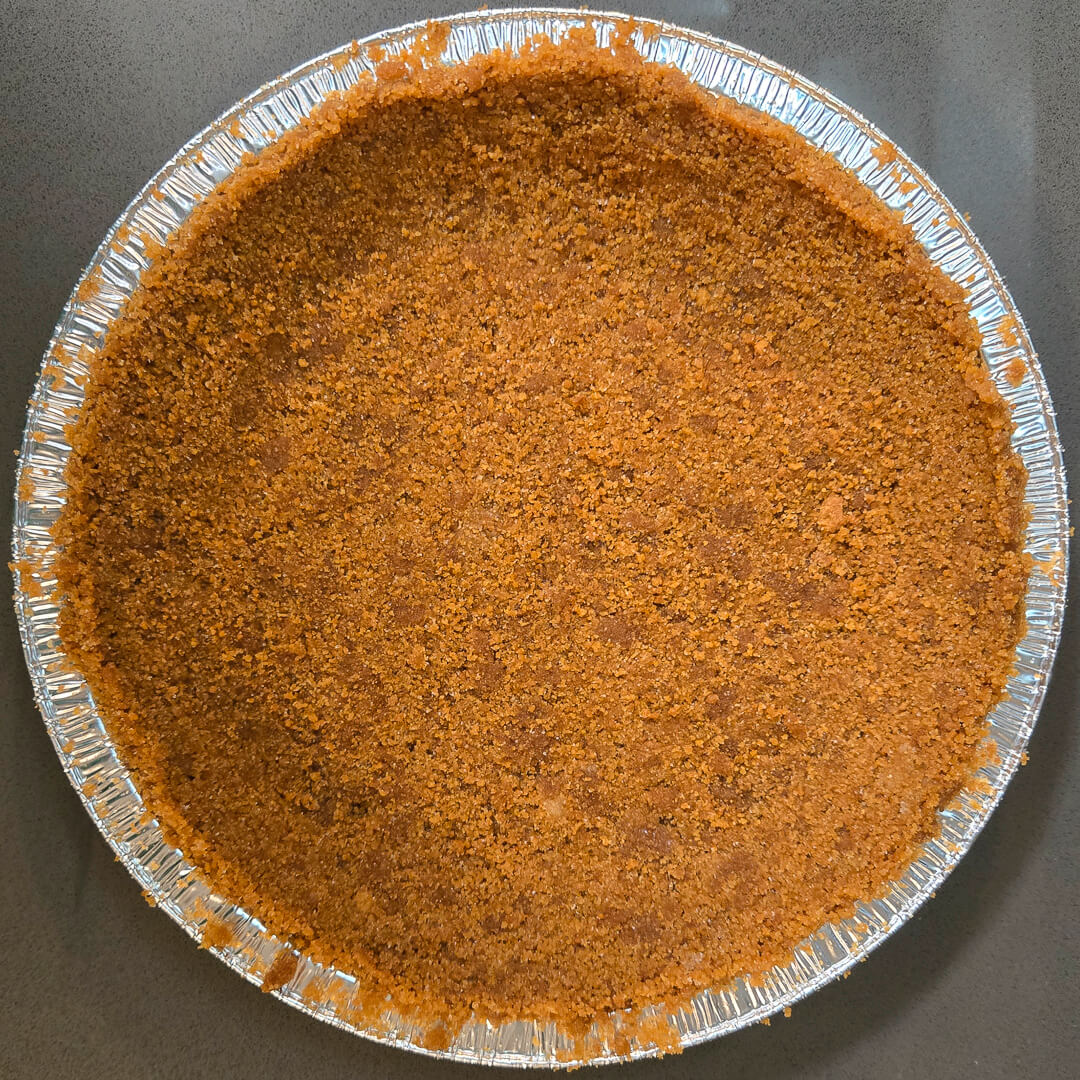
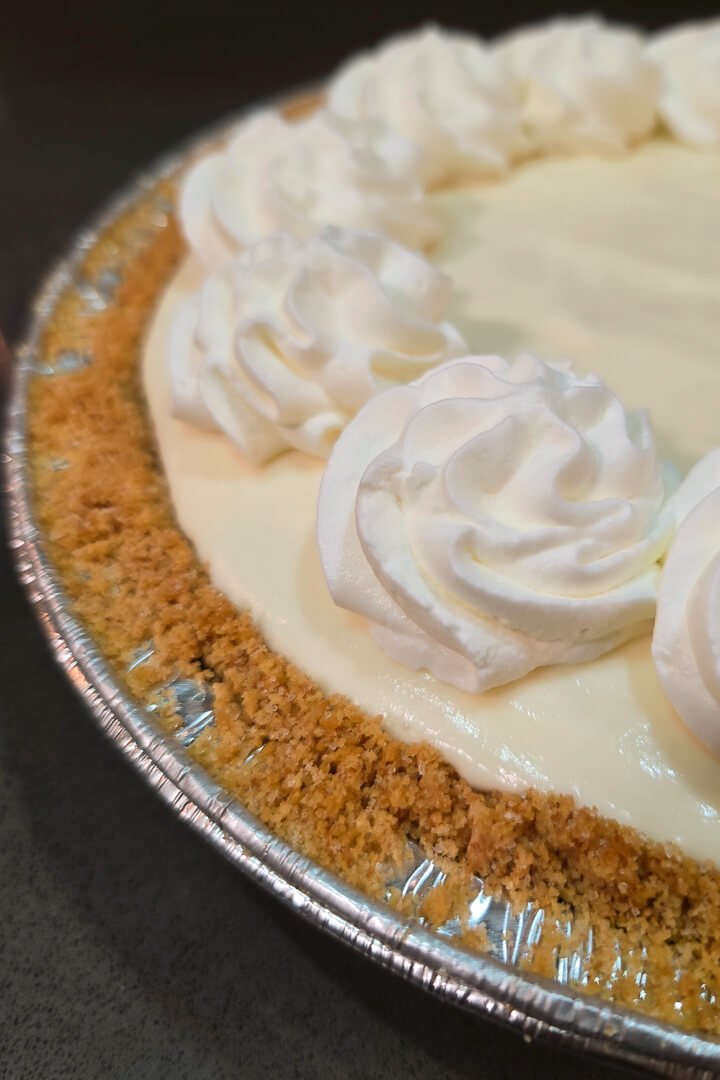
Frozen pies like this frozen lemonade pie are usually best in a crumb crust. The classic crumb crust is graham cracker crust, but other crumb crusts like gingersnap cookie crust, biscoff cookie crust, or Oreo cookie crust are also delicious options for this pie.
Frozen Lemonade Pie Recipe:
Ingredients
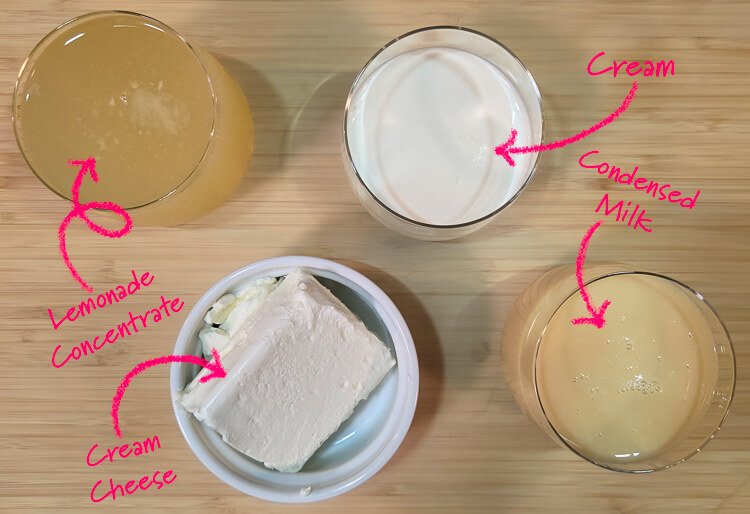
- 3.5oz Cream Cheese, softened at room temperature
- 10.5oz Sweetened Condensed Milk (¾ of a 14oz can; 300g)
- 9oz Frozen Lemonade Concentrate, thawed (255mL)
- ½c Heavy Whipping Cream, cold (118mL) (or 8oz Cool Whip)
1.
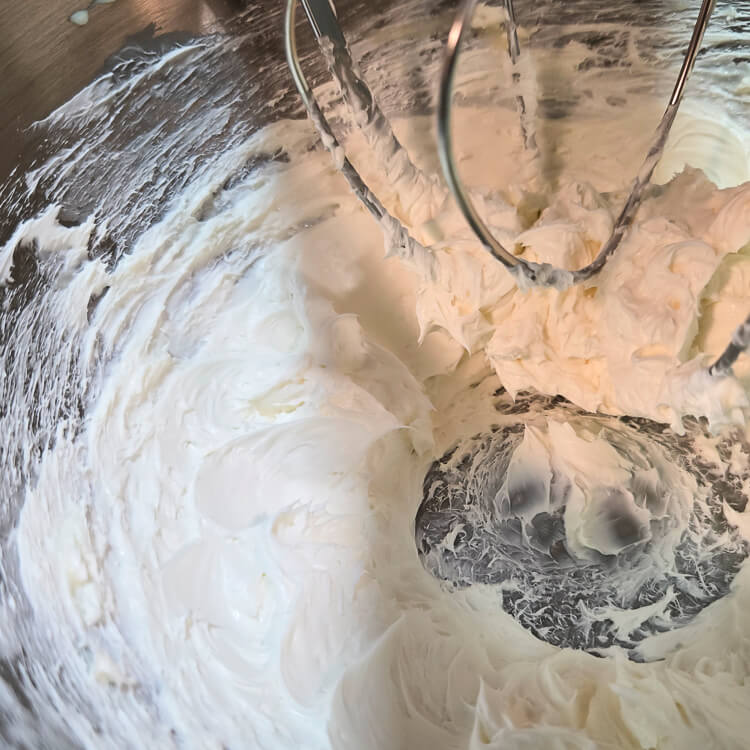
In the bowl of a stand mixer, whip the cream cheese until smooth.
2.
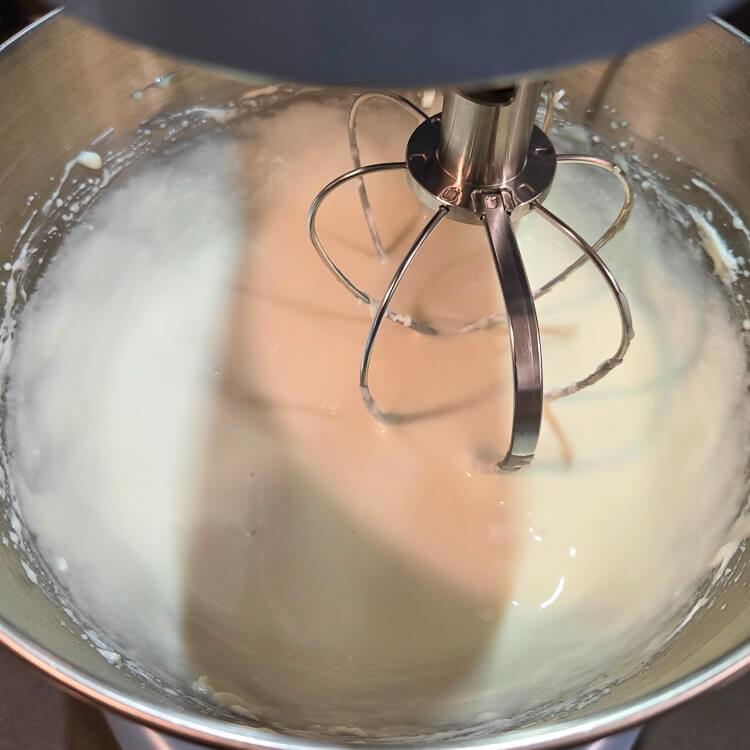
Add the sweetened condensed milk and whip until no chunks of cream cheese remain.
3.
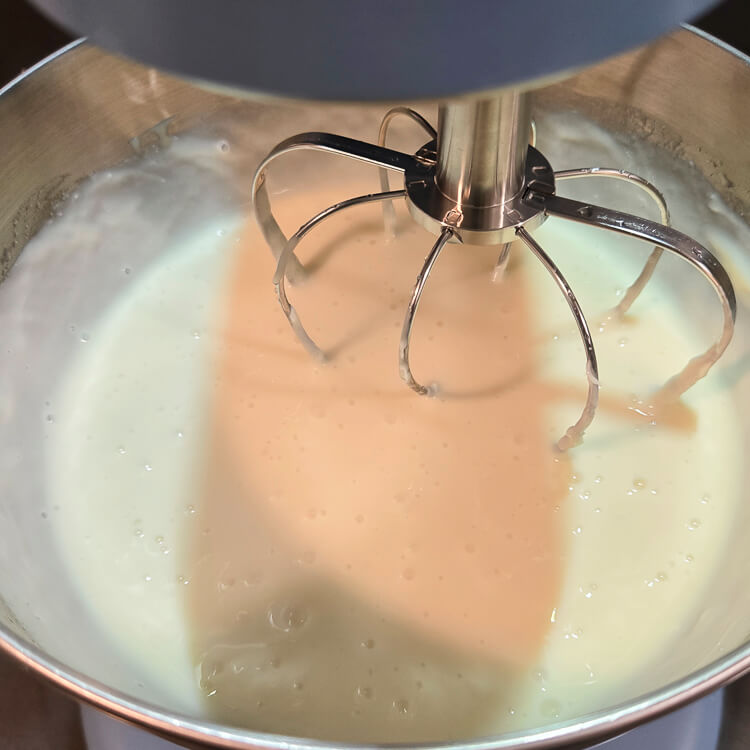
With the mixer running, slowly add the frozen lemonade concentrate. Mix until smooth.
4.
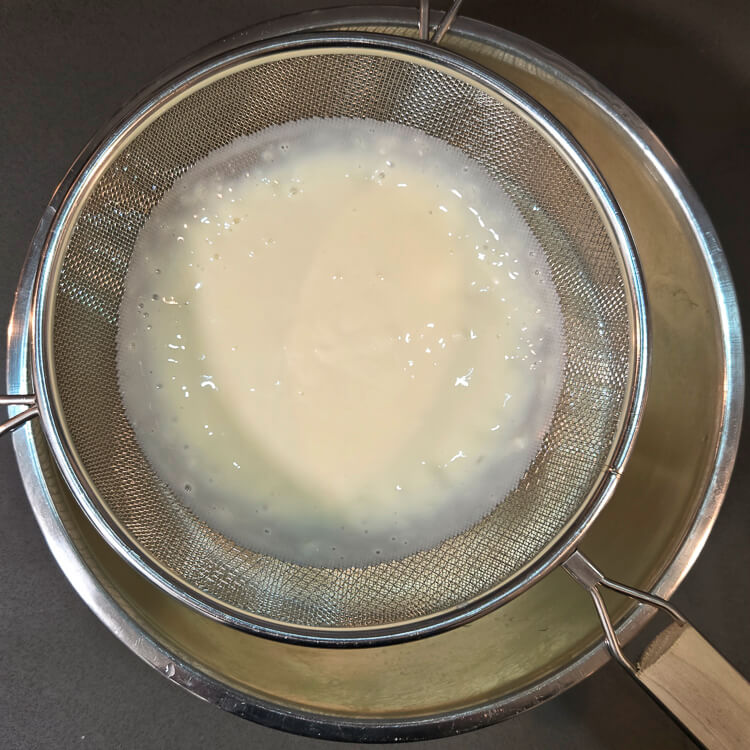
(Optional) Pass the mixture through a fine mesh sieve into a large mixing bowl for an extra-smooth filling.
5.
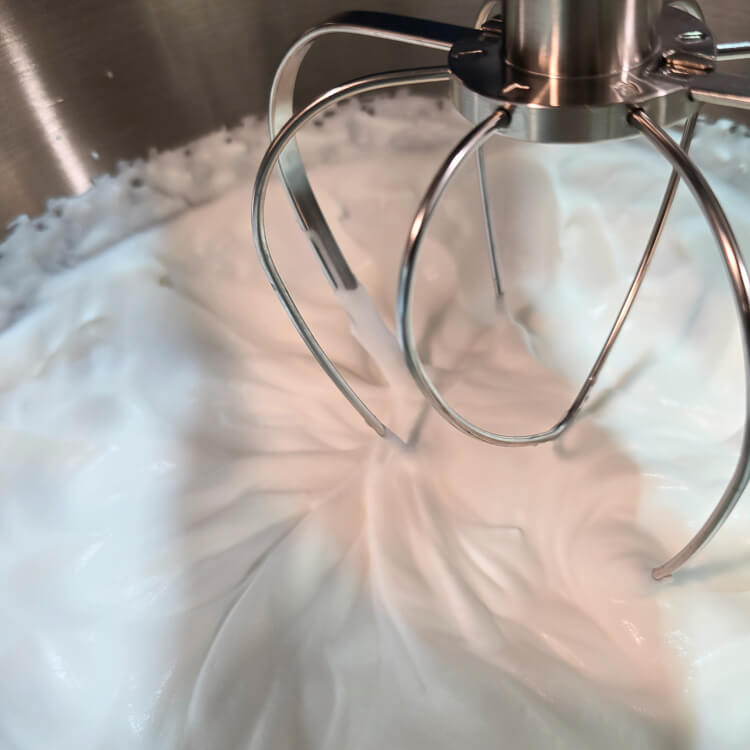
In a clean mixing bowl, whip the heavy whipping cream until stiff peaks form.
6.
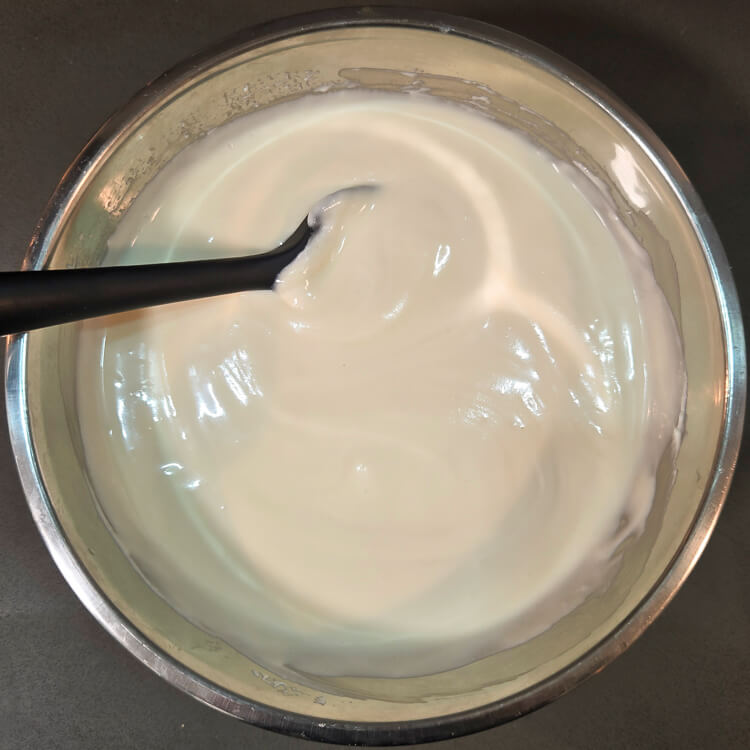
Very gently fold the whipped cream into the lemonade mixture.
7.
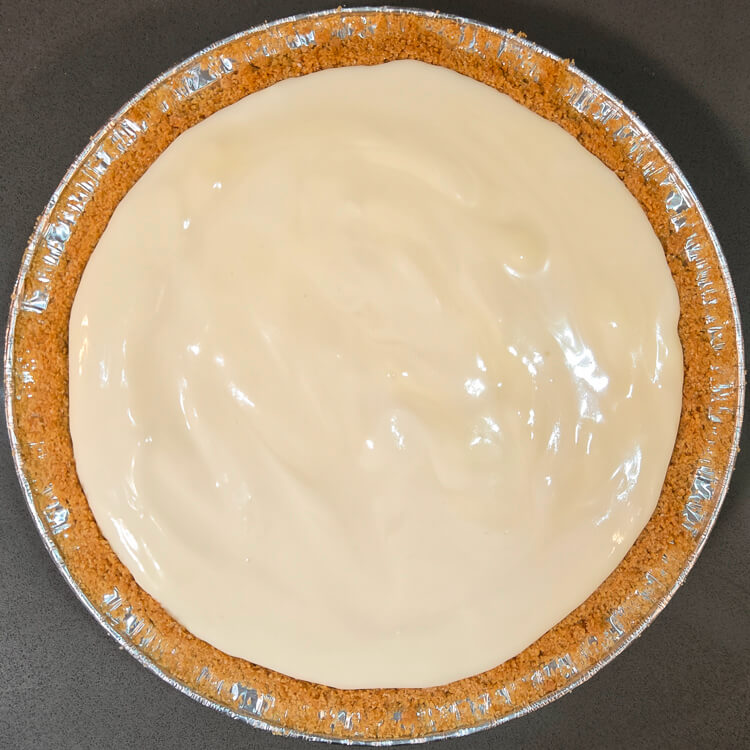
Carefully pour the frozen lemonade pie filling into your prepared graham cracker crust.
8.
Transfer the pie to your freezer and freeze for 6-12 hours.
9.
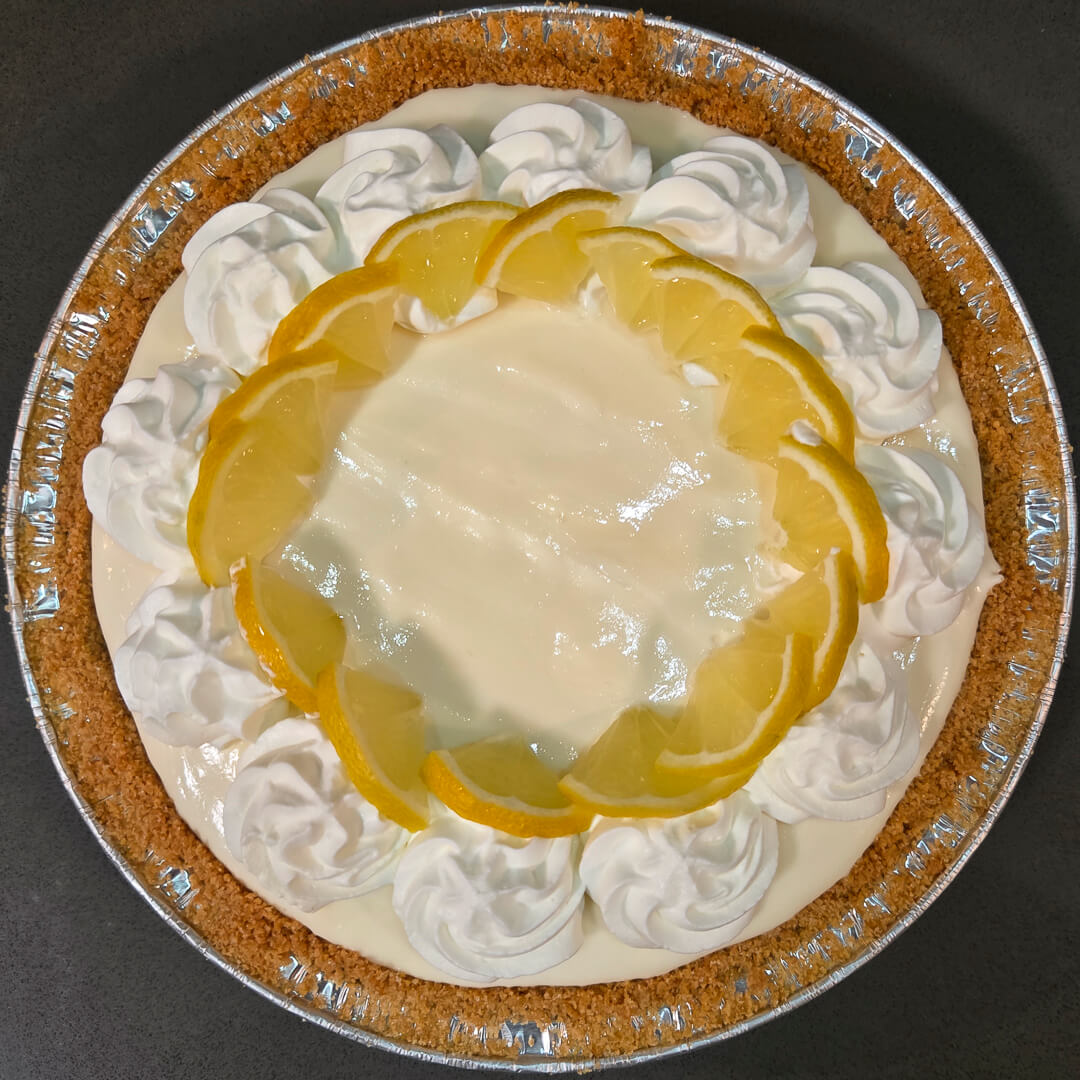
Decorate, slice, and serve!
Other Frozen Pie Recipes
While frozen lemonade pie is one of the most popular frozen pies, there are many other delicious frozen pies.
- Frozen Pink Lemonade Pie: Just like frozen lemonade pie, but pink lemonade concentrate is used in place of regular lemonade concentrate.
- Frozen Margarita Pie: Similar to frozen lemonade pie, but the no-churn ice cream filling is margarita flavored. Lime juice, tequila, and sometimes triple sec.
- Banana Split Pie: A banana split, but in pie form! This is a modern recipe with many different versions and twists.
- Frozen Key Lime Pie: Key lime pie is the most popular pie across the United States (at least in search volume). It has spawned many delicious variations, and the frozen version freezes a no-bake key lime mousse inside a graham cracker crust.
- Baked Alaska: Baked Alaska is not quite a pie, but I consider it a pie-adjacent dessert. Layers of ice cream sit on top of a cake base encased in toasted meringue.

How to Store Frozen Lemonade Pie
Since this pie is frozen, it must be stored flat in the freezer. You can pull it out about 10 minutes before serving if you’d like to soften the filling slightly before eating. Frozen lemonade pie can last for up to a week in the freezer.
It’s worth noting that the filling for this frozen lemonade pie recipe holds well for that full week specifically because of the cream cheese. The cream cheese acts as a stabilizer, maintaining the texture of the no-churn ice cream over time. Versions of frozen lemonade pie that omit the cream cheese will start losing their texture after a couple of days, and will begin to lose their fluff and form ice crystals.
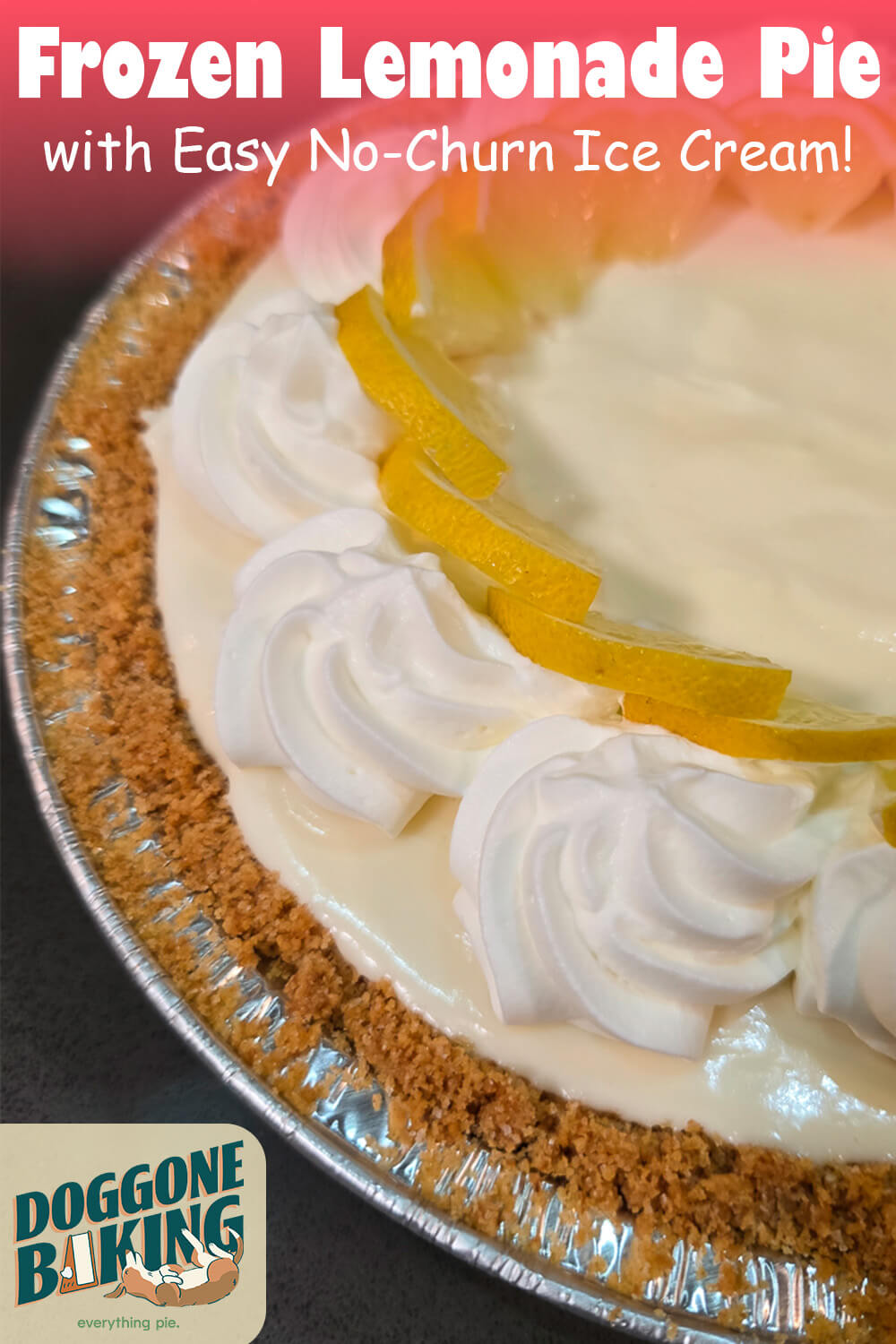
We’d love to see your frozen lemonade pie creations! If you give this recipe a try, tag @doggone_baking on social media so we can share in the baking fun.
Frozen Lemonade Pie
Ingredients
- 1 Graham Cracker Crust
- 3½ oz Cream Cheese, softened (100g)
- 10½ oz Sweetened Condensed Milk (300g) ¾ of a 14oz can
- 9 fl oz Frozen Lemonade Concentrate, thawed (255mL) homemade recipe in post
- ½ cup Heavy Whipping Cream, cold (118mL) or 1 8oz tub of Cool Whip
Instructions
- In the bowl of a stand mixer, whip the cream cheese until smooth.
- Add the sweetened condensed milk and whip until no chunks of cream cheese remain.
- With the mixer running, slowly add the frozen lemonade concentrate. Mix until smooth.
- (Optional) Pass the mixture through a fine mesh sieve into a large mixing bowl for an extra-smooth filling.
- In a clean mixing bowl, whip the heavy whipping cream until stiff peaks form.
- Very gently fold the whipped cream into the lemonade mixture.
- Carefully pour the frozen lemonade pie filling into your prepared graham cracker crust.
- Transfer the pie to your freezer and freeze for 6-12 hours.
- Decorate, slice, and serve!


About Me
In 2016, I left my office job and became a professional baker. These days I spend my days testing recipes and baking pies while my two dogs snooze happily nearby.