
This post may contain affiliate links. Please read my disclosure policy.
All recipes on Doggone Baking are intended for humans — the dogs are just our enthusiastic photo assistants and taste-test spectators.
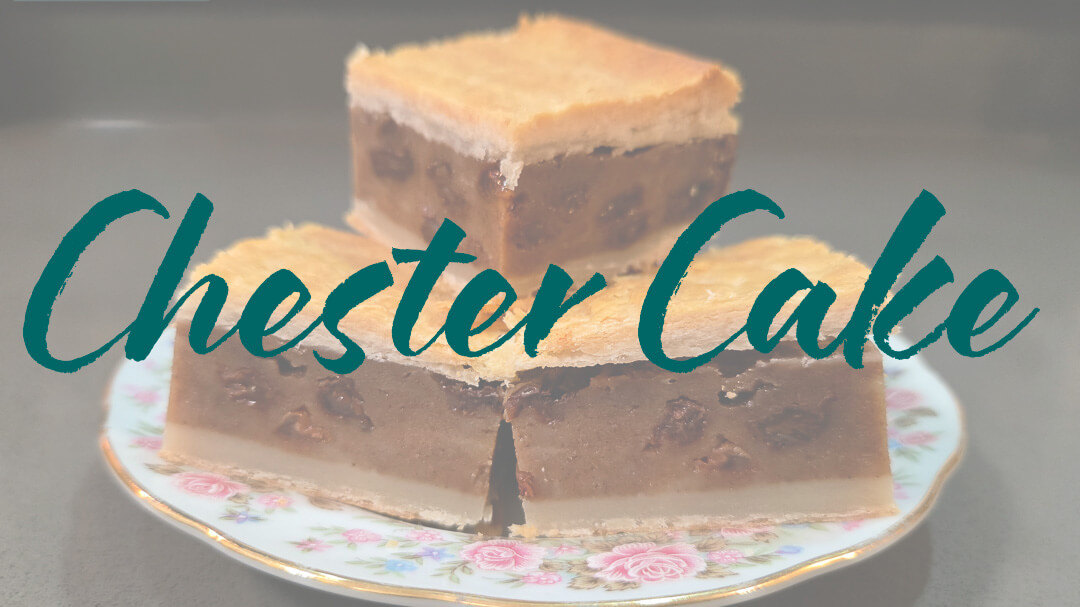
Irish Chester Cake Recipe (Gur Cake)
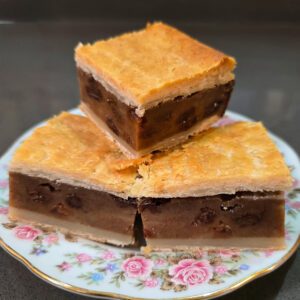
While some pies are really cakes (looking at you, Boston Cream Pie and Nantucket Cranberry Pie), some cakes are pies. Chester cake, although called a cake, is more of a pie than a cake. The traditional Irish recipe features a sweet dried fruit filling baked between two layers of pastry crust.
Depending on where you are in Ireland, you might hear different names for the dessert. Around Cork, it’s usually called Chester cake (or variations of that). In Dublin you might hear it called Gur Cake. Occasionally the dessert is even called Donkey’s Gudge.

What is Chester Cake?
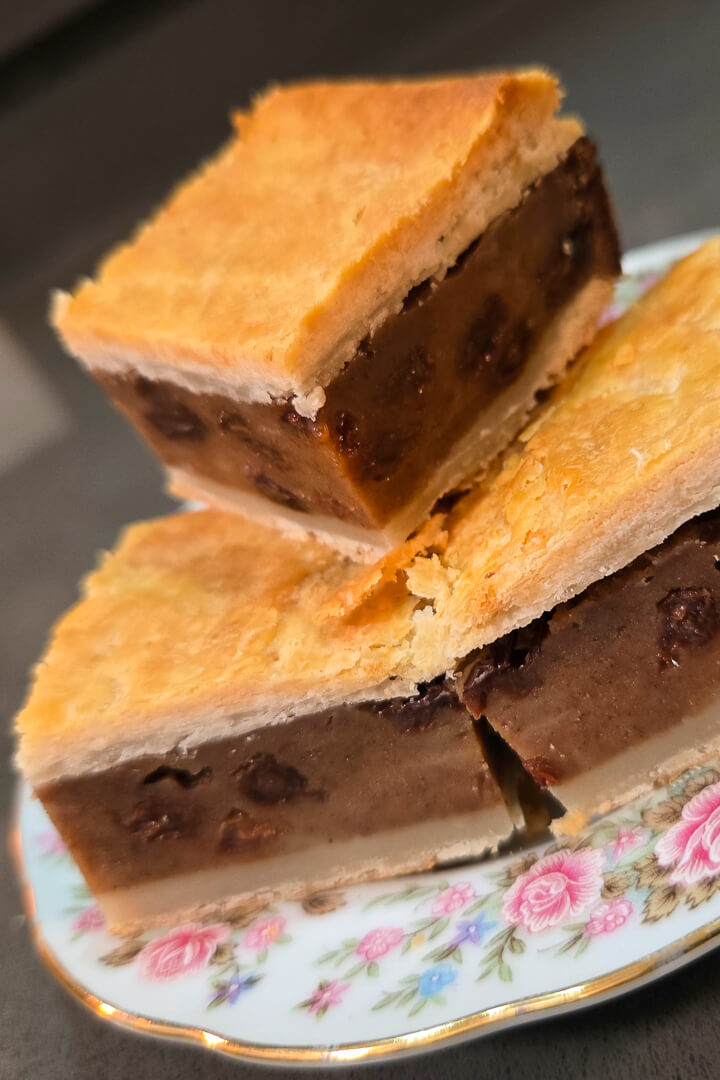
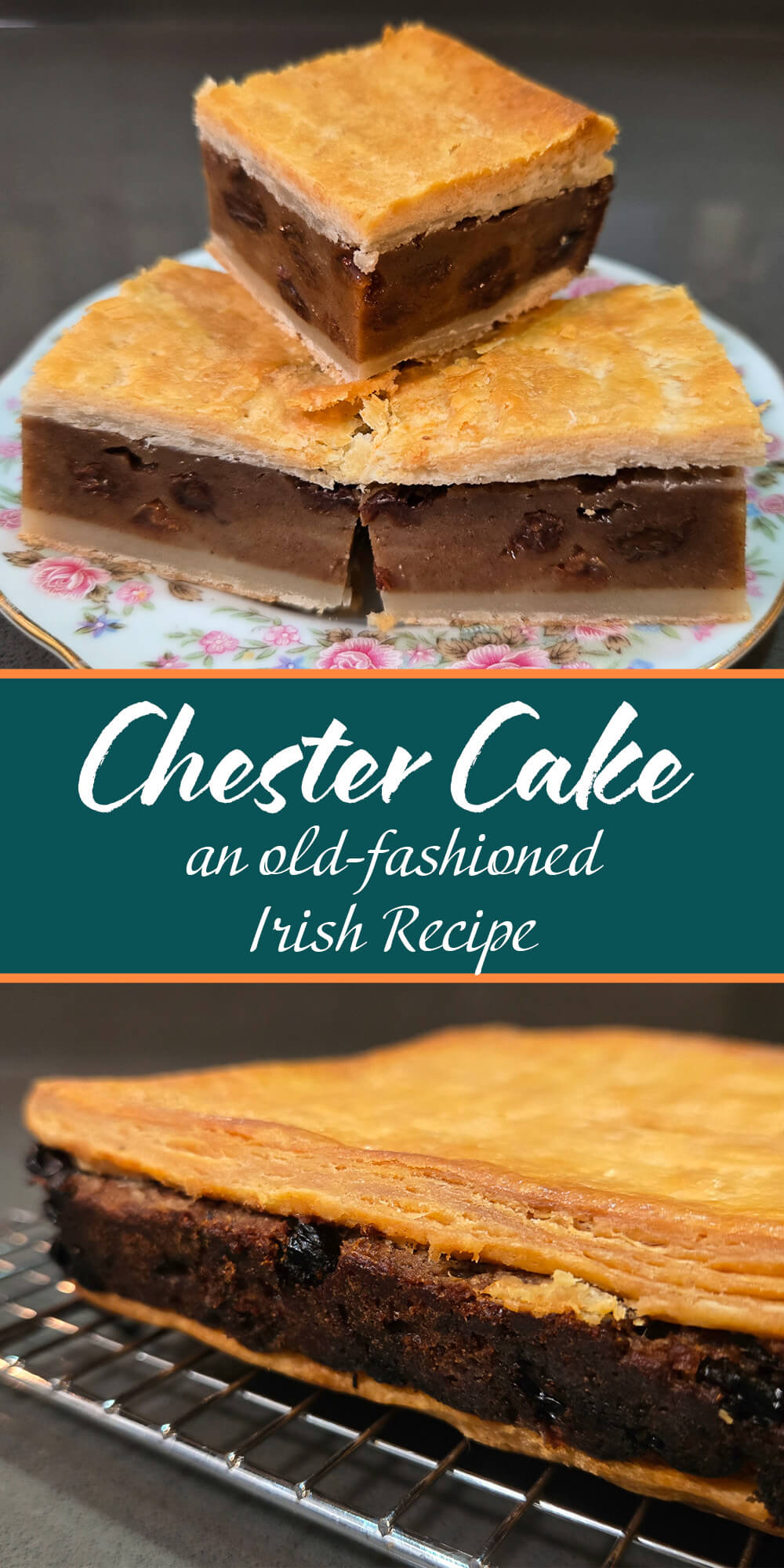
Also known as Gur Cake, Chester Squares, or Donkey’s Gudge, Chester cake is a traditional Irish pastry made by baking a sweet dried fruit filling between two layers of pie crust. Despite the name “cake,” it does not have a soft sponge texture. Instead, it is structured more like a slab pie.
The filling is somewhat similar to bread pudding. It’s made by soaking raisins, or other dried fruits such as currants, together with stale bread in strong black tea and golden syrup, sometimes called golden treacle. The bread absorbs the liquid, creating a thick, spiced mixture that bakes into a dense, sliceable layer.
At first glance, tea-soaked bread and raisins tucked inside pastry may sound unusual. But once baked, the filling becomes rich, lightly spiced, and pleasantly sweet. The result is a thrifty and comforting Irish dessert that has stood the test of time.
History of Chester Cake
Chester cake (or Chester slice, Chester squares, Chester bread, etc.) most likely originated in Cork, Ireland in the late 1800s or early 1900s. The dessert would have been a practical way to reuse bakery ingredients that were left over: day-old bread, dried fruits, and scrap pastry dough. For working-class families and schoolchildren, Chester cake would have been one of the least expensive treats in the shop.
The dessert’s name changes depending on where you are in Ireland. In Dublin, it is sometimes called Gur Cake. Many sources connect the name Gur Cake to the Irish term “gurriers,” referring to children who were running away from school or home. According to nostalgic histories, these gurriers would grab a slice of this inexpensive pastry on their way out. In Cork, the name Chester cake appears more frequently. Another nickname, Donkey’s Gudge, is occasionally mentioned, although I can’t find much information on where that name came from.
Note: While this dessert has strong roots in Irish baking tradition, I am not Irish and have not traveled to Ireland. If you have family stories, regional knowledge, or corrections to share about Chester cake, I would love to hear from you. Please feel free to reach out and share your insight here.
Ingredients for Chester Cake
Chester cake, or Gur Cake, uses only a handful of ingredients, and most of them are flexible. That flexibility is part of the dessert’s design. Like many old-fashioned pies, this recipe was created to stretch simple, shelf-stable ingredients into something filling and satisfying. That practicality made Chester cake an economical bakery item and an easy dessert to prepare at home.
This kind of resourcefulness shows up in many historic pie recipes. Schnitz pie and Marlborough pie, for example, were American ways to preserve and stretch apples beyond harvest season, when fresh fruit was no longer at its peak. Instead of wasting ingredients, bakers found creative methods to transform them into something new. Chester cake follows the same philosophy with day-old bread and dried fruits.
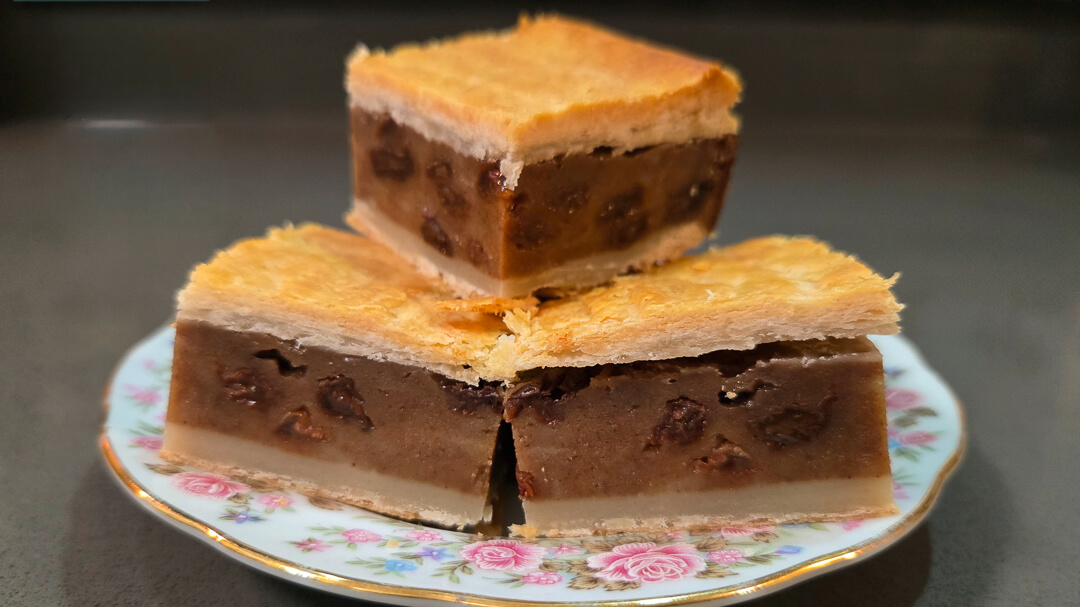
Stale Bread:
Stale bread is one of the key ingredients in Chester cake, and it plays an important structural role in the filling. The bread is soaked in strong black tea and golden syrup, mixed with dried fruit, then baked between pastry layers. As it bakes, it forms a dense, sliceable filling similar in texture to a thick bread pudding.
Most traditional recipes call for plain white bread, which keeps the flavor simple and lets the tea and dried fruit stand out. That said, other breads can work. Just keep in mind that whatever bread you use will affect the final taste. A whole wheat loaf will create a deeper, slightly nuttier flavor, while a sourdough bread might impart a unique flavor.
One of the trickiest parts of working with stale bread is measurement. Many recipes list a weight of stale bread, but that can be misleading because bread loses moisture as it dries. The drier the bread, the less it weighs. For example, the 12 slices I used weighed about 325 grams before removing the crusts, about 250 grams after removing the crusts, and about 185 grams after sitting out all day to dry.
Other recipes measure by slice count, but that can be just as inconsistent. Slice thickness and loaf size vary widely. Some recipes suggest eight slices or 300 grams, but with the loaf I tested, it took 12 slices to reach roughly 300 grams before drying.
For consistency, this recipe was tested using 325 grams of fresh white bread with the crusts still on. I removed the crusts, then allowed the bread to dry by leaving it uncovered on the countertop for about 8 hours. If you need to speed up the process, you can place the slices directly on your oven rack at the lowest setting, usually around 170°F or 75°C, for about 30 minutes until dry but not toasted.
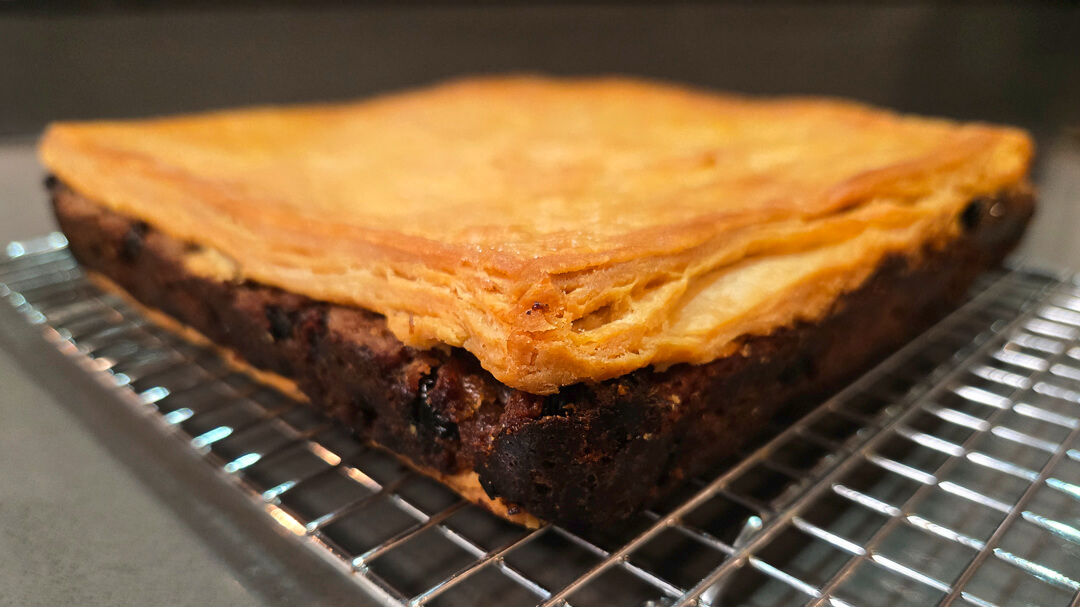
Black Tea:
Stale bread is used for this recipe, not just as a way to stretch bread, but also because it can be rehydrated with black tea to give the filling more flavor. There are many different kinds of black tea, but this being an Irish recipe, Irish Breakfast tea is a natural choice.
Two of the most common black tea tea blends are English Breakfast and Irish Breakfast. English Breakfast tea is typically a blend of black teas from regions such as India, Kenya, Indonesia, and China. Irish Breakfast tea often includes teas from India, Kenya, and Sri Lanka, and is generally stronger and slightly more malty in flavor. It also tends to contain a bit more caffeine.
For Chester cake, you want a tea that tastes robust rather than delicate. A strong, freshly brewed cup ensures the bread absorbs enough flavor to balance the sweetness of the syrup and fruit.
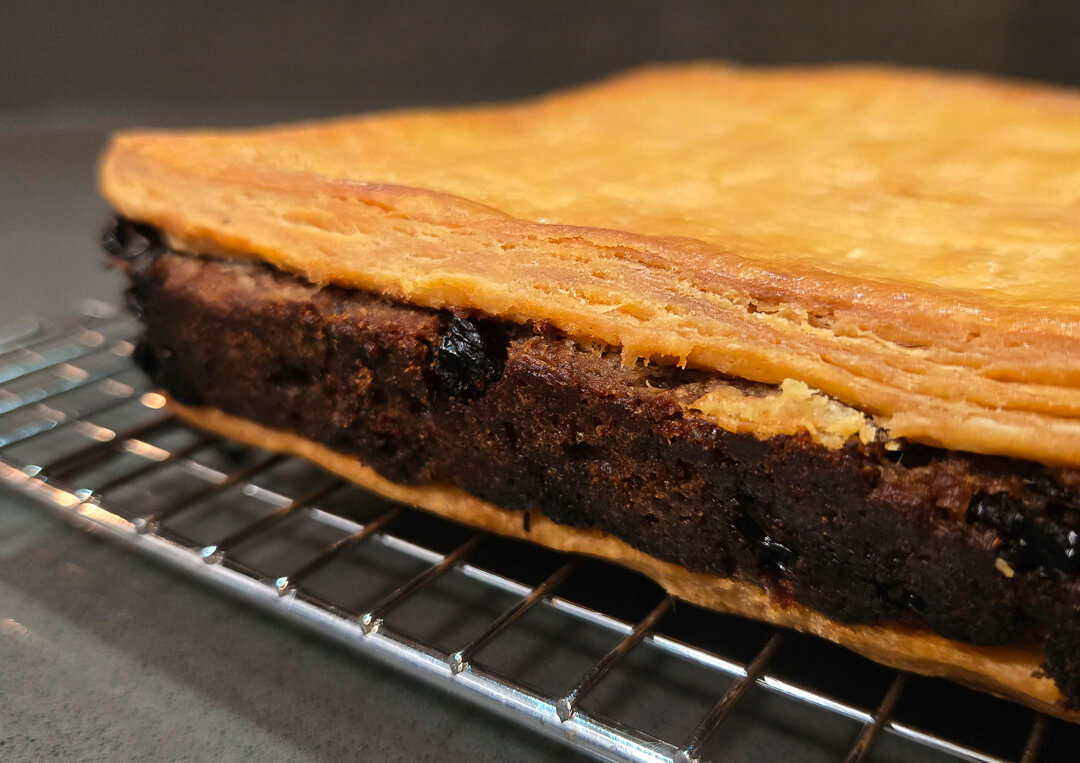
Golden Syrup:
Golden syrup is a common ingredient in British and Irish baking. It is most commonly found in the UK, Ireland, and Australia, and it plays an important role in Chester cake’s flavor and texture.
Golden syrup is an invert sugar syrup made from sugarcane. While it is chemically similar to corn syrup, another invert sugar syrup, it has a more distinct flavor. It tastes lightly caramelized, with hints of toffee and a subtle warmth. If you can’t find golden syrup where you live, you can substitute dark corn syrup, corn syrup, or invert sugar syrup. The taste will be ever so slightly different, but the recipe will come out delicious nonetheless.
Chester Cake Recipe
Crust:
For this Irish Chester cake recipe, you’ll need a full batch of all-butter pie crust dough, divided into two equal portions. The dough is rolled slightly thicker than a typical pie crust, about 3-4mm thick, and cut into two, 9-inch by 9-inch squares. You can also use 2 sheets of frozen puff pastry dough cut into two, 9-inch by 9-inch squares.
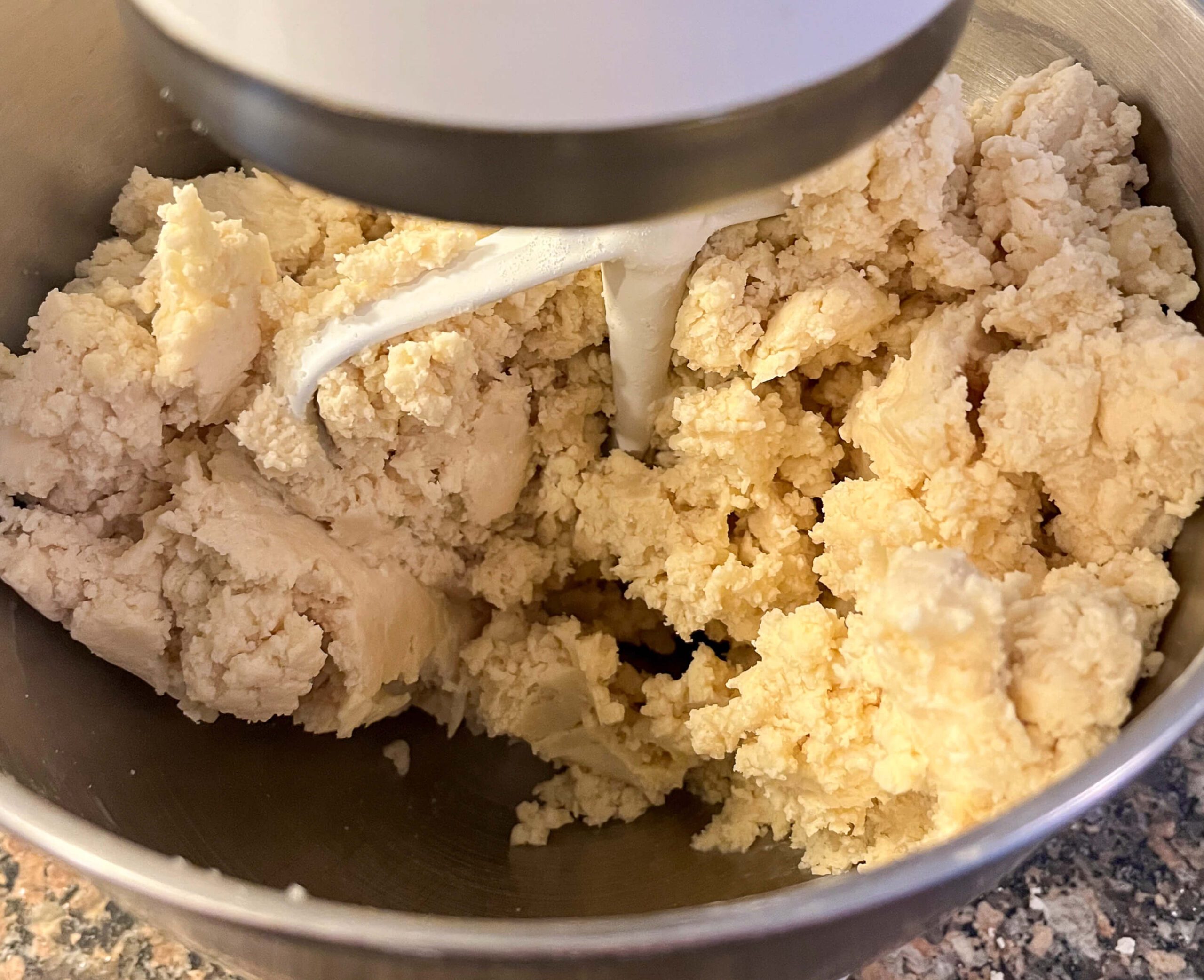
Zero Waste Solutions: Using Scrap Dough for the Crust
If you make pies regularly, you may find yourself with a lot of trimmed, scrap pie dough over time. You trim after rolling, trim again when cutting your circle or square, and often trim once more when fitting the dough into a pan. Over time, that can feel wasteful.
Using scrap dough for making the pie shell itself can be a bit finicky. Because the dough has already been rolled out once, the gluten structure is stronger. That extra development makes the dough more likely to shrink or slump as it bakes in a pie tin.
However, scrap dough works really well for a few different applications, including the crust for this Cheser cake recipe. Because the crust isn’t worked into an intricate shape like crimped edges, and it’s just laid out flat, shrinkage is less of a concern. You can re-roll scrap dough for making things like this Chester cake, hand pies, turnovers, slab pies, and lattice tops. As you bake pies, place your scraps in a freezer-safe bag and store them in the freezer. Once you have accumulated enough, thaw the dough in the refrigerator, gently press it together, and roll it out for your next project. It is a simple way to reduce waste while making the most of every batch of pastry.
Chester Cake Filling:
Ingredients
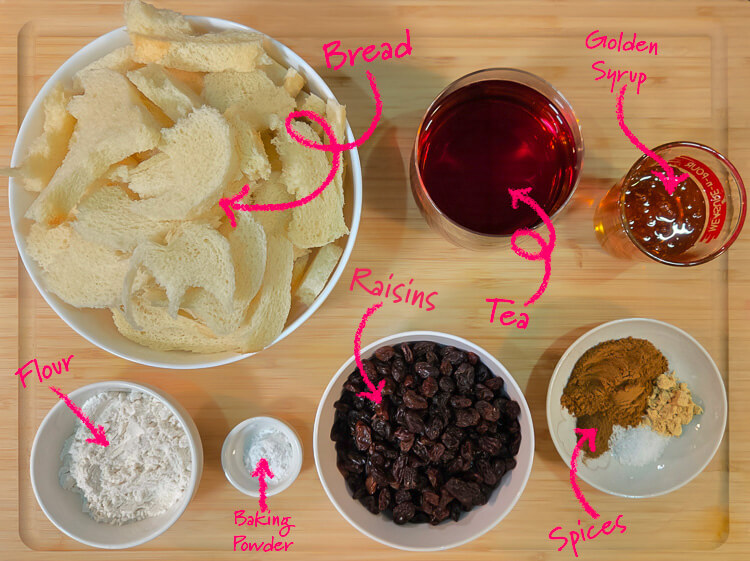
- 325g White Bread (fresh)
- 1¼c Fruit (or other similar dried fruit) (180g)
- 1¼c Irish Breakfast Tea, brewed (300mL)
- ⅓c Golden Syrup (90g)
- ¼c All-Purpose Flour (32g)
- ½t Baking Powder
- 2t Ground Cinnamon
- ½t Ground Ginger
- ¼t Ground Cloves
- 2T Heavy Whipping Cream (optional)
Preparation Step: Carefully remove the crusts from the white bread slices. Let the bread sit at room temperature for 6–8 hours or overnight until stale. To speed up the process, place the slices directly on the oven rack at the lowest setting, about 170°F (75°C), for 30 minutes. Do not toast.
1.
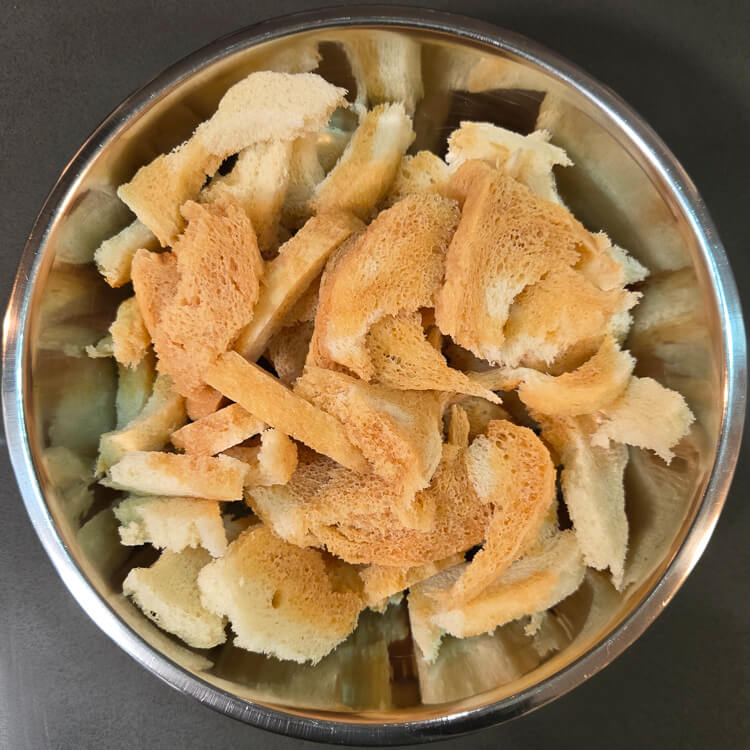
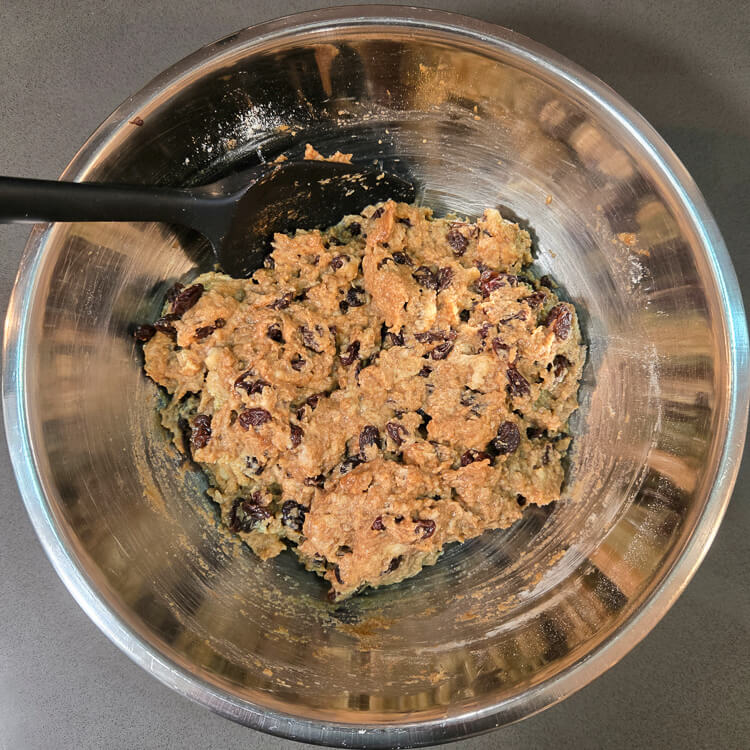
Tear the stale bread into small pieces and place in a large mixing bowl. Pour the brewed tea over the bread and let sit for 3–5 minutes.
2.
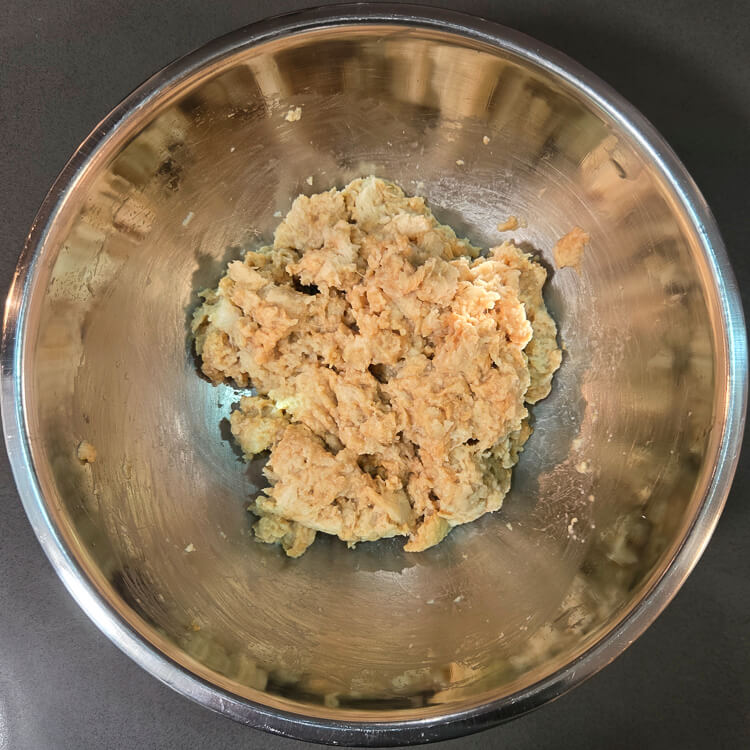
Using a fork, mash the bread and tea together until the mixture forms a thick, porridge-like consistency.
3.
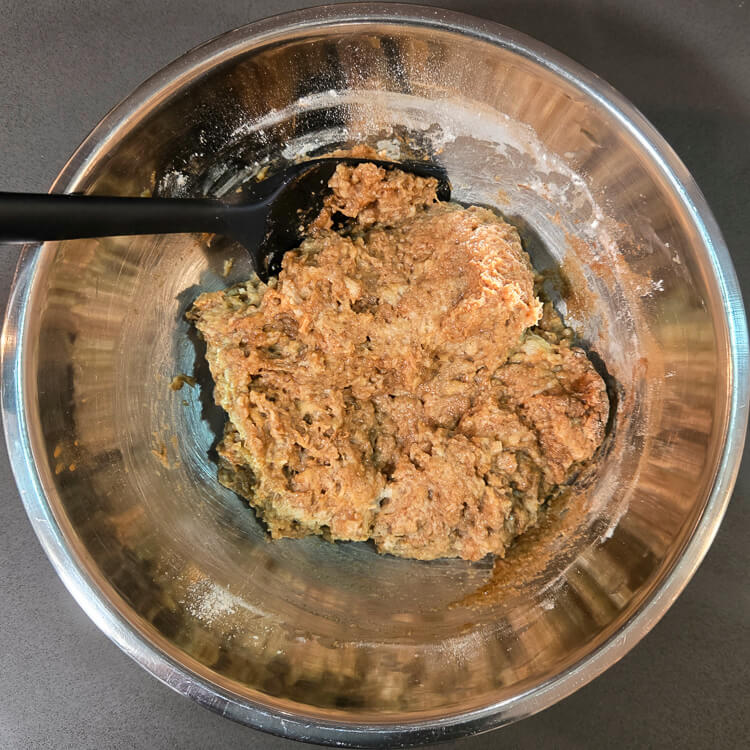
Add the flour, golden syrup, baking powder, and spices. Mix until evenly combined.
4.
Stir in the raisins or other dried fruit.
5.
Let the filling sit for about 1 hour so the raisins can begin to rehydrate.
Assembling the Chester Cake:
1.
Preheat the oven to 400°F (205°C).
2.
Take each disc of dough from your batch of all-butter pie crust. Roll each one slightly thicker than standard pie dough, about 3–4mm thick, and larger than 9 by 9 inches.
3.
Cut out two 9 by 9 inch squares.
4.
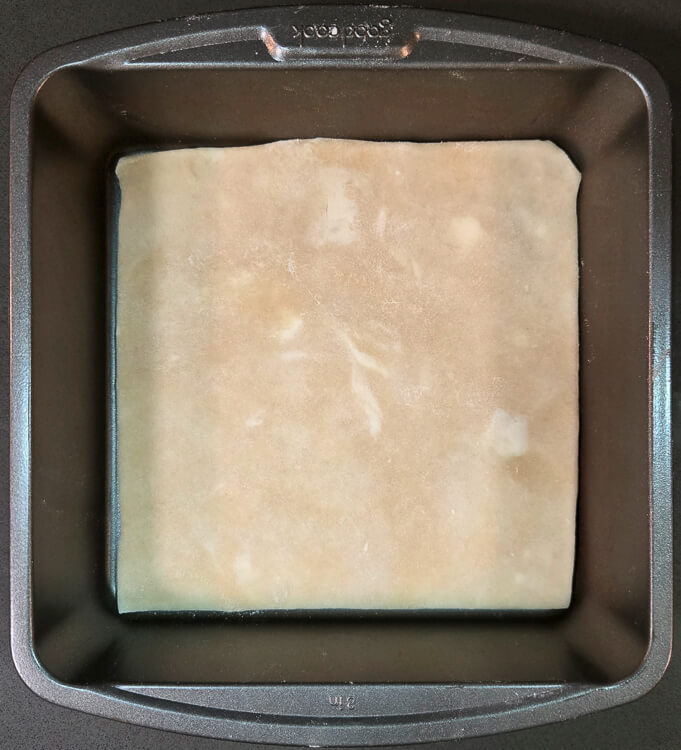
Place one square in the bottom of a 9-inch square baking pan.
5.
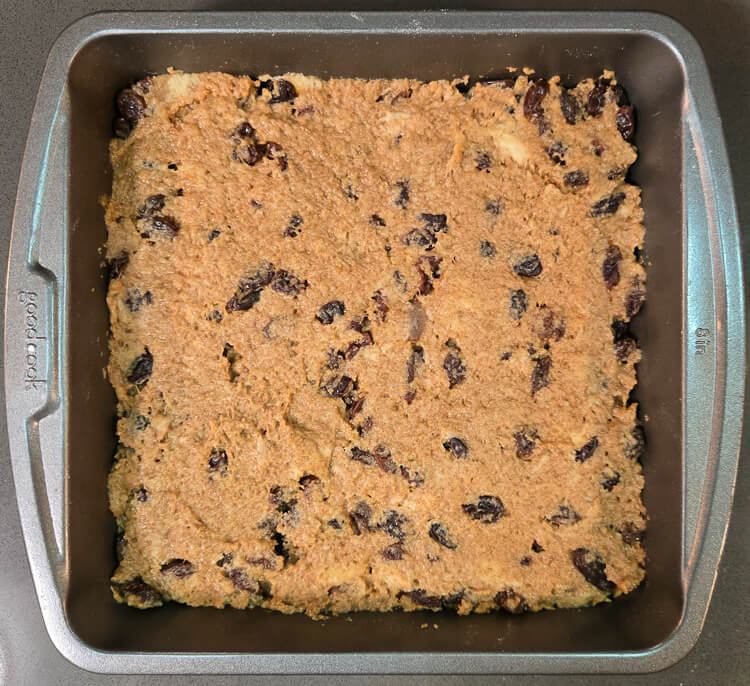
Spread the Chester cake filling evenly over the dough. Use an offset spatula to smooth the surface and press out any air pockets.
6.
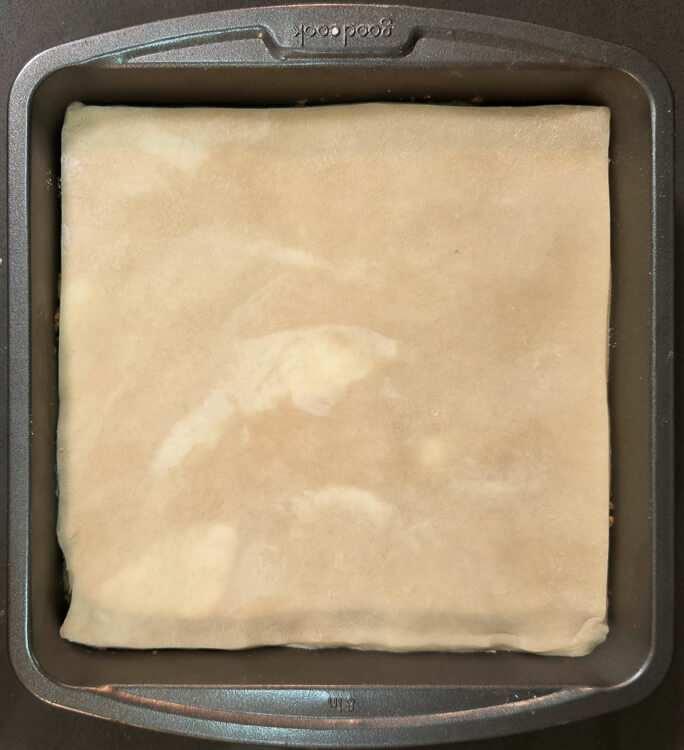
Place the second square of dough on top.
7.
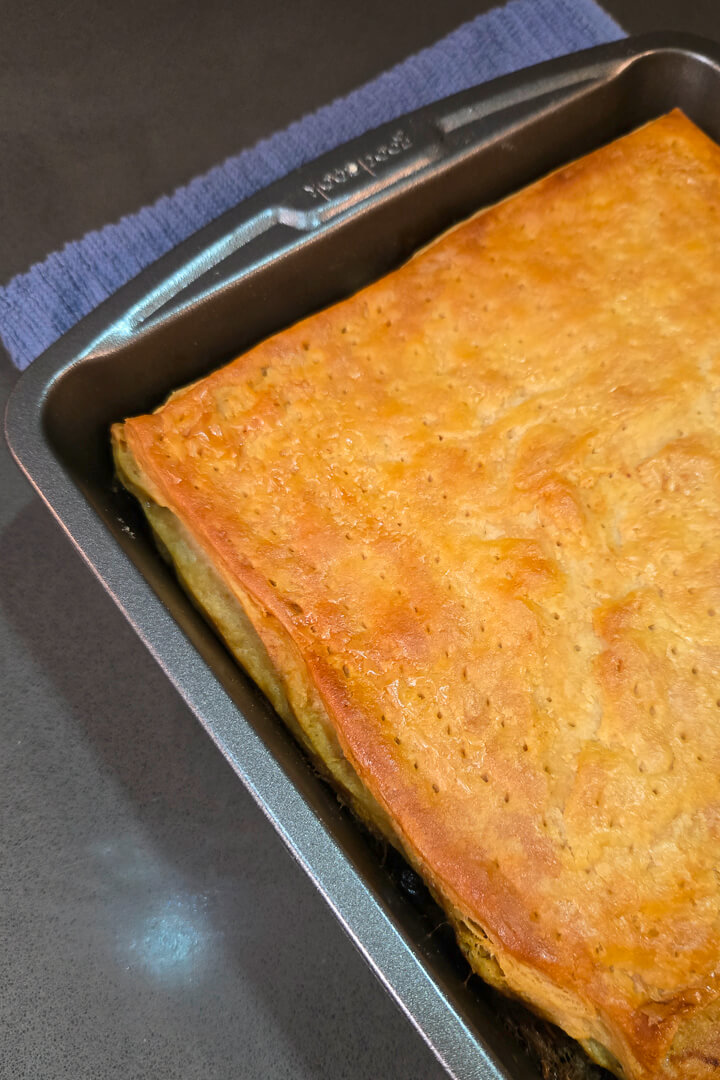
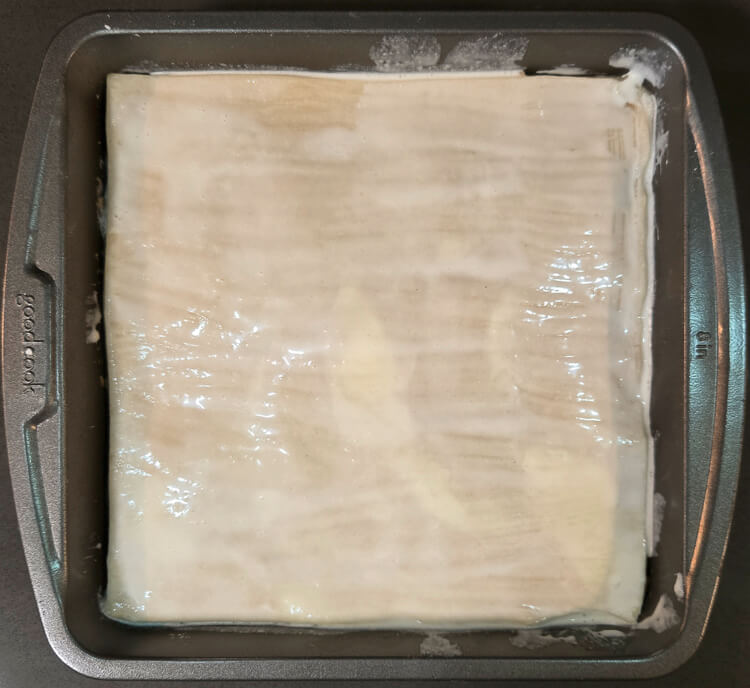
Brush the top crust with heavy whipping cream using a pastry brush. This helps give the final product a golden-brown finish.
8.
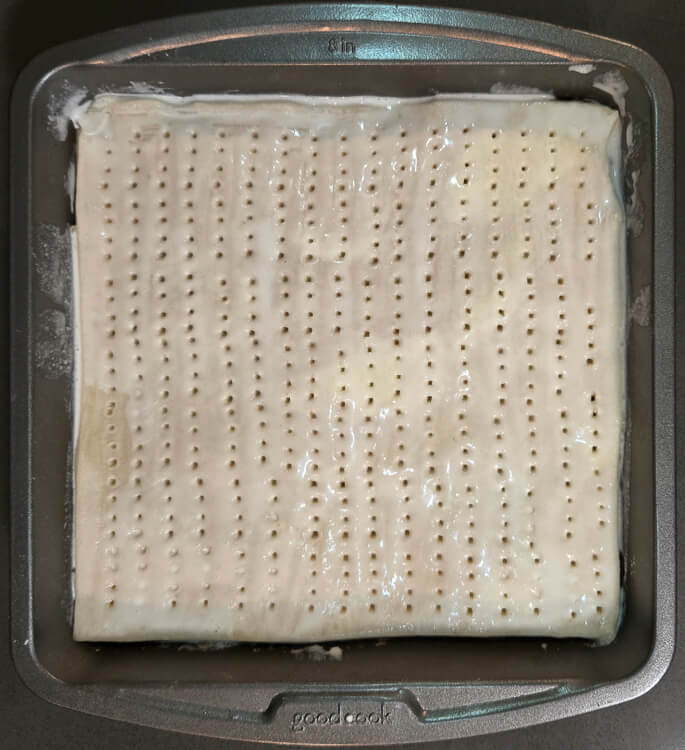
Dock the top crust all over with a fork to allow steam to escape.
9.
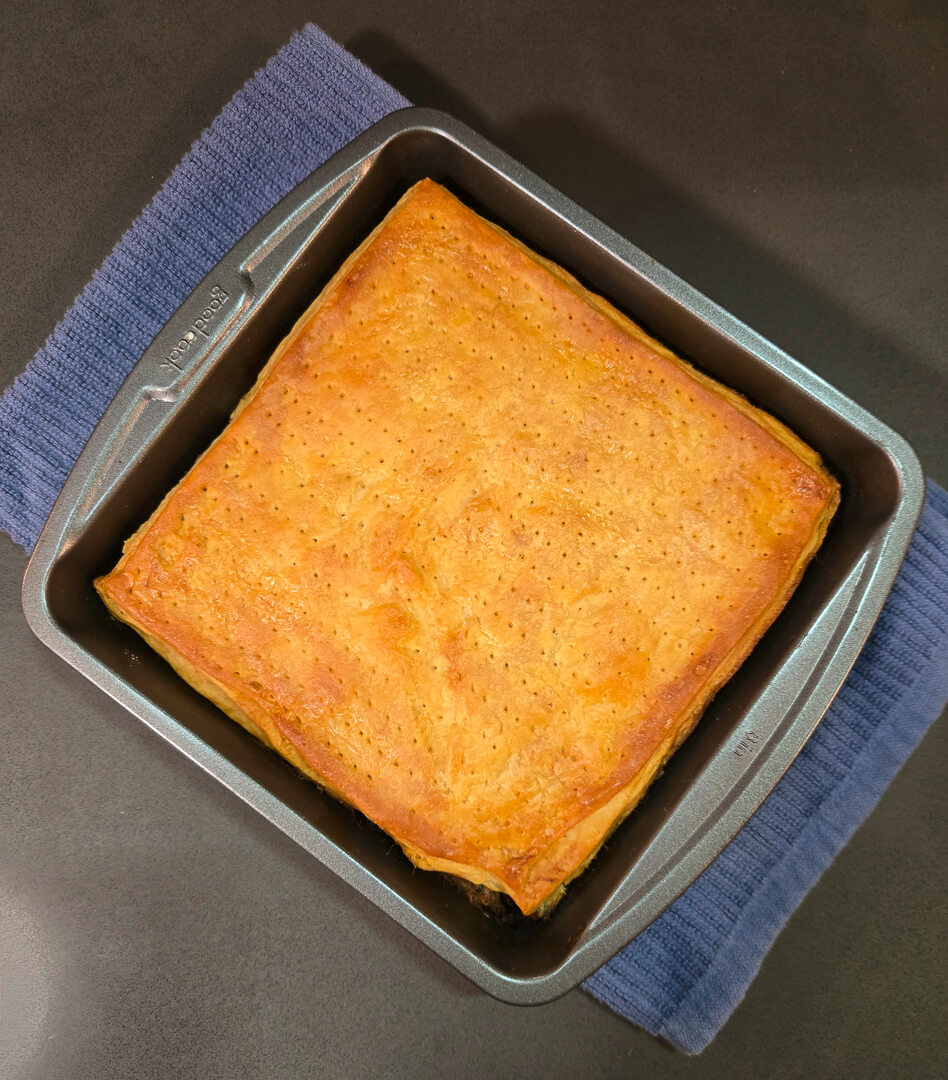
Place the baking pan in your oven, and bake for 15 minutes.
10.
After 15 minutes, reduce the oven temperature to 375°F (190°C) and bake for an additional 45 minutes.
11.
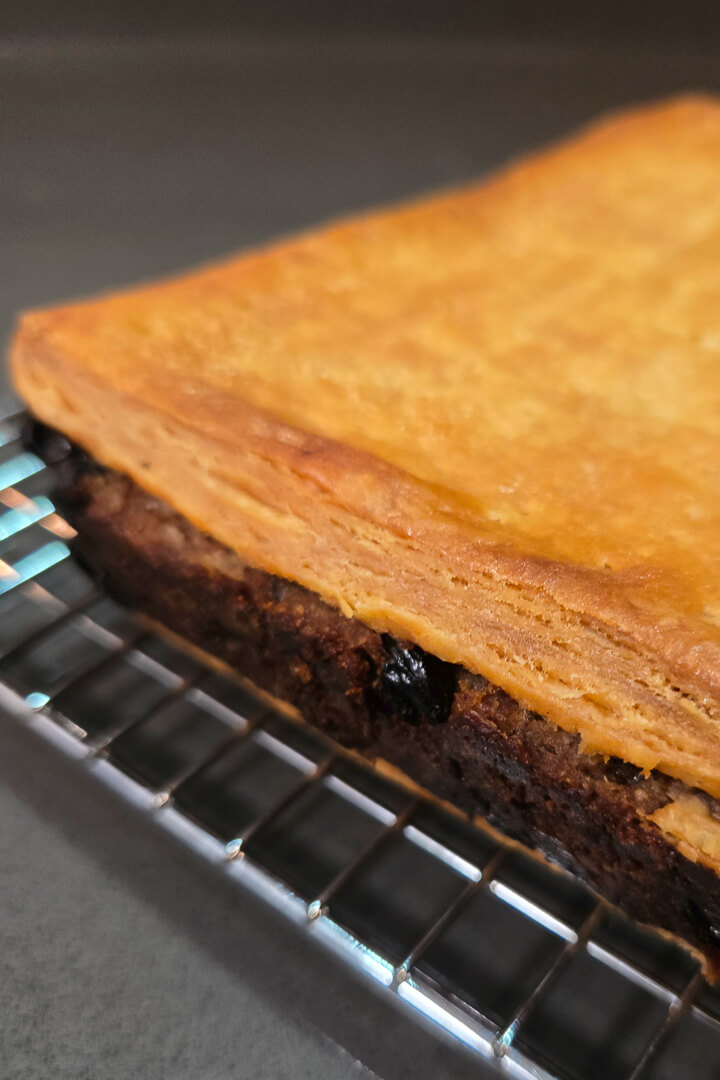
Remove from the oven and allow the Chester cake to cool before slicing and serving.

How to Store Chester Cake
Chester cake is a shelf-stable dessert that keeps well once baked. Store it at room temperature for up to one week. Cover it loosely with foil or plastic wrap to prevent it from drying out. If the crust softens over time, you can re-crisp individual squares in a toaster oven or place them directly on the oven rack at 350°F (175°C) for about 10 minutes.
We’d love to see your Irish Chester cake creations! If you give this recipe a try, tag @doggone_baking on social media so we can share in the fall baking fun.
Irish Chester Cake (Gur Cake)
Ingredients
- 1 batch Flaky Pie Dough
- 8-12 slices White Bread*, stale see recipe notes
- 1¼ cup Raisins (180g)
- 1¼ cup Irish Breakfast Tea, brewed (300mL)
- ⅓ cup Golden Syrup (90g)
- ¼ cup All-Purpose Flour (32g)
- ½ tsp Baking Powder
- 2 tsp Ground Cinnamon
- ½ tsp Ground Ginger
- ¼ tsp Ground Cloves
Instructions
Preparing the Stale Bread
- Carefully remove the crusts from the white bread slices. Let the bread sit at room temperature for 6–8 hours or overnight until stale. To speed up the process, place the slices directly on the oven rack at the lowest setting, about 170°F (75°C), for 30 minutes. Do not toast.
Make the Chester Cake Filling
- Tear the stale bread into small pieces and place in a large mixing bowl. Pour the brewed tea over the bread and let sit for 3–5 minutes.
- Using a fork, mash the bread and tea together until the mixture forms a thick, porridge-like consistency.
- Add the flour, golden syrup, baking powder, and spices. Mix until evenly combined.
- Stir in the raisins or other dried fruit.
- Let the filling sit for about 1 hour so the raisins can begin to rehydrate.
Make the Chester Cake
- Preheat the oven to 400°F (205°C).
- Take each disc of dough from your batch of all-butter pie crust. Roll each one slightly thicker than standard pie dough, about 3–4mm thick, and larger than 9 by 9 inches.
- Cut out two 9-inch by 9-inch squares.
- Place one square in the bottom of a 9-inch square baking pan.
- Spread the Chester cake filling evenly over the dough. Use an offset spatula to smooth the surface and press out any air pockets.
- Place the second square of dough on top.
- Brush the top crust with heavy whipping cream using a pastry brush. This helps give the final product a golden-brown finish.
- Dock the top crust all over with a fork to allow steam to escape.
- Place the baking pan in your oven, and bake for 15 minutes.
- After 15 minutes, reduce the oven temperature to 375°F (190°C) and bake for an additional 45 minutes.
- Remove from the oven and allow the Chester cake to cool before slicing and serving.
Notes


About Me
In 2016, I left my office job and became a professional baker. These days I spend my days testing recipes and baking pies while my two dogs snooze happily nearby.
See My Full Bio
2 responses to “Irish Chester Cake Recipe (Gur Cake)”
-

SO delicious! I made it with dried cherries an it was outstanding. -
This is so good! I love the warm spices with the filling. Super yummy.

Leave a Reply