
This post may contain affiliate links. Please read my disclosure policy.
All recipes on Doggone Baking are intended for humans — the dogs are just our enthusiastic photo assistants and taste-test spectators.
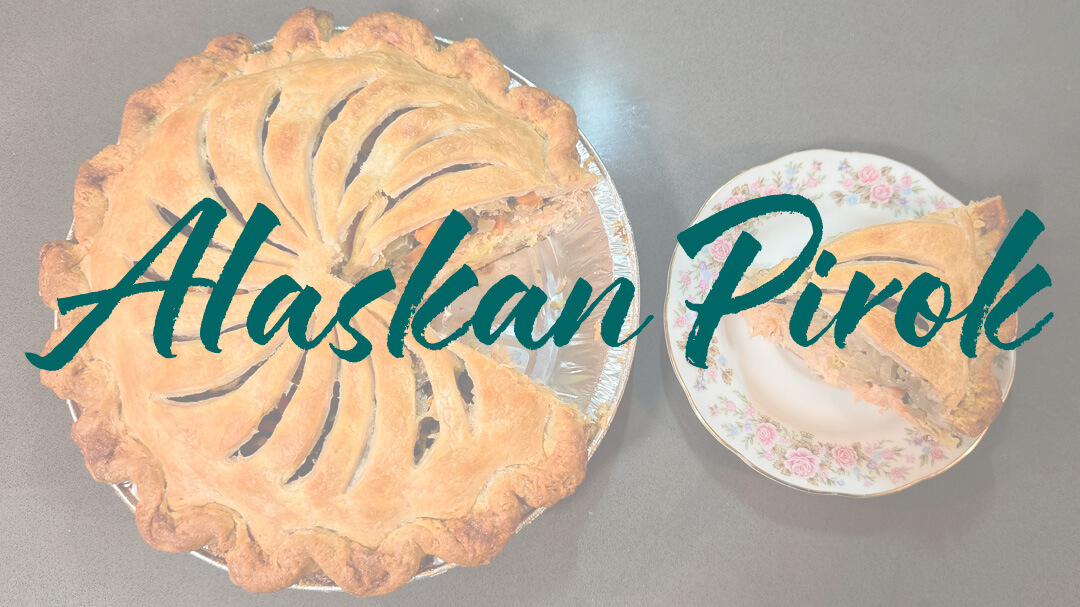
Pirok: Alaskan Salmon Pie (Perok)
If you haven’t spent much time in Alaska, there’s a good chance you’ve never heard of Pirok. Pirok, also spelled perok or peroke, is a layered, savory salmon pie adapted from Russian cuisine and most often found in Native Alaskan homes. There is no single definitive recipe. Pirok varies widely from family to family, with each household putting its own spin on the dish.
Pirok, sometimes called Alaskan salmon pie, has been one of my favorite savory pies since I first discovered it. It’s especially cozy during the winter months, but is also just as comforting and satisfying any time of year.

What is Pirok?
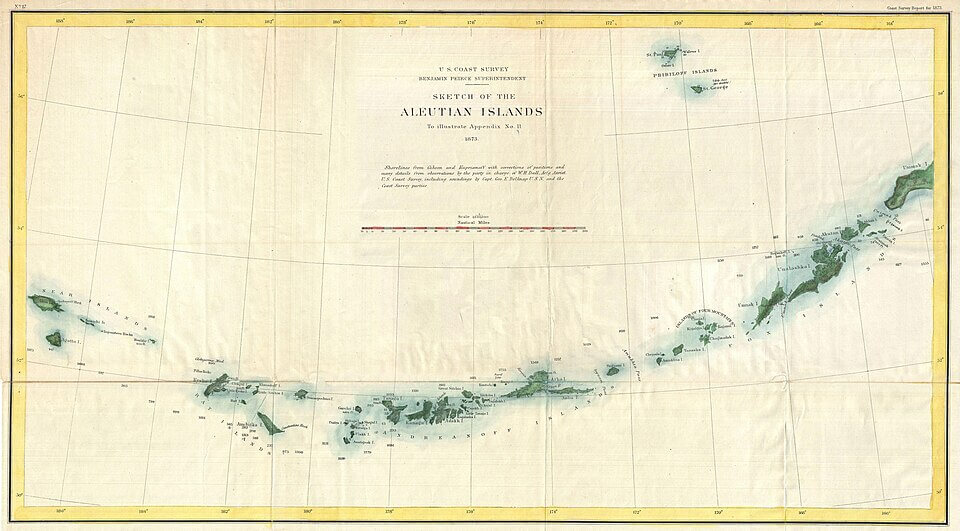
Pirok, also commonly spelled perok or peroke, is a Russian-influenced savory pie that can be thought of as an Alaskan version of a pot pie. It is most often associated with Kodiak Island and the Aleutian Islands, an archipelago that trails off the southern coast of Alaska like a long tail. These islands stretch between the North American and Russian mainlands, and their relative isolation has helped preserve a distinctive blend of Russian, American, and Native Aleut culture that still persists today.
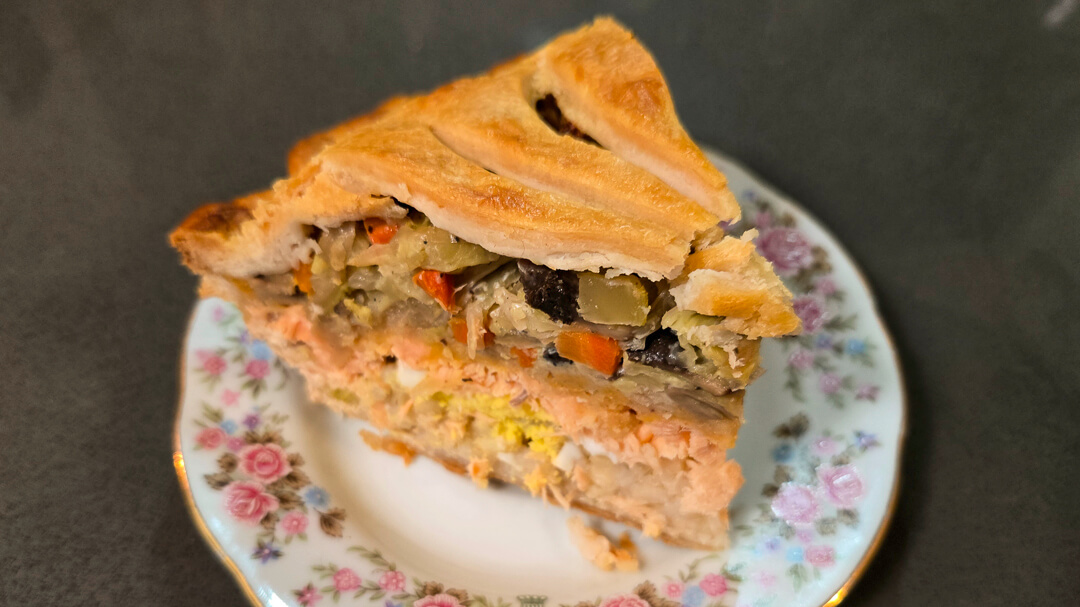
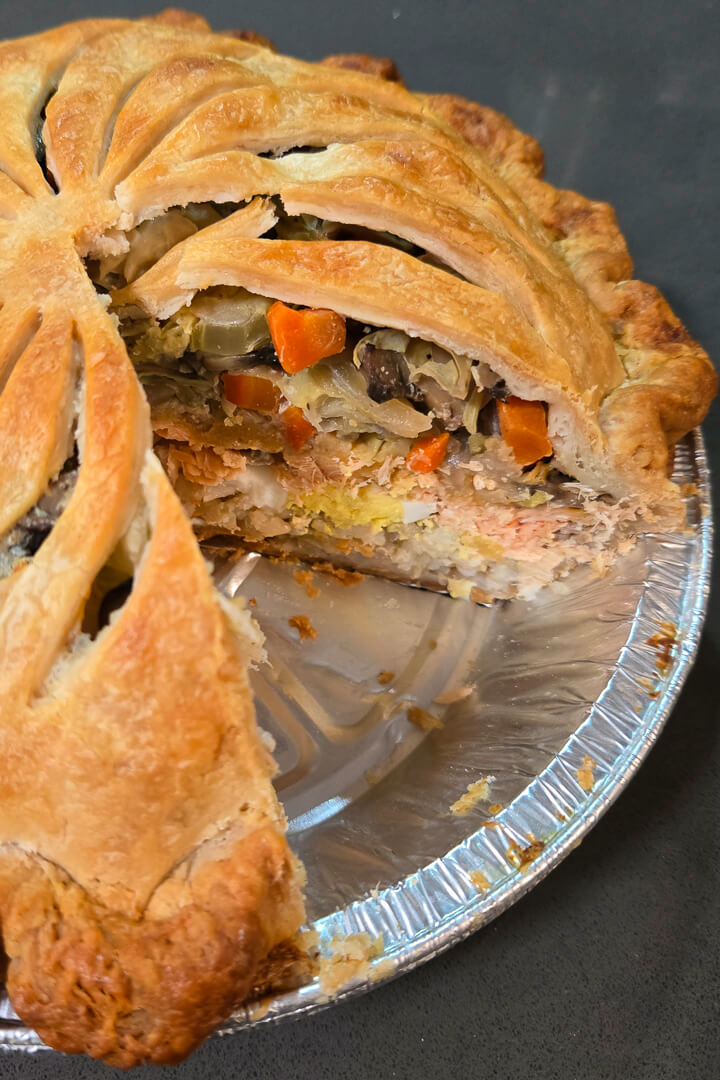
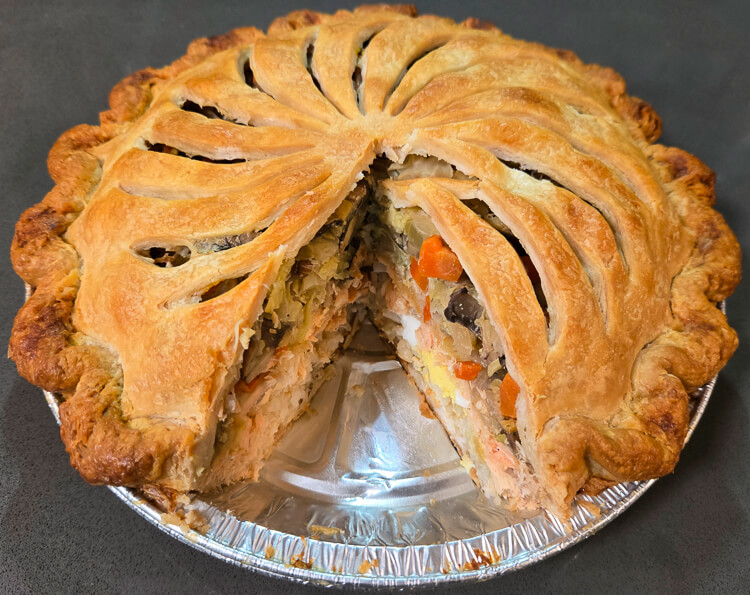
Pirok is a layered, double-crusted savory pie. In most published recipes, the filling is built in layers of cooked rice, salmon (which may be canned, dried, or fresh), sliced hard-boiled eggs, sometimes cheese and/or bacon bits, and vegetables. The vegetables vary from recipe to recipe but are typically a mix of onions, cabbage, and root vegetables. The finished pie is hearty, deeply flavorful, and especially comforting.
History of Pirok in Alaska
Because this pie most likely originated on Kodiak or one of the Aleutian Islands, and is most commonly associated with Native Alaskan communities, much of its history is either unrecorded or passed down through families and towns rather than formal written sources.
Pirok, sometimes spelled perok, is widely believed to be an evolution of a layered Russian pie known as coulibiac (кулебяка). The name pirok likely derives from the Russian word for pie, pirog (пиро́г). Coulibiac is sometimes described as a salmon wellington. It is typically not baked in a dish, but instead wrapped in puff pastry in the shape of a log, similar in form to a beef wellington. Modern Russian versions layer rice, salmon, hard-boiled eggs, and vegetables. By comparison, Alaskan Pirok is more often round, frequently includes shredded cheese, and tends to use a larger proportion of vegetables.
The dish likely arrived in what is now Alaska in the mid-1700s, when Russian fur trappers began settling on the Aleutian Islands. By the late 1700s, the Aleutian Islands and much of Alaska had become a Russian territory. Alaska was later sold to the United States in 1867. Long before Russian contact, however, the Aleutian Islands had been home to the indigenous Unangax̂ people for at least 9,000 years.
By the 1960s, Alaskan pirok was common enough to be included in an Encyclopedia of Cookery under Alaskan cuisine. Today, it remains a strongly regional dish, with recipes appearing in Alaskan publications such as Edible Alaska and the Anchorage Daily News.
Disclaimer: I have done my best to present an accurate representation of this dish using the sources available to me. I do not belong to the Native Alaskan community, nor have I had the opportunity to travel to the region and learn about Pirok firsthand. If you notice any informational inaccuracies, please don’t hesitate to contact me so I can correct them.
What Are the Different Types of Salmon?
When shopping for salmon at the grocery store, you may notice that there are several different varieties available. Since this pie is from Alaska, Alaskan salmon is the recommended choice whenever possible, but any other types of salmon can be substituted as well. Below is a brief overview of some of the most commonly available salmon varieties and their key characteristics.
If you are concerned about the sustainability of the salmon you are purchasing, please consult this guide to sustainable salmon published by the Monterey Bay Aquarium.
- Atlantic Salmon: Most commercially available Atlantic salmon is farmed and is often more affordable as a result. It tends to be fattier than Pacific salmon, which includes all other commonly sold salmon species. Although farmed salmon has historically had a poor reputation for environmental sustainability, farming practices have improved. The Monterey Bay Aquarium guide recommends sourcing Atlantic salmon farmed in Maine or Denmark.
- Chinook Salmon or King Salmon: Chinook, also known as King salmon, is often considered the best-tasting variety of salmon due to its high fat content and rich flavor. Chinook, coho, and pink salmon are all found in Alaskan waters. If you can find Alaskan Chinook salmon, it is often expensive, but exceptionally flavorful.
- Coho Salmon: Coho salmon is leaner than most other salmon varieties. Because of its lower fat content, it has a firmer texture once cooked. Coho salmon is also commonly caught in Alaska and works well in baked dishes like pirok.
- Pink Salmon: Pink salmon is the most common Pacific salmon species. It is most frequently used for canning and is less often sold fresh. While milder in flavor, it can still be used successfully in savory salmon pies.
- Sockeye Salmon: Sockeye salmon, also known as red salmon, has the strongest and most distinctive salmon flavor. It is richly colored, deeply flavorful, and holds up well to cooking. Sockeye salmon is also caught in Alaska and is an excellent option if you prefer a more pronounced salmon taste.
Step-by-Step Alaskan Pirok Recipe:
Crust:
Pirok (perok) is traditionally a double-crusted pie, with both a bottom and top layer of pastry. Prepare a batch of flaky pie dough in advance, then divide it into two equal portions. Wrap each portion tightly in plastic wrap and refrigerate until you are ready to roll them out.
This pie also bakes especially well in a cast iron pan, which helps produce a deeply golden crust and even heat distribution. If you’d like more detailed guidance, see my guide on baking pies in cast iron skillets.
Make the Alaskan Pirok:
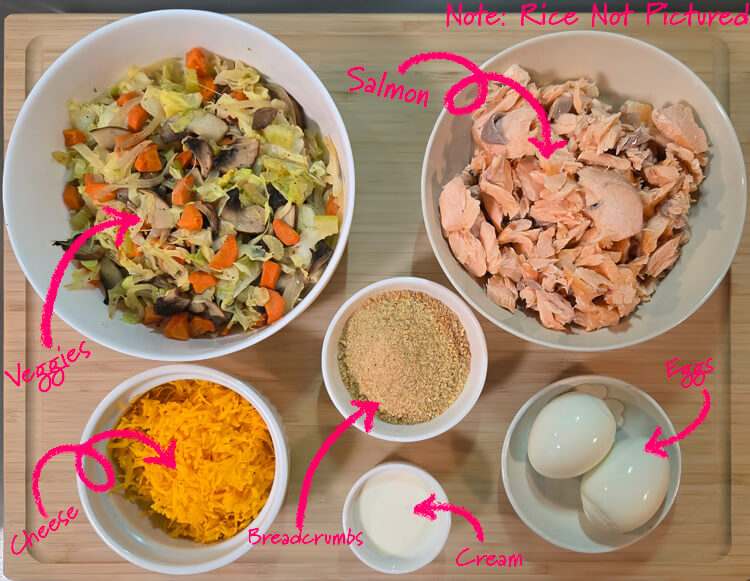
Ingredients
- 1lb Fresh Salmon
- 1½c Cooked Brown Rice
- 2 Eggs, hard-boiled
- ½c Shredded Cheese
- ¼c Breadcrumbs
- 1 Carrot, diced (~3oz)
- ½ Onion, sliced (~4oz)
- 8oz Cabbage
- 4oz Mushrooms, sliced
- 1 stalk Celery, diced (~2oz)
- 2T Butter
- 1½t Salt (more to taste)
- ¼t Ground Black Pepper (more to taste)
- ¼c Heavy Whipping Cream, divided
Prepare the Salmon:
1.
Preheat the oven to 350°F (175°C).

2.
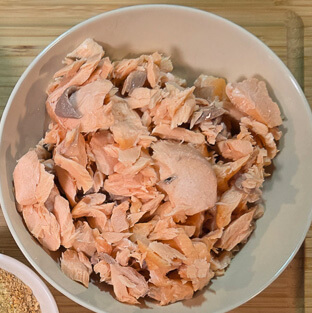
Place the salmon on a baking sheet lined with parchment paper and sprinkle with 1 teaspoon of salt. If using salmon fillets with skin, place them skin-side down.
3.
Bake until a meat thermometer inserted into the center of the salmon reads 145°F (63°C). The cooking time will vary depending on thickness. For a fillet about 1.5 inches thick (4cm), this typically takes about 40 minutes.
4.
Allow the salmon to cool slightly, then flake it with a fork and set aside.
Prepare the Vegetables:
5.
In a large skillet, melt the 2 tablespoons of butter over medium heat.
6.
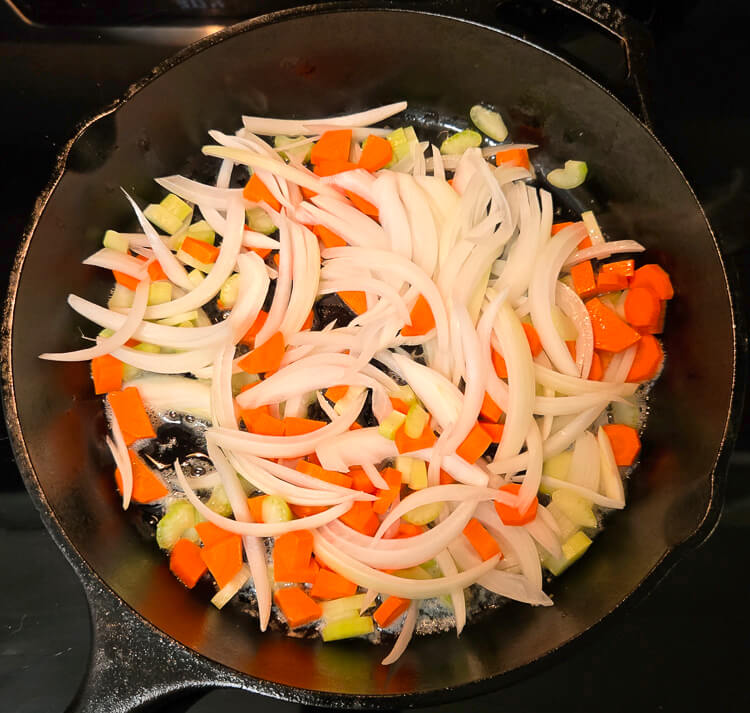
Add the sliced onion, diced carrot, and diced celery. Sauté until the onion is translucent, about 5 to 7 minutes.
7.
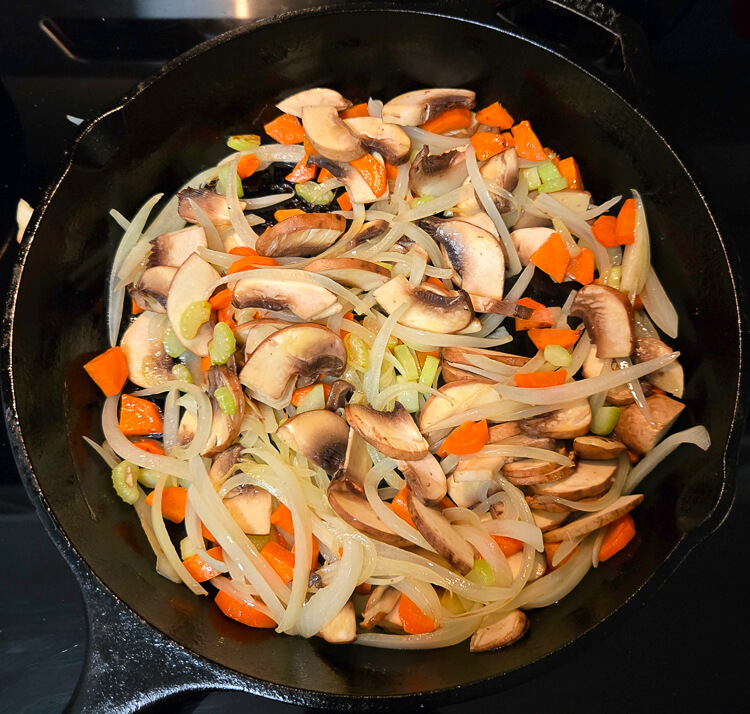
Add the sliced mushrooms and cook until they are soft, about 5 minutes.
8.
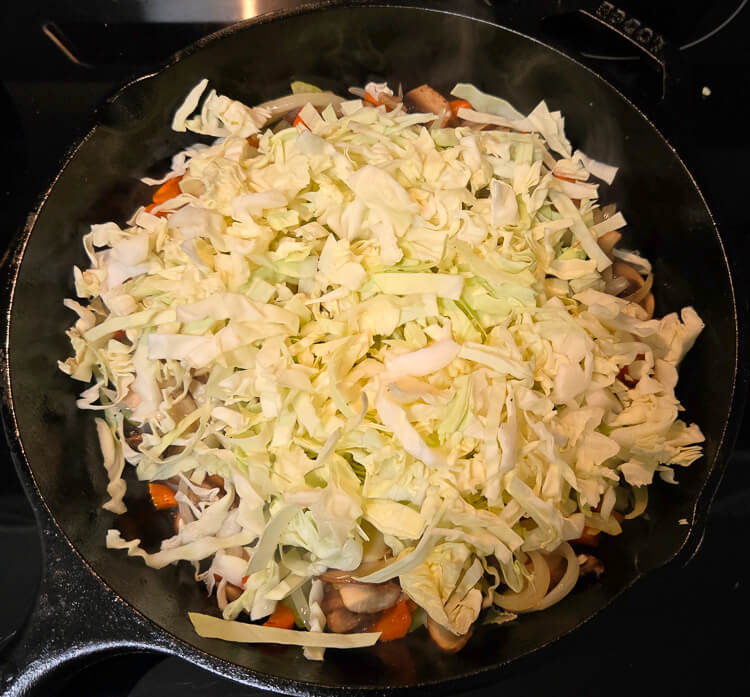
Add the cabbage and continue cooking until fully wilted, about 5 minutes more.
9.
Season with ½ teaspoon of salt and ¼ teaspoon of black pepper. Remove from the heat and set aside to cool.
Assemble the Pirok:
10.
Preheat the oven to 350°F (175°C).
11.
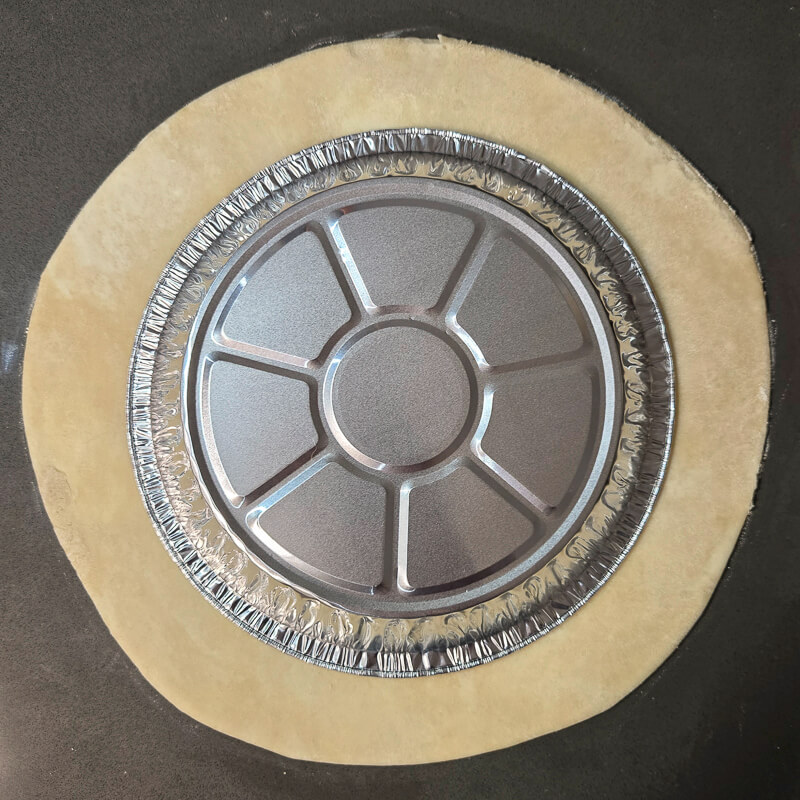
Roll out your prepared pie dough into two rounds about 2 mm thick and at least 1 inch wider than your 9-inch pie tin. See here for how to roll out pie dough.
12.
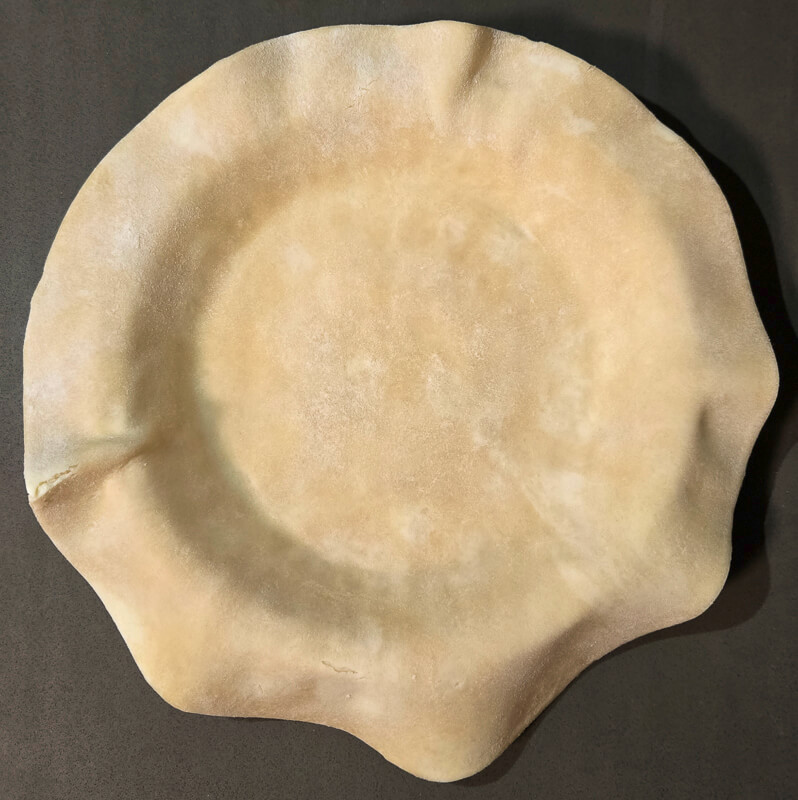
Fit one round into the pie tin, pressing it gently into the corners. Trim the edges with kitchen scissors so there is about 1 inch of overhang. See how to fit pie dough into a tin here.
13.
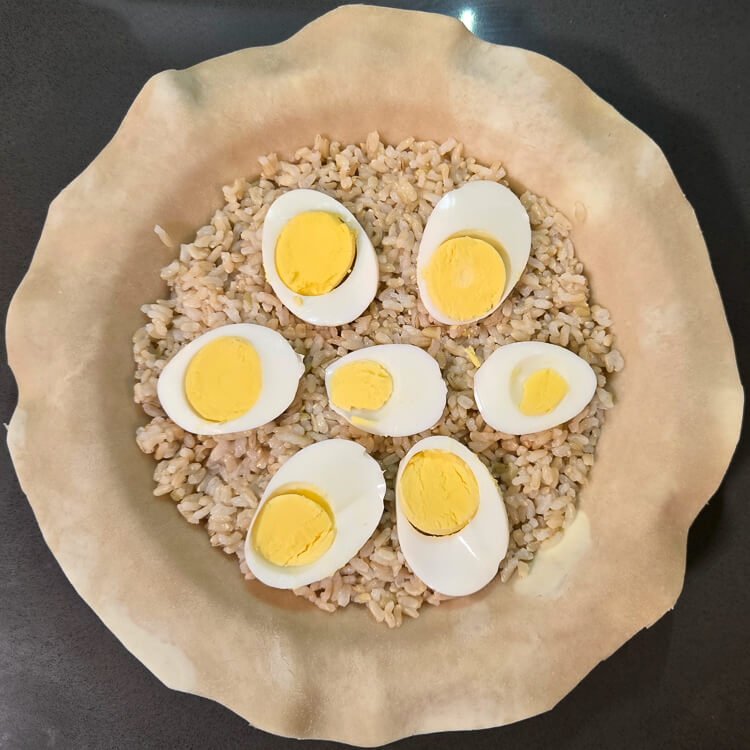
Press the 1½ cups of cooked brown rice into the bottom of the pie.

14.
Slice the hard-boiled eggs and arrange them in a single layer over the rice.
15.
Add the flaked salmon, pressing it down gently so it fills any gaps between the rice and egg slices.
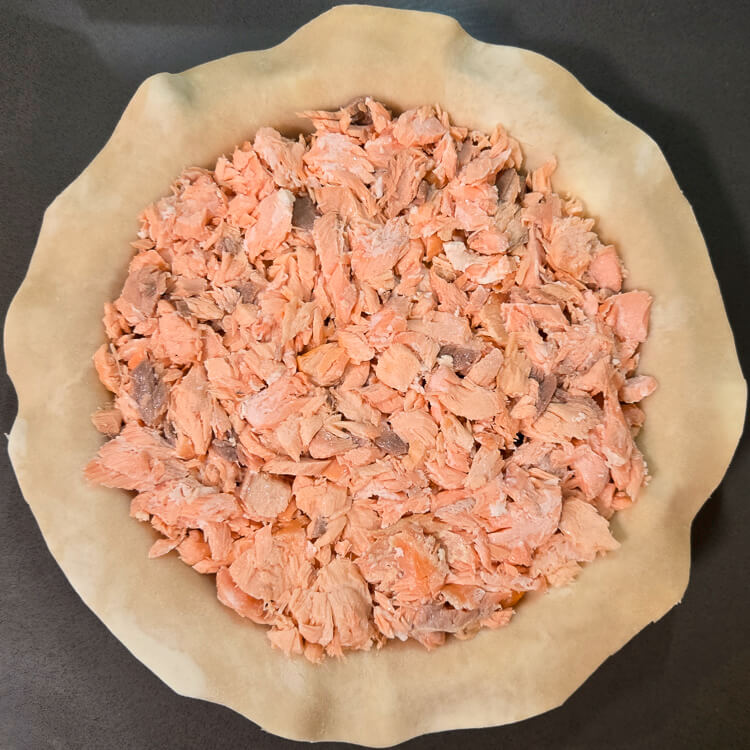
16.
Sprinkle the shredded cheese evenly over the salmon.

17.
Sprinkle the breadcrumbs over the cheese. The breadcrumbs help absorb excess moisture in the filling and prevent the pie from becoming mushy.

18.
Mound the sautéed vegetable mixture over the top, pressing the filling firmly into the pie tin to remove any air pockets. The filling will mound out over the top of the pie tin, this is intended.

19.
Pour 2 tablespoons of heavy whipping cream over the filled pie.

20.
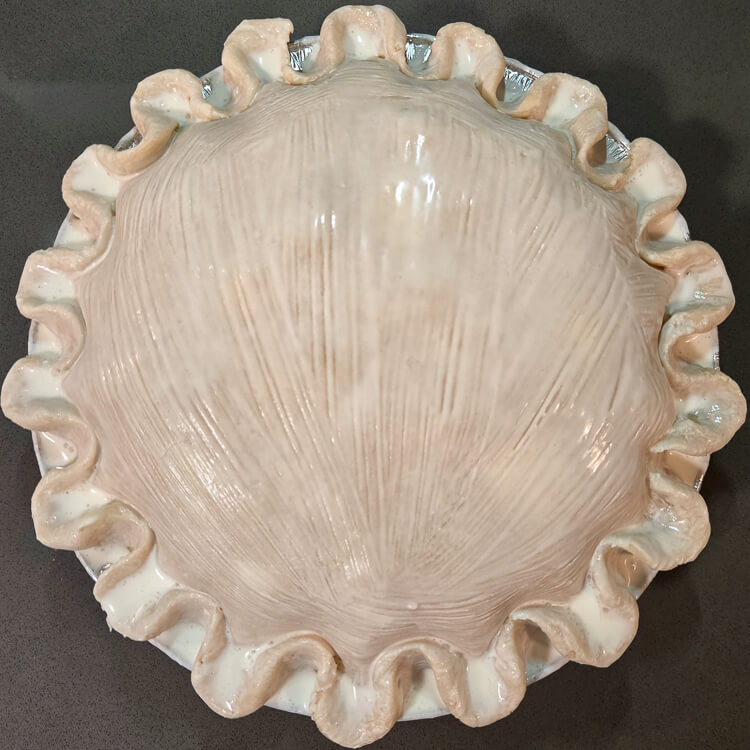
Place the second round of dough over the filling and trim it using kitchen scissors so it is about ½ inch shorter than the bottom crust all the way around. Seal the edges using your preferred method.
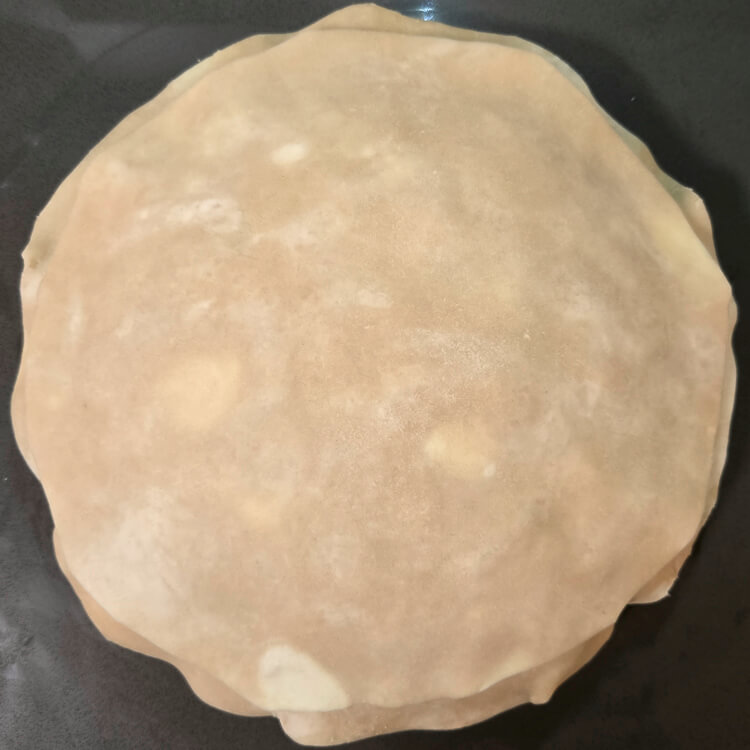
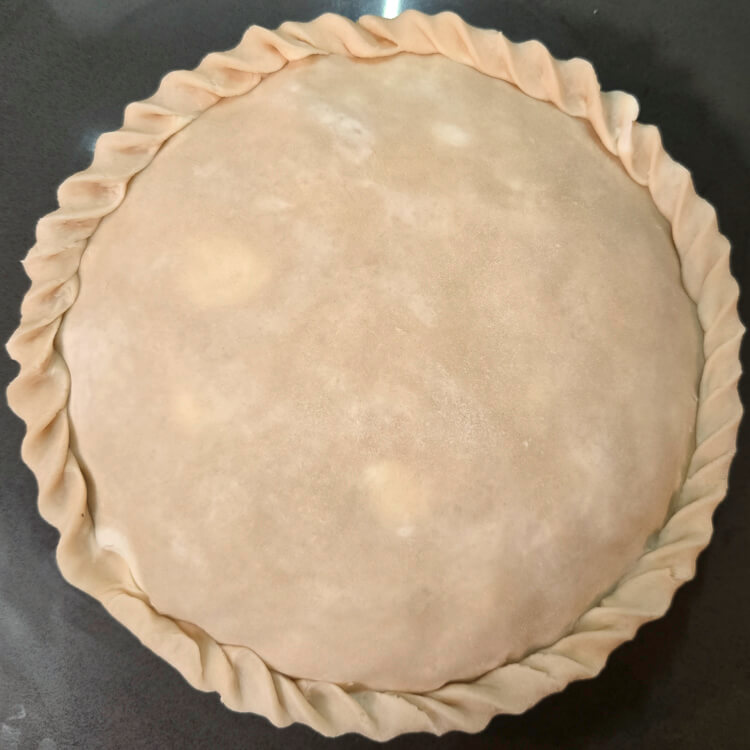
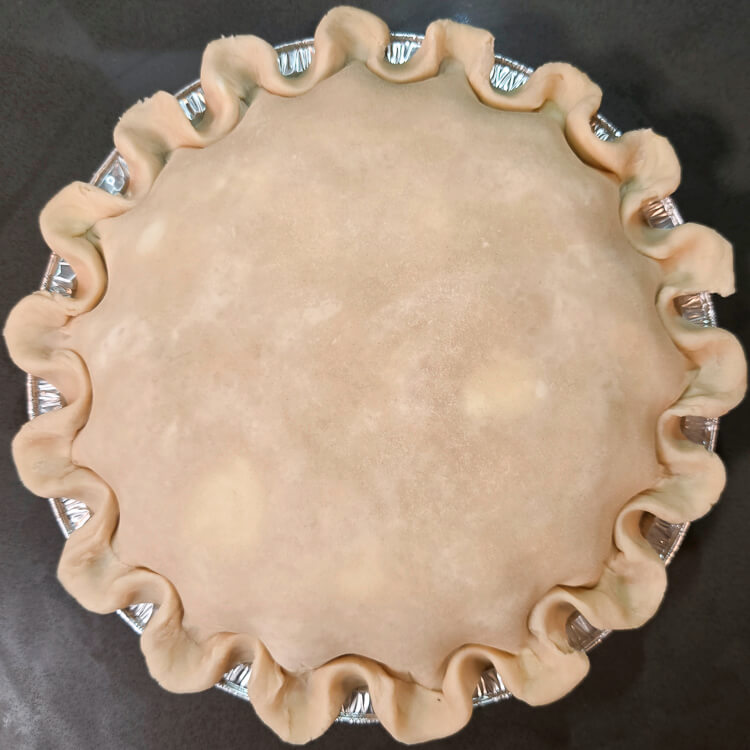
21.
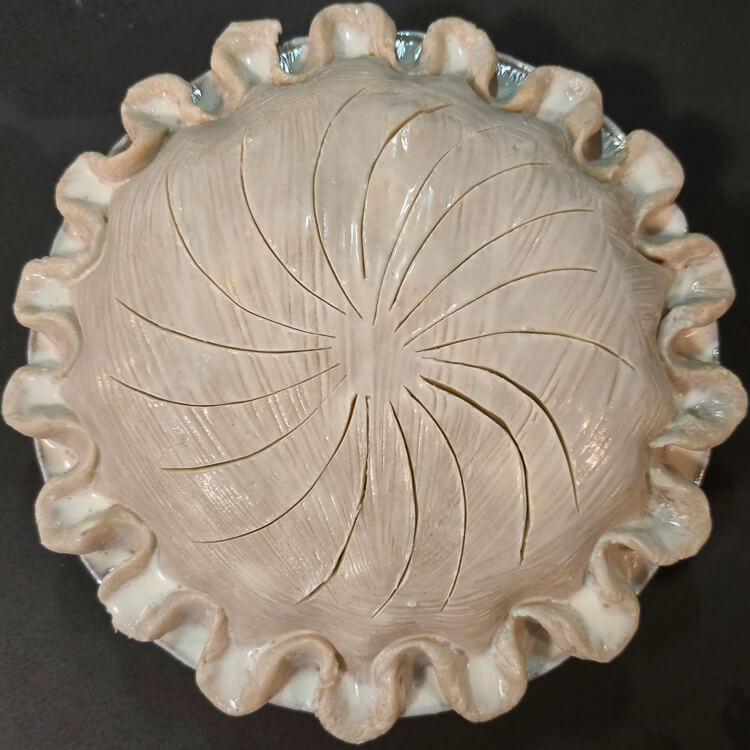
Brush the top with an egg or cream wash. A cream wash gives a slightly more rustic appearance. Cut vents into the top crust to allow steam to escape.
22.
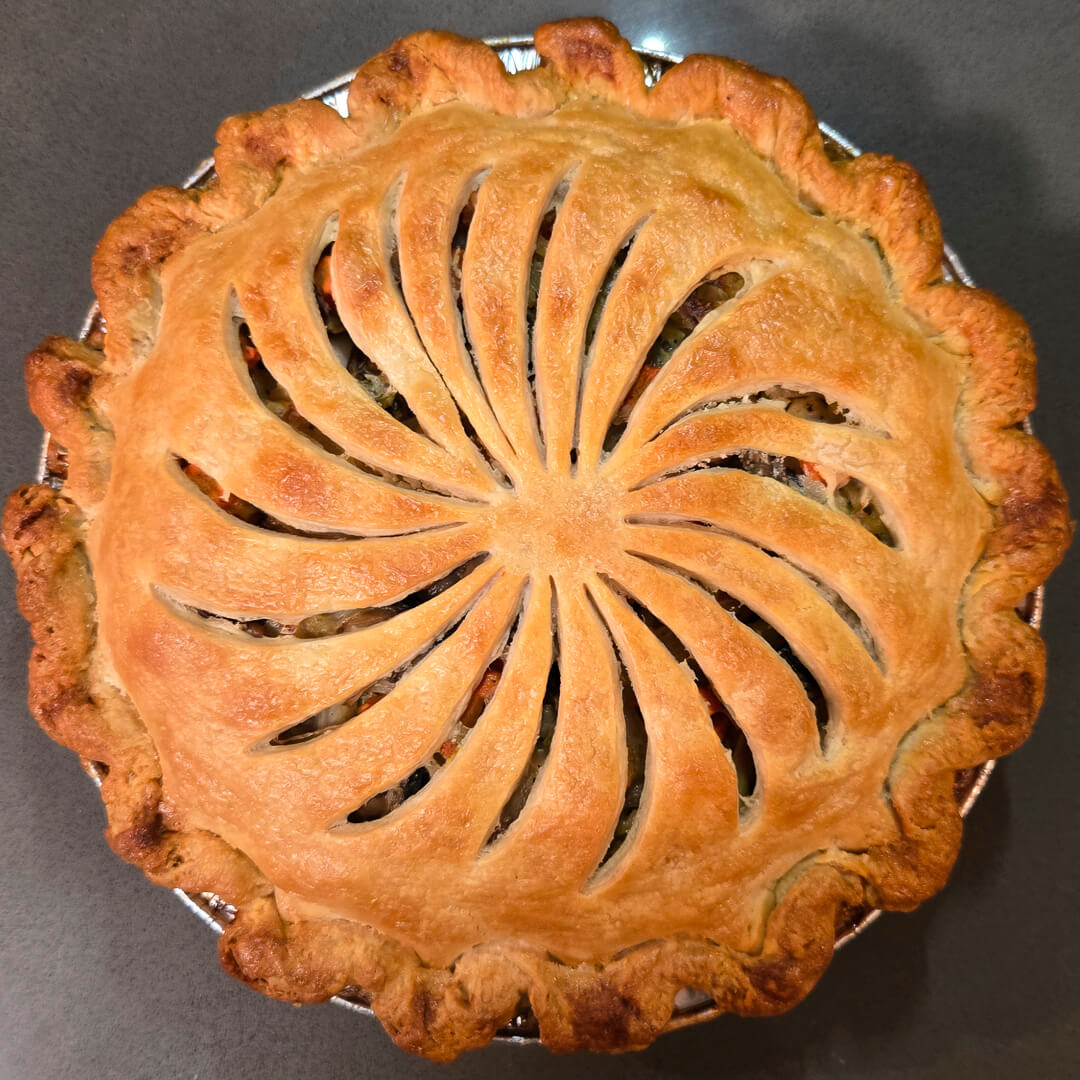
Bake for about 1 hour, or until the crust is golden brown.
23.
Let the pie cool for at least 30 minutes before slicing and serving.
Variations of Alaskan Salmon Pie:
No two recipes for Alaskan Pirok (perok) are exactly the same. This is a dish that naturally adapts to personal taste, seasonal ingredients, and family tradition. Below are some common ways to customize your Pirok while staying true to its spirit.
- Different Kinds of Rice
I recommend using brown rice for this recipe. Its slightly nutty flavor complements the salmon well, and it holds its structure as it absorbs moisture from the filling without becoming mushy. That said, any type of rice will work. Many recipes use plain white rice, and wild rice blends also make a flavorful variation.
- The Vegetable Assortment
No two pirok recipes seem to use the exact same combination of vegetables. Onions are nearly universal, cabbage is very common, and the remaining vegetables are often a mix of root vegetables. Feel free to mix and match vegetables that pair well with salmon and suit your preferences.
- Cheese or No Cheese
Not all pirok recipes include cheese. The addition of cheese appears to have become more common starting in the 1960s. If you prefer a dairy-free version, the cheese and additional cream can be omitted entirely. If you enjoy cheese, try experimenting with different varieties to find what you like best.
- Adding in Bacon Bits
Some versions of pirok include bacon, usually added in the same layer as the cheese. Bacon adds a smoky, savory note, but it is optional and not found in every regional or family recipe.
- Different Kinds of Salmon
As discussed earlier in the post, several types of salmon work well in pirok. Try different varieties to find your favorite. Canned or dried salmon can also be used, though oven-baked fresh salmon offers the richest flavor and texture.

How to Store an Alaskan Pirok:
Wrapped tightly in plastic wrap or aluminum foil, your Alaskan salmon pie will keep well in the refrigerator for up to one week. When ready to serve, place the pie—still in its pan—back into a preheated 350°F oven for about 20 to 30 minutes, or until heated through and the crust has regained its crispness. Once reheated, the pie will taste just as good as if it were freshly baked. Do not freeze an Alaskan pirok, many of the ingredients in the filling do not freeze and reheat well.
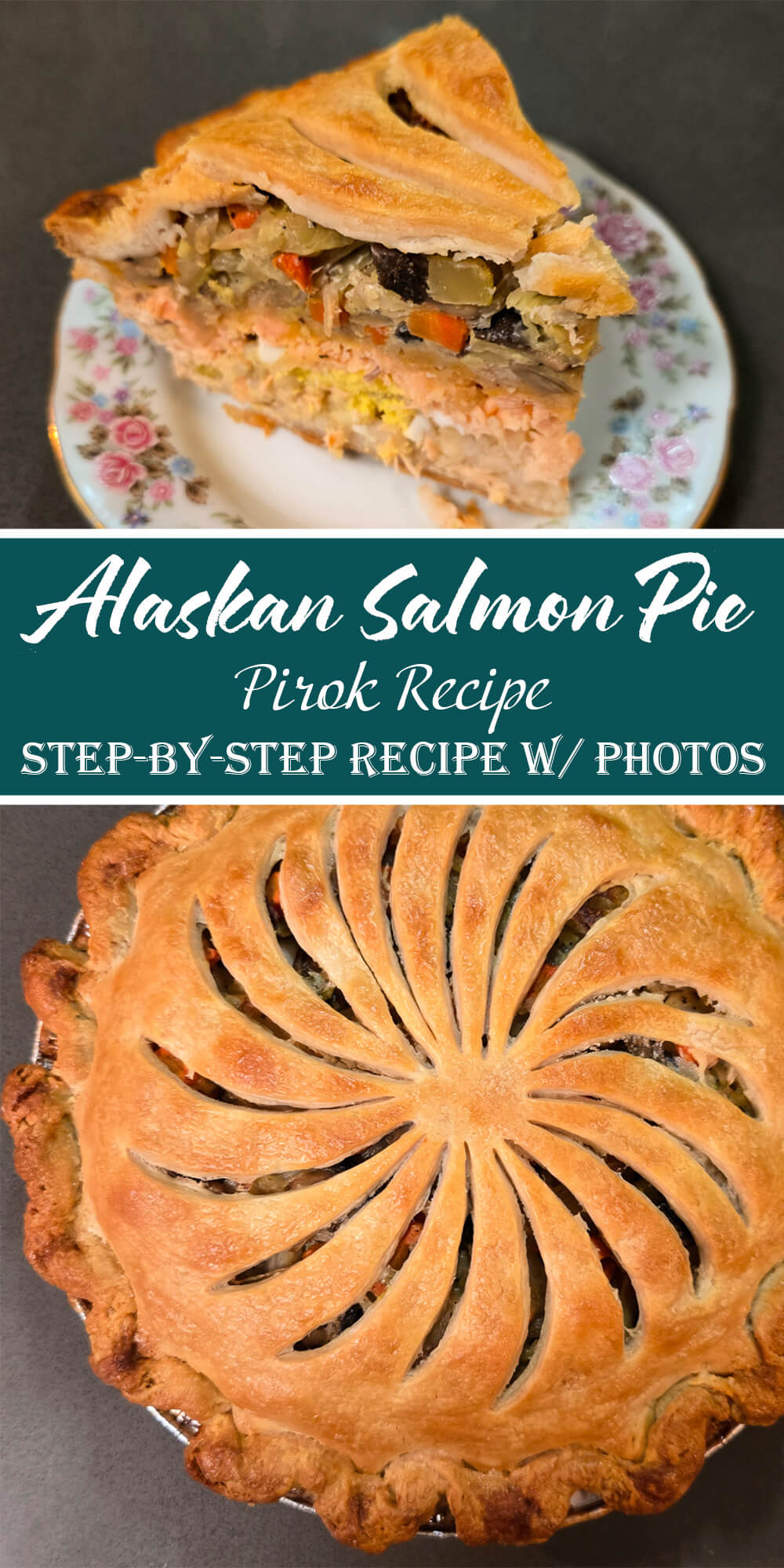
We’d love to see your Alaskan Pirok creations and hear about your family recipes! Tag us @doggone_baking or send us an email.

Pirok (Alaskan Salmon Pie)
Ingredients
Crust
- 1 batch Flaky Pie Dough
- 2 tbsp Heavy Whipping Cream (30mL)
Salmon Pie Filling
- 1 lb Fresh Salmon (454g)
- 1½ cups Cooked Brown Rice
- 2 Eggs, hard-boiled
- ½ cup Sharp Cheddar Cheese, shredded
- ¼ cup Fine Breadcrumbs
- 1 Carrot, diced (~85g)
- ½ Onion, sliced (~115g)
- ¼ Cabbage, cored and sliced (~225g)
- 4 oz Mushrooms, sliced (115g)
- 1 stalk Celery, diced (~55g)
- 2 tbsp Butter (28g)
- 1½ tsp Salt more to taste
- ¼ tsp Black Pepper, ground
- 2 tbsp Heavy Whipping Cream (30mL)
Instructions
Make the Crust
- Prepare one batch of flaky pie crust. Split the dough into two even discs, wrap them in plastic wrap, and refrigerate until ready to roll out.
Bake the Salmon
- Preheat the oven to 350°F (175°C).
- Place the salmon on a baking sheet lined with parchment paper and sprinkle with 1 teaspoon of salt. If using salmon fillets with skin, place them skin-side down.
- Bake until a meat thermometer inserted into the center of the salmon reads 145°F (63°C). The cooking time will vary depending on thickness. For a fillet about 1.5 inches thick (4cm), this typically takes about 40 minutes.
- Allow the salmon to cool slightly, then flake it with a fork and set aside.
Prepare the Vegetables
- In a large skillet, melt the 2 tablespoons of butter over medium heat.
- Add the sliced onion, diced carrot, and diced celery. Sauté until the onion is translucent, about 5 to 7 minutes.
- Add the sliced mushrooms and cook until they are soft, about 5 minutes.
- Add the cabbage and continue cooking until fully wilted, about 5 minutes more.
- Season with ½ teaspoon of salt and ¼ teaspoon of black pepper. Remove from the heat and set aside to cool.
Assemble the Pirok
- Preheat the oven to 350°F (175°C).
- Roll out your prepared pie dough into two rounds about 2 mm thick and at least 1 inch wider than your 9-inch pie tin. See here for how to roll out pie dough.
- Fit one round into the pie tin, pressing it gently into the corners. Trim the edges with kitchen scissors so there is about 1 inch of overhang. See how to fit pie dough into a tin here.
- Press the 1½ cups of cooked brown rice into the bottom of the pie.
- Slice the hard-boiled eggs and arrange them in a single layer over the rice.
- Add the flaked salmon, pressing it down gently so it fills any gaps between the rice and egg slices.
- Sprinkle the shredded cheese evenly over the salmon.
- Sprinkle the breadcrumbs over the cheese.
- Mound the sautéed vegetable mixture over the top, pressing the filling firmly into the pie tin to remove any air pockets. The filling will mound out over the top of the pie tin.
- Pour 2 tablespoons of heavy whipping cream over the filled pie.
- Place the second round of dough over the filling and trim it using kitchen scissors so it is about ½ inch shorter than the bottom crust all the way around. Seal the edges using your preferred method.
- Brush the top heavy whipping cream. Cut vents into the top crust to allow steam to escape.
- Bake for about 1 hour, or until the crust is golden brown.
- Let the pie cool for at least 30 minutes before slicing and serving.


About Me
In 2016, I left my office job and became a professional baker. These days I spend my days testing recipes and baking pies while my two dogs snooze happily nearby.
See My Full Bio
2 responses to “Pirok: Alaskan Salmon Pie (Perok)”
-

I loooove Alaskan salmon, so I was searching for new recipes and found this pie. Wow! I made it for dinner and my family loved it!! -
Mine wasn’t as pretty as yours, but probably as delicious. Adding to my rotation!


Leave a Reply