
This post may contain affiliate links. Please read my disclosure policy.
All recipes on Doggone Baking are intended for humans — the dogs are just our enthusiastic photo assistants and taste-test spectators.
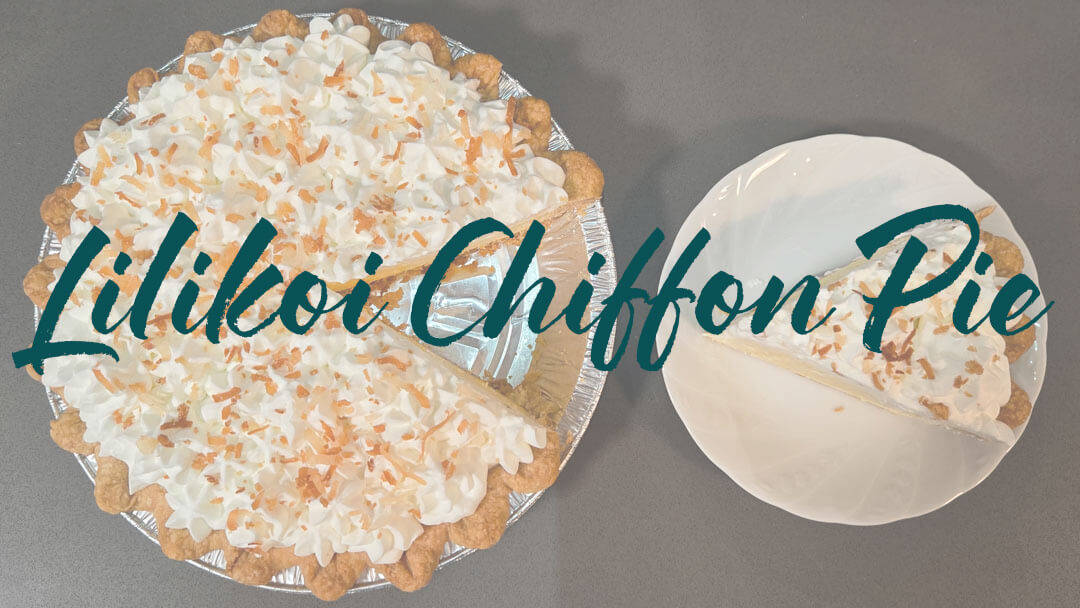
Hawaiian Lilikoi Chiffon Pie Recipe (Passionfruit Chiffon Pie)
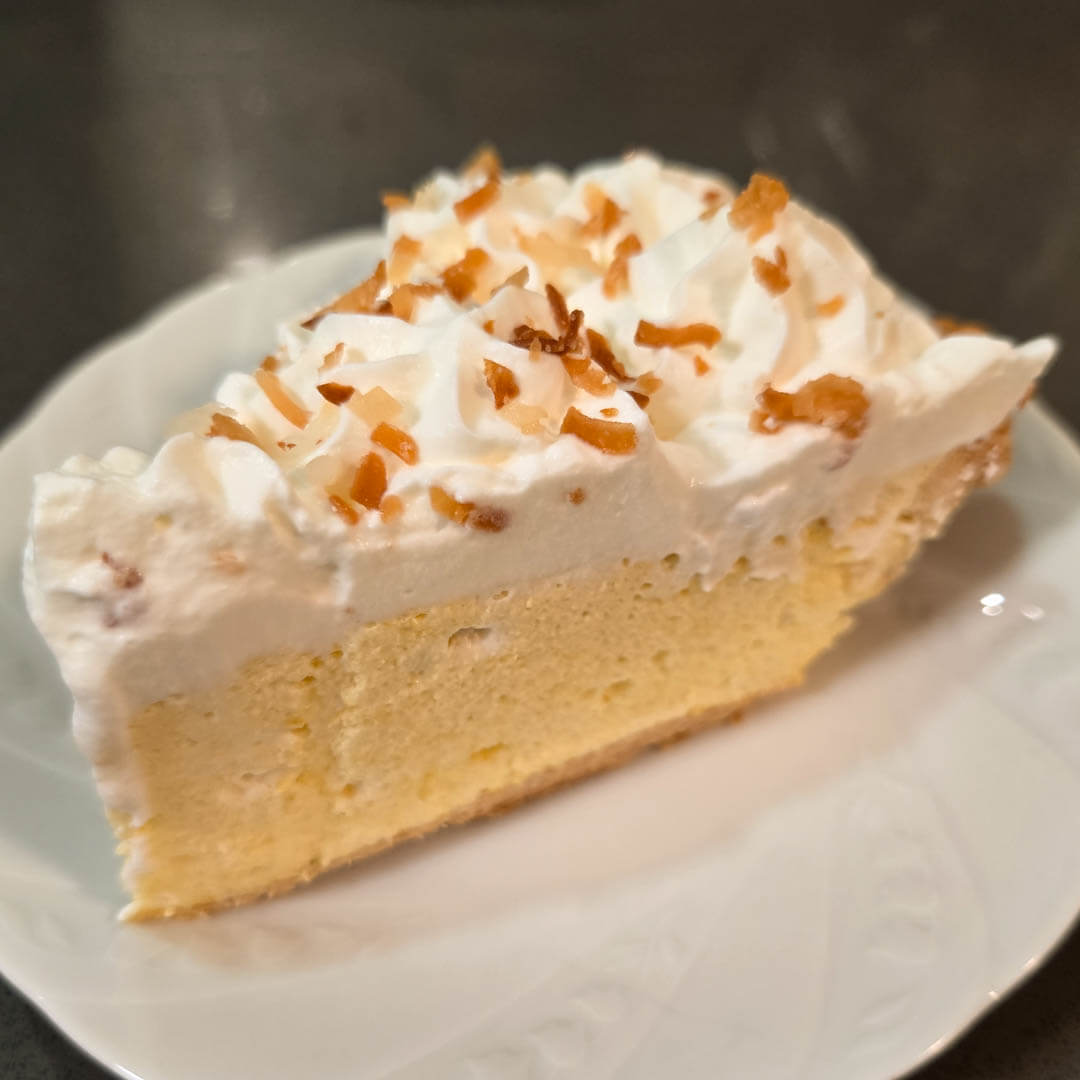
Lilikoi is the Hawaiian word for passionfruit, and this lilikoi chiffon pie is a dreamy, tropical spin on a classic chiffon pie. An extra light and fluffy passionfruit chiffon filling is set inside a flaky, all-butter pie crust, and the result is every bit as pretty as it is delicious. This Hawaiian lilikoi chiffon pie recipe is the perfect summer pie, and it’s sure to become one of your favorite summer desserts.

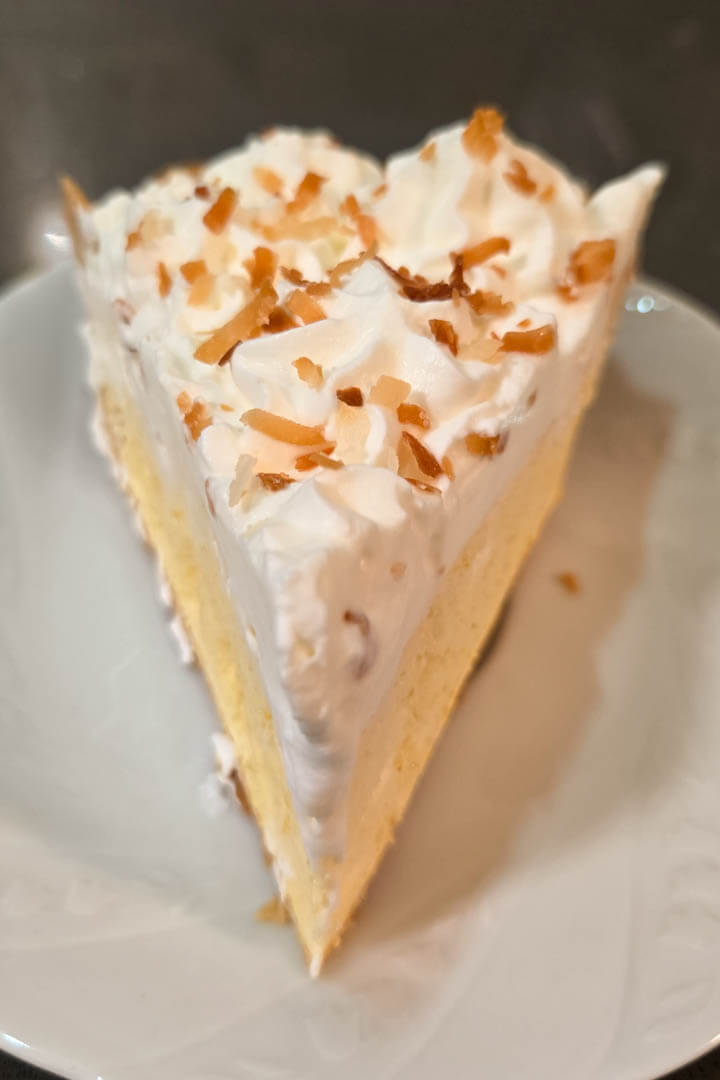
What is a Lilikoi Chiffon Pie?
Because lilikoi is the Hawaiian word for passionfruit, lilikoi chiffon pie is also sometimes called passionfruit chiffon pie. The pie features a light and fluffy passionfruit chiffon filling set inside a flaky pie crust. Chiffon pies are often topped with fresh whipped cream, and sprinkling toasted coconut flakes on top gives this passionfruit chiffon pie a nice tropical finish.
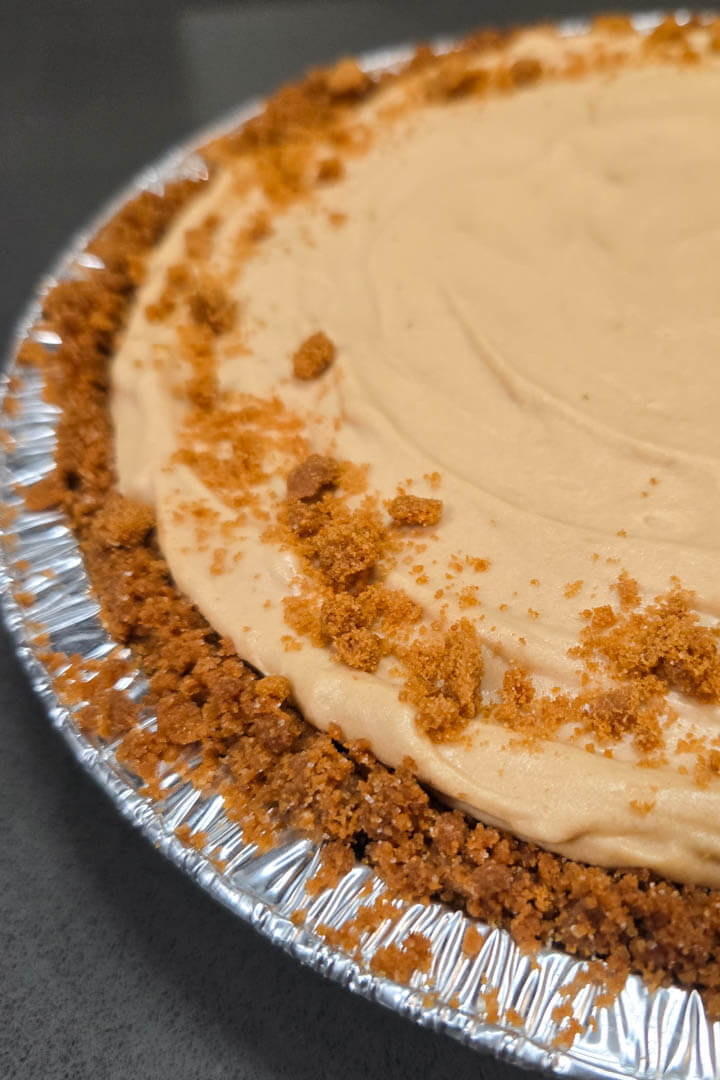
If you’re not feeling an all-butter pie crust, this lilikoi chiffon pie also sets deliciously in a crumb crust. Graham cracker crust is the most popular crumb crust, but a biscoff cookie crust, vanilla wafer crust, or pretzel crust would all make unusual, delicious options too.
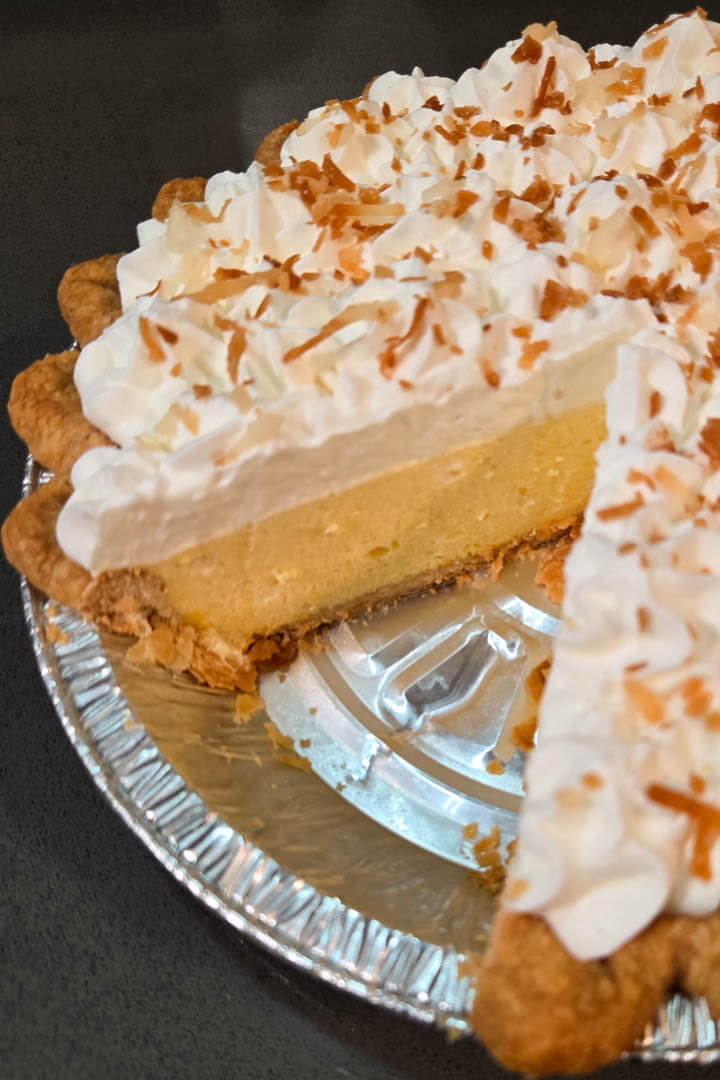
The Origin of Lilikoi Chiffon Pie
Passionfruit is actually native to Brazil, and it was brought to the Hawaiian islands around 1880. The name lilikoi (liliko’i) comes from where the fruit was first planted: Liliko’i Gulch on Maui. The plant took to the islands so well that by the 1930s, lilikoi grew wild across the entire Hawaiian archipelago. You can read more about passionfruit and Hawaii here.
Some of the most popular lilikoi dessert recipes include lilikoi bars (think lemon bars with a passionfruit twist), lilikoi cheesecake, lilikoi butter mochi cake, and lilikoi mousse.
Sam Choy is a celebrity chef from Hawaii known as “the godfather of poke.” He’s a James Beard Award winner who’s hosted a number of cooking shows, and over the years he’s published 16 cookbooks. Lilikoi chiffon pie has appeared in many of them, including his first cookbook, With Sam Choy: Hawaii’s Easy Cooking from the Heart published in 1995.
Sam Choy’s cookbooks have almost certainly helped spread lilikoi chiffon pie’s popularity (you can tell by how many blog posts feature people making his recipe), but he wasn’t the one who invented it. The earliest mention of lilikoi chiffon pie I’ve found comes from a June 1977 edition of The Evening Independent. A column titled “Honolulu Celebrity Report” told readers to “be sure to sample the famous lilikoi chiffon pie.” The first published cookbook recipe for lilikoi chiffon pie that I’ve found comes from a 1982 cookbook titled Hawaii Cooks – The Island Way.
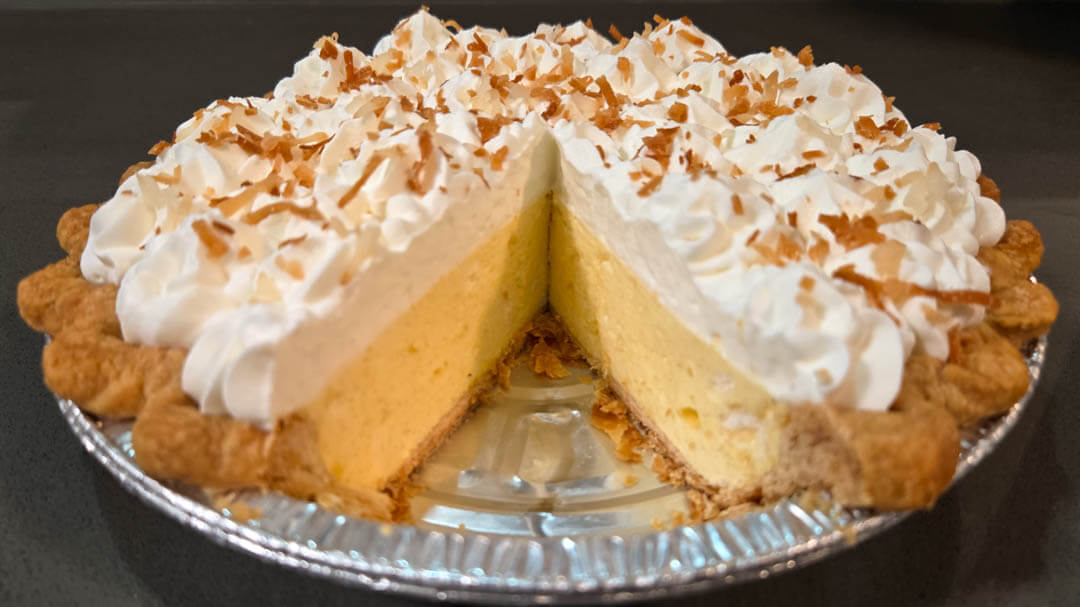
Tips for Making a Fluffy Chiffon Pie
The defining characteristic of a chiffon pie is an incredibly light, fluffy filling made by folding whipped egg whites and gelatin into a flavored filling. Monroe Boston Strause, known as the “Pie King of Los Angeles,” was making pies back in the 1920s and 1930s and claims to be the inventor of chiffon pie (he’s also credited with creating graham cracker crust). Some of the most popular chiffon pies out there are lemon chiffon pie, strawberry chiffon pie, pumpkin chiffon pie, and chocolate chiffon pie.
Making an extra light and fluffy chiffon pie might sound intimidating, but a few simple tips can make the whole process easier.
Making a Fluffy, Food-Safe Meringue for Chiffon Pie
Back in their heyday, chiffon pie recipes almost always called for raw egg whites whipped into a French meringue. That might even be part of the reason chiffon pies aren’t as popular today. I’ve adjusted my chiffon pie recipes on this site to use a Swiss meringue instead of a French meringue. Making a Swiss meringue brings the egg whites up to a food-safe 160°F (70°C), and while Swiss meringue has smaller bubbles than French meringue, the end result is still incredibly light and fluffy, just safer to eat.
Using Cream of Tartar to Create a More Stable Meringue
Creating meringue involves denaturing the protein in egg whites with mechanical agitation (whipping) to create a foam. Adding a small amount of cream of tartar helps the egg white proteins denature more efficiently and more completely. This strengthens the protein network and further stabilizes the meringue, reducing the likelihood that it will collapse or weep over time. You can read more about the science of meringue here.
Letting the Base Cool Before Folding in the Meringue
But if you fold meringue into a hot base, you’ll deflate all those delicate bubbles you just whipped up. Be sure to let the base cool to room temperature before folding in the meringue. Just don’t let it get too cold. If it gets cold, the gelatin will firm up and make it nearly impossible to fold the meringue in evenly.
Gently Fold the Meringue In in Small Portions
The most important step in creating a fluffy chiffon pie filling is folding the meringue in gently, so you don’t knock all that air back out. The easiest way to do this is to start by folding in about one cup of meringue first. Once the filling lightens up a bit, it’s much easier to fold in the rest of the meringue without needing as much force. Use a spatula in a sweeping motion to fold the meringue into the filling.
Finding Passionfruit Puree for Lilikoi Chiffon Pie
Making this lilikoi chiffon pie requires some seedless passionfruit juice or passionfruit puree. The easiest way to get passionfruit juice or passionfruit puree is to head to a Mexican or other Latin American grocery store, where you’ll usually find passionfruit puree sold frozen in plastic pouches labeled “pulpa de fruta de Maracuyá.” Just defrost the pouch and use the passionfruit puree as-is for this recipe.
If it’s easier for you to find, you can also buy frozen passionfruit cubes instead of pulp. They’re often sold right alongside other frozen tropical fruits like mango and guava. Simply puree the passionfruit cubes in a blender until smooth to get the passionfruit puree you need for this pie.
Step-by-Step Lilikoi Chiffon Pie Recipe
Crust:
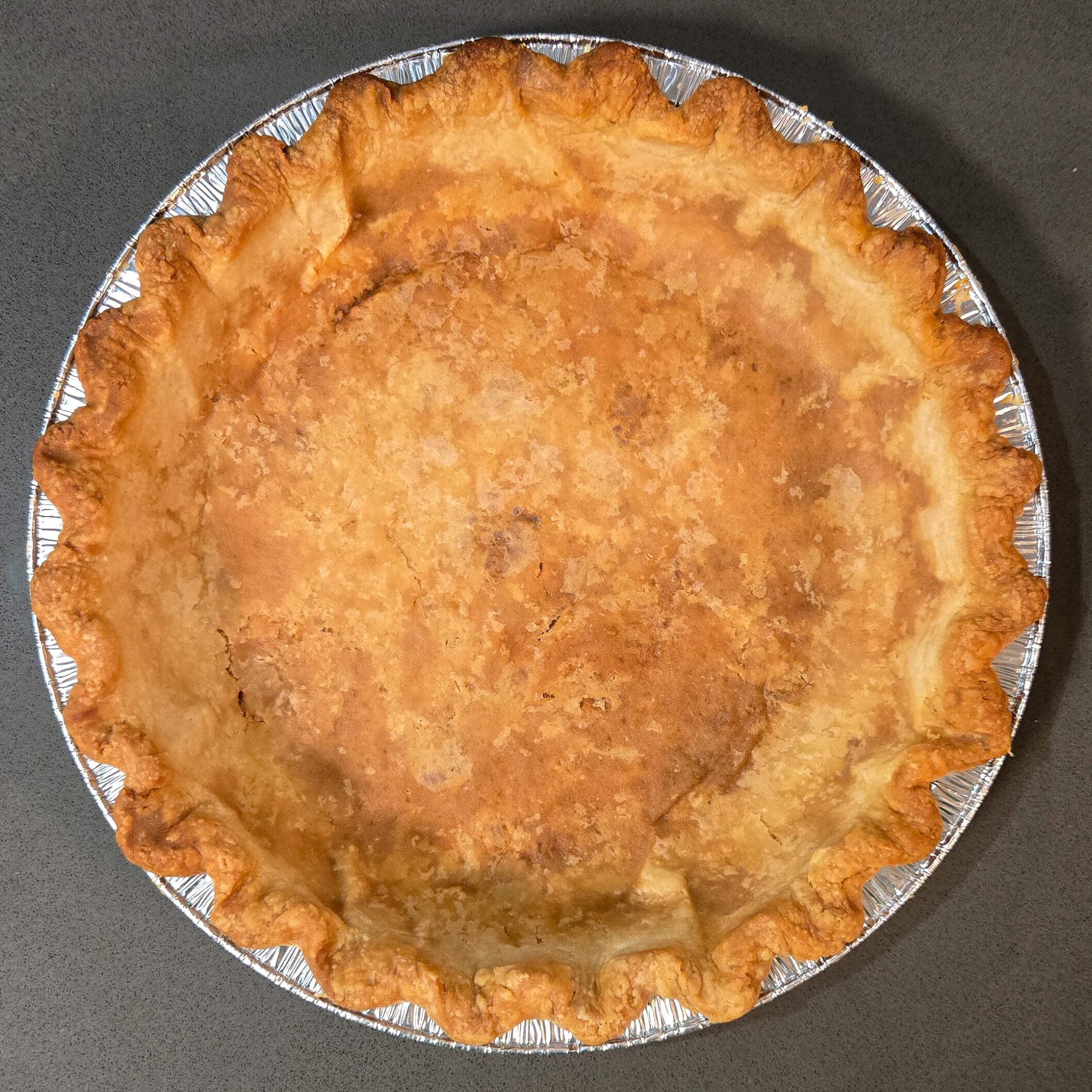
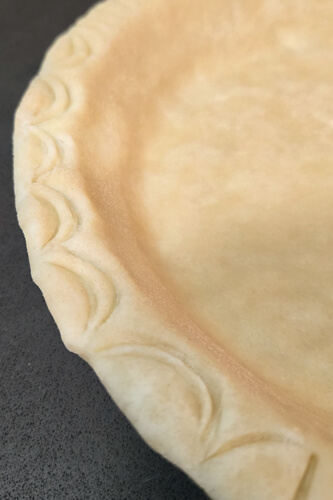
Most published recipes for lilikoi chiffon pie call for a fully blind-baked flaky pie shell. That said, this pie also works beautifully in a graham cracker crust, which is a simpler option. For a more unusual twist try a Biscoff cookie crust, vanilla wafer crust, or pretzel crust.
Lilikoi Chiffon Pie Filling Recipe
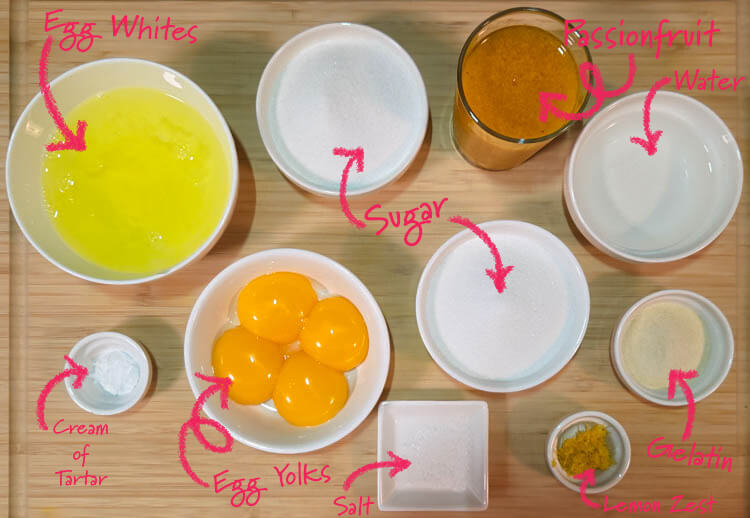
Ingredients
- 2½t Unflavored Gelatin (1 packet)
- ¼c Water
- 4 Eggs, separated
- ⅔c Lilikoi Puree (passionfruit puree)
- 1c Granulated Sugar, divided
- Zest from 1 Lemon
- ¼t Cream of Tartar
- ¼t Salt
Make the Chiffon Pie Filling Base
1.
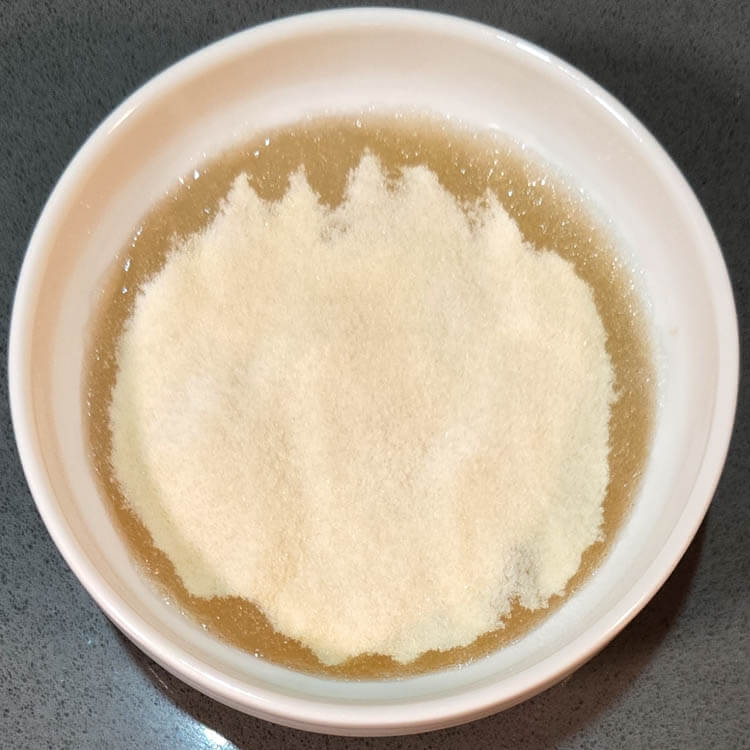
Sprinkle 2½ teaspoons of gelatin over ¼ cup of cold water and let it sit for 5 minutes so the gelatin can bloom.
2.
Microwave the gelatin and water mixture for about 15 seconds, just until the gelatin melts.
3.
Separate the eggs, placing the yolks in a large bowl.
4.
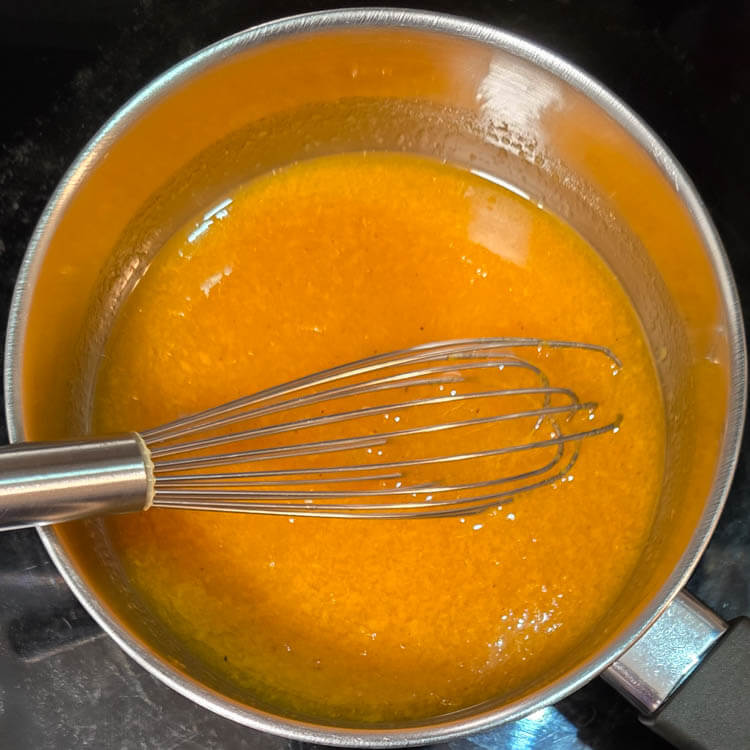
In a small pot, combine the lilikoi puree, salt, lemon zest, and ½ cup of the granulated sugar. Heat over medium heat just until the mixture begins to boil.
5.
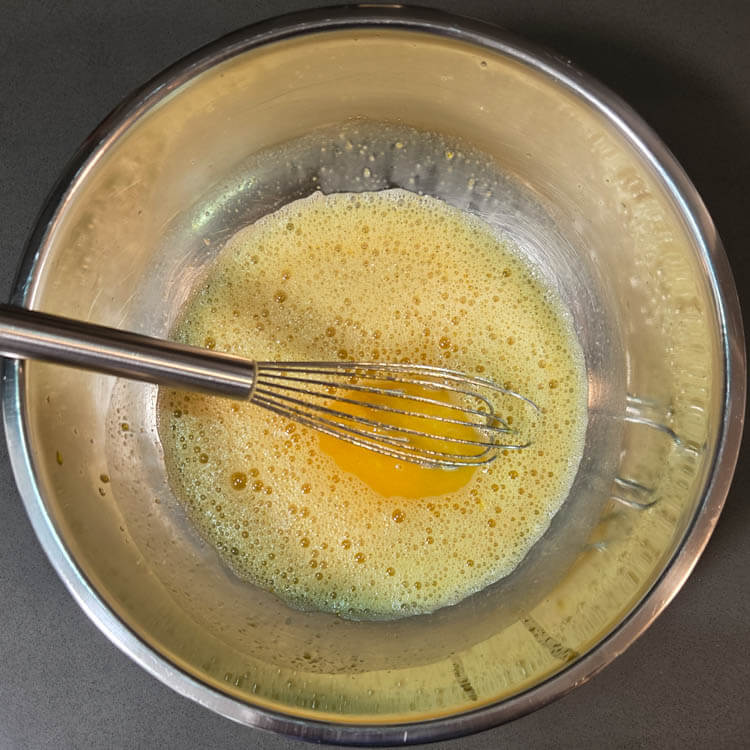
Very slowly pour the hot lilikoi juice mixture into the egg yolks while whisking continuously to temper the egg yolks.
6.
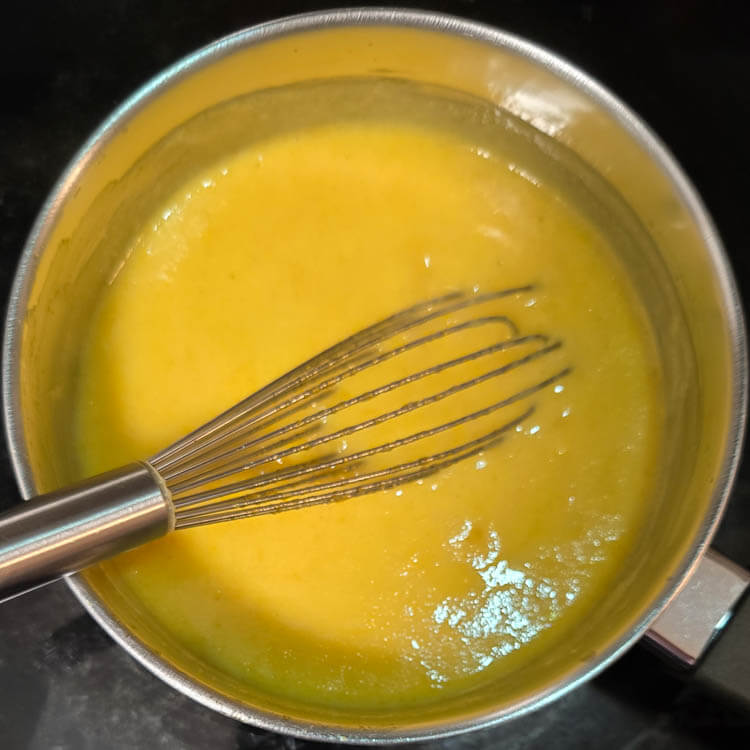
Pour the mixture back into the pot and place it over low heat, whisking constantly.
7.
Once the mixture comes to a boil, whisk vigorously for another 60 seconds, then remove the pot from the heat.
8.
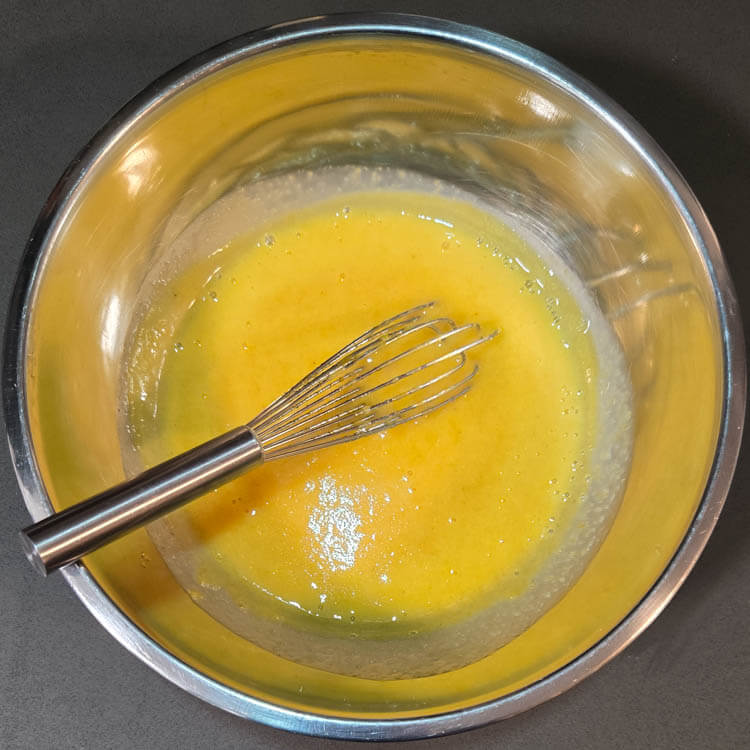
Whisk in the melted gelatin.
9.
Set the chiffon pie filling base aside and let it cool to room temperature.
Make the Meringue:
10.
Once the base has cooled, set up a double boiler. In the heatproof bowl, whisk together the 4 egg whites, ¼ teaspoon of cream of tartar, and the remaining ½ cup of sugar. Continue whisking gently and steadily until the mixture reaches 160°F (70°C).
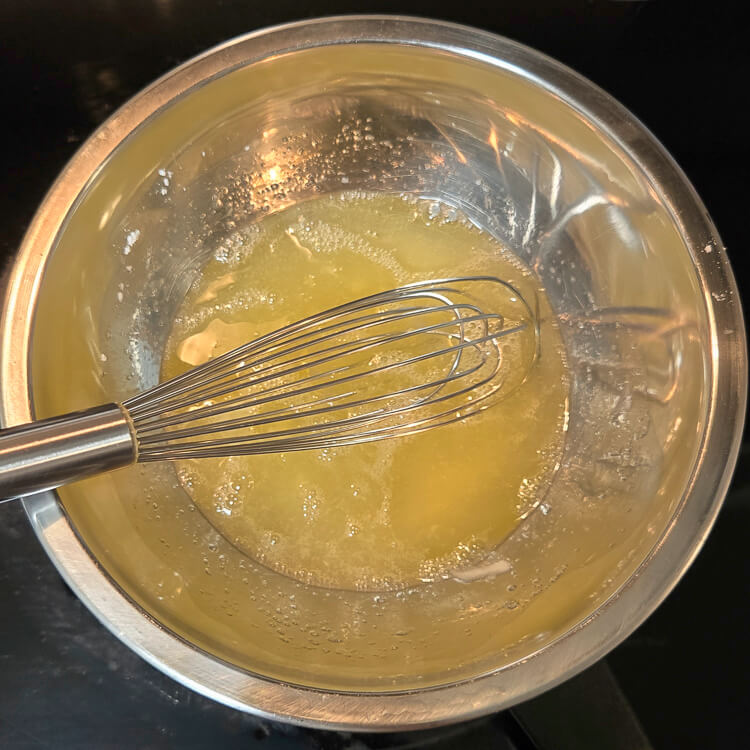
Pro Tip: Cream of tartar helps stabilize meringue, making it easier to whip the egg whites to stiff peaks without them collapsing.
11.
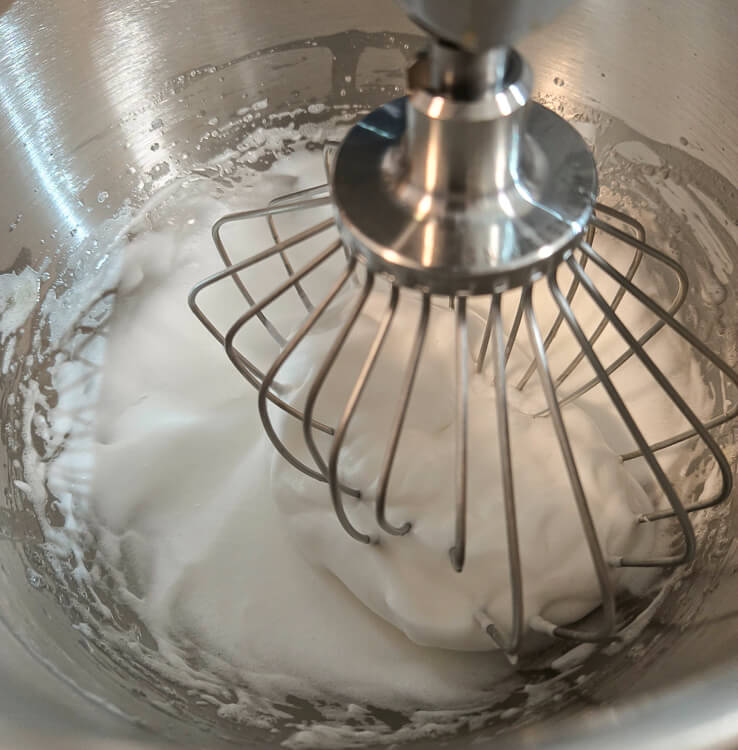
As soon as the egg whites reach 160°F (70°C), immediately transfer the mixture to a stand mixer fitted with a whisk attachment. Whip on high speed until stiff peaks form.
12.
Gently fold the meringue into the cooled filling base from step 9, mixing carefully until fully combined and no streaks remain.
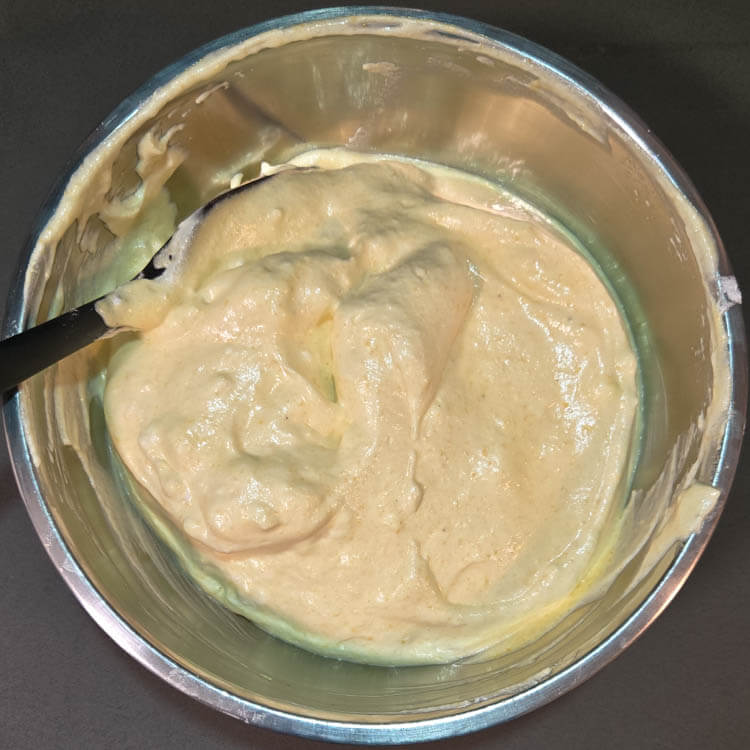
A Note on This Recipe: Many older chiffon pie recipes skip the double-boiler step and whip raw egg whites directly in a stand mixer. However, the recipes on this site call for gently heating the egg whites before whipping to bring them to food-safe temperatures while still preserving a light, stable meringue.
13.
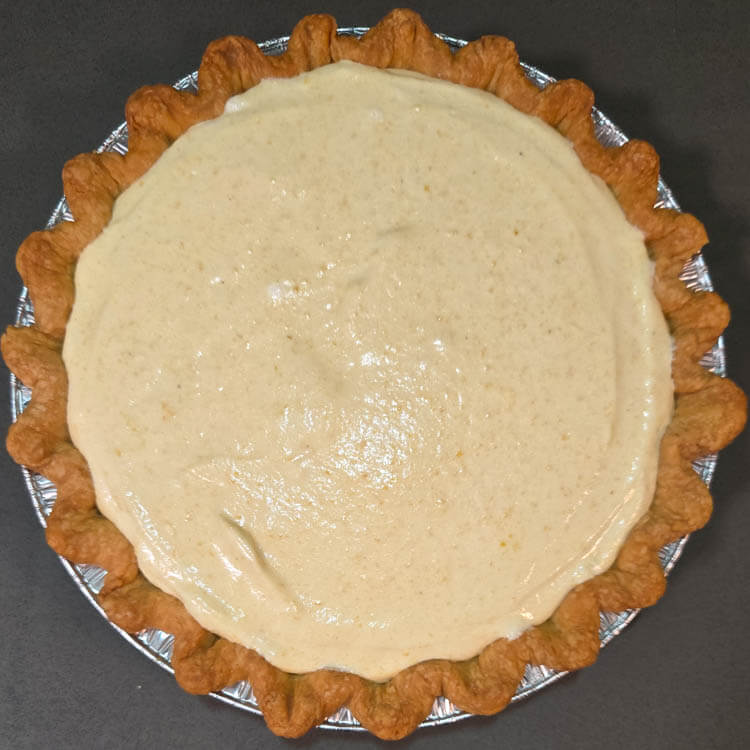
Once the meringue is fully incorporated with the lilikoi chiffon pie filling base, pour the filling into your prepared pie crust.
14.
Transfer the pie to the refrigerator, and chill for at least 6 hours, or until the filling is completely set.
Homemade Whipped Cream Topping:
Lilikoi chiffon pie is topped with a whipped cream topping. Top the whipped cream with toasted shredded coconut for an extra tropical touch.
Ingredients
- 1½ c Heavy Whipping Cream, cold
- ¼c Powdered Sugar, sifted (60g)
- ½t Vanilla Extract
- 2T Sweetened Shredded Coconut (optional)
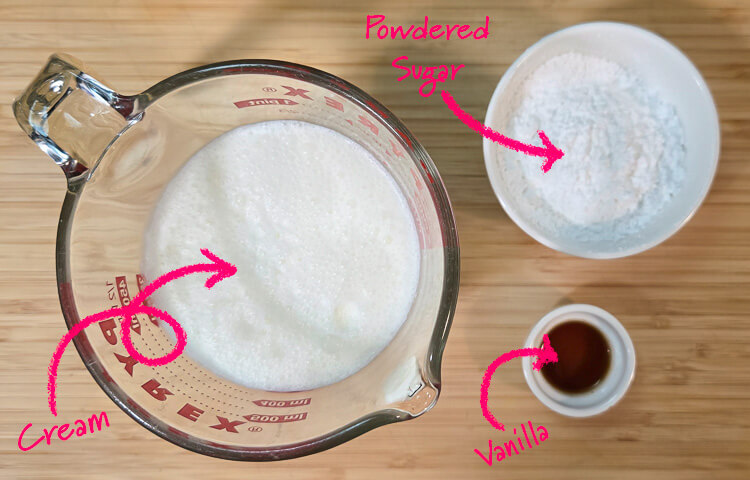
1.
Preheat your oven to 350F. Spread the sweetened shredded coconut on a piece of parchment paper or tin foil on a cookie sheet. Toast for 5-10 minutes until golden brown.
2.
In a stand mixer fitted with the whisk attachment, combine the cold heavy cream, sifted powdered sugar, and vanilla extract. Whip on medium-high speed until stiff peaks form and the cream holds its shape.
3.
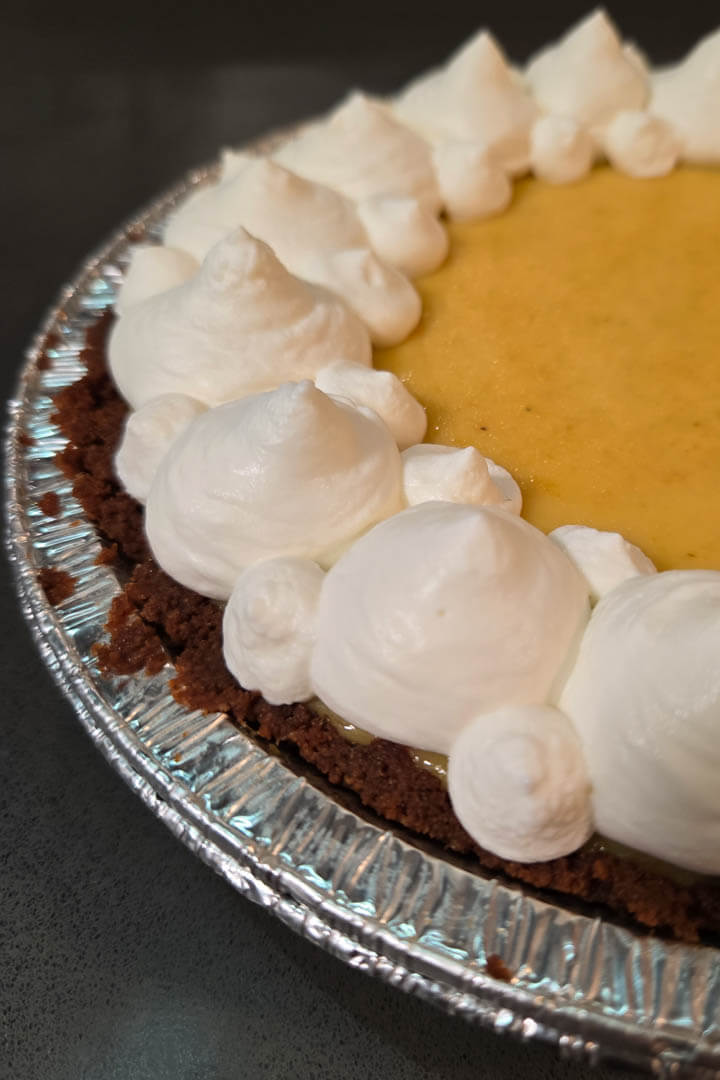
Spread the whipped cream evenly over the chilled passionfruit pie using an offset spatula or the back of a spoon. For a more decorative look, transfer it to a piping bag and pipe rosettes or swirls across the top. Sprinkle with toasted coconut.
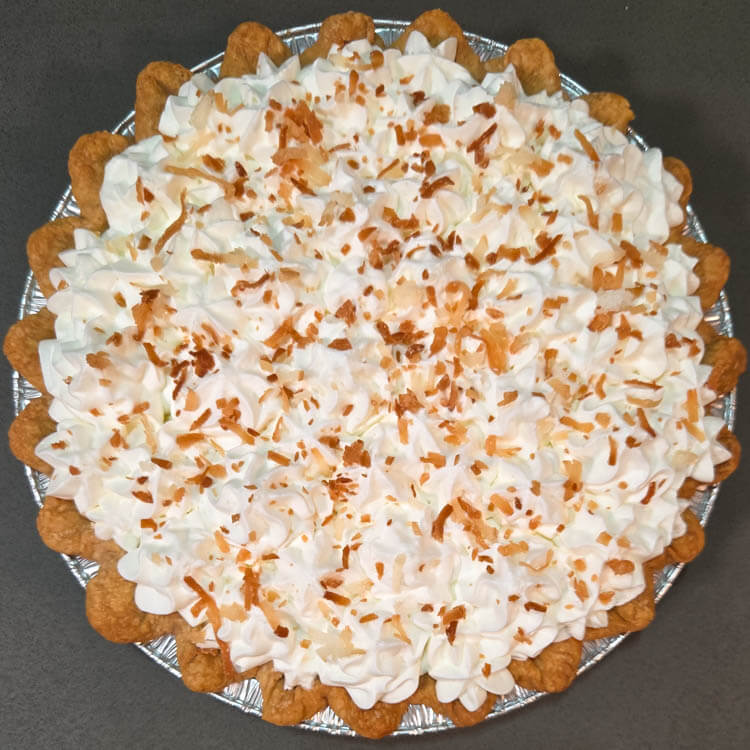
Pro-Tip: Sifting your powdered sugar is an important step to prevent clumps in your whipped cream. You can shake the powdered sugar through a fine-mesh sieve to sift it.
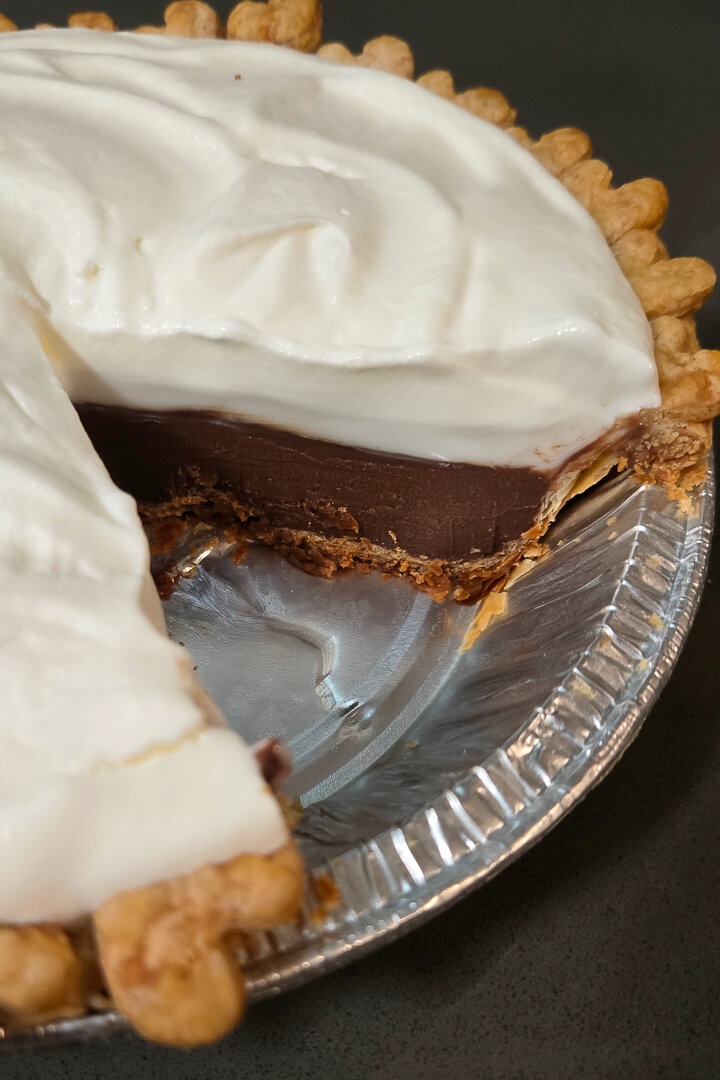
Another Hawaiian Pie Recipe: Haupia Pie
Chocolate haupia pie is a Hawaiian dessert made famous by Ted’s Bakery on the North Shore of Oahu. Haupia (pronounced how-PEE-uh) is a traditional Hawaiian dessert sometimes referred to as coconut pudding. Chocolate haupia pie takes classic Hawaiian haupia and turns it into a pie by layering chocolate haupia and regular coconut haupia in a pastry crust, then finishing it with whipped cream.
Chocolate haupia pie became so popular that it inspired a whole batch of variations. Two of the most common ones you’ll see are Okinawan sweet potato haupia pie, made with vibrantly purple Okinawan sweet potatoes, and pumpkin haupia pie.
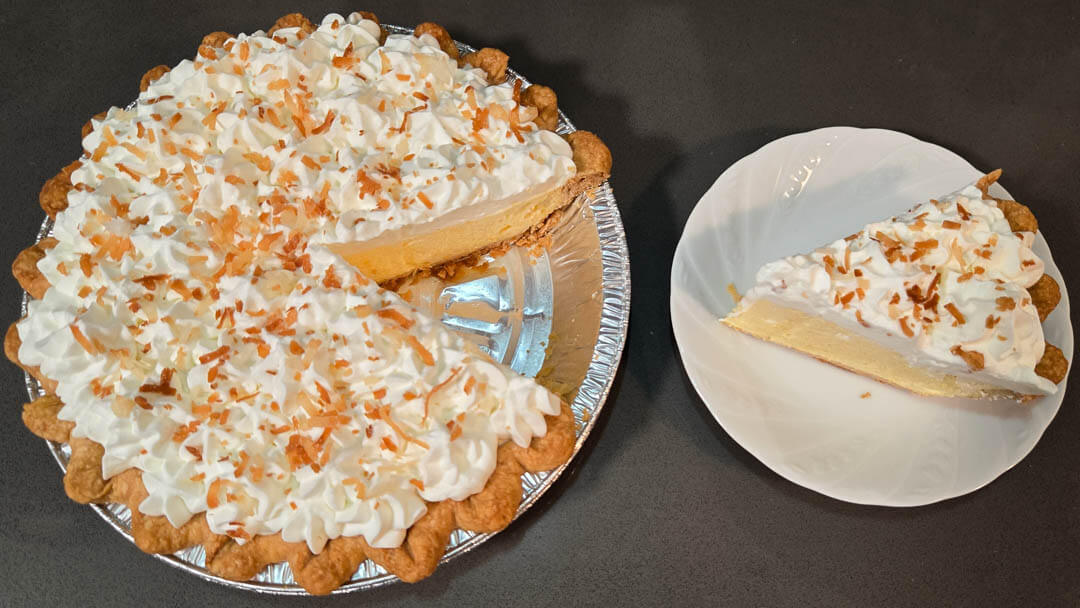
Other Passionfruit Pie Recipes
While there might not be an endless number of different pies made with passionfruit like you might find with apples and peaches, there are a few different pies I’ve found that use passionfruit in the filling.
- South American Passionfruit Pie: Made similar to key lime pie, this passionfruit pie is popular across South America. You might find it called Pie de Maracuyá in Spanish or Torta de Maracujá in Brazilian Portuguese.
- Norfolk Island Passionfruit Pie: Norfolk Island is a small volcanic island in the South Pacific that’s a territory of Australia. An old cookbook called The Norfolk Island Cookery Book has a recipe for this pie, which is similar to South American passionfruit pie except it doesn’t use any sweetened condensed milk.
- Passionfruit Impossible Pie: Impossible pies are a group of pie recipes popularized by Bisquick, with cheeseburger impossible pie and coconut impossible pie among the most common. These dump-and-mix recipes separate by themselves into a “crust” and “filling” as they bake.
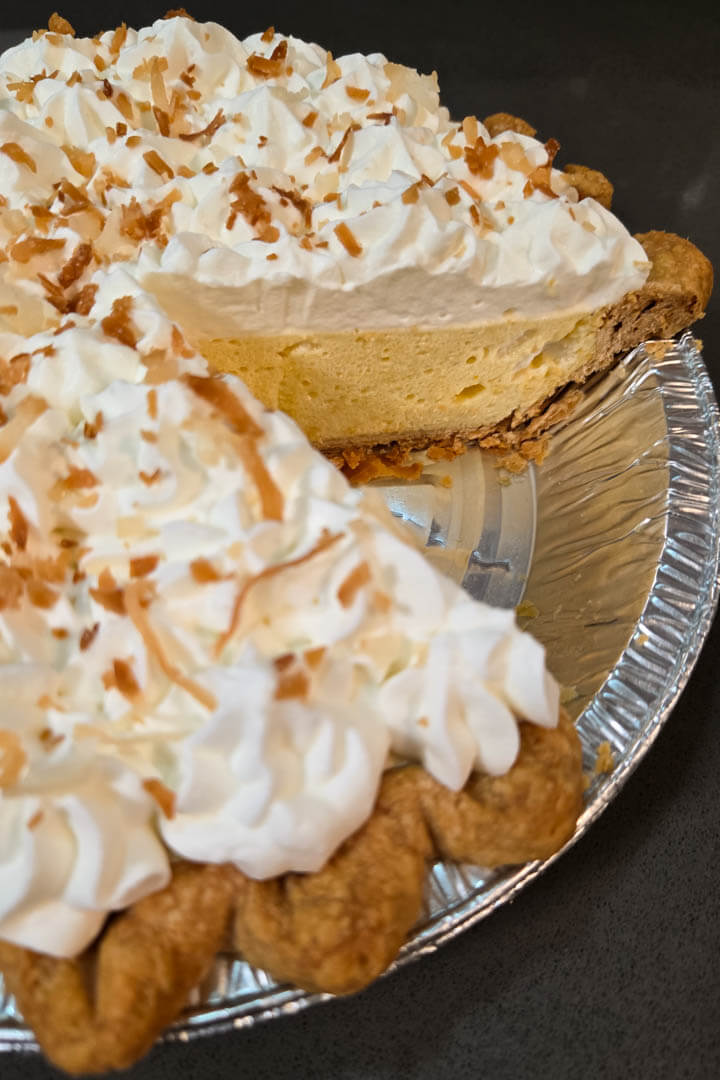
How to Store a Hawaiian Lilikoi Chiffon Pie
Lilikoi chiffon pie contains a significant amount of egg whites in the filling, so it should always be kept refrigerated. Once set, before topping with whipped cream, cover the pie tightly with plastic wrap or store it in a large, airtight container in the refrigerator for 3-5 days. After the first couple of days, the crust will begin to soften as it absorbs moisture from the filling. Because this is a chilled chiffon-style pie rather than a baked fruit pie, it can’t be reheated or refreshed in the oven.
Lilikoi chiffon pie is best served chilled. When you’re ready to serve the pie, remove the plastic wrap and top it with freshly whipped cream and toasted coconut flakes. Then slice and serve!
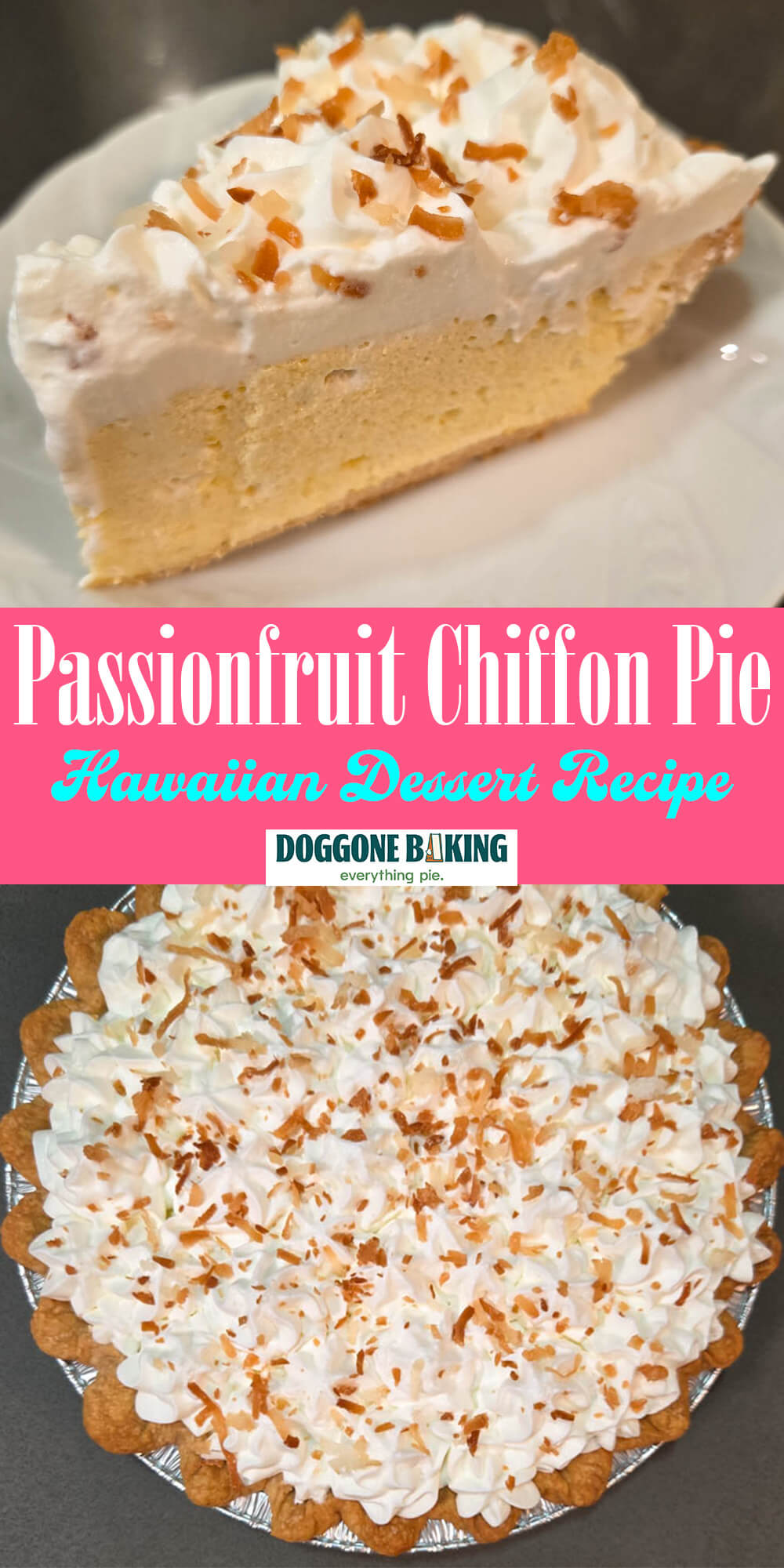
We’d love to see your Hawaiian pie creations! If you give this recipe a try, tag @doggone_baking on social media so we can share in the baking fun.
Lilikoi Chiffon Pie
Ingredients
Crust
Lilikoi Chiffon Pie Filling
- 2½ tsp Unflavored Gelatin (7g) 1 packet
- ¼ cup Water (60mL)
- 4 Eggs, separated
- ⅔ cup Lilikoi Puree (160mL) Passionfruit Puree
- 1 cup Granulated Sugar, divided (200g)
- Zest of 1 Lemon
- ¼ tsp Cream of Tartar
- ¼ tsp Salt
Whipped Cream Topping
- 1½ cups Heavy Whipping Cream (355mL) cold
- ¼ cup Powdered Sugar, sifted (60g)
- ½ tsp Vanilla Extract
- 2 tbsp Sweetened, Shredded Coconut optional
Instructions
Make the Lilikoi Filling Base
- Sprinkle 2½ teaspoons of gelatin over ¼ cup of cold water and let it sit for 5 minutes so the gelatin can bloom.
- Microwave the gelatin and water mixture for about 15 seconds, just until the gelatin melts.
- Separate the eggs, placing the yolks in a large bowl.
- In a small pot, combine the lilikoi puree, salt, lemon zest, and ½ cup of the granulated sugar. Heat over medium heat just until the mixture begins to boil.
- Very slowly pour the hot lilikoi juice mixture into the egg yolks while whisking continuously to temper the egg yolks.
- Pour the mixture back into the pot and place it over low heat, whisking constantly.
- Once the mixture comes to a boil, whisk vigorously for another 60 seconds, then remove the pot from the heat.
- Whisk in the melted gelatin.
- Set the chiffon pie filling base aside and let it cool to room temperature.
Make the Meringue to Add to the Base
- Once the base has cooled, set up a double boiler. In the heatproof bowl, whisk together the 4 egg whites, ¼ teaspoon of cream of tartar, and the remaining ½ cup of sugar. Continue whisking gently and steadily until the mixture reaches 160°F (70°C).
- As soon as the egg whites reach 160°F (70°C), immediately transfer the mixture to a stand mixer fitted with a whisk attachment. Whip on high speed until stiff peaks form.
Finish the Lilikoi Chiffon Pie Filling
- Gently fold the meringue into the cooled filling base from step 9, mixing carefully until fully combined and no streaks remain.
- Once the meringue is fully incorporated with the lilikoi chiffon pie filling base, pour the filling into your prepared pie crust.
- Transfer the pie to the refrigerator, and chill for at least 6 hours, or until the filling is completely set.
Make the Homemade Whipped Cream
- Preheat your oven to 350F. Spread the sweetened shredded coconut on a piece of parchment paper or tin foil on a cookie sheet. Toast for 5-10 minutes until golden brown.
- In a stand mixer fitted with the whisk attachment, combine the cold heavy cream, sifted powdered sugar, and vanilla extract. Whip on medium-high speed until stiff peaks form and the cream holds its shape.
- Spread the whipped cream evenly over the chilled passionfruit pie using an offset spatula or the back of a spoon. For a more decorative look, transfer it to a piping bag and pipe rosettes or swirls across the top. Sprinkle with toasted coconut.


About Me
In 2016, I left my office job and became a professional baker. These days I spend my days testing recipes and baking pies while my two dogs snooze happily nearby.
See My Full Bio
One response to “Hawaiian Lilikoi Chiffon Pie Recipe (Passionfruit Chiffon Pie)”
-
This looks amazing. And really all of your recipes do!

Leave a Reply