
This post may contain affiliate links. Please read my disclosure policy.
All recipes on Doggone Baking are intended for humans — the dogs are just our enthusiastic photo assistants and taste-test spectators.
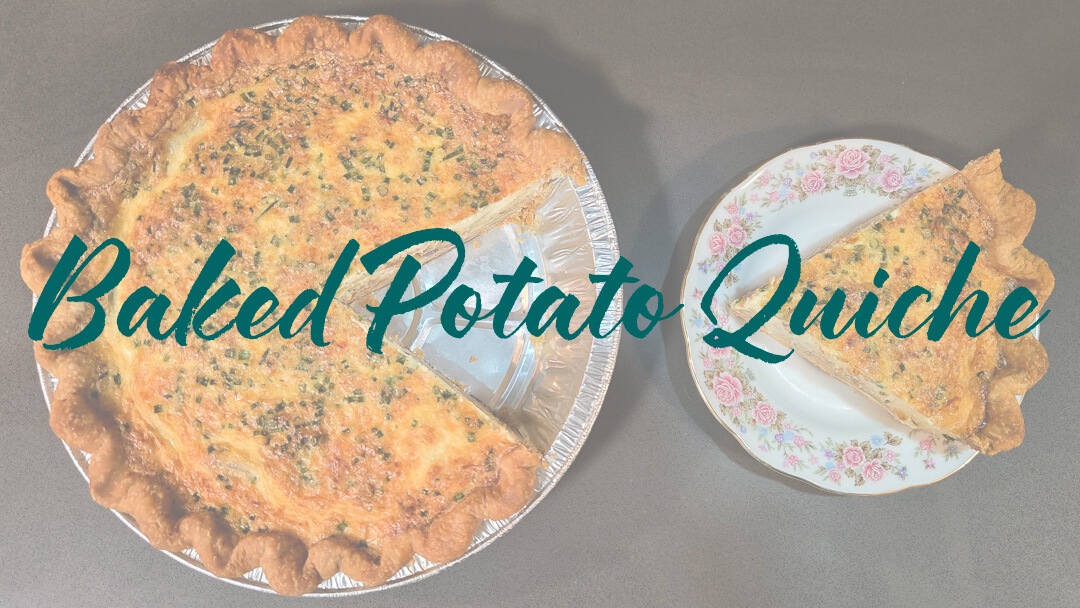
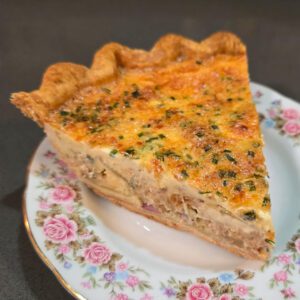
Loaded Baked Potato Quiche Recipe
A creamy quiche baked in a flaky pie crust is the ultimate comfort food. This loaded baked potato quiche is a fun, modern twist on an old classic. Combine two comfort foods together by adding all the flavor of a loaded baked potato with the creamy cheesiness of a quiche. Perfect for sleepy weekend mornings or a kids’ breakfast.

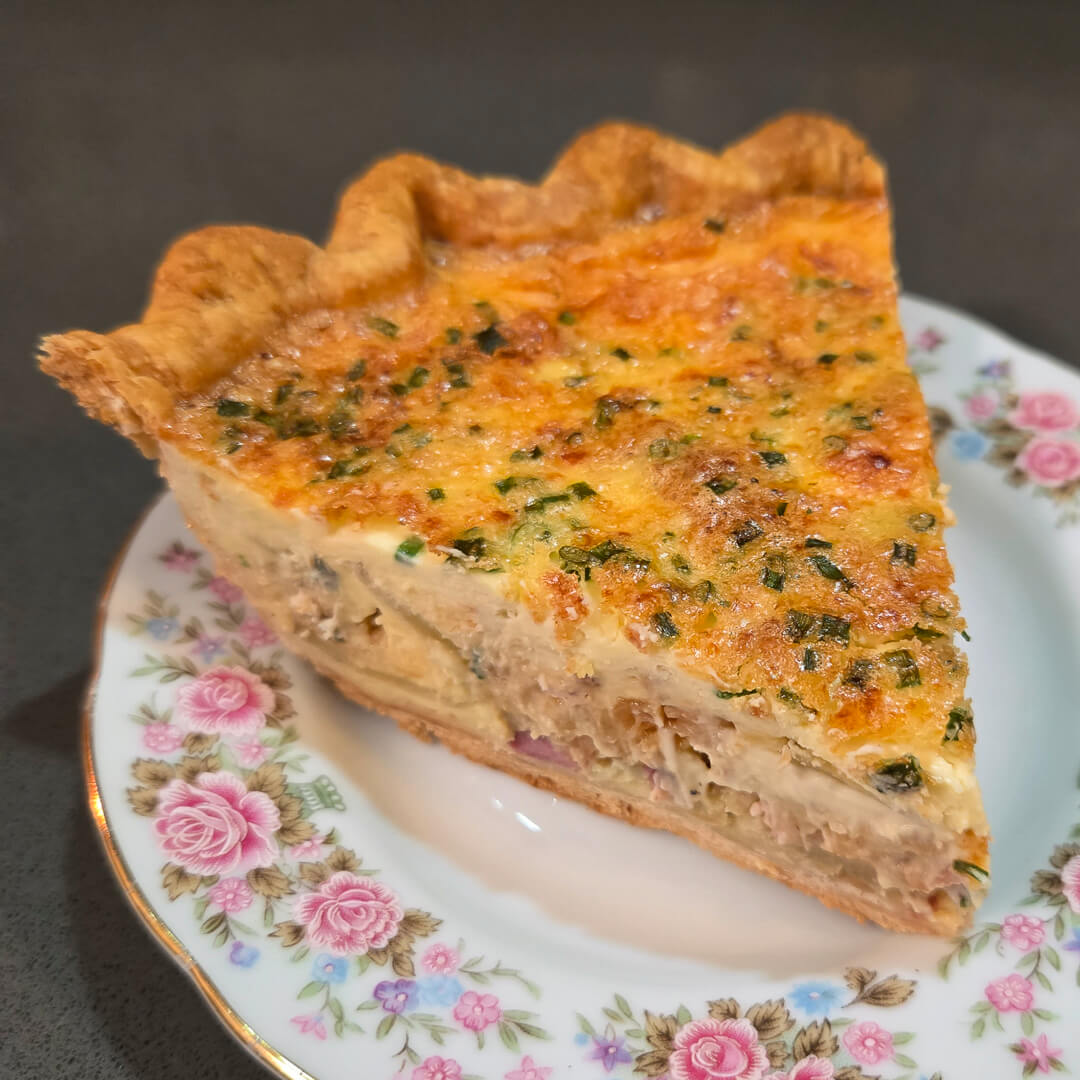
What is a Loaded Baked Potato Quiche?
A quiche is a savory custard pie made with eggs and cream baked in a flaky pastry crust. The filling can include a wide variety of vegetables, meats, or cheeses, making quiche a versatile dish originating from France. Served warm or chilled, a slice of quiche makes an excellent breakfast, brunch, or light meal any time of day.
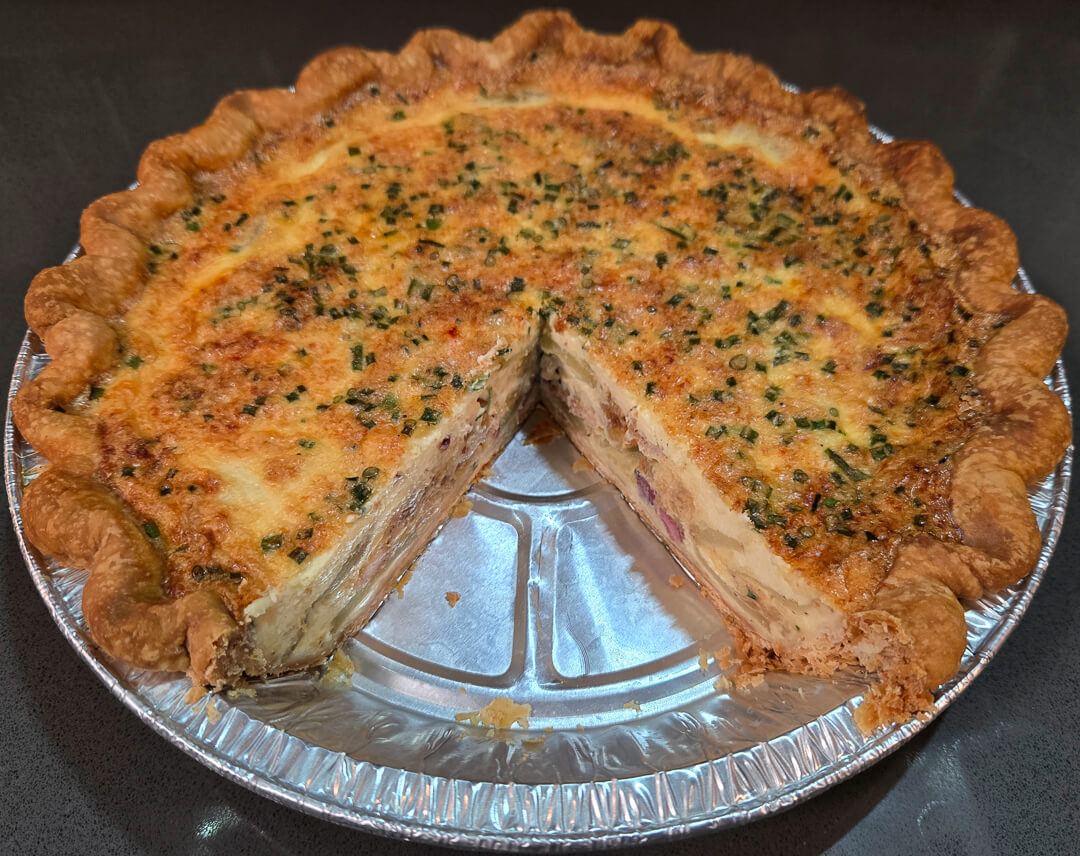
This loaded baked potato quiche is a quiche with a filling that’s reminiscent of a loaded baked potato. This particular recipe includes roasted potatoes, caramelized onions, chives, cheddar cheese, and bacon bits, but you can swap out the ingredients to match your favorite loaded baked potato toppings. Some additional ideas include diced tomatoes, scallions, or diced jalapenos.
A Brief History of Quiches:
The earliest quiches come from the Lorraine region of France, where the dish began taking shape in the 1500s. These first versions looked quite different from the quiches we know today. Instead of a deep pastry crust filled with custard, they were closer to a simple flatbread with a lightly enriched topping.
Over the centuries, the dish evolved, and the modern quiche we know today became popular in American and British cuisine following WWII. Because of this link to post-war cuisine, spinach quiche began appearing in American cookbooks in the 1960s and 1970s. If you would like a detailed look at how quiches developed over time, see my full post on Quiche Lorraine.
The Origin of Loaded Baked Potato Quiche
As much as I enjoy tracking down the histories of classic pies like pecan pie and pumpkin pie, or reviving forgotten recipes like Marlborough pie or schnitz pie, tracking down the exact origin point of modern recipes can be fun in its own way. When a friend first asked me to make them a loaded baked potato quiche, I figured it would be a one-off recipe and there wouldn’t be much of anything previously published. I should’ve remembered that you can find everything on the internet.
A loaded baked potato quiche is not a recipe you’ll find in any old cookbooks. In fact, unless it previously appeared on a website that has since been deleted, baked potato quiche (or any variation like loaded potato quiche) first appeared in 2012 and then took off online in 2015. Although most of their recipes have since been updated, I found approximately three baking blogs and one YouTube channel that posted recipes for some variation of a loaded baked potato quiche in 2015.
A few blogs posted their own recipes in 2016. Then the idea dropped off again, with one or two blogs posting recipes between 2017-2022. The idea seems to have picked up steam again a bit in 2023. With modern recipes like these, a recipe going moderately viral on pinterest or social media can create these waves of upticks. Unfortunately, it’s hard to go back and find data for that.
On March 30, 2015, The Recipe Rebel posted a recipe for an “Easy Loaded Baked Potato Quiche.” From what I can tell, this was the first blog post to post a recipe. Although they updated their post in recent years to make it more modern, the original post in 2015 was an old-school style food blog post with the personal story content. Not super useful if you just want baking tips, but perfect if I’m trying to track their inspiration! They embedded a link to Betty Crocker’s website for a Loaded Baked Potato quiche published on April 13, 2012. As far as I can tell, that 2012 recipe really is the first published recipe for a baked potato quiche.
Other early iterations of baked potato quiche include a recipe from a cute old-school Youtube video channel called “Daddy Cooks.” His daughter found a photo of a baked potato quiche on Facebook (maybe from The Recipe Rebel?). On October 26, 2015 Suburbia Unwrapped published a sponsored post for Cabot Creamery which Cabot then featured on their website in November.
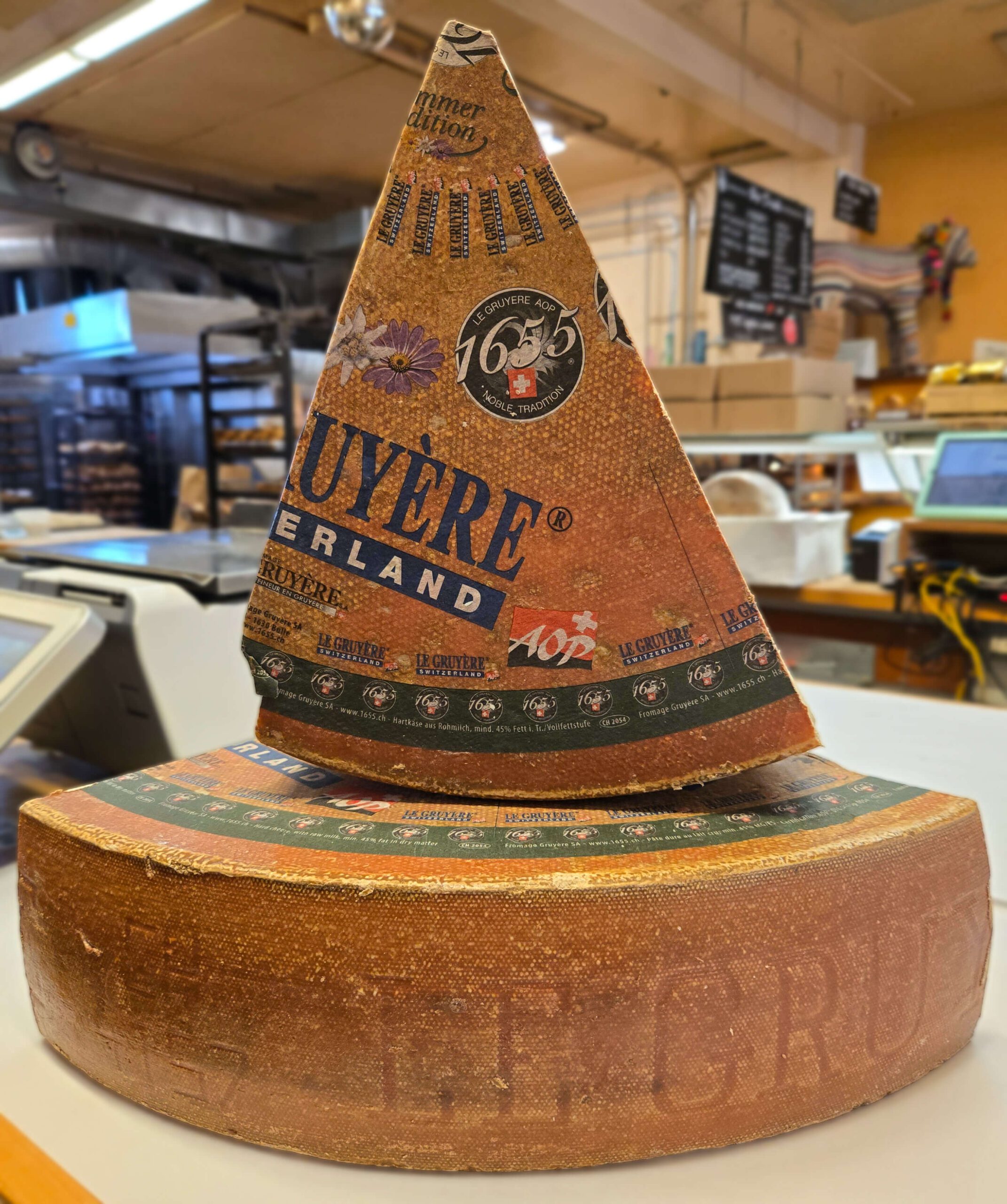
Cheeses for A Baked Potato Quiche
This recipe uses a mix of Gruyère, a classic cheese used in quiches, and sharp cheddar cheese, a classic topping on a loaded baked potato. I’ve provided some information on Gruyère and Cheddar below, but feel free to mix and match your favorite baked potato cheese toppings in this quiche. Just be sure to pick cheeses that are good for melting.
About Gruyère
The most commonly used cheese for classic quiches is Gruyère, a name-protected Swiss alpine cheese made from cow’s milk. Authentic Swiss Gruyère will have an “AOP” designation on the label, which certifies that it meets the strict standards for Gruyère produced in Switzerland. Gruyère AOP is crafted in the Fribourg region of the Swiss Alps and is known for its firm texture, nutty flavor, and savory aroma. It grates beautifully, melts smoothly, and infuses the custard with a salty flavor that perfectly complements the creamy filling.
Authentic Gruyère AOP can be pricey as it needs to be made by specific dairy farms and cheesemakers in Switzerland and then imported to where you live (unless you live in Switzerland). Many U.S. creameries produce domestic versions of Gruyère that mimic the flavor and meltability of Swiss AOP cheese at a fraction of the cost. Once baked into your quiche, the difference is nearly impossible to tell.
About Cheddar Cheese
Originating in England over 800 years ago, cheddar is one of the most popular and ubiquitous types of cheese available. Broadly speaking, most cheddar cheese can be described by three different characteristics:
Aging: Sharp vs. Mild Cheddar
When people talk about “sharp” or “mild” cheddar, they’re referring to the different flavors that develop in the cheese as it ages.
- Mild cheddar: usually aged for 1-3 months, these are the mildest tasting cheddars. They don’t have that “sharp” flavor, and instead have a creamier flavor and tend to be softer in texture.
- Sharp Cheddar: usually aged for longer than 9 months. “Medium” sharp of “semi-sharp” cheddar is aged closer to 6 months. “Extra sharp” cheddar might be aged for more like 18-24 months. These cheddars are your classic cheddar cheeses with a strong cheddar flavor. The older the cheese gets, the tangier and less sweet it gets as the sugars are broken down.
- Aged Cheddar: Cheddar can be aged for up to twenty-seven years! The longer the cheese is aged, the nuttier, drier, and sharper the cheese gets. You can find many cheddars in the 5-7 year range.
The Rind: Clothbound, Block, or Waxed
Cheddar cheeses often come in three different forms: wrapped in canvas bandages, encased in wax, or in block form with no rind.
- Clothbound Cheddar: comes wrapped in canvas bandages, and develops a much more complex flavor than other cheddars. It often has a much earthier and mushroomy flavor.
- Block Cheddar: most cheddar in the grocery store is block cheddar. These are the blocks of cheddar you find sold encased in plastic wrap with no rind.
- Wax Covered Cheddar: occasionally you’ll find blocks of cheddar that are sold encased in wax rather than plastic. The wax protects the cheese from moisture loss and waxed cheddar can have a smoother, creamier texture compared to its equivalent counterparts.
The Color: Orange vs White Cheddar
Although they look noticeably different, there’s not much difference between white and orange cheddar in flavor or texture. The orange color is usually created by the addition of annatto, a natural food coloring made from achiote seeds.
What Kind of Cheddar to Use in a Quiche
Any kind of cheddar will work well in this baked potato quiche! Almost all cheddar melts nicely and imparts good flavor. However, I prefer a sharp, block, orange cheddar for this quiche. It feels like the most classic callback to a loaded baked potato. The flavor of sharp cheddar shines through the other flavors of the quiche a bit better than a mild cheddar.
Step-by-Step Loaded Baked Potato Quiche Recipe
Crust:
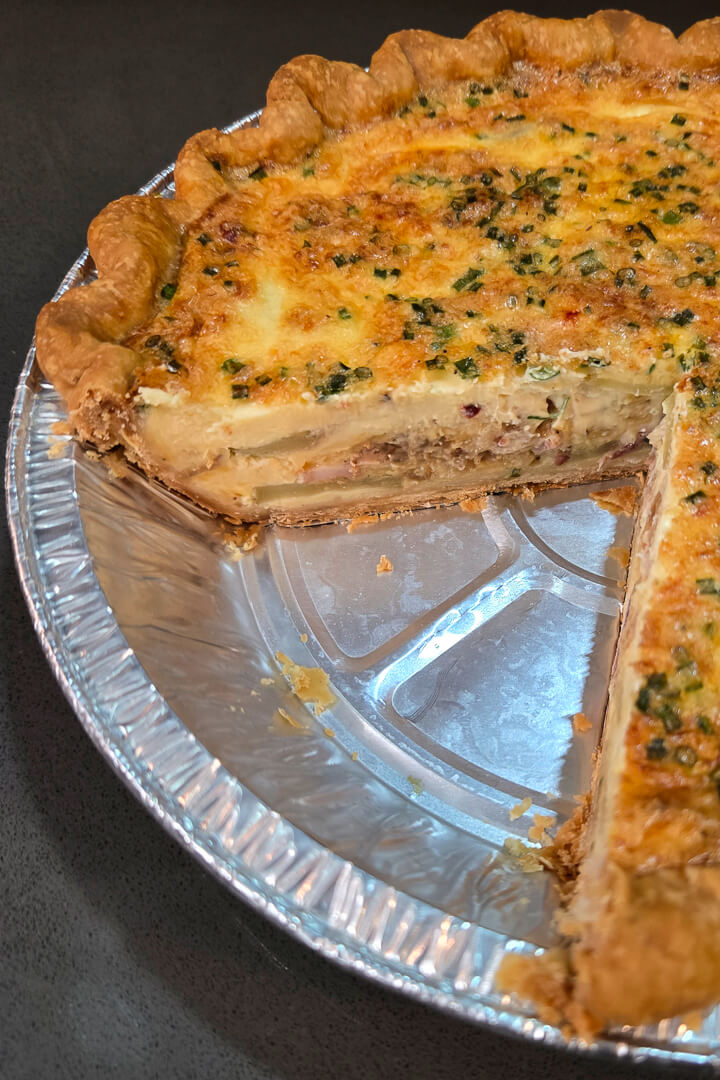
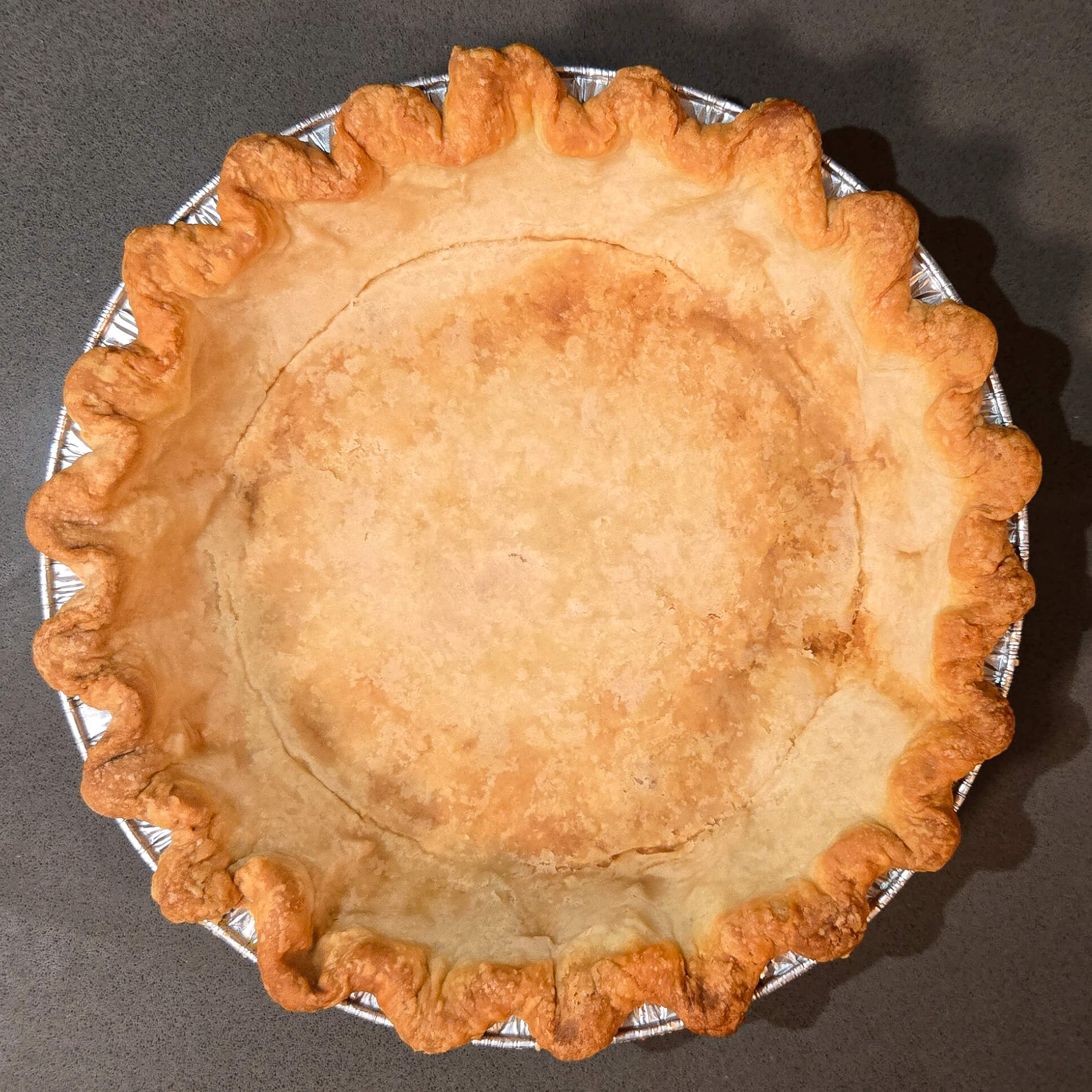
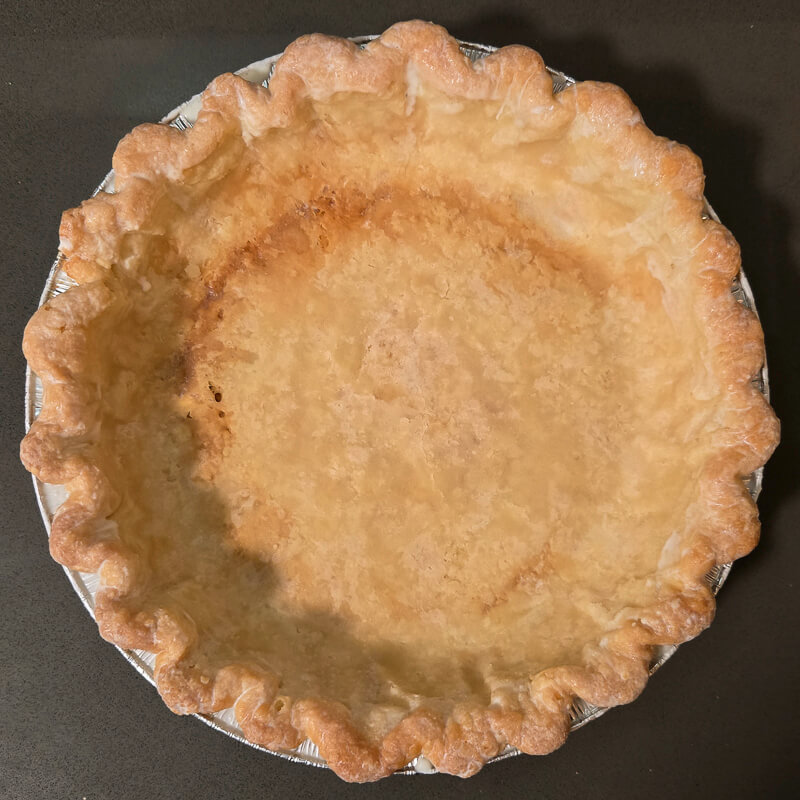
A traditional pastry crust works best for quiches, providing a crisp, buttery base that complements the rich, creamy filling. For this recipe, aim for a dark-baked crust. A darker bake ensures the bottom stays crisp and flaky, even after the long bake time and moisture from the custard.
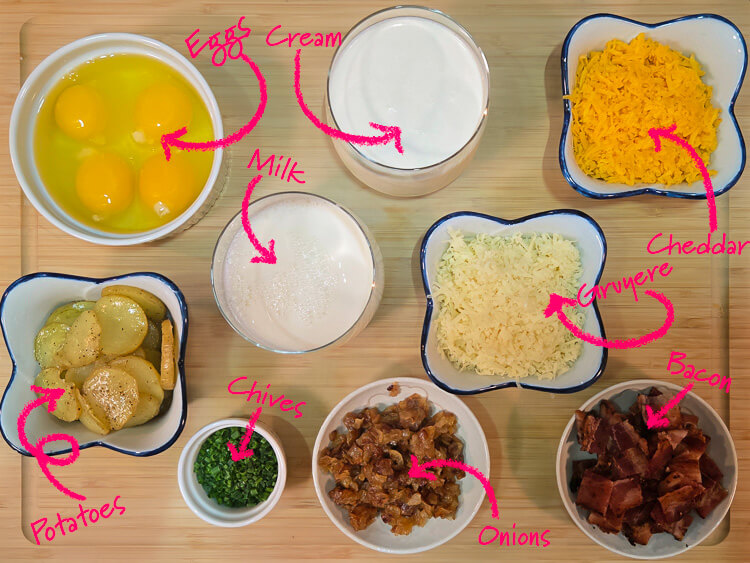
Loaded Baked Potato Quiche Filling:
Ingredients
- 4 Eggs
- 1⅓c Heavy Whipping Cream
- ⅔c Whole Milk
- 2oz Gruyère Cheese, grated (57g)
- 2oz Cheddar Cheese, grated (57g)
- ½t Salt
- ¼t Black Pepper
- 8oz Yukon Gold Potatoes
- 2T Olive Oil
- 3 sliced Bacon
- 1 Yellow Onion, diced
- 2T Chives, sliced
- 2T Heavy Whipping Cream (optional)
1.
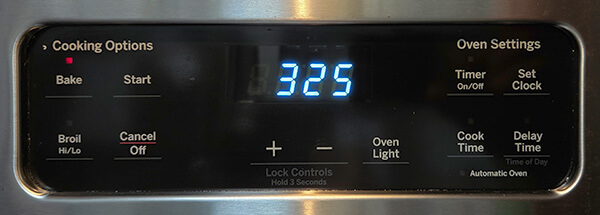
Preheat the oven to 325°F (165°C).
2.
Slice the potatoes and toss them with 2 tablespoons of olive oil and a little bit of salt and pepper.
3.
Spread the potatoes on a baking sheet lined with parchment paper. Bake for about 15 minutes, or until the potatoes are soft and beginning to turn a golden brown.
4.
Remove the potatoes from the oven and allow them to cool.
5.
Drop the oven temperature to 325°F (165°C).
6.
In a skillet over medium heat, fry the 3 slices of bacon.
7.
When the bacon is done, remove the slices from the skillet and allow them to cool. Once cool, chop them into bacon bits.
8.
Using the same skillet, caramelize the onions in the bacon grease on low heat. Truly caramelizing onions takes a long time, about 45 minutes. Keep the heat on low and stir the onions every 10 minutes until they’re a golden brown color. Remove the onions from the heat and allow them to cool.
9.
Mix together the potato slices, bacon bits, and caramelized onions. Once cooled, spread them over the bottom of your prepared, fully-baked pie crust.
10.
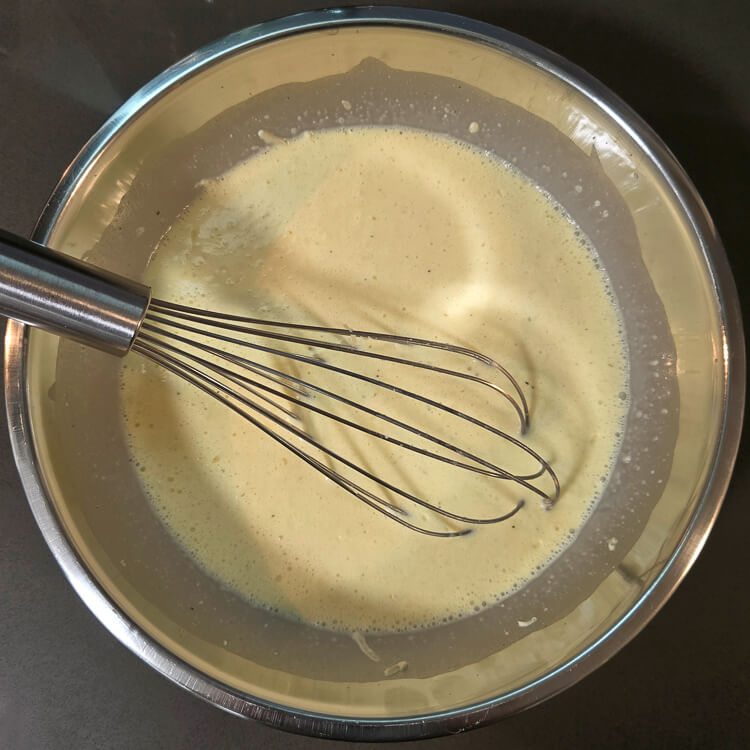
In a large mixing bowl, whisk together the eggs, milk, cream, salt, pepper, and grated Gruyère and cheddar cheeses until smooth and fully combined.
11.
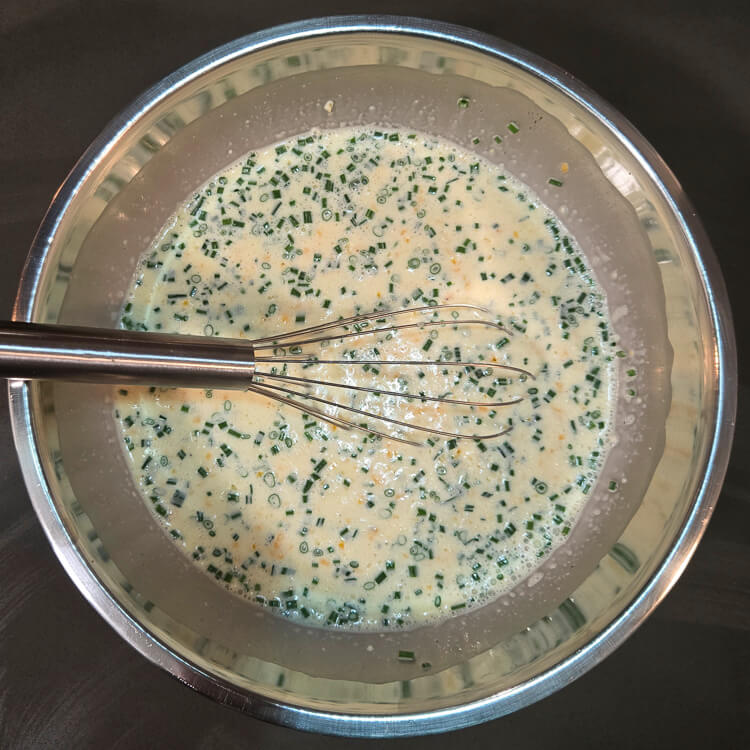
Whisk in the sliced chives.
12.
(Optional) Lightly brush the edges of your dark, blind-baked pie crust with heavy cream for a beautiful golden finish after baking.
13.
On a metal sheet pan, pour the quiche mixture into the prepared crust, filling it just below the rim to prevent overflow.
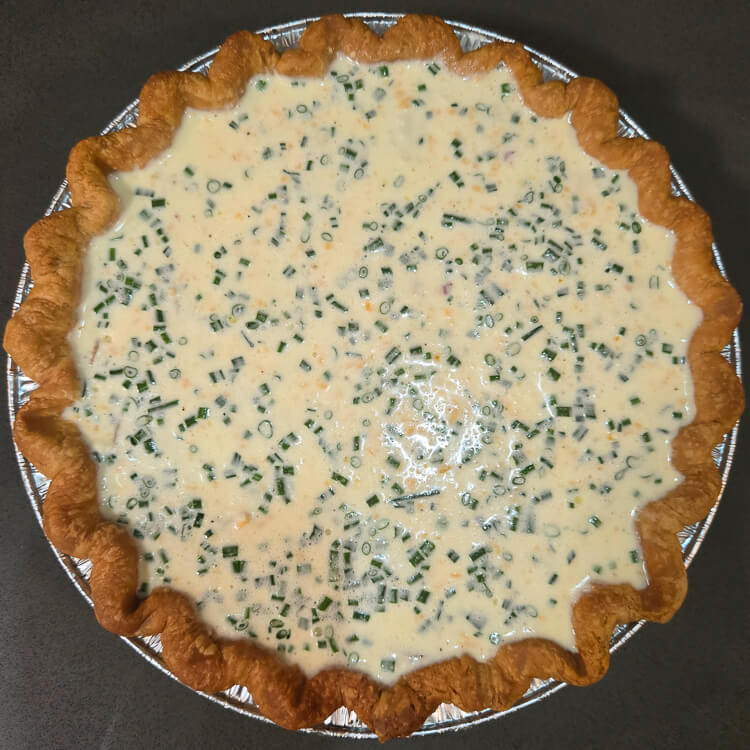
Pro Tip: Dunk all of the fillings that float to the top of the quiche. If they’re coated in a layer of filling before baking the quiche, the exposed pieces are less likely to burn.
14.
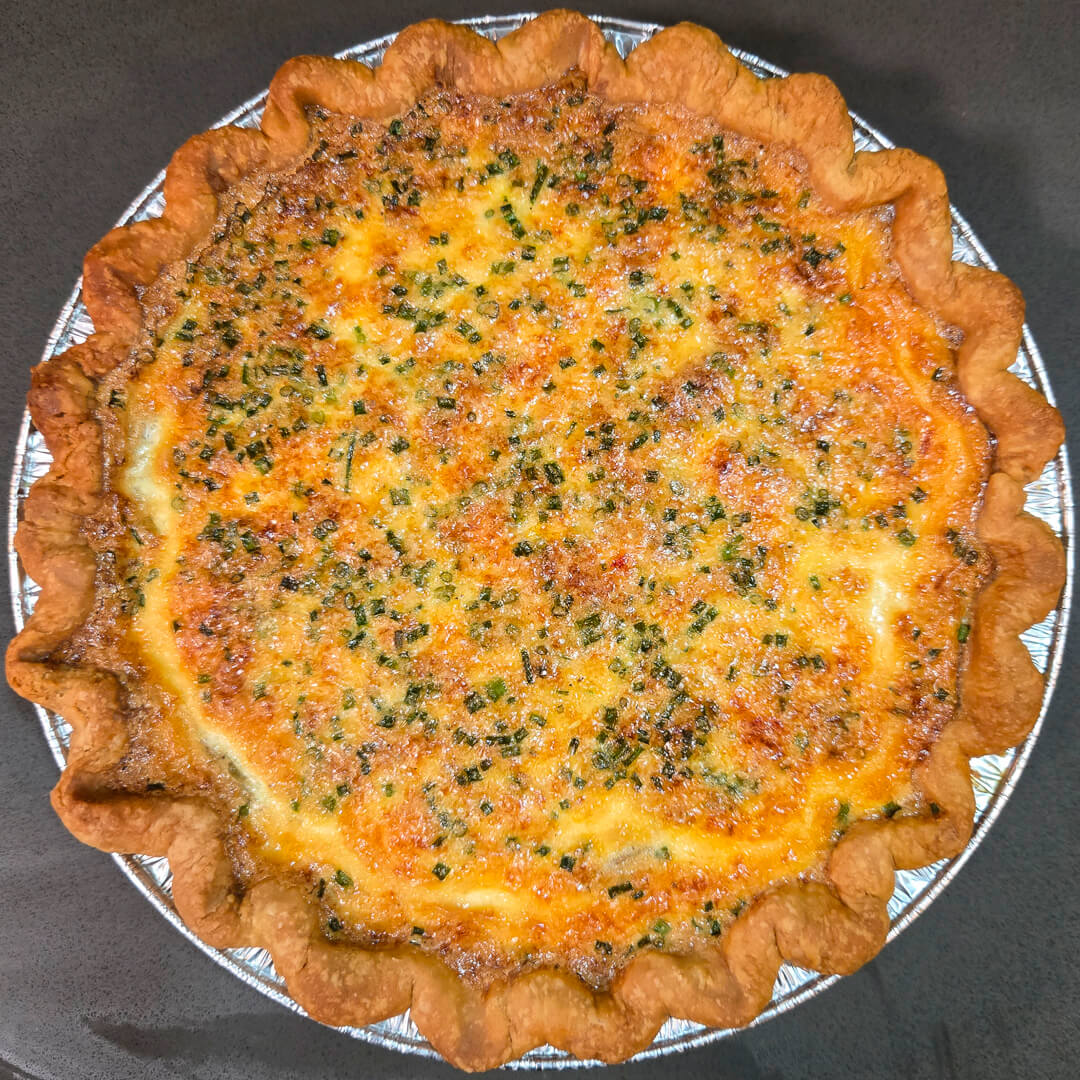
Transfer the quiche to the oven and bake for 35–40 minutes, or until the edges are puffed and the center is still slightly jiggly. The filling will continue to set as it cools.
15.
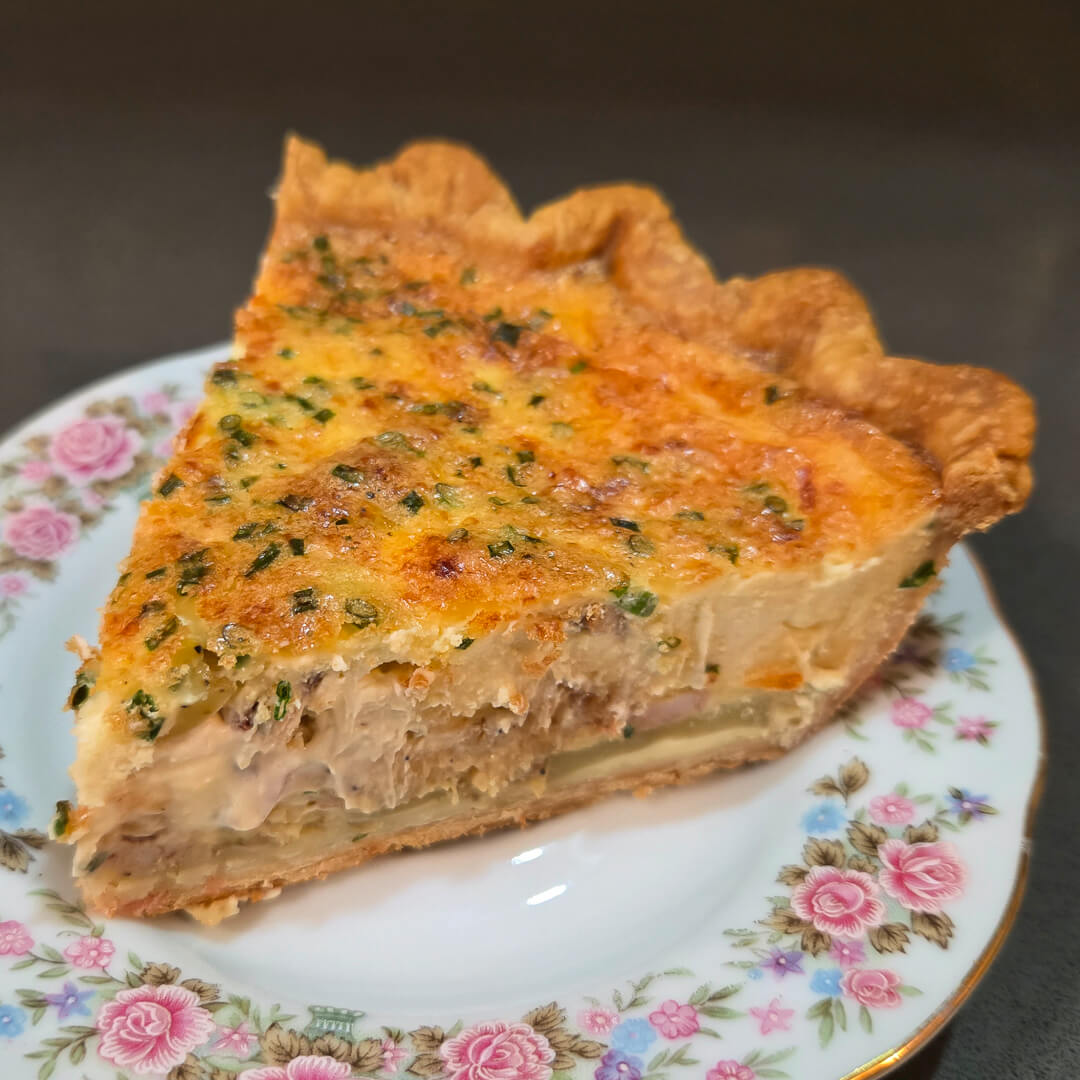
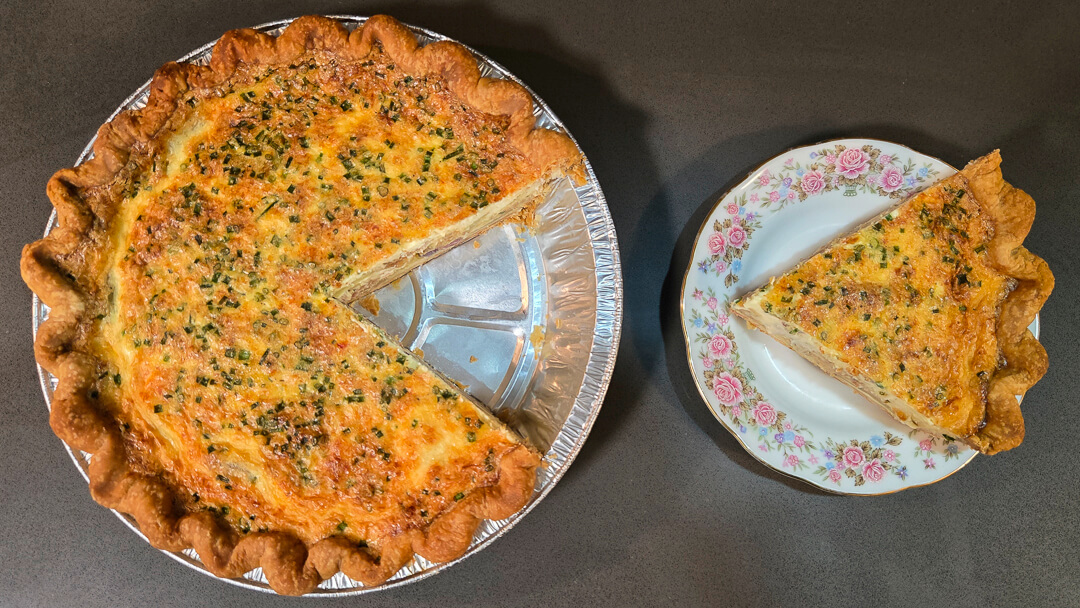
Remove the quiche from the oven and let it cool on the countertop for at least 30 minutes before slicing and serving.
How to Make a Perfectly Creamy Quiche
Ratio of Eggs to Dairy for a Quiche Custard:
A classic quiche should have a silky, custard-like texture that’s creamy but stable enough to slice cleanly. The key to achieving this is the right balance of eggs to dairy. Use roughly ½ cup (125 mL) of dairy for every large egg in your mixture. Adjusting the balance of milk to cream also affects richness. This recipe uses more cream than milk for an extra creamy and rich filling. For a lighter, fluffier filling that allows the eggs to shine, use more milk than cream.
Don’t Overbake the Quiche:
The most common mistake when baking quiche is overcooking it. Overbaked custard turns dense and rubbery instead of soft and creamy. For perfect texture, remove the quiche from the oven while the edges are set but the center still has a gentle jiggle. The residual heat will finish cooking the custard as it cools, leaving it creamy, tender, and perfectly set once sliced.
Classic Quiche Recipes
A loaded baked potato quiche is not an old or a classic quiche recipe, but there are a few quiches that are classics.
- Quiche Lorraine: The original classic quiche made with bacon, onions, and Gruyère. Quiche Lorraine traces its roots to the original quiches created in the Lorraine region of France in the 1500s.
- Quiche Provencale: Quiche Provençale features summery Mediterranean vegetables like bell peppers, zucchini, and olives.
- Cheese Quiche: A simple quiche made with just cheese and herbs is creamy, comforting, and always a favorite.
- Quiche aux Champignons: Quiche made with mushrooms in the filling is incredibly popular and has a rich, savory flavor.
- Quiche Florentine: Quiche Florentine is a classic vegetarian quiche featuring spinach and onions.

How to Store Quiche
Because quiche contains eggs and dairy it should always be refrigerated if you’re not serving it right away. Quiche keeps well for 3–5 days in the refrigerator when wrapped tightly in plastic wrap or stored in an airtight container.
You can also freeze a whole, baked quiche for longer storage. Wrap it securely in plastic, then place it in a freezer-safe bag to prevent freezer burn. Frozen quiche will keep for up to one month. When ready to serve, let it thaw in the refrigerator, then reheat it in a 325°F (165°C) oven for 15–20 minutes, or until warmed through.
We’d love to see your quiche creations! If you give this recipe a try, tag @doggone_baking on social media so we can share in the baking fun.
Loaded Baked Potato Quiche
Ingredients
Crust
- 1 Dark, Blind-Baked Pie Shell
- 2 tbsp Heavy Whipping Cream
Spinach Quiche Filling
- 4 Eggs
- 1⅓ cup Heavy Whipping Cream (315mL)
- ⅔ cup Whole Milk (160mL)
- 2 oz Gruyère Cheese (57g) grated
- 2 oz Sharp Cheddar Cheese (57g)
- ½ tsp Salt
- ¼ tsp Black Pepper
- 3 slices Bacon fresh or frozen
- 1 Yellow Onion, diced
- 8 oz Yukon Gold Potatoes, sliced
- 2 tbsp Chives, minced
Instructions
- Preheat the oven to 350°F (175°C).
- Slice the potatoes and toss them with 2 tablespoons of olive oil and a little bit of salt and pepper.
- Spread the potatoes on a baking sheet lined with parchment paper. Bake for about 15 minutes, or until the potatoes are soft and beginning to turn a golden brown.
- Remove the potatoes from the oven and allow them to cool.
- Drop the oven temperature to 325°F (165°C).
- In a skillet over medium heat, fry the 3 slices of bacon.
- When the bacon is done, remove the slices from the skillet and allow them to cool. Once cool, chop them into bacon bits.
- Using the same skillet, caramelize the onions in the bacon grease on low heat. Truly caramelizing onions takes a long time, about 45 minutes. Keep the heat on low and stir the onions every 10 minutes until they’re a golden brown color. Remove the onions from the heat and allow them to cool.
- Mix together the potato slices, bacon bits, and caramelized onions. Once cooled, spread them over the bottom of your prepared, fully-baked pie crust.
- In a large mixing bowl, whisk together the eggs, milk, cream, salt, pepper, chives, and shredded cheese until smooth and fully combined.
- (Optional) Lightly brush the edges of your dark, blind-baked pie crust with heavy cream for a beautiful golden finish after baking.
- On a metal sheet pan, pour the quiche mixture into the prepared crust, filling it just below the rim to prevent overflow.
- Transfer the quiche to the oven and bake for 35–40 minutes, or until the edges are puffed and the center is still slightly jiggly. The filling will continue to set as it cools.
- Remove the quiche from the oven and let it cool on the countertop for at least 30 minutes before slicing and serving.

About Me
In 2016, I left my office job and became a professional baker. These days I spend my days testing recipes and baking pies while my two dogs snooze happily nearby.