
This post may contain affiliate links. Please read my disclosure policy.
All recipes on Doggone Baking are intended for humans — the dogs are just our enthusiastic photo assistants and taste-test spectators.

Crème Brûlée Pie Recipe
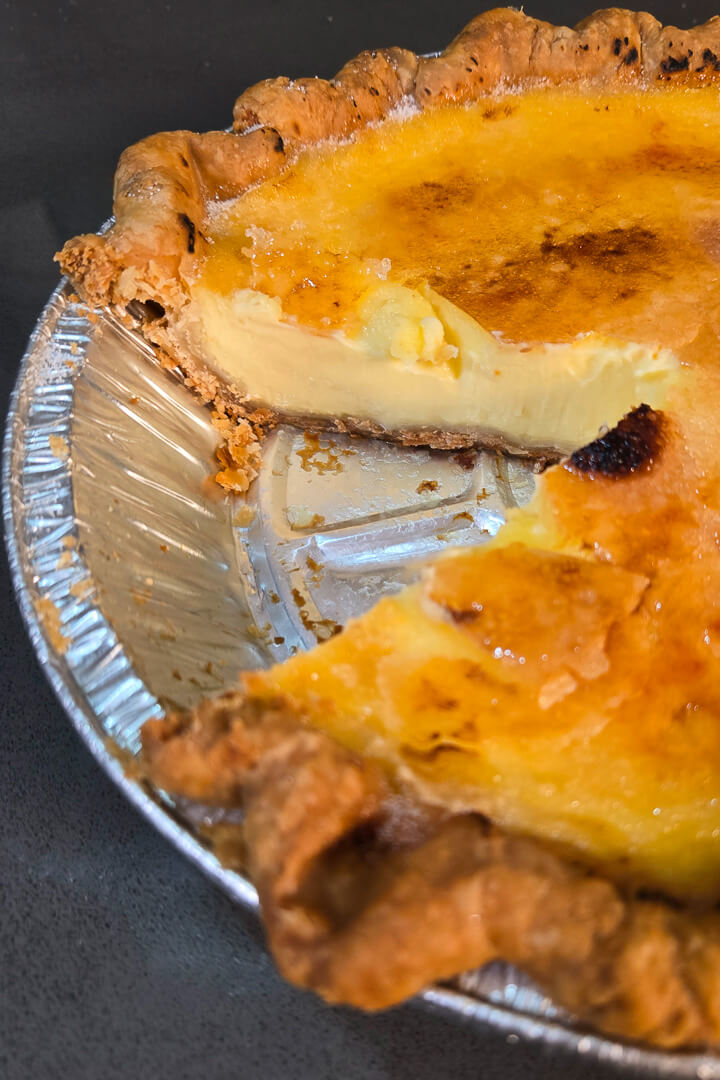
Crème brûlée is a classic dessert enjoyed all around the world. This version makes the dessert even more decadent by baking the rich vanilla custard inside a flaky pie crust. Making crème brûlée in a pie crust also makes the dessert easier to prepare, eliminating the need for a traditional water bath. Crème brûlée pie is delicious any time of year, but it has become a personal favorite dessert for New Year’s Eve celebrations.


What Is Crème Brûlée Pie?
Crème brûlée pie is exactly what it sounds like: a crème brûlée-style custard baked into a pie shell and finished with a crisp caramelized sugar topping. The result is a decadent custard pie with an extra rich, creamy custard surrounded by a flaky pie crust and topped with a hard caramel layer that cracks when tapped with a spoon. In many ways, crème brûlée pie is actually a simpler way to make crème brûlée at home. Traditional crème brûlée must be baked in a water bath so the custard cooks evenly, preventing the edges from drying out or overbaking before the center sets. In a pie, the crust acts as an insulator, helping the custard bake gently and evenly without the need for a water bath.
What Is Crème Brûlée?
Crème brûlée is a classic French dessert whose name translates to “burnt cream.” It is traditionally made from a rich vanilla custard baked in individual ramekins. After baking and cooling, a thin layer of sugar is sprinkled over the surface and caramelized, most often with a kitchen torch. This creates the signature hard caramel topping that cracks satisfyingly when broken with a spoon.
History of Crème Brûlée
Crème brûlée originated in Europe centuries ago, and this luxurious custard dessert has since become a favorite around the world. Interestingly, France, Spain, and England all lay claim to being the birthplace of crème brûlée. In England, the dessert was known as “burnt cream,” in France as “crème brûlée,” and in Spain as “crema catalana.” Given the simplicity of the dessert and the shared culinary traditions across Europe, it would not be surprising if similar versions developed independently in multiple regions.
The earliest printed recipe for “burnt cream” appears in a 15th-century English cookbook. In that version, the sugar topping was caramelized by pressing a heated iron directly onto the surface of the custard. Recipes for crema catalana date back to the Medieval period, sometime between the 5th and 15th centuries. The first printed recipe specifically using the name crème brûlée appeared in a French cookbook published in 1691, written by a chef who served at the court of Louis XIV.
You can watch a video on the history of creme brulee here.
Emergence of Crème Brûlée Pie
Recipes for crème brûlée pie itself are few and far between in published cookbooks and it’s a relatively modern dessert, appearing after 2000. A number of recipes also appear on the internet, including the New York Times. The earliest recipes for crème brûlée pie on the internet appears around 2010, with a halloween dessert intended to look like a bloodshot eye.
Crème Brûlée Pie Recipe
Crust:
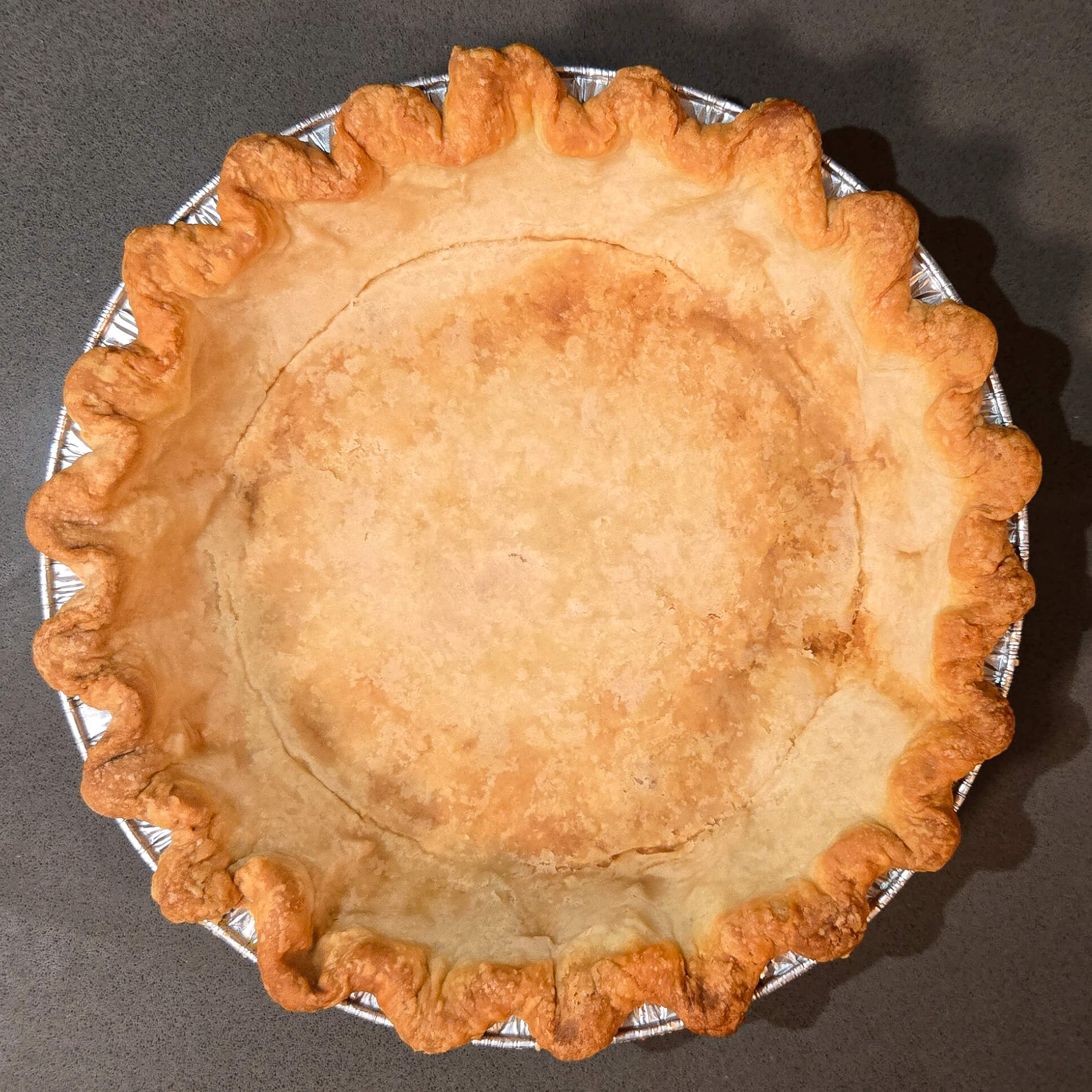
Crème brûlée pie is easiest to make, and tastes best, in a flaky pie shell. You’ll want a dark, blind-baked pie crust for this recipe to ensure the bottom stays crisp.
Creme Brulee Custard:
Ingredients
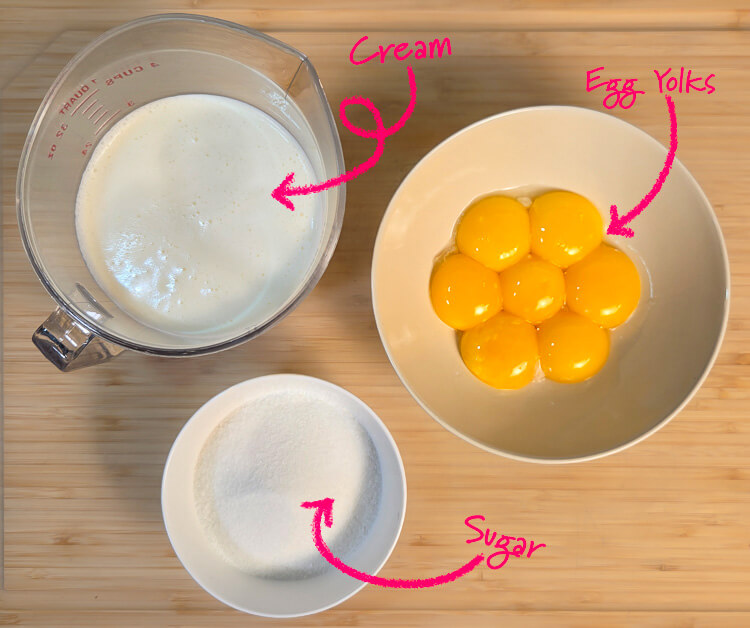
- 7 Egg Yolks
- ¾c + ¼c Granulated Sugar, divided (150g)
- 3c Heavy Whipping Cream (700mL)
- 2t Vanilla Extract
- ¼tsp Salt
1.
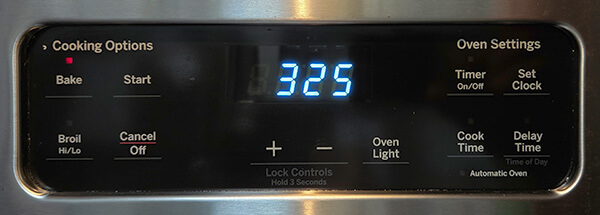
Preheat your oven to 325°F (160°C).
2.
In a medium pot over medium heat, bring the heavy cream to just under a boil, until hot and steaming but not bubbling.
3.
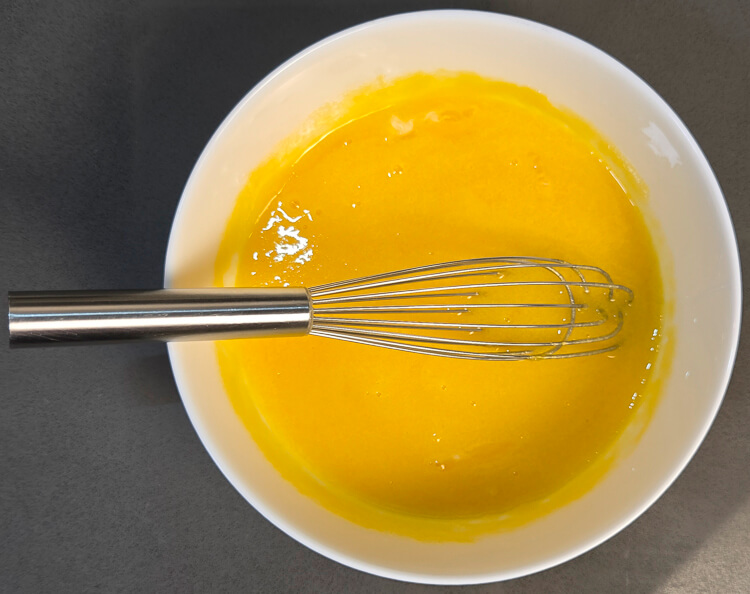
While the cream is heating, whisk together the egg yolks and ¾ cup of the granulated sugar in a large mixing bowl until smooth and well combined.
4.
Once the cream is hot, transfer it to a heatproof measuring cup. Very slowly pour the hot cream into the egg mixture while whisking constantly and vigorously. This gradual process tempers the eggs and ensures a smooth, creamy custard.
Pro Tip: Tempering Eggs
Tempering eggs is one of the most important steps in custard-style desserts like curds, puddings, and pastry creams. Gentle, even heating helps the eggs thicken the mixture smoothly rather than curdling. To learn more about tempering eggs, read here.
5.
Whisk in the salt and vanilla extract.
6.
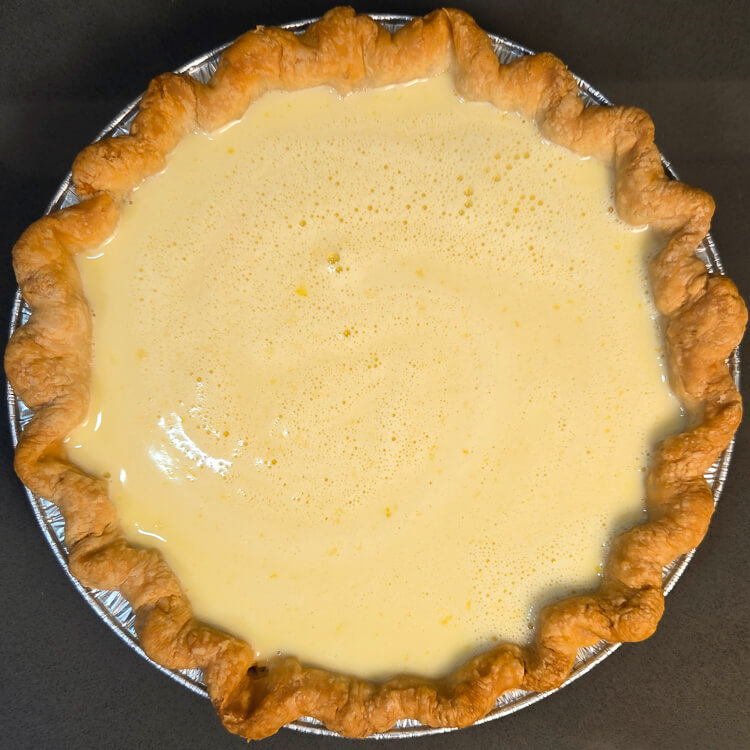
Pour the custard mixture into your prepared blind-baked pie shell and bake for 40 to 45 minutes, or until the center is just set with a slight jiggle.
7.
Remove the pie from the oven and allow it to cool on the countertop for about 30 minutes before transferring it to the refrigerator. Chill for at least 3 hours, or until the custard is fully set.
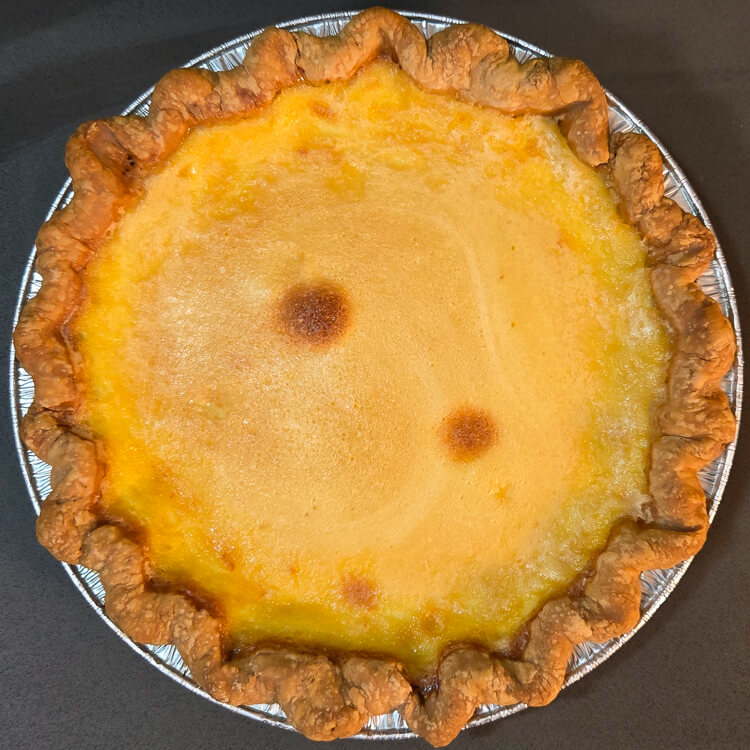
Pro Tip: Allowing the pie to cool first at room temperature helps the custard cool more gradually and evenly. This reduces the likelihood of cracks forming on the surface as the pie sets.
8.
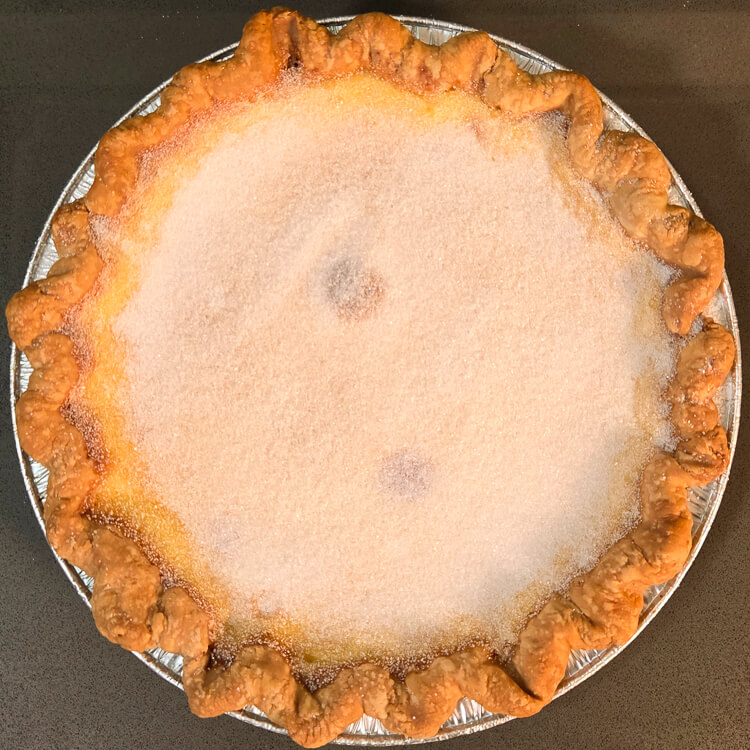
Once fully chilled and ready to serve, remove the pie from the refrigerator and sprinkle the remaining ¼ cup of granulated sugar evenly over the surface of the custard.
9.
Using a kitchen torch or one of the alternative methods described below, carefully brûlée the top of the pie until the sugar melts and forms a deeply caramelized crust.
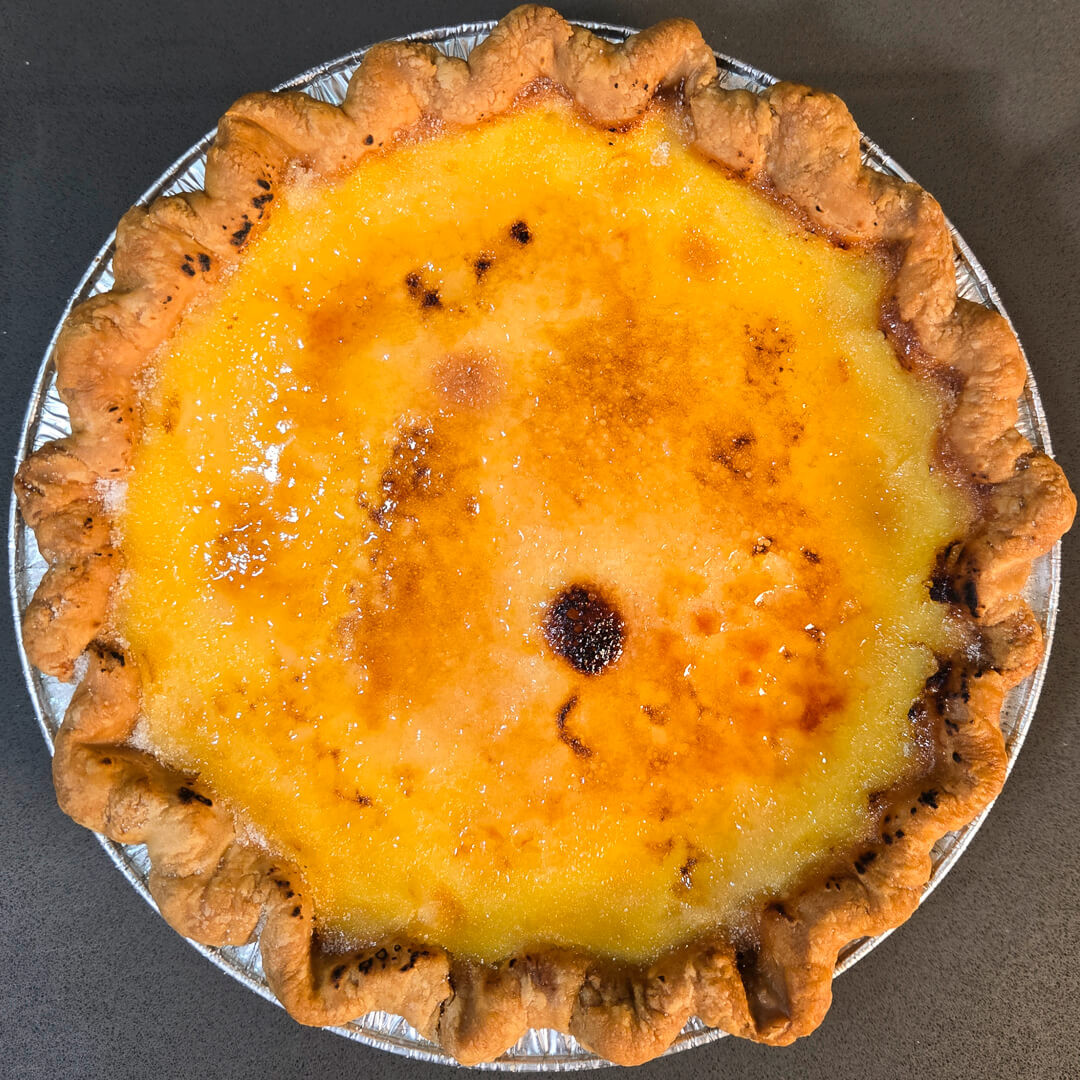
Pro Tip: Do not brûlée the sugar topping until just before serving. The caramelized sugar is crispiest immediately after brûléeing and will soften over time as it absorbs moisture from the custard beneath.
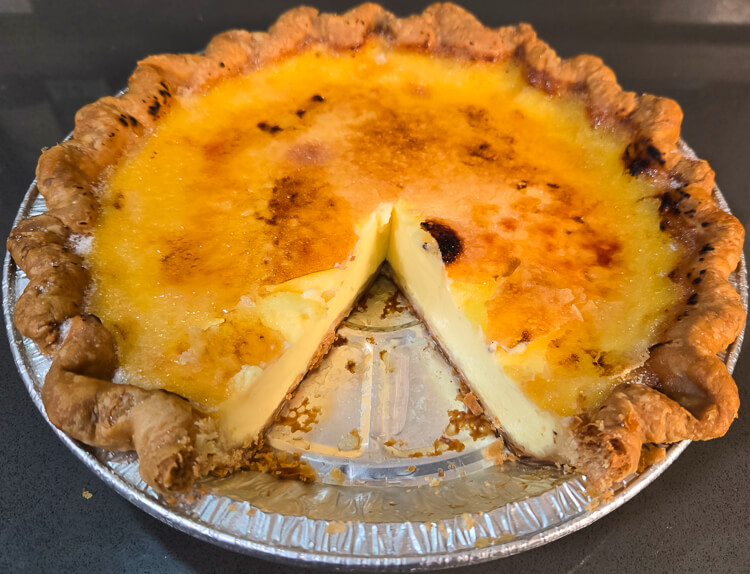
How to Brûlée a Crème Brûlée Pie
The quickest and most foolproof way to brûlée the top of a crème brûlée pie is with a kitchen torch. A torch gives you the most control over heat and caramelization. If you don’t have a kitchen torch, there’s no need to worry. There are a few other effective ways to caramelize the sugar topping. You can read about the science of caramelization in my post here.
Kitchen Torch Method:
To brûlée the top of a pie with a kitchen torch, set the torch to a medium flame and focus the heat. Keep the torch moving constantly to avoid scorching or lighting the sugar on fire. Sweep the flame back and forth across the surface of the pie, making sure all of the sugar granules melt evenly. Continue heating until the sugar begins to bubble and turn a light golden brown.
Broiler Method:
If you don’t have a kitchen torch, you can use your oven’s broiler. Do not preheat the oven with the broiler on. Instead, place the pie on the top rack, positioned close to the broiler element. Leave the oven door open, turn the broiler to low, and watch carefully as the sugar begins to melt and brown. Remove the pie immediately once a caramelized top forms. Leaving the door open and waiting to turn on the broiler until the pie is already in the oven helps caramelize the sugar without melting the custard underneath.
Hot Spoon Method:
This method is less common, and I have not tested it personally, but some home cooks report success using a hot spoon to brûlée desserts. If you have a gas stove, hold a metal spoon with an oven mitt and heat the bowl of the spoon directly over the flame. Gently press the back of the hot spoon onto the sugar until it melts and begins to caramelize. Repeat as needed until the entire surface of the pie is evenly caramelized.

How to Store a Crème Brûlée Pie
Because creme brulee pie is made with a dairy-based pudding filling, it must be kept refrigerated. If possible, wait to brulee the top of the pie until ready to serve. The caramel will absorb the liquid from the custard over time and soften so that it doesn’t create that crisp crack that creme brulee is famous for. Cover the pie tightly with plastic wrap or store it in a large, airtight container to keep it fresh. It will stay at its best for up to three days, though the custard itself can last as long as a week. After the first few days, the crust will start to soften as it absorbs moisture from the filling.

We’d love to see your crème brûlée pie creations! If you give this recipe a try, tag @doggone_baking on social media so we can share in the baking fun.

Crème Brûlée Pie
Ingredients
Crust
- 1 Dark, Blind-Baked Pie Shell
- 2 tbsp Heavy Whipping Cream (optional)
Crème Brûlée
- 7 Egg Yolks
- 1 cup Granulated Sugar, divided (¾cup + ¼cup)
- 3 cups Heavy Whipping Cream
- 2 tsp Vanilla Extract
- ¼ tsp Salt
Instructions
- Preheat your oven to 325°F (160°C).
- In a medium pot over medium heat, bring the heavy cream to just under a boil.
- While the cream is heating, whisk together the egg yolks and ¾ cup of the granulated sugar in a large mixing bowl.
- Once the cream is hot, transfer it to a heatproof measuring cup. Very slowly pour the hot cream into the egg mixture while whisking constantly and vigorously. This gradual process tempers the eggs and ensures a smooth, creamy custard.
- Whisk in the salt and vanilla extract.
- (Optional) Brush the edges of your pie crust with cream for a golden brown finish after baking.
- Pour the custard mixture into your prepared blind-baked pie shell and bake for 40 to 45 minutes, or until the center is just set with a slight jiggle.
- Remove the pie from the oven and allow it to cool on the countertop for about 30 minutes before transferring it to the refrigerator. Chill for at least 3 hours, or until the custard is fully set.
- Once fully chilled and ready to serve, remove the pie from the refrigerator and sprinkle the remaining ¼ cup of granulated sugar evenly over the surface of the custard.
- Using a kitchen torch or one of the alternative methods described above in the post, carefully brûlée the top of the pie until the sugar melts and forms a deeply caramelized crust.


About Me
In 2016, I left my office job and became a professional baker. These days I spend my days testing recipes and baking pies while my two dogs snooze happily nearby.



Leave a Reply