
This post may contain affiliate links. Please read my disclosure policy.
All recipes on Doggone Baking are intended for humans — the dogs are just our enthusiastic photo assistants and taste-test spectators.
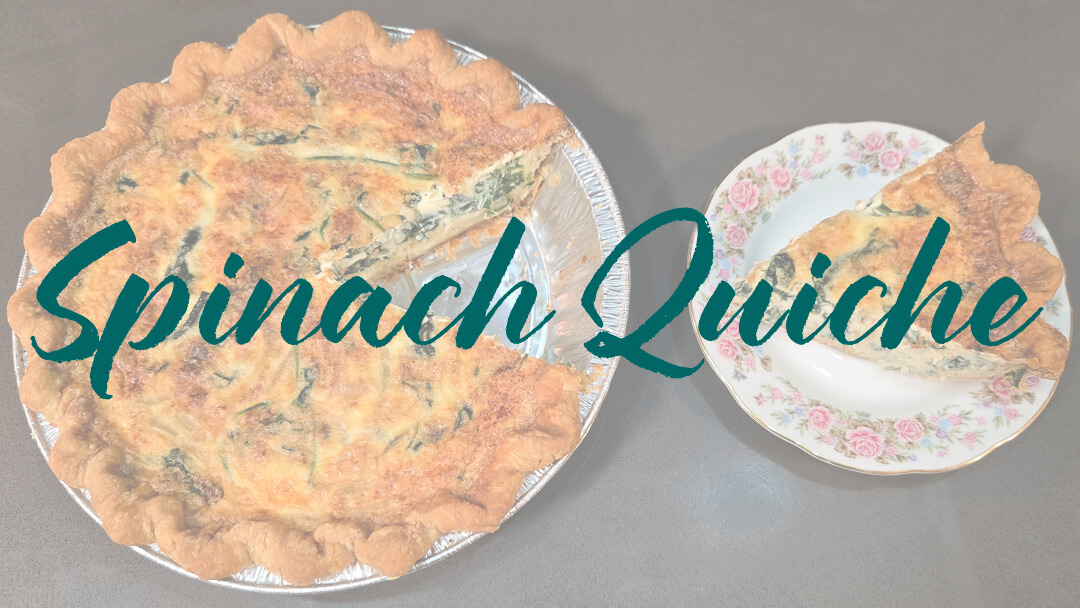
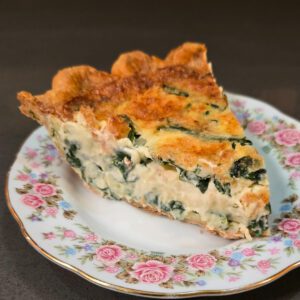
Quiche Florentine: Spinach Quiche Recipe
A creamy quiche baked in a flaky pie crust is the ultimate comfort food. Spinach quiche, also called Quiche Florentine, is a classic quiche. If you are looking for a vegetarian quiche for brunch, a weekend breakfast, or an easy picnic dish, a spinach quiche is a delicious choice that fits almost any occasion.

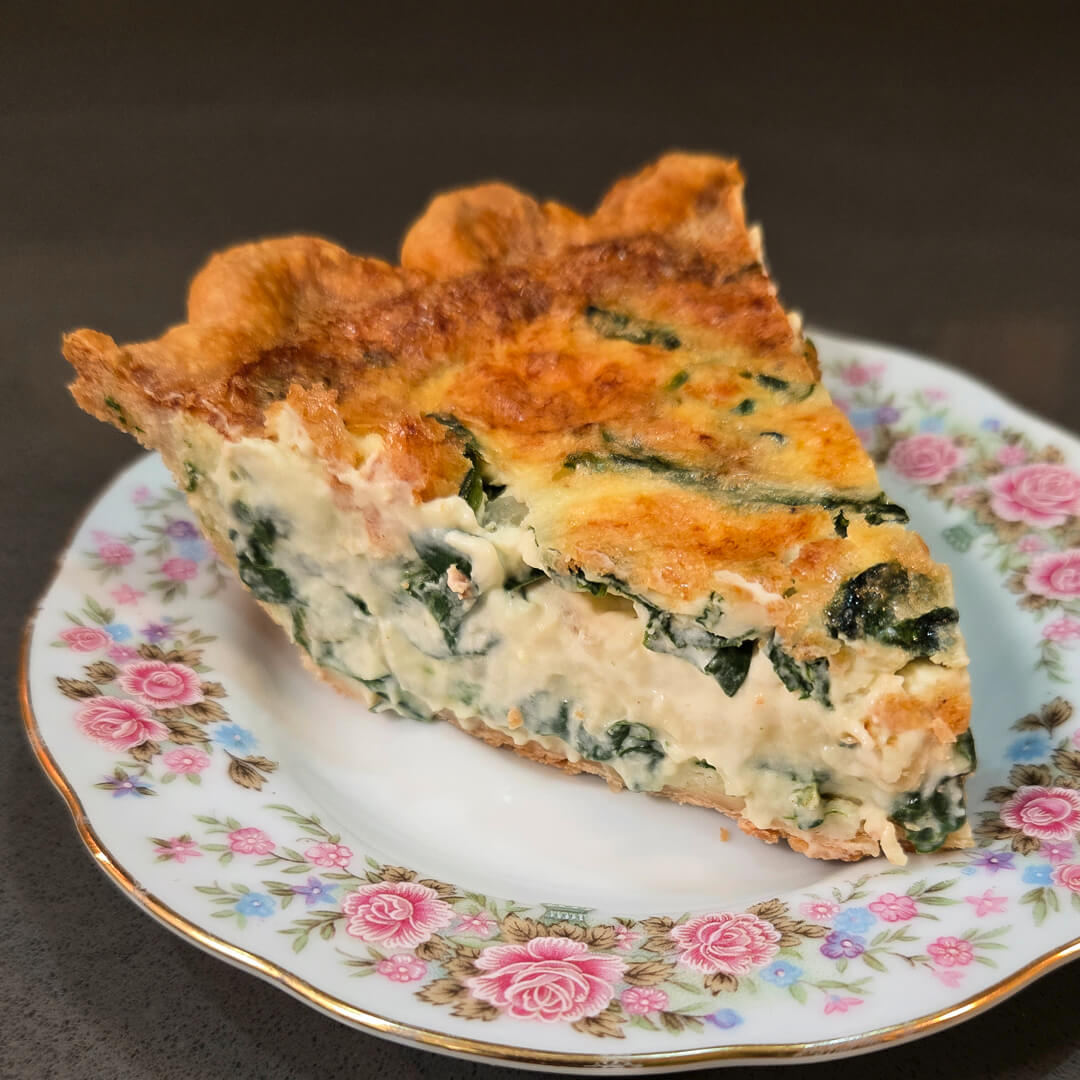
What is a Quiche Florentine?
A quiche is a savory custard pie made with eggs and cream baked in a flaky pastry crust. The filling can include a wide variety of vegetables, meats, or cheeses, making quiche a versatile dish originating from France. Served warm or chilled, a slice of quiche makes an excellent breakfast, brunch, or light meal any time of day. A Quiche Florentine is a spinach quiche, typically with spinach and onions baked into the filling.
A Brief History of Quiches:
The earliest quiches come from the Lorraine region of France, where the dish began taking shape in the 1500s. These first versions looked quite different from the quiches we know today. Instead of a deep pastry crust filled with custard, they were closer to a simple flatbread with a lightly enriched topping.
Over the centuries, the dish evolved, and the modern quiche we know today became popular in American and British cuisine following WWII. Because of this link to post-war cuisine, spinach quiche began appearing in American cookbooks in the 1960s and 1970s. If you would like a detailed look at how quiches developed over time, see my full post on Quiche Lorraine.
What Does “Florentine” Mean in Cooking? (And Why It Always Means Spinach)
Quiche Florentine is a spinach quiche, Eggs Florentine are eggs Benedict with spinach instead of Canadian bacon, and Chicken Florentine is chicken in a creamy spinach sauce. ‘Florentine’ in cooking, short for ‘à la Florentine,’ usually means that spinach is a primary ingredient in the dish.
But how did ‘Florentine’ come to mean dishes with spinach? Legend says that when Catherine de Medici of Florence married King Henry II of France, she brought her personal chefs with her, and spinach was her favorite vegetable. Her favorite dishes entered the French court and ended up being dubbed ‘à la Florentine.’ It’s unclear whether this is necessarily true or not, but Larousse Gastronomique, a French culinary encyclopedia, does say that ‘à la Florentine’ is a method of cooking that includes spinach and cream sauce.
Cheeses for Quiche Florentine
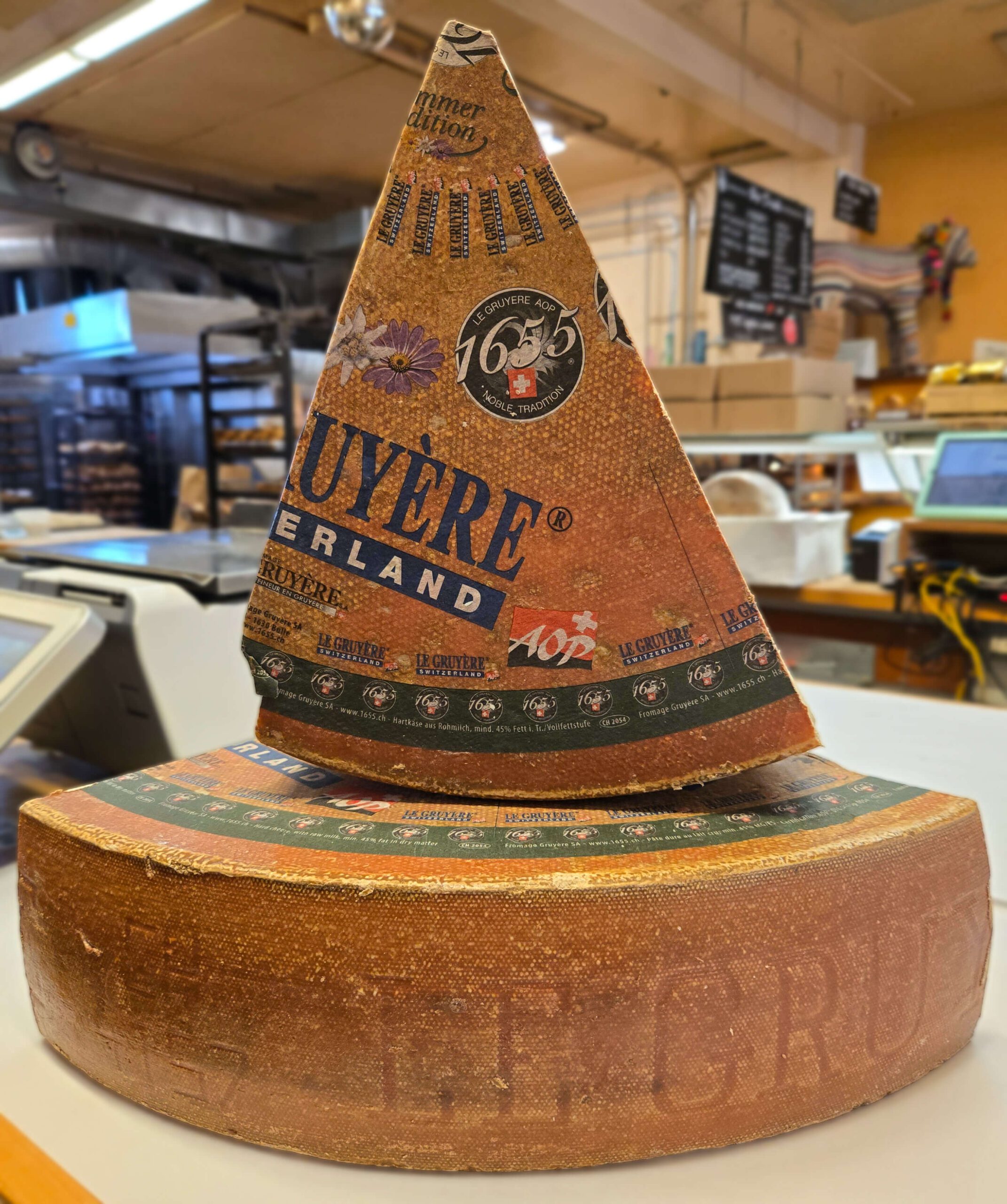
Gruyère
The most commonly used cheese for quiche is Gruyère, a name-protected Swiss alpine cheese made from cow’s milk. Authentic Swiss Gruyère will have an “AOP” designation on the label, which certifies that it meets the strict standards for Gruyère produced in Switzerland. Gruyère AOP is crafted in the Fribourg region of the Swiss Alps and is known for its firm texture, nutty flavor, and savory aroma. It grates beautifully, melts smoothly, and infuses the custard with a salty flavor that perfectly complements the creamy filling.
Substitutes for Gruyère:
If you want to branch out from Gruyère, you can experiment with other alpine-style cheese for quiche. There are several delicious options that share Gruyère’s meltability and complex flavor:
- Chällerhocker: Pronounced “holler-hocker,” this Swiss alpine cheese from Lutisberg is aged for at least 10 months and washed with wine and spices during the process. It’s intensely savory and umami-rich, with a deep, complex flavor that’s exceptional in quiche.
- Hornbacher: Sometimes called “the baked potato cheese,” Hornbacher is an alpine cheese from Wasen, Switzerland. It’s another extremely umami and savory melting cheese. A younger version of Hornbacher called Hornbacher “Little Brother” won World’s Best Cheese in 2024.
- Comte: Extremely similar to Gruyère, Comte is a French, alpine cheese from the Jura mountains. It’s an extremely snackable cheese that has a similar yet a slightly more delicate flavor than Gruyère.
- Appenzeller: The creamiest and most aromatic of the group, Appenzeller has been produced since the Middle Ages across Switzerland, France, Austria, and Italy. Its tangy, full-bodied flavor melts beautifully into quiche custard.
There are many other alpine cheeses that you can try as well. Mix and match your favorites for a personalized quiche filling.
Affordable Substitutes for Gruyère:
Authentic Gruyère AOP can be pricey as it needs to be made by specific dairy farms and cheesemakers in Switzerland and then imported to where you live (unless you live in Switzerland). Luckily, there are budget-friendly ways to achieve a similar taste and texture:
- Domestic Gruyère: Many U.S. creameries produce domestic versions of Gruyère that mimic the flavor and meltability of Swiss AOP cheese at a fraction of the cost. Once baked into your quiche, the difference is nearly impossible to tell.
- Gruyère-Parmesan Blend: Mixing grated Parmesan with your shredded Gruyère adds a touch of sharpness and volume while keeping the cost down. The Parmesan also enhances the savory edge of the custard, giving the filling a slightly nuttier depth.
Using Frozen vs. Fresh Spinach in Cooking
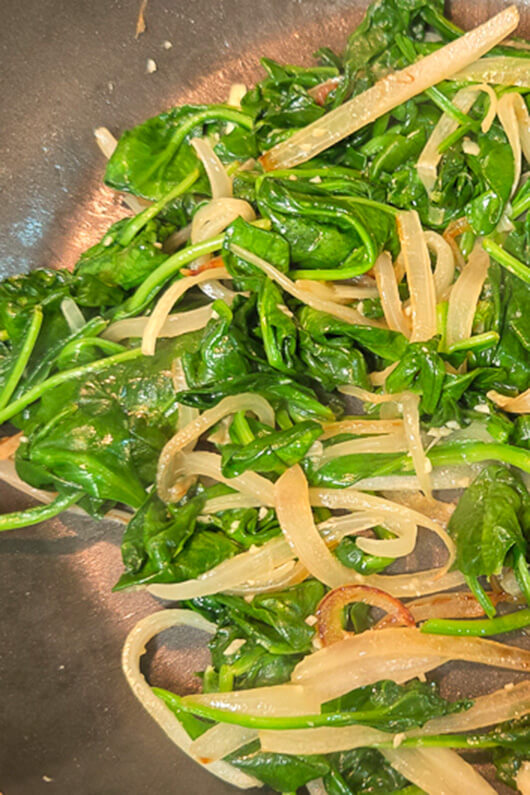
There are a few different common options for cooking with spinach: fresh baby spinach, often sold in 10 ounce bags in the US, fresh bunched spinach which can be a bit more difficult to find, and frozen spinach which is convenient, affordable, and found in almost any grocery store. All three options can be used in this spinach quiche recipe, but there are some slight differences.
Nutrients in Frozen vs Fresh Spinach:
Before getting into how to make this spinach quiche with frozen or fresh spinach, we should discuss whether spinach loses nutrients when frozen. The short answer is no. Regardless of whether you start with fresh or frozen spinach for this recipe, the spinach will be cooked. Usually, the concern about nutrient differences comes from the difference between uncooked and cooked spinach. Frozen spinach is blanched (and therefore cooked) before packaging.
The question then becomes whether cooked spinach loses nutrients compared to fresh spinach. This is also not the case, although the nutrient profile does change somewhat between the two. Fresh spinach is higher in folate, vitamin C, niacin, riboflavin, and potassium.
However, fresh spinach contains a chemical called oxalic acid. Oxalic acid actually prevents the absorption of some nutrients. When heated, oxalic acid breaks down, allowing our bodies to absorb higher levels of nutrients after cooking. These nutrients include vitamins A and E, fiber, zinc, thiamin, calcium, iron, and carotenoids.
High levels of oxalic acid in spinach also leads to another aspect that many people notice when eating spinach. Some people notice that raw spinach often feels sandy or gritty when they eat it, or that it leaves a chalky feeling on their teeth. While many people mistakenly think they simply should have washed their spinach better, this gritty or chalky texture is actually caused by a chemical reaction between the oxalic acid in the spinach and your saliva. When chewing raw spinach, the oxalic acid molecules bind with calcium molecules in your saliva, creating thousands of tiny calcium oxalate crystals that create a gritty, chalky texture. By cooking spinach and breaking down the oxalic acid, this sandy texture is also reduced.
Making Quiche with Frozen Spinach
Frozen spinach is chopped and blanched before packaging. The blanching process leads to a significant amount of extra water being frozen with the spinach. If making a quiche using frozen spinach, be sure to thaw it and squeeze out the excess water before adding it to the quiche. Otherwise, you’ll end up adding too much water to the filling, which may result in a watery quiche. Additionally, because frozen spinach comes pre-blanched, there’s no need to cook it before adding it to the quiche.
Baby Spinach vs Bunched Spinach
These days, almost all grocery stores in the US are primarily selling baby spinach in prepackaged plastic bags or clamshell containers over mature bunched spinach. This change is so dramatic that Serious Eats even wrote an article on it. Both baby spinach and mature spinach work interchangeably and are delicious in a spinach quiche, though there are a few differences worth knowing.
Baby spinach is more convenient and easier to find. It comes pre-washed and doesn’t require any de-stemming. However, the immature leaves cook down softer and can feel mushier compared to mature bunched spinach. Baby spinach also has lower levels of oxalic acid, which reduces the gritty or sandy texture mentioned above.
Bunched spinach, being mature leaves rather than immature leaves, holds up to cooking a bit more and retains a more substantial texture. It also tends to have more flavor. It sometimes comes with longer stems, and it often makes sense to de-stem the leaves before cooking for a better texture. Mature spinach leaves have higher levels of oxalic acid, significantly increasing the sandy or gritty texture mentioned above. While making quiche with mature spinach can result in better texture and more flavor, it’s important to wash the leaves well and cook them thoroughly to break down the oxalic acid and reduce the sandiness.
Step By Step Header Text
Crust:
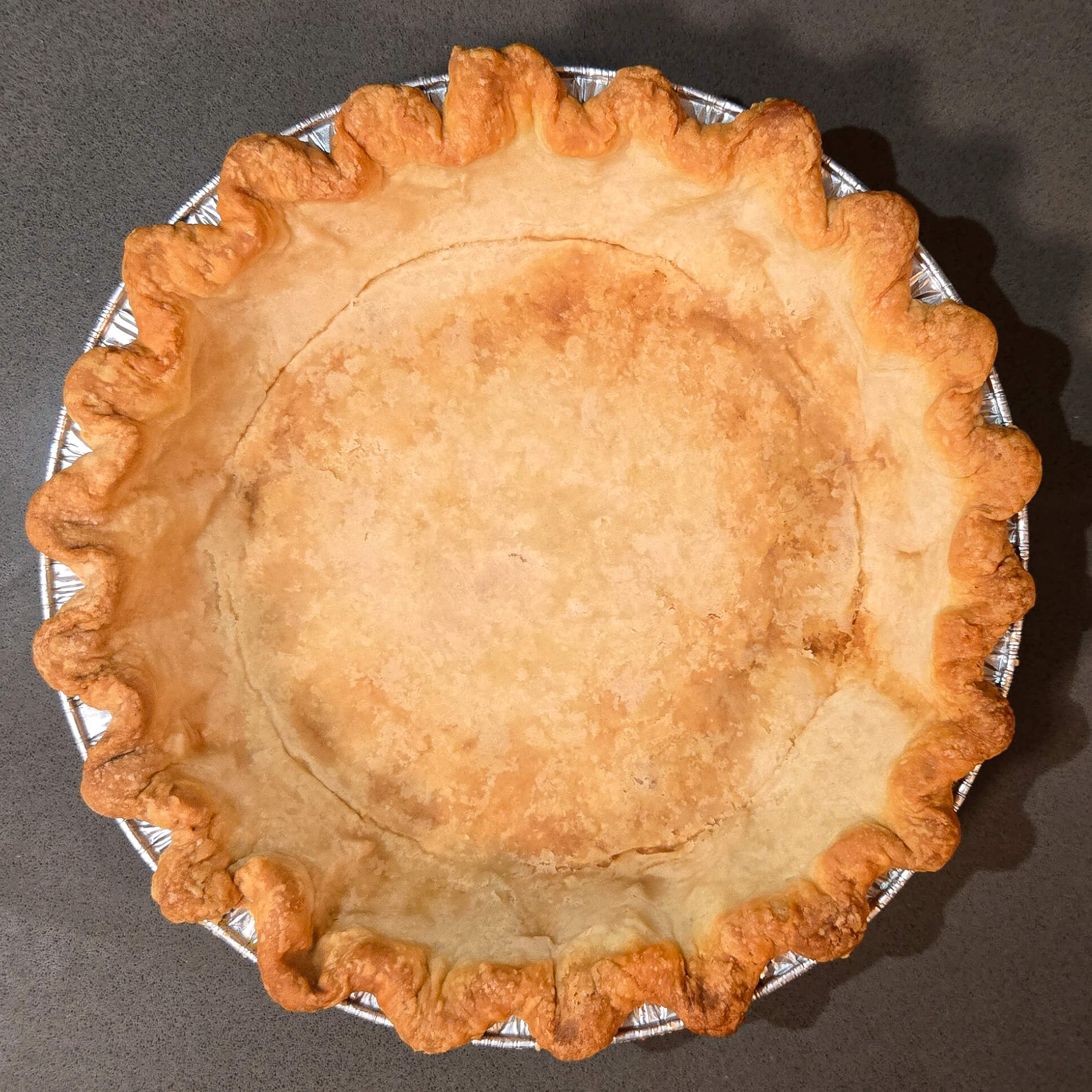
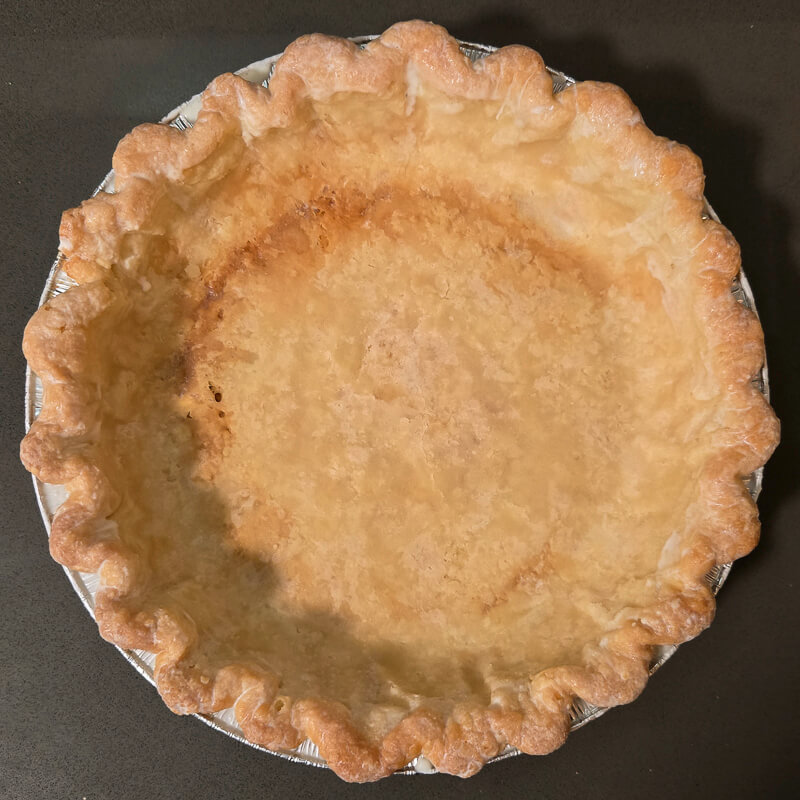
A traditional pastry crust works best for quiches, providing a crisp, buttery base that complements the rich, creamy filling. For this recipe, aim for a dark-baked crust. A darker bake ensures the bottom stays crisp and flaky, even after the long bake time and moisture from the custard.
Spinach Quiche (Quiche Florentine) Filling:
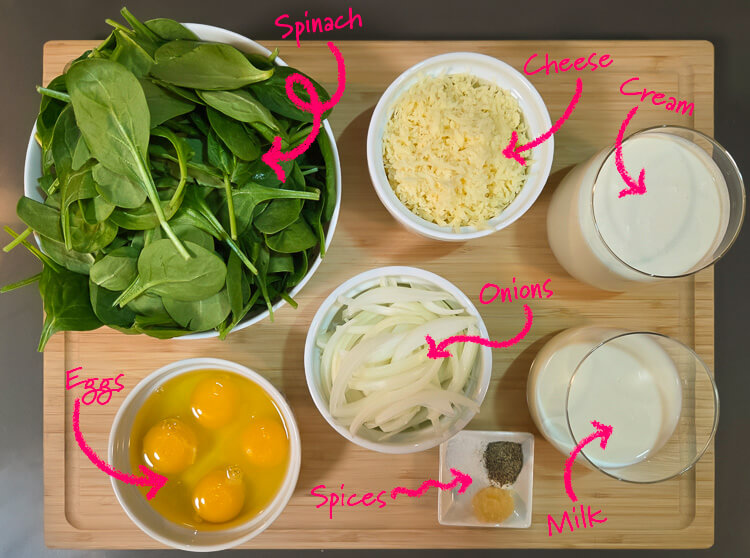
Ingredients
- 4 Eggs
- 1⅓c Heavy Whipping Cream
- ⅔c Whole Milk
- 4oz Gruyère Cheese, grated (113g)
- ½t Salt
- ¼t Black Pepper
- 6oz Spinach, fresh or frozen (170g)
- ½ Yellow Onion, sliced
- 1 clove Garlic, minced
- 2T Heavy Whipping Cream (optional)
1.
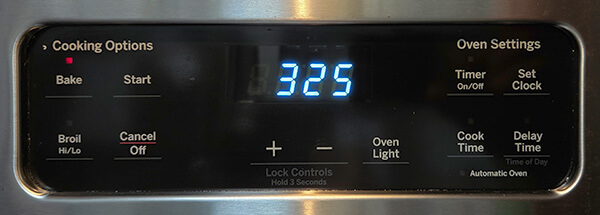
Preheat the oven to 325°F (165°C).
2.
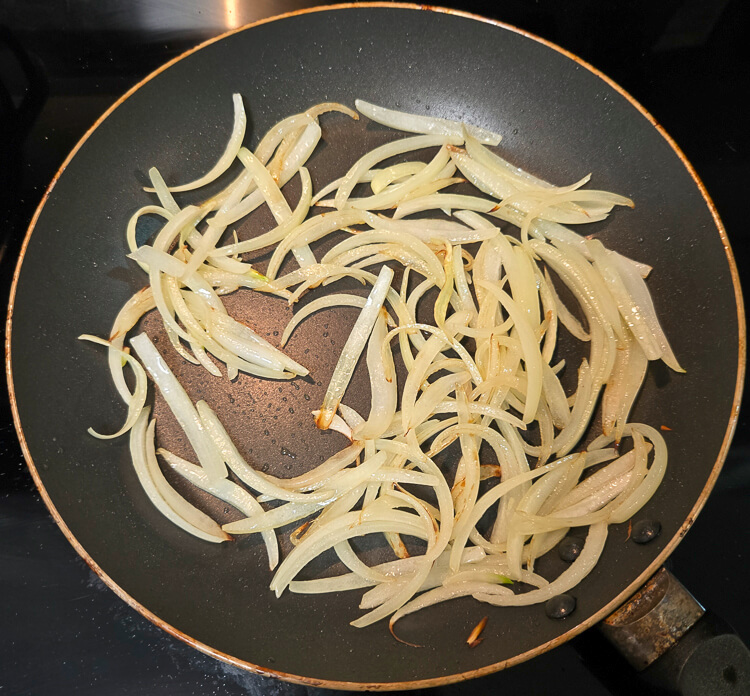
In a skillet over medium heat, sauté the sliced onions for 5–7 minutes, or until soft and translucent.
3.
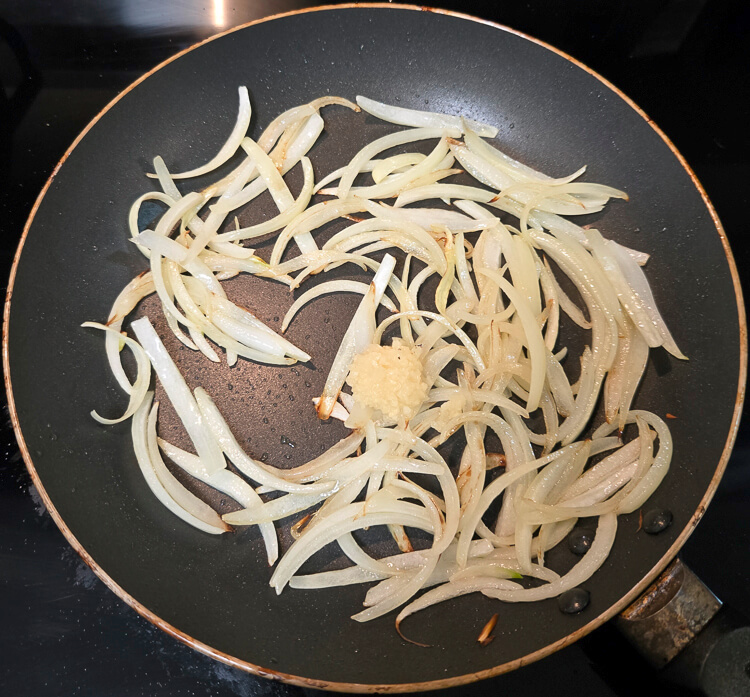
Add the garlic and continue sautéing for 1 minute.
4.
If using fresh spinach, add the 6 ounces of spinach and sauté until fully wilted. Remove the vegetables from the heat and set aside.
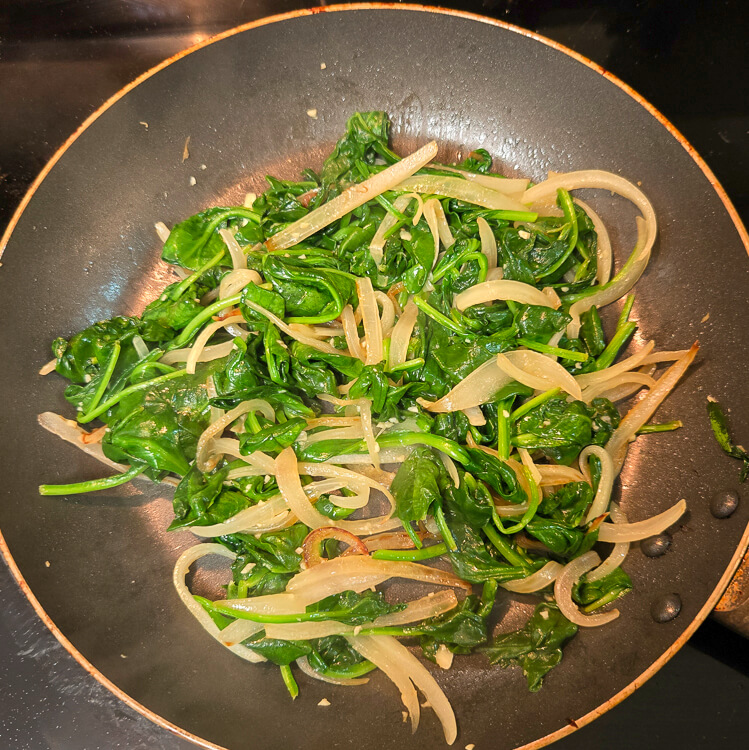
Pro Tip: Always let the spinach and onions cool before adding them to your custard mixture. Adding them while still warm can begin to cook the eggs prematurely.
5.
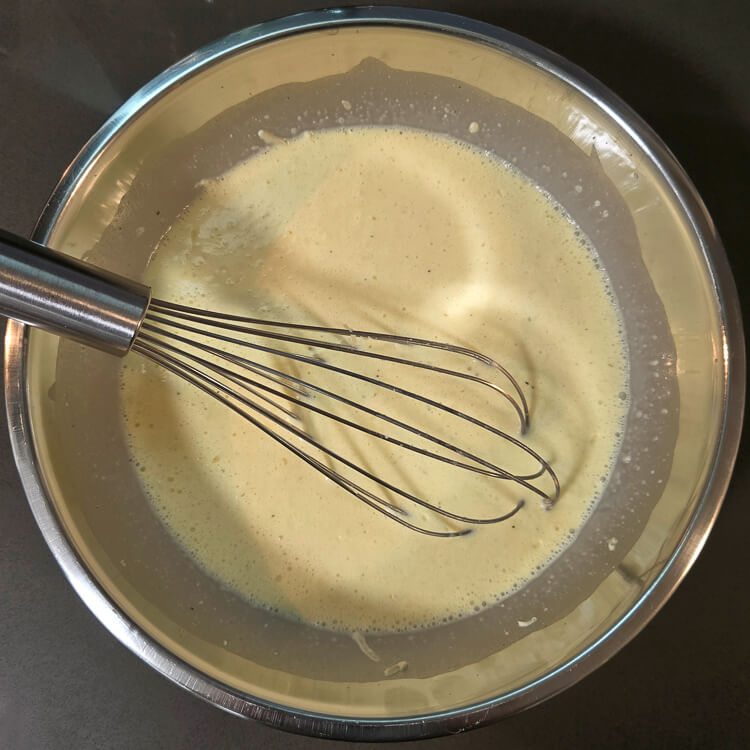
In a large mixing bowl, whisk together the eggs, milk, cream, salt, pepper, and grated Gruyère cheese until smooth and fully combined.
6.
(Optional) Lightly brush the edges of your dark, blind-baked pie crust with heavy cream for a beautiful golden finish after baking.
7.
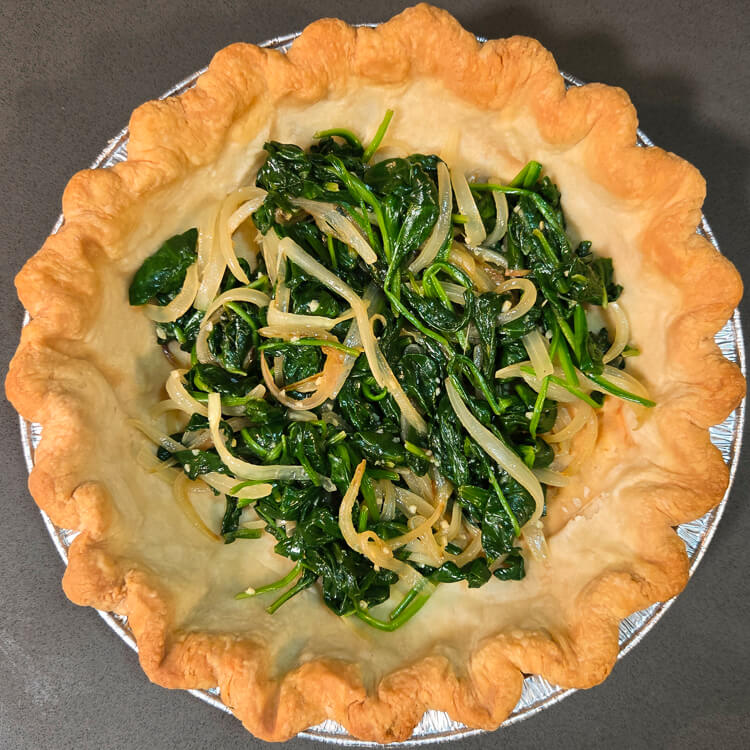
Spread the onions and spinach evenly in the pie crust.
8.
On a metal sheet pan, pour the quiche mixture into the prepared crust, filling it just below the rim to prevent overflow.
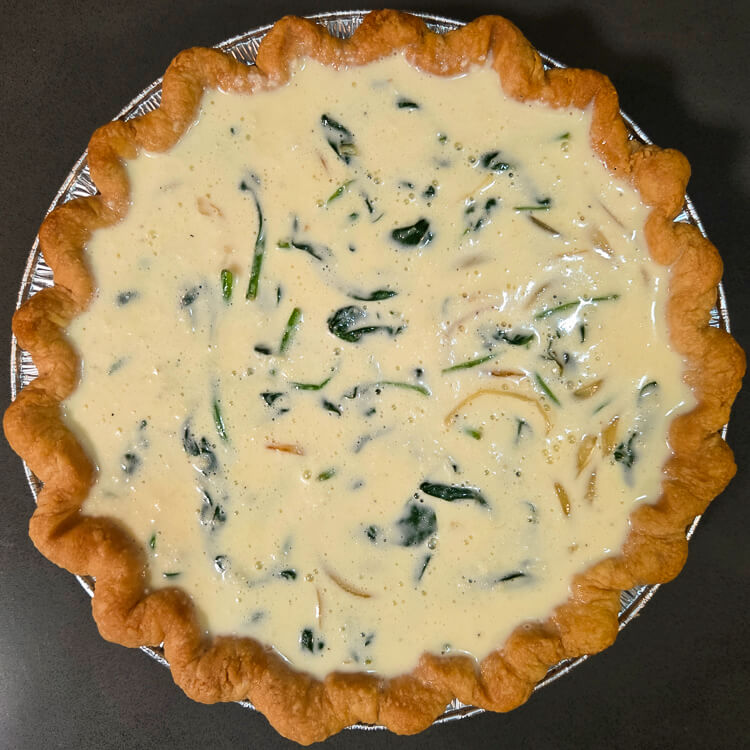
Pro Tip: Dunk all of the onion and spinach at the top of the pie. If they’re coated in a layer of filling before baking the quiche, the exposed pieces are less likely to burn.
9.
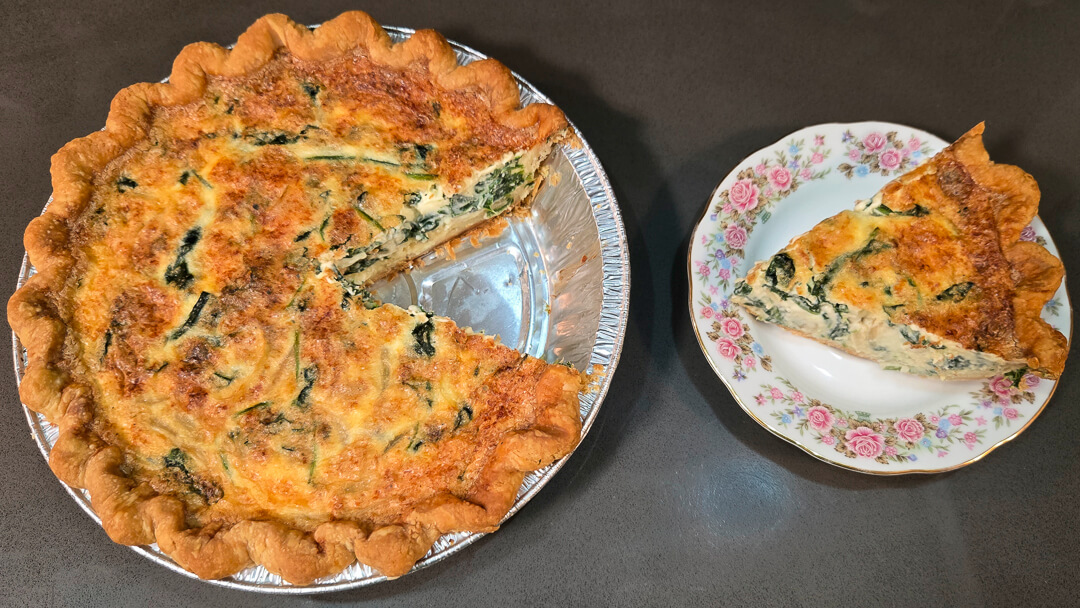
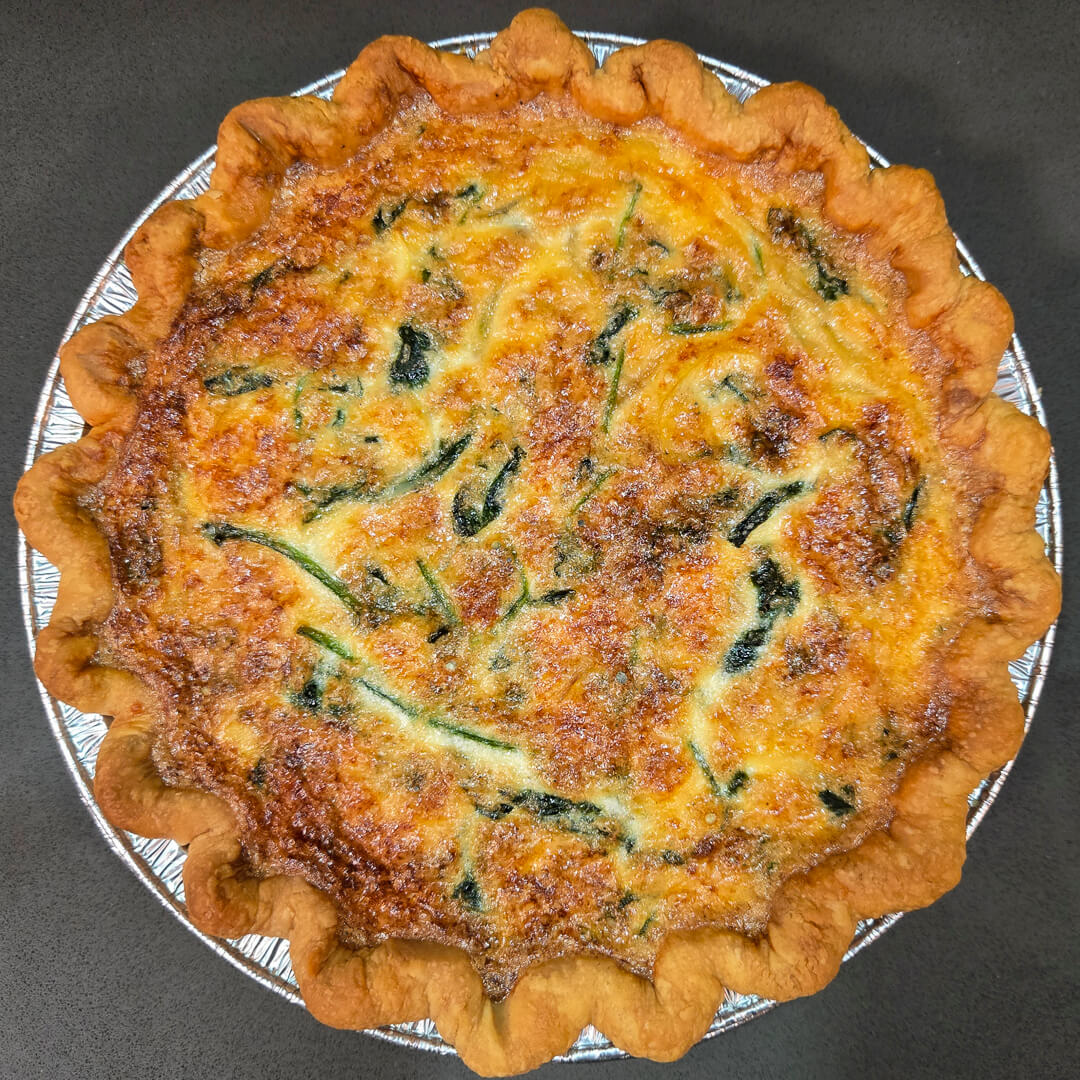
Transfer the quiche to the oven and bake for 35–40 minutes, or until the edges are puffed and the center is still slightly jiggly. The filling will continue to set as it cools.
10.
Remove the quiche from the oven and let it cool on the countertop for at least 30 minutes before slicing and serving.
How to Make a Perfectly Creamy Quiche
Ratio of Eggs to Dairy for a Quiche Custard:
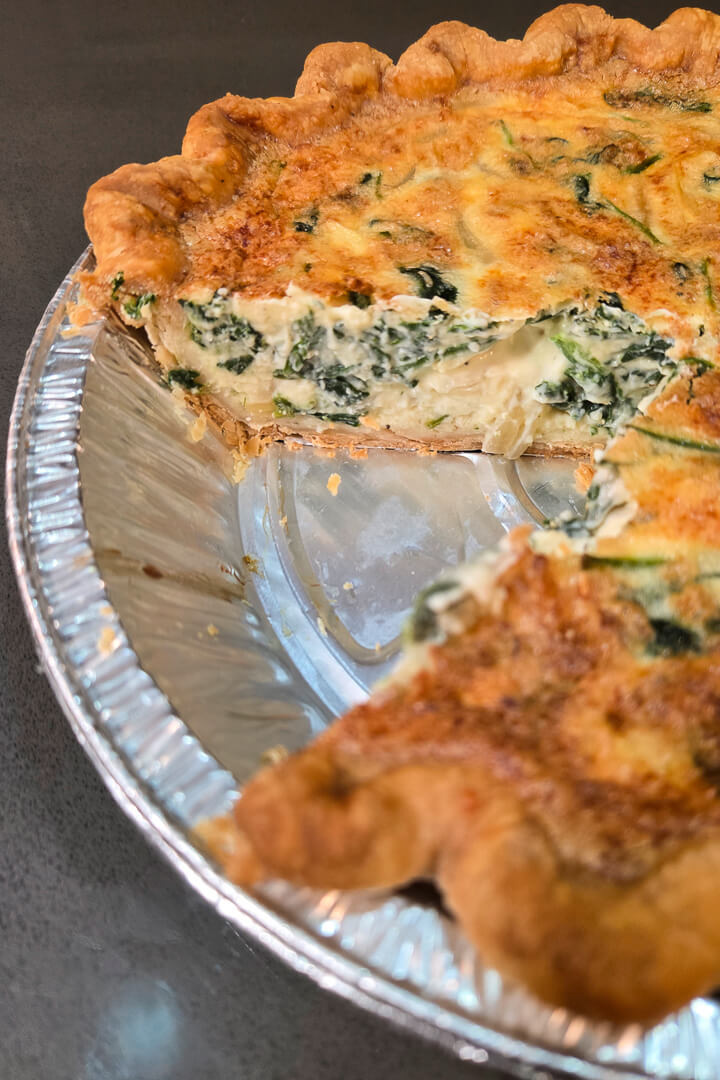
A classic quiche should have a silky, custard-like texture that’s creamy but stable enough to slice cleanly. The key to achieving this is the right balance of eggs to dairy. Use roughly ½ cup (125 mL) of dairy for every large egg in your mixture. Adjusting the balance of milk to cream also affects richness. This recipe uses more cream than milk for an extra creamy and rich filling. For a lighter, fluffier filling that allows the eggs to shine, use more milk than cream.
Don’t Overbake the Quiche:
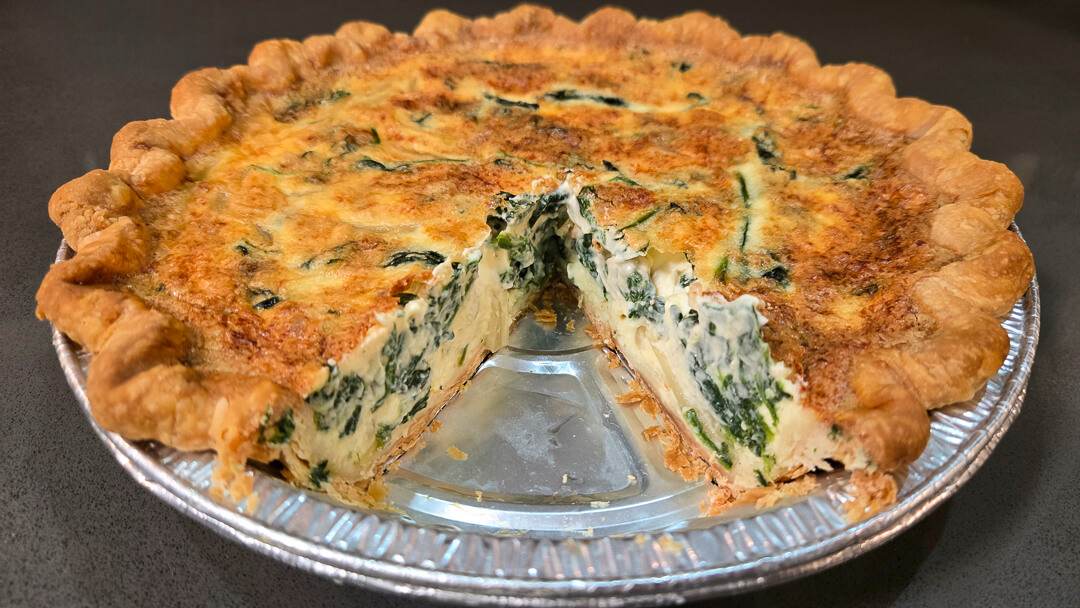
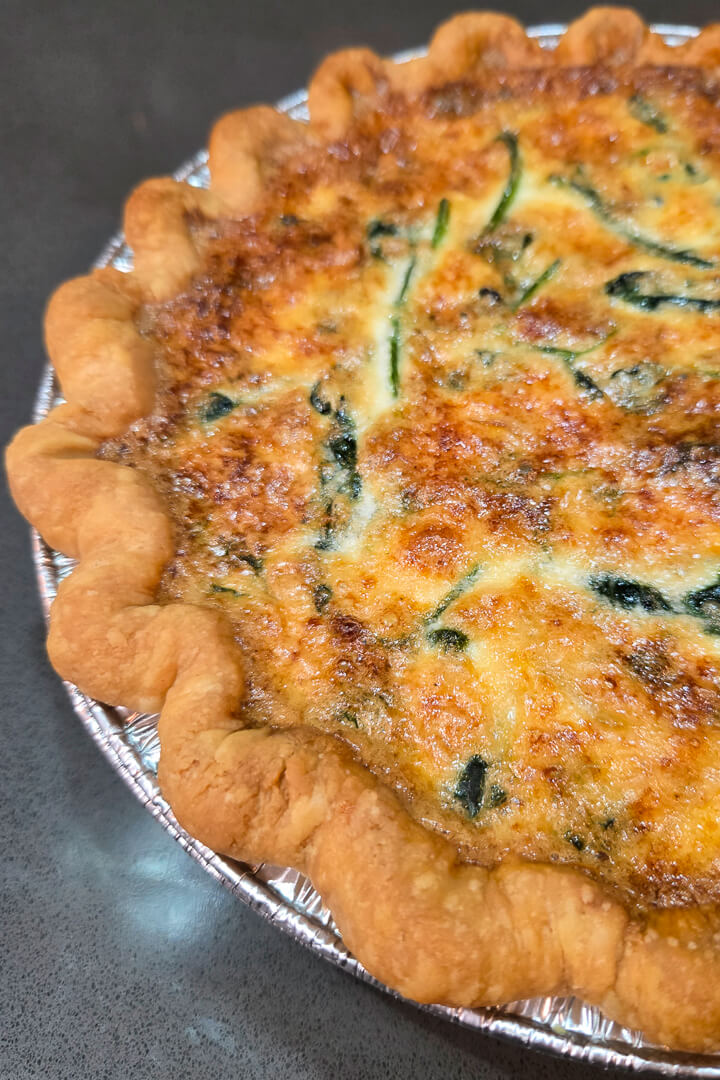
The most common mistake when baking quiche is overcooking it. Overbaked custard turns dense and rubbery instead of soft and creamy. For perfect texture, remove the quiche from the oven while the edges are set but the center still has a gentle jiggle. The residual heat will finish cooking the custard as it cools, leaving it creamy, tender, and perfectly set once sliced.
Other Types of Quiche:
Quiche Florentine is delicious, but there are also seemingly endless quiche varieties to try. Additionally, once you’ve mastered the basic quiche custard, you can easily change up the fillings by swapping in different vegetables, cheeses, and meats to suit the season or your taste. Here are some of the most popular types of quiche:
- Quiche Lorraine: A classic quiche made with bacon, onions, and Gruyère. Quiche Lorraine traces its roots to the original quiches created in the Lorraine region of France in the 1500s.
- Quiche Provencale: Quiche Provençale features summery Mediterranean vegetables like bell peppers, zucchini, and olives.
- Cheese Quiche: A simple quiche made with just cheese and herbs is creamy, comforting, and always a favorite.
- Quiche aux Champignons: Quiche made with mushrooms in the filling is incredibly popular and has a rich, savory flavor.
These are just a few classic types of quiche. There are nearly endless flavor combinations you can create by changing the mix-ins. We’d love to hear what your favorite kinds of quiche are and which ones you’d like us to make next.

How to Store Quiche:
Because quiche contains eggs and dairy it should always be refrigerated if you’re not serving it right away. Quiche keeps well for 3–5 days in the refrigerator when wrapped tightly in plastic wrap or stored in an airtight container.
You can also freeze a whole, baked quiche for longer storage. Wrap it securely in plastic, then place it in a freezer-safe bag to prevent freezer burn. Frozen quiche will keep for up to one month. When ready to serve, let it thaw in the refrigerator, then reheat it in a 325°F (165°C) oven for 15–20 minutes, or until warmed through.
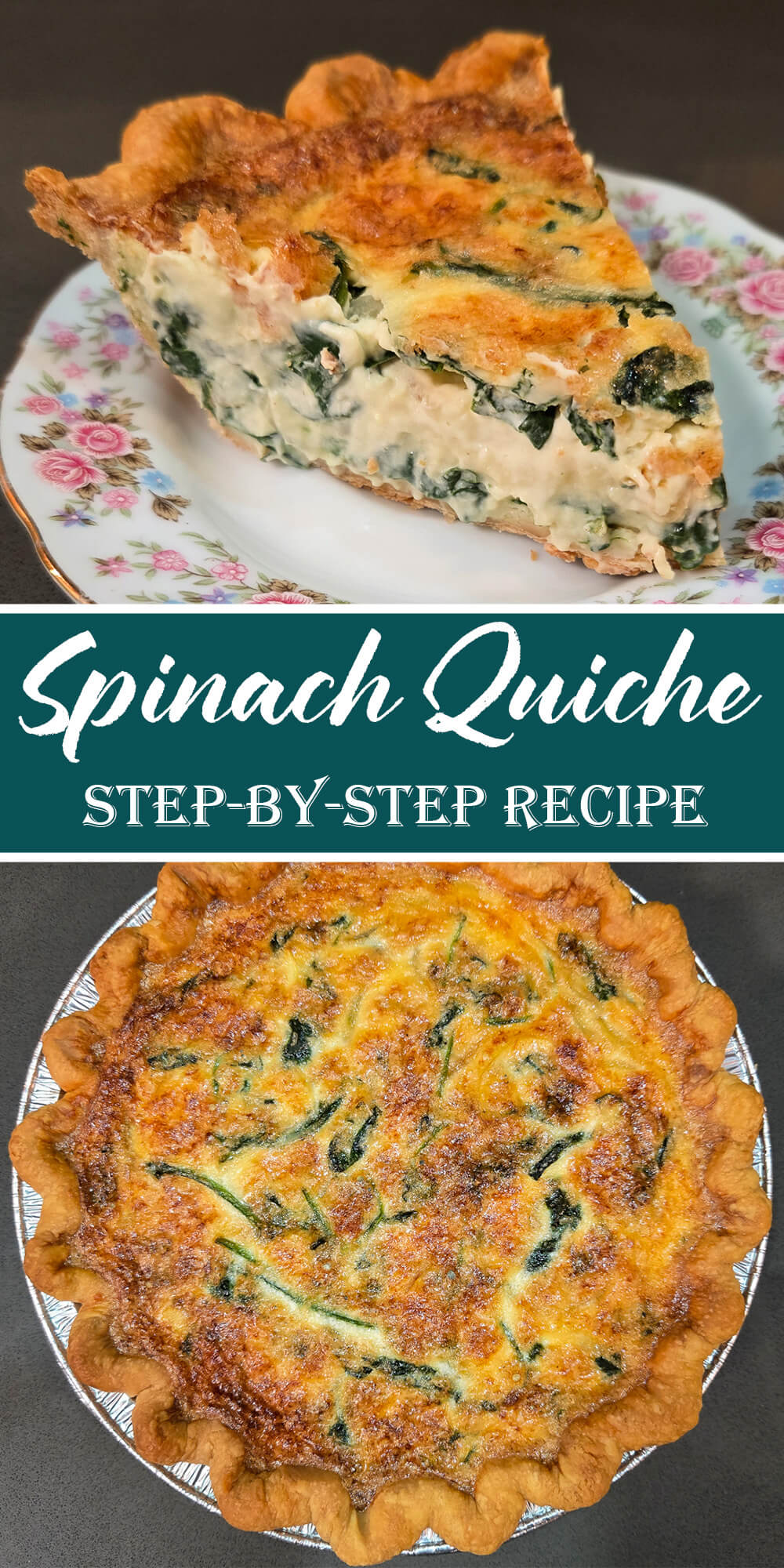
We’d love to see your quiche creations! If you give this recipe a try, tag @doggone_baking on social media so we can share in the baking fun.
Spinach Quiche
Ingredients
Crust
- 1 Dark, Blind-Baked Pie Shell
- 2 tbsp Heavy Whipping Cream
Spinach Quiche Filling
- 4 Eggs
- 1⅓ cup Heavy Whipping Cream (315mL)
- ⅔ cup Whole Milk (160mL)
- 4 oz Gruyère Cheese (113g) grated
- ½ tsp Salt
- ¼ tsp Black Pepper
- 6 oz Spinach (170g) fresh or frozen
- ½ Yellow Onion, sliced
- 1 clove Garlic, minced
Instructions
- Preheat the oven to 325°F (165°C).
- In a skillet over medium heat, sauté the sliced onions for 5–7 minutes, or until soft and translucent.
- Add the garlic and continue sautéing for 1 minute.
- If using fresh spinach, add the 6 ounces of spinach and sauté until fully wilted. Remove the vegetables from the heat and set aside.
- In a large mixing bowl, whisk together the eggs, milk, cream, salt, pepper, and grated Gruyère cheese until smooth and fully combined.
- (Optional) Lightly brush the edges of your dark, blind-baked pie crust with heavy cream for a beautiful golden finish after baking.
- Spread the onions and spinach evenly in the pie crust.
- On a metal sheet pan, pour the quiche mixture into the prepared crust, filling it just below the rim to prevent overflow.
- Transfer the quiche to the oven and bake for 35–40 minutes, or until the edges are puffed and the center is still slightly jiggly. The filling will continue to set as it cools.
- Remove the quiche from the oven and let it cool on the countertop for at least 30 minutes before slicing and serving.

About Me
In 2016, I left my office job and became a professional baker. These days I spend my days testing recipes and baking pies while my two dogs snooze happily nearby.