
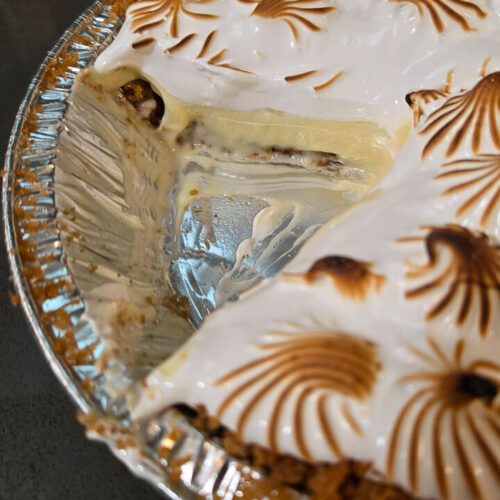
Old-Fashioned Canadian Flapper Pie
This old-fashioned favorite from the Canadian prairies has recently earned the moniker of Canada’s “forgotten dessert.” It’s a simple, comforting vanilla cream pie with a long history. You’re most likely to find it in Alberta or Saskatchewan, but it’s a charming and nostalgic treat no matter where you live. A cozy vanilla pie in the winter, or a cool treat in the summer, this flapper pie recipe is sure to be a favorite all year round.
Table of Contents
What is Flapper Pie?
Flapper pie is essentially an old-fashioned vanilla cream pie, although its simplicity doesn’t make it any less delicious. The name likely comes from its popularity at parties during the 1920s, a period when “flappers” were a cultural symbol. Flappers were young women in the years after World War I who rejected strict social norms. They often wore shorter dresses, cut their hair into bobs, and were associated with more modern views of the time. They drove cars, danced to jazz, and challenged traditional gender expectations. When the Great Depression began in the 1930s, the flapper lifestyle faded, and the image of flappers is now closely tied to the Roaring Twenties.
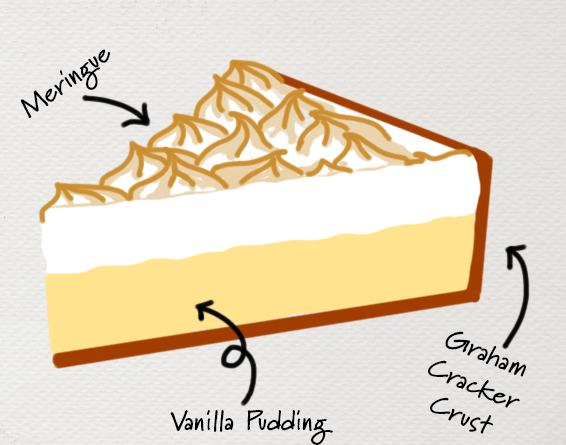
Although cream pies in the early twentieth century were usually served in a flaky pastry crust, flapper pie is most often made with a graham cracker crust. Cinnamon graham crackers work particularly well in this recipe. Flapper pie is also delicious in a gingersnap crust for the holidays. The spiciness of the gingersnaps perfectly balances the sweetness of the vanilla pudding and meringue.
Most recipes for flapper pie today still use more old-fashioned ingredients for the vanilla cream than modern cream pies. Modern cream pies often use a blend of heavy cream and milk for extra richness, while vintage recipes commonly used only milk because heavy cream was harder to get.
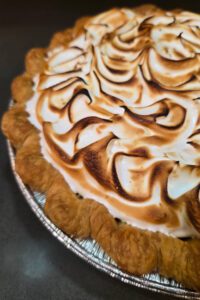
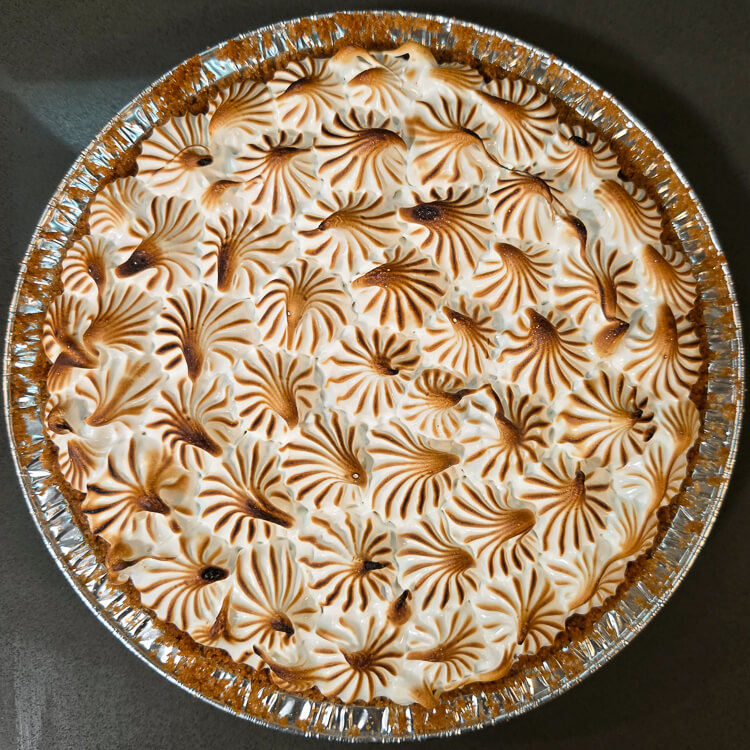
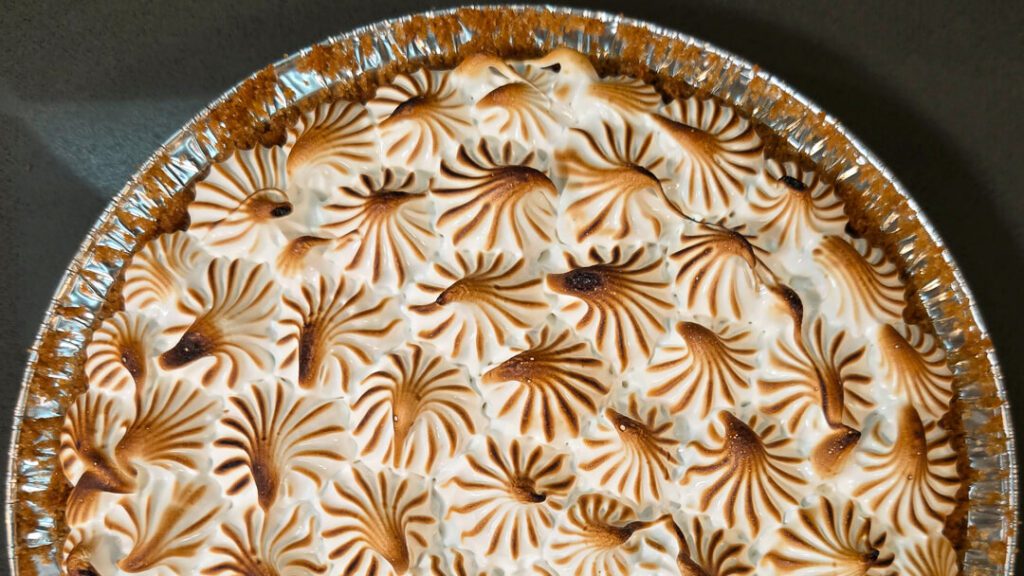
Flapper pie is finished with a toasted meringue topping. Although it might seem unusual today to be served a cream pie with a meringue topping instead of whipped cream, this was actually standard back in the day. In the late 1800s and early 1900s, before reliable home refrigeration, cream pies were almost always topped with meringue. The reasoning was twofold: cream was hard to get, and people wouldn’t want to waste the egg whites after using the egg yolks in the pudding. Whipping up the leftover egg whites for a meringue topping was simply more economical.
Because this style of cream pie has mostly been forgotten, serving up a flapper pie with vanilla custard and a toasted meringue topping in a cinnamon-graham crust can be a novel and exciting treat.
The Difference Between Flapper Pie, Mock Cream Pie, and Custard Pie:
Some articles about flapper pie compare it to another, even-more-forgotten pie called mock cream pie. While mock cream pie and flapper pie do have similar ingredients, the method for preparing them differs.
Regular cream pies, including flapper pie, are made by cooking the pastry cream or pudding on the stovetop. The pudding is then poured into a prepared pie crust that’s ready to eat, like a blind-baked pastry crust or a graham cracker crust. Mock cream pie, on the other hand, has a filling somewhere between a stovetop pudding and a baked custard.
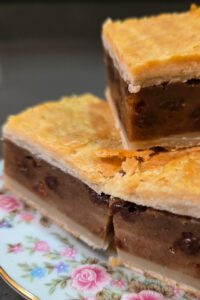
Custard pies, including old-fashioned egg custard pie, take all the ingredients for the custard, mix them together, pour the mixture into a pie shell, and bake it in the oven. Custard pie filling usually uses whole eggs, and therefore were not necessarily served with a meringue topping.
Mock cream pie uses only egg yolks, similar to a cream pie, and mixes the ingredients with boiling milk to partially cook the mixture. Instead of finishing it on the stovetop, the warm mixture is poured into a pie shell and baked until set. It is then topped with a meringue made from the remaining egg whites.
Historical Deep Dive: Cream as a Luxury Ingredient
While heavy whipping cream (or double cream in the UK) is used in many dessert, cooking, and pie recipes today, this was not always the case. Whipped cream now appears on everything from pies and cakes to hot drinks, and cream is often added to milk-based puddings and custards to create richer desserts. Even though many of these dishes were enjoyed more than a century ago, older recipes for these dishes often use only milk or very small amounts of cream. Cream was considered a luxury ingredient, and there were several reasons for that.
What is Homogenization?
Most milk in grocery stores today is homogenized. Homogenization is essentially a forced and permanent emulsification of milk. Milk contains water, fat, proteins, sugars such as lactose, and other key nutrients. Without homogenization, the fat separates from the liquid and rises to the top. The homogenization process subjects milk to high pressure to break down the fat into fine particles that stay suspended in the liquid. This is why a modern carton of milk pours as one smooth, uniform product.
Although the process of homogenization was first introduced by Auguste Gaulin in France in 1899, the sales of homogenized milk didn’t pick up in the US until the 1930s. At this time, commercial milk processing had also not yet advanced to the point where cream could easily be obtained from large batches of milk and sold separately.
Before homogenized milk became standard, households had to skim the cream from the top of non-homogenized milk after it had naturally separated. You can still find this type of milk today sold as “cream top” milk. When skimming cream from non-homogenized milk, about a quarter of the total volume is cream, and only a portion of that is what we call heavy whipping cream or double cream. That means that for every gallon of milk a household purchased, they’d only receive about a half cup of heavy whipping cream. This was the only way to obtain heavy whipping cream in the early 1900s.
To put this into context, this modern quiche Lorraine recipe, for example, uses 1⅓ cups of heavy whipping cream in the filling. A family would have had to buy three gallons of milk to obtain enough cream for this specific recipe. Using only milk for custards and cream pies was far more practical and affordable.
The Necessity of Refrigeration:
Obtaining cream was only part of the problem. Storing milk was also difficult. Before reliable home refrigeration became widely available in the mid-twentieth century, milk spoiled very quickly unless the weather was cold. Families bought only the amount of milk they could use before it went bad. Purchasing several gallons simply to skim off the small amount of cream would have been wasteful.
Because of these limitations, cream remained a rather luxurious ingredient in many households. Milk served as the base for most vintage puddings, custards, and early cream pies, which explains why older recipes tend to be lighter and less rich than the ones we prepare today.
Step-by-Step Flapper Pie Recipe:
Crust:
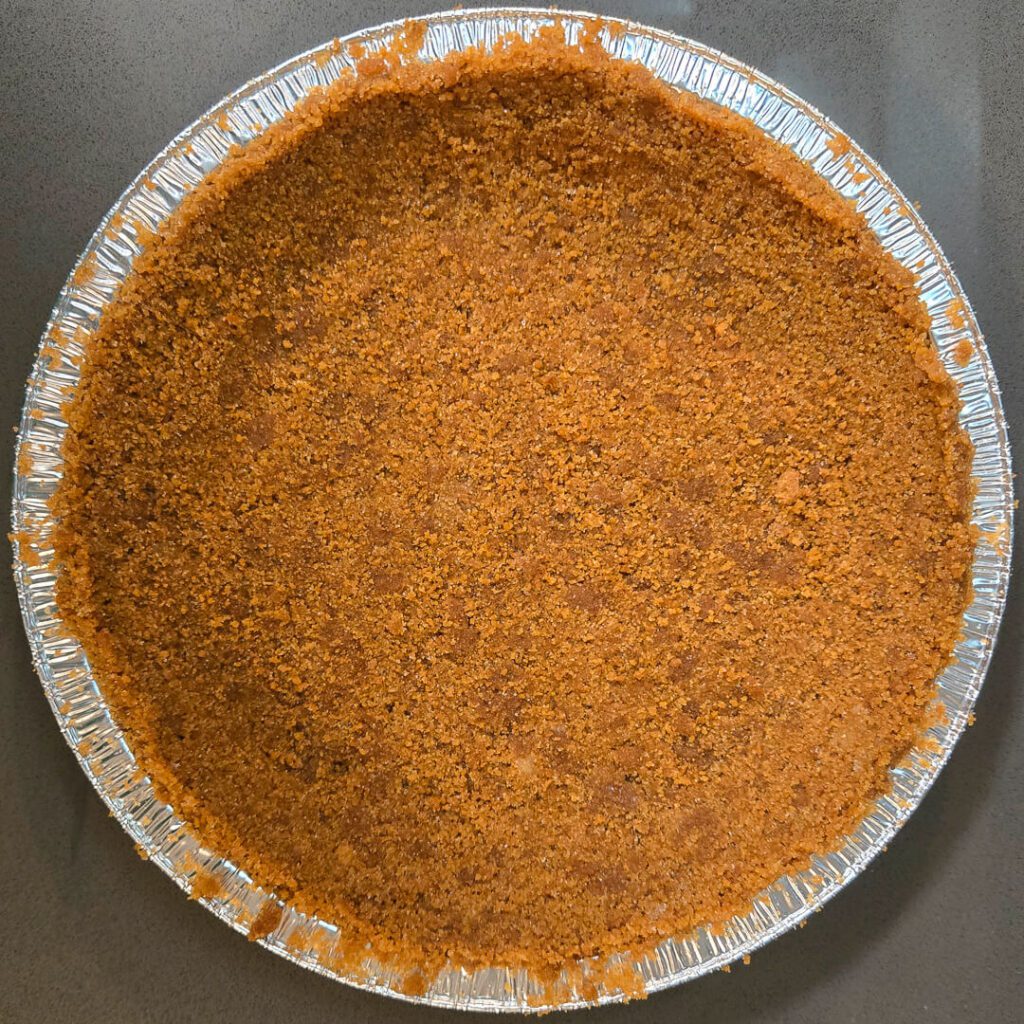
Flapper pie is customarily served in a graham cracker crust. You can sometimes buy one from the store, or they’re one of the easiest pie crusts to make yourself. If you don’t have graham crackers where you live, a Digestive biscuit pie crust is a delicious substitute.
Vanilla Pudding Filling:
Ingredients
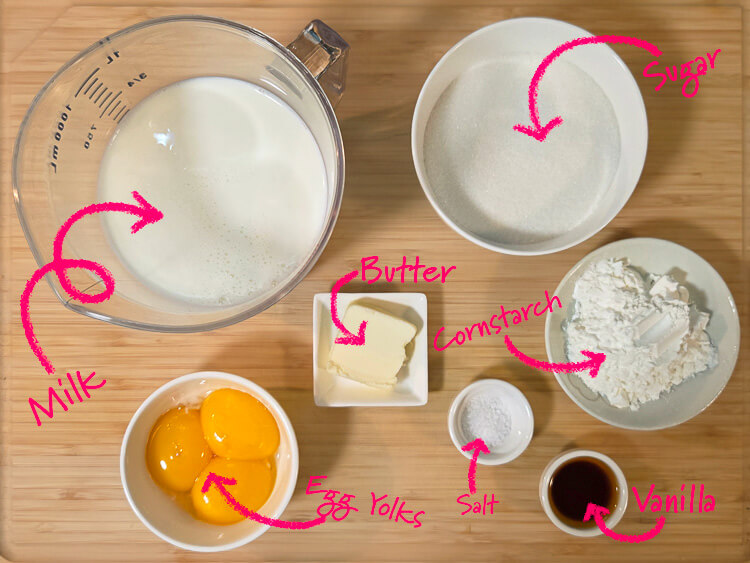
- 2½c Whole Milk (595mL)
- ⅔c Granulated Sugar (135g)
- ¼c Cornstarch (32g)
- 3 Egg Yolks (save the egg whites for the meringue)
- ¼t Salt
- 1½t Vanilla Extract
- 1T Unsalted Butter
1.
In a large mixing bowl, whisk together the sugar, cornstarch, and salt.
2.
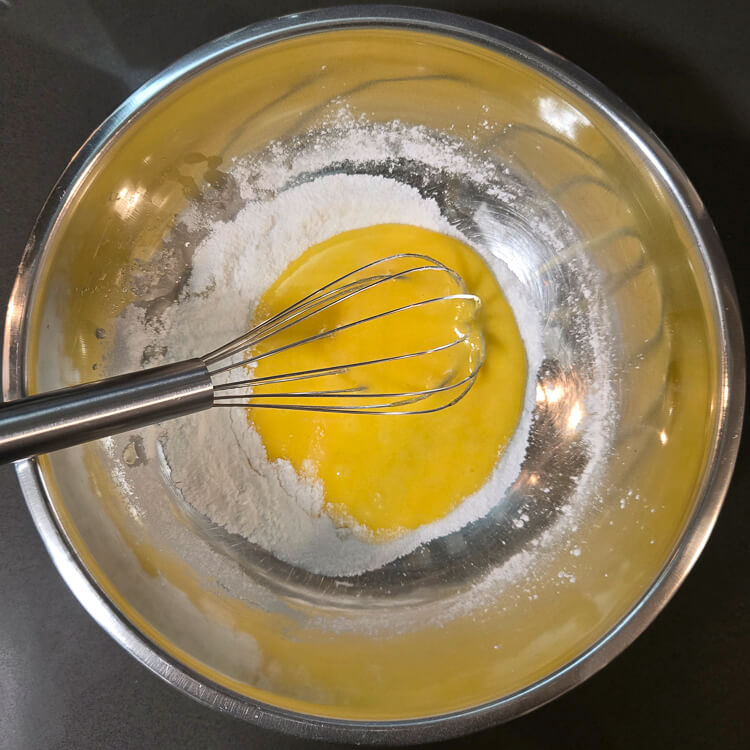
Add the egg yolks and whisk together with the dries from step 1 until the egg yolks are broken up. You do not need to fully mix everything together. See photo.
3.
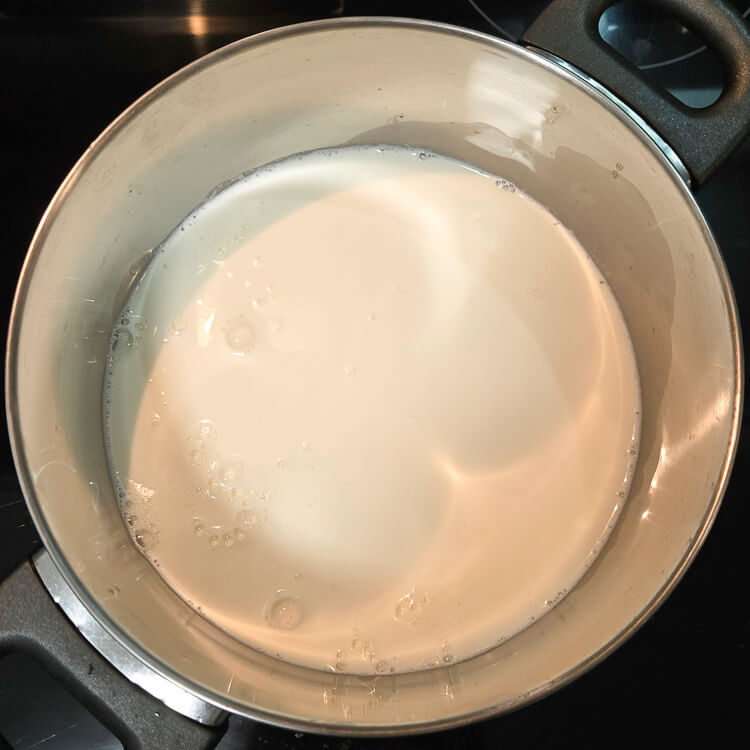
In a medium pot over medium heat, bring the milk to just under a boil.
4.
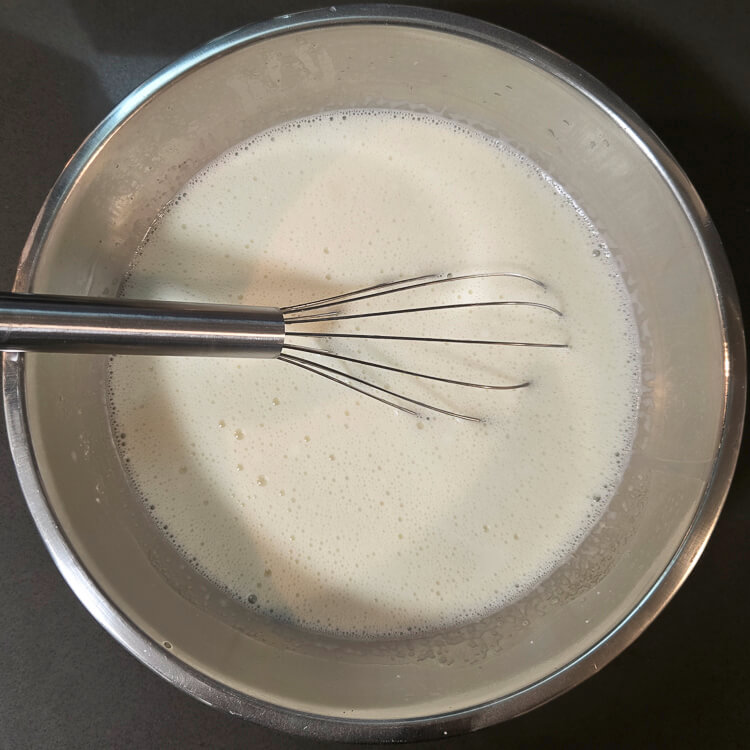
Once the milk is hot and steaming, transfer the milk to a heatproof measuring cup. Very slowly pour it into the bowl from step two while whisking constantly and vigorously. This gradual process tempers the eggs and ensures a smooth, creamy pudding.
Pro Tip: Tempering Eggs
Tempering eggs is one of the most important steps in custard-style desserts like curds, puddings, and pastry creams. Gentle, even heating helps the eggs thicken the mixture smoothly rather than curdling. To learn more about tempering eggs, read here.
5.
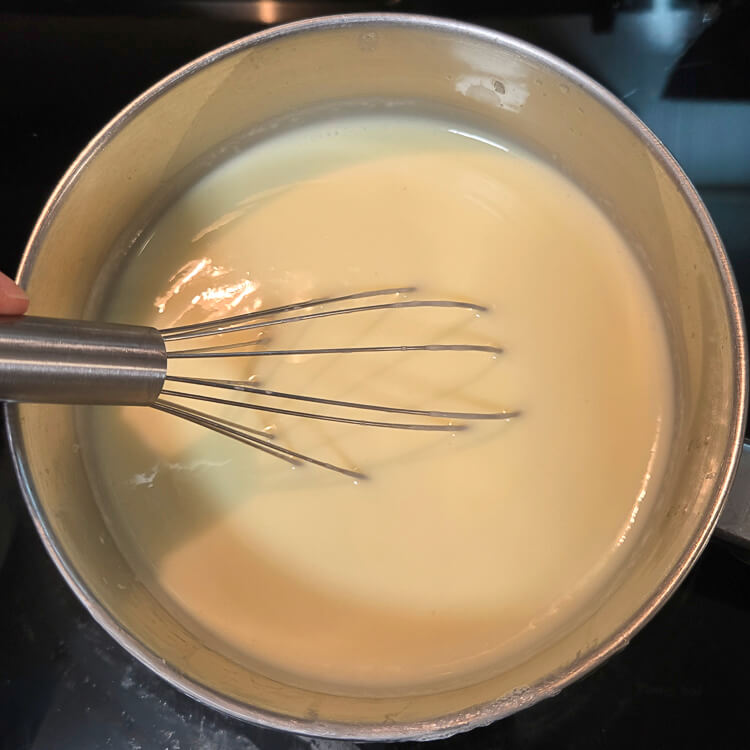
When all of the milk has been added, pour the mixture back into the pot. Place it over low heat and whisk continuously until the pudding thickens and just begins to bubble.
6.
As soon as it reaches a boil, whisk vigorously for 30 to 60 seconds.
7.
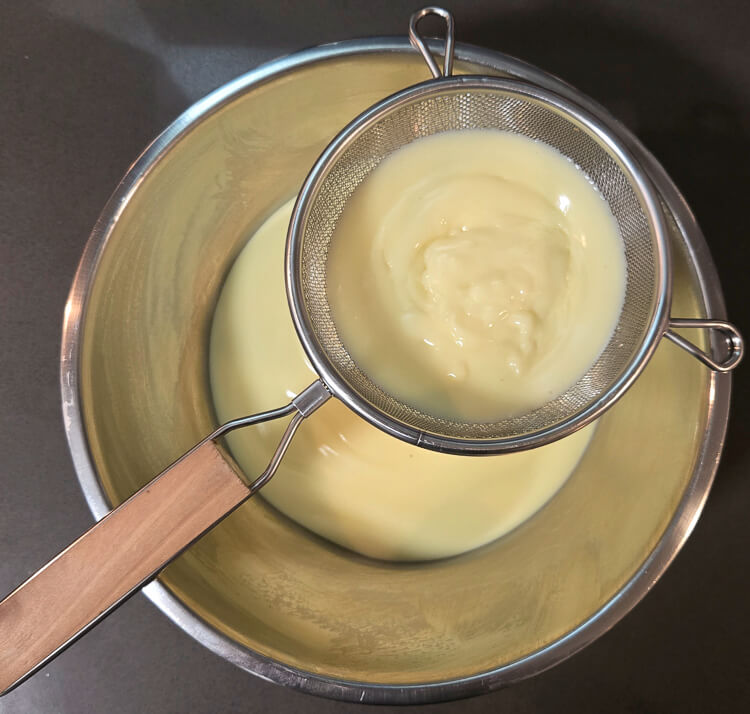
Immediately strain the vanilla pudding through a fine-mesh sieve into a clean mixing bowl to remove any lumps or bits of cooked egg.
8.
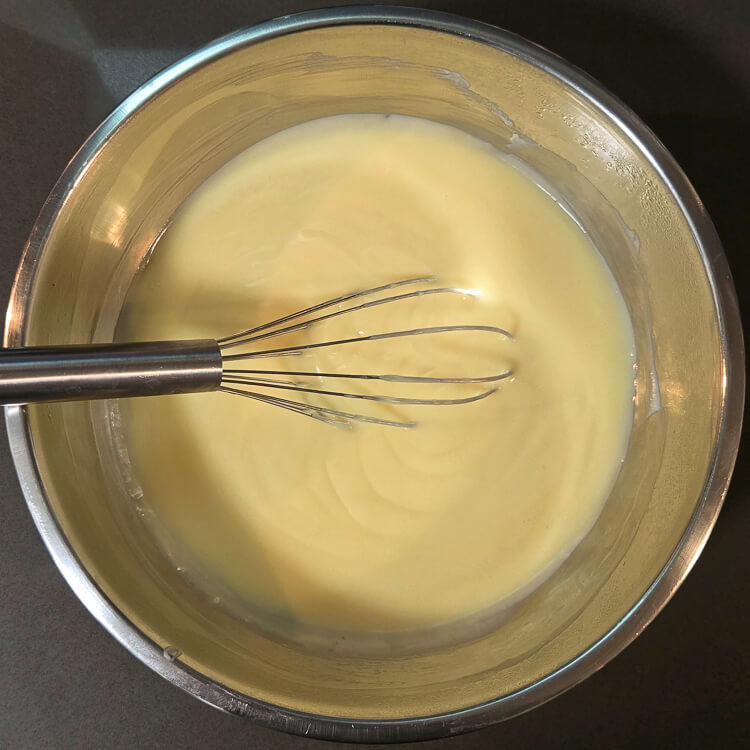
Whisk in the butter and vanilla extract until smooth.
9.
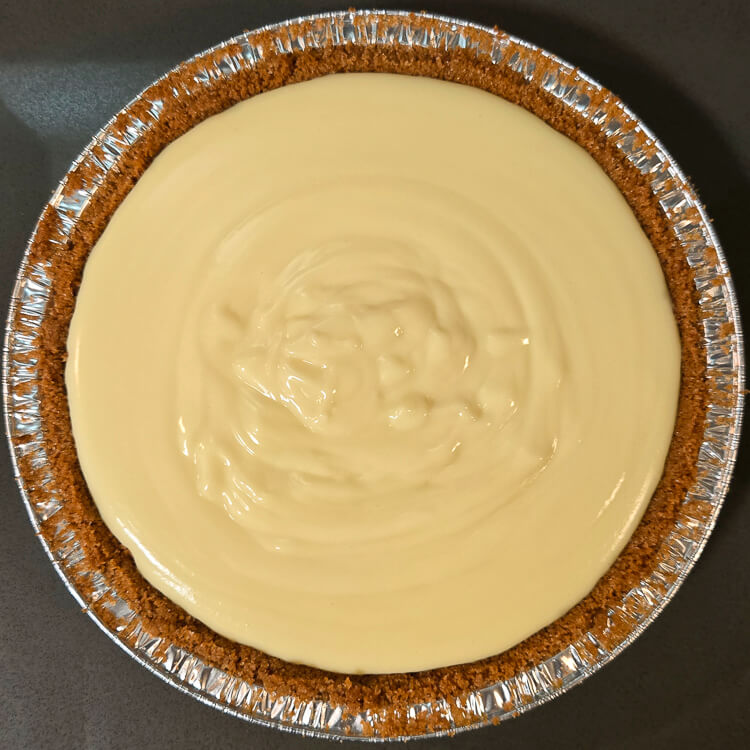
Pour the pudding into your prepared graham cracker crust.
10.
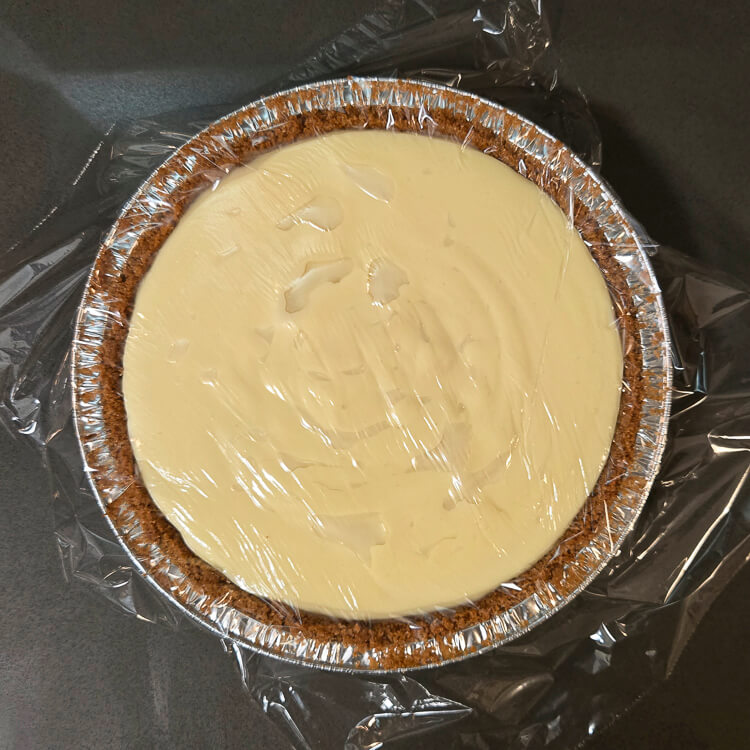
Press a piece of plastic wrap directly against the surface to prevent a skin from forming.
11.
Chill the pie in your refrigerator for at least 3 hours so the pudding can fully set.
Meringue Topping:
Ingredients
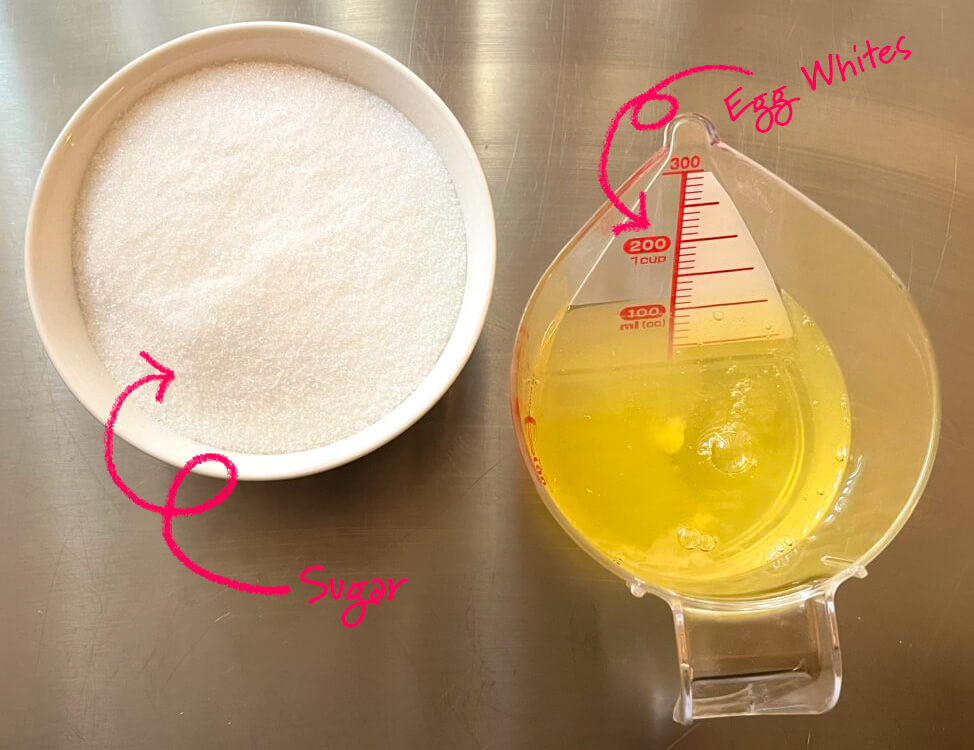
- 3 Egg Whites (remaining from making the filling)
- 3/4c Granulated Sugar (150g)
1.
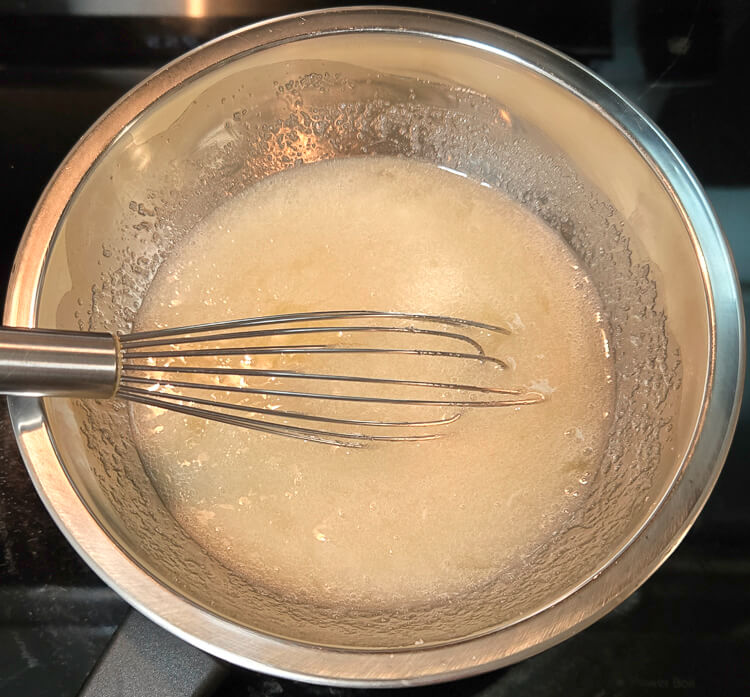
In a mixing bowl set over a double boiler, whisk together the egg whites and sugar.
2.
Continue whisking the mixture slowly until a candy thermometer reads 160°F.
3.
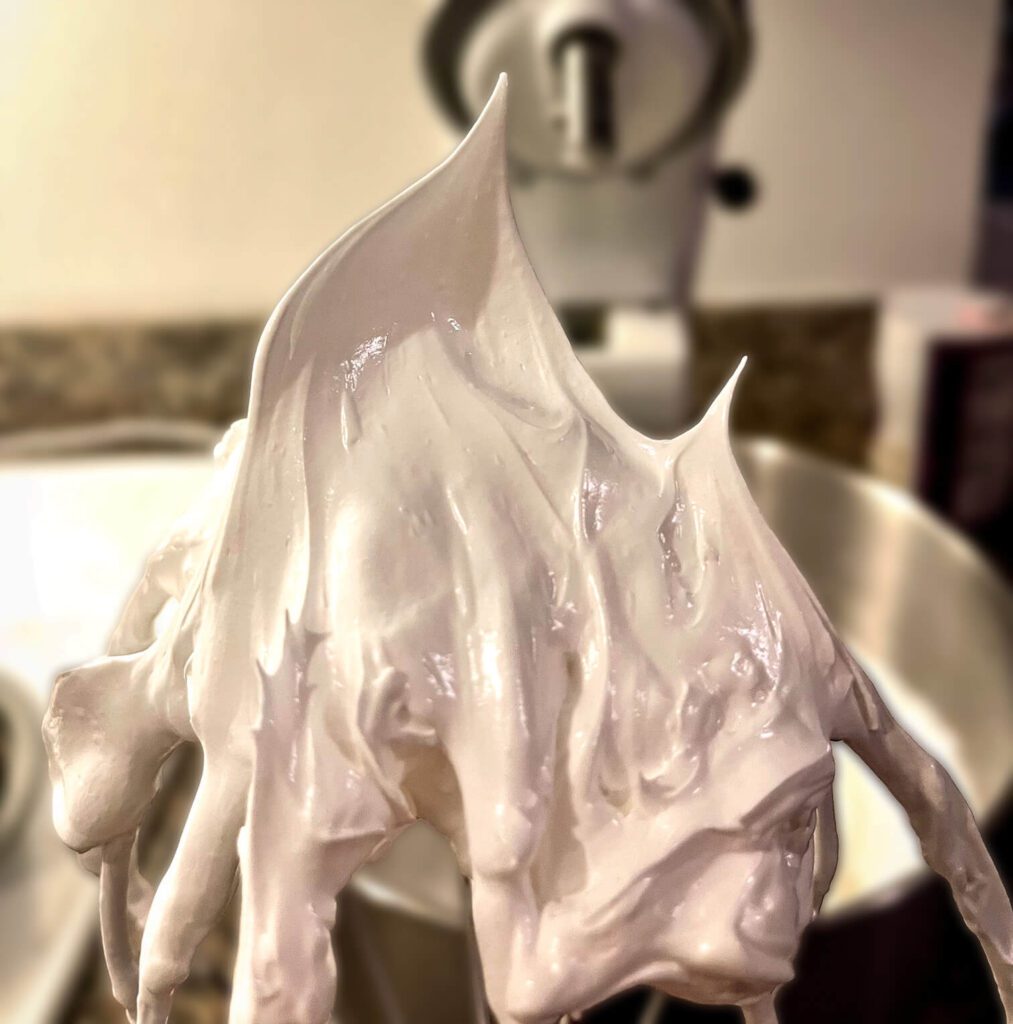
Immediately remove the bowl from heat, and whip on high speed with a stand mixer until stiff peaks form.
4.
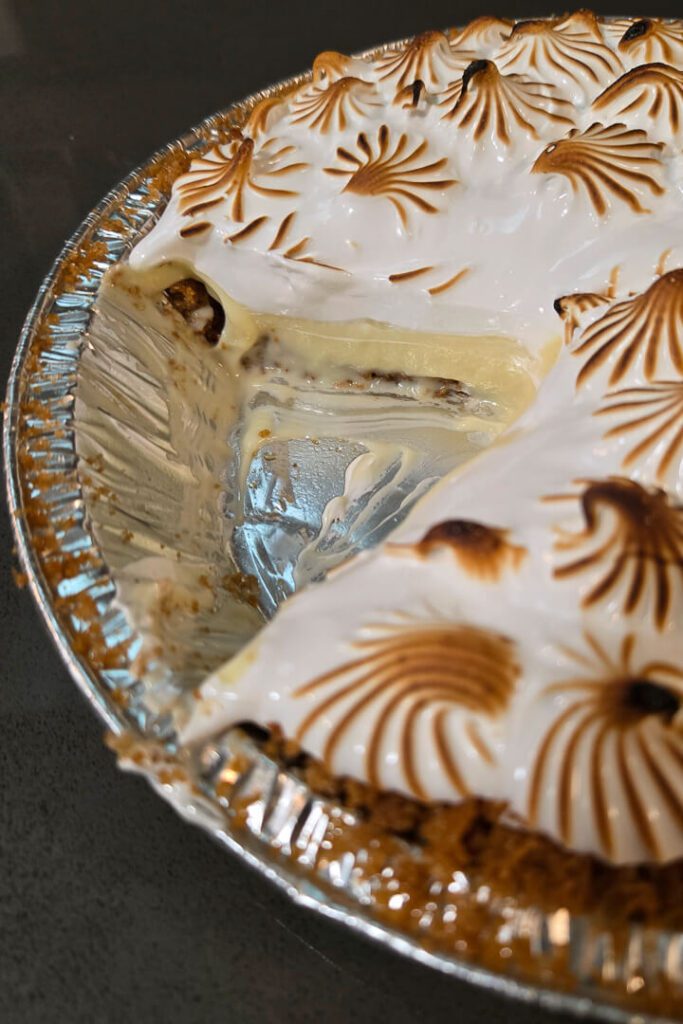
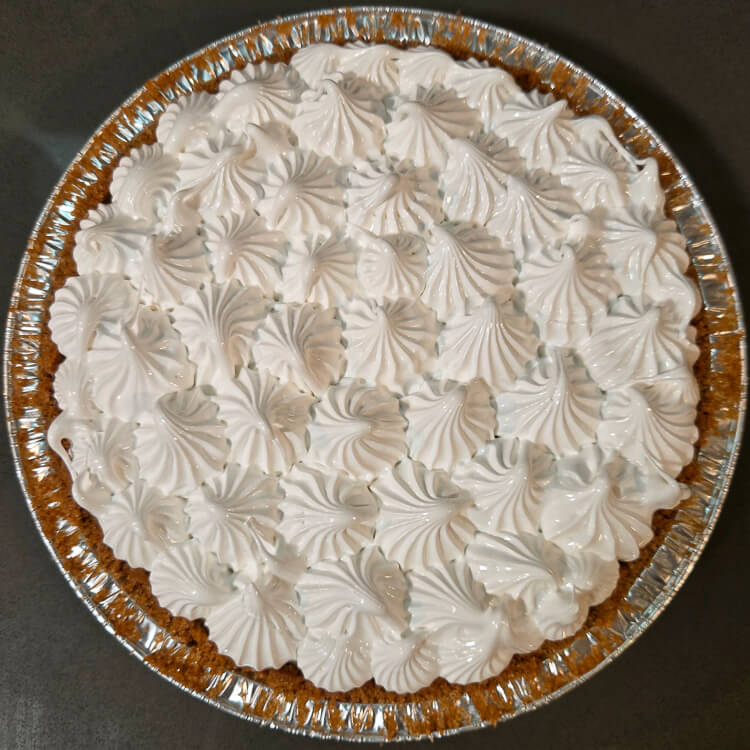
Spread the meringue evenly over the chilled vanilla pudding, making sure to seal the edges where the meringue meets the crust.
5.
Toast the meringue:
- Torch Method (recommended): Use a kitchen torch to brown the peaks of the meringue quickly and evenly.
- Broiler Method: Place the pie under the broiler, watching carefully, until the meringue begins to turn a golden brown (3-5 minutes).
- Baking Method: Bake the pie at 350°F for 10–15 minutes, until the meringue begins to brown.
Other “Forgotten” Pies:
One of my favorite parts of making this website is finding old or obscure pies that have strong regional connections, or just simply disappeared over time. If you have any vintage pies that you’d like to see revived, please let me know! Here are a few lesser-known pies full of history that I’ve written about.
- Marlborough Pie: Marlborough pie was once a staple Thanksgiving pie in New England, right alongside pumpkin pie and apple pie. It is a custard-style pie made with applesauce and flavored with sherry.
- Amish Schnitz Pie: Also called snitz pie, this pie uses dried apples, known as schnitz or snitz in Pennsylvania Dutch, which are rehydrated and cooked into a thick, apple-butter-like filling.
How to Store Flapper Pie:
Because flapper pie is made with a dairy-based pudding filling, it must be kept refrigerated. Cover the pie tightly with plastic wrap or store it in a large, airtight container to keep it fresh. Because of the meringue topping, it should be enjoyed within a day or two. Although the pudding will keep fresh for up to a week, the meringue will begin to weep and separate after a couple of days. Unlike baked fruit pies, flapper pie can’t be reheated or recrisped in the oven, so it’s best enjoyed chilled straight from the refrigerator.
We’d love to see your historical pie creations! If you give this recipe a try, tag @doggone_baking on social media so we can share in the baking fun.

Flapper Pie
Ingredients
Crust
Vanilla Custard
- 2½ cups Whole Milk (595mL)
- ⅔ cup Granulated Sugar (135g)
- ¼ cup Cornstarch (32g)
- 3 Egg Yolks Save the whites for the meringue topping
- ¼ tsp Salt
- 1½ tsp Vanilla Extract
- 1 tbsp Unsalted Butter (14g)
Meringue Topping
- 3 Egg Whites
- ¾ cup Granulated Sugar (150g)
Instructions
Make the Vanilla Custard
- In a large mixing bowl, whisk together the sugar, cornstarch, and salt.
- Add the egg yolks and whisk together with the dries from step 1 until the egg yolks are broken up. You do not need to fully mix everything together. Set aside.
- In a medium pot over medium heat, bring the milk to just under a boil.
- Once the milk is hot and steaming, transfer the milk to a heatproof measuring cup. Very slowly pour it into the bowl from step two while whisking constantly and vigorously.
- When all of the milk has been added, pour the mixture back into the pot. Place it over low heat and whisk continuously until the pudding thickens and just begins to bubble.
- As soon as it reaches a boil, whisk vigorously for 30 to 60 seconds.
- Immediately strain the vanilla pudding through a fine-mesh sieve into a clean mixing bowl.
- Whisk in the butter and vanilla extract until smooth.
- Pour the pudding into your prepared graham cracker crust.
- Press a piece of plastic wrap directly against the surface to prevent a skin from forming.
- Chill the pie in your refrigerator for at least 3 hours so the pudding can fully set.
Make the Meringue Topping
- In a mixing bowl set over a double boiler, whisk together the egg whites and sugar.
- Continue whisking the mixture slowly until a candy thermometer reads 160°F (70℃).
- Immediately remove the bowl from heat, and whip on high speed with a stand mixer until stiff peaks form.
- Spread the meringue evenly over the chilled vanilla pudding, making sure to seal the edges where the meringue meets the crust.
- Using a kitchen torch, brown the meringue until it is a golden brown. Alternatively, bake the pie at 350℉ (175℃) or put the pie under a broiler until the meringue becomes a golden brown color.
- Slice and serve!


One Comment
This is such a beautiful deep dive, I love when recipes come with stories! Now I need to try making this delicious pie!